


Looking for the real thing? Browse genuine crusader rings for sale, each piece one of one, individually authenticated, with documented provenance. For the background, see the guide to medieval jewelry.
What 'crusader' symbolism meant in context
The phrase crusader symbolism describes a layered set of religious, martial and social signs that developed mainly between the 11th and 13th centuries and that later cultures sometimes adapted. To read an object labeled as crusader-era, start by treating the term as a shorthand for devotional emblems, group insignia, and personal identity devices rather than a single fixed meaning, and keep in mind that museum catalogues and object studies provide the clearest comparative evidence Home, Kunera, hervorgegangen aus dem Projekt der Kunstgeschichte der Radboud Universiteit Nijmegen.
In practice, what looks like a simple sign on a ring or pendant could have served several functions at once: a visible devotional mark worn by a pilgrim, a badge of military or order membership, or an administrative seal used to authenticate documents. Each of those functions developed in overlapping social spaces such as pilgrimage routes, crusader encampments and the administrative centers of the Latin East, so meaningful interpretation depends on connecting the object to its condition notes and documented context rather than relying on isolated visual similarity Oxford handbook excerpt on seals and sigillography.
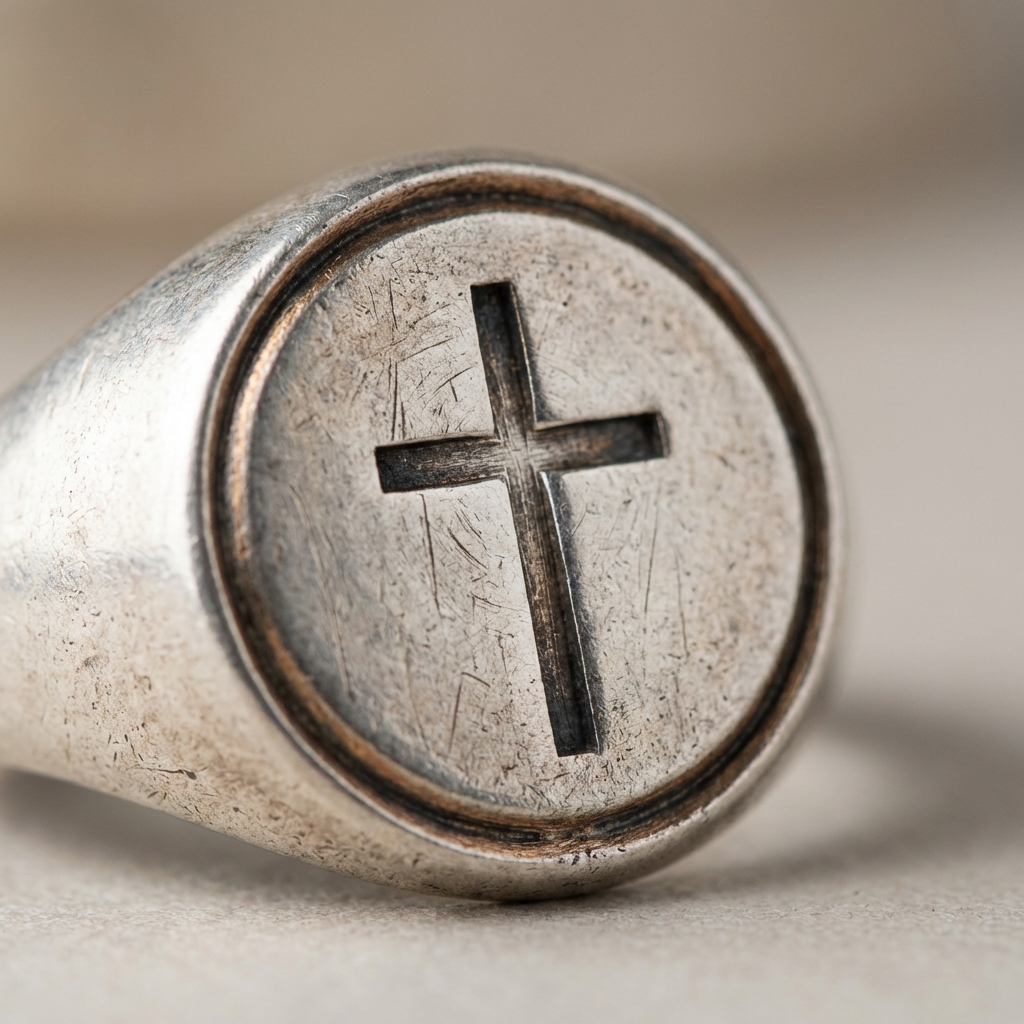
Collectors and readers should therefore begin by defining the claim being made about a piece: is the description emphasizing devotional use, order attribution, or legal function? That initial classification will determine which references and catalogues are most relevant when comparing motifs and will inform what kinds of provenance or restoration notes to request.
The cross, in many regional shapes, was the principal devotional and identity symbol for people associated with crusading activity and it appears repeatedly on pendants, badges and sewn garments in museum collections; this makes the cross a primary starting point for identification on wearable objects British Library overview of the Crusades. Aurora Antiqua's medieval pendants collection
Cross shapes varied regionally and chronologically. Western European pieces frequently use the Latin cross form, while finds connected to the Crusader States often show hybrid designs that blend Western cross types with local Eastern Christian forms; for practical identification, compare the object against annotated museum images and collection entries that show the same basic forms Metropolitan Museum collection highlights on crosses and pendants, and see a Metropolitan Museum seal ring example here.
On rings and pendants the cross could signal different things depending on context: a small cross bezel on a ring might be a private devotional emblem, a cross pendant could be a pilgrimage token, and a cross combined with additional devices might point to order affiliation or administrative identity. When you read a piece, note whether the cross is central to the composition, whether it is accompanied by inscriptions or heraldic marks, and whether the object is described in catalogue notes as a badge, pendant or sewn emblem.
See curated rings and behind-the-scenes context on @auroraantiqua
See curated examples with clear condition notes and conservative attributions to compare cross types and mounting styles without pressure to buy.
Because crosses are also widely reused in later revivalist cycles, a cross alone rarely proves medieval origin; it raises a question to be answered by provenance, comparable catalogue entries, and restoration notes rather than by visual match alone Metropolitan Museum collection highlights on crosses and pendants.
Rings, signets and seals: identity and legal function
Signet rings and seals served both practical legal functions and symbolic identity-marking roles for crusaders and officials in the Latin East, and they are often best approached first as administrative tools whose imagery also carried personal or institutional meaning Oxford handbook excerpt on seals and sigillography. See the DOAKS introduction to Byzantine seals here.
In administrative contexts a ring or seal authenticated documents and transactions; in social contexts the same device could be worn to signal office, allegiance or membership. When a signet face combines a cross with a personal motif, the combination is deliberate: the cross conveys a public association while the personal device supplies individual identity or familial heraldry Journal of Medieval History article on seals and signets.
Signet rings in administrative and battlefield contexts
Signets were practical on campaign because a simple, well-carved design could be read quickly on a folded document or a sealed package. In many object catalogues, signet types are catalogued with function notes that describe both the sealing use and any wear patterns consistent with ring-on-hand use, helping scholars distinguish between a working seal and a purely decorative ring Oxford handbook excerpt on seals and sigillography.
A crusader-symbol on a ring or small object typically signals devotional practice, group membership or legal identity; reliable readings require object-level evidence, provenance and catalogue comparison.
Combined imagery: cross plus personal or institutional motifs
When crosses appear alongside personal devices or institutional emblems on bezels and seals, the composite design often indicates an assertion of office or membership rather than simple personal piety. Catalogue entries that show similar combinations are invaluable for narrowing likely associations, because a solitary cross can mean many things while a combination narrows possibilities to particular administrative or order contexts Journal of Medieval History article on seals and signets.
Knights, orders and emblems: how group identity was shown
Knights and military orders used simple, highly legible emblems that combined crosses with heraldic elements to show group membership and to assert authority in both battle and administration; studies of order seals and emblems clarify how these devices were designed to be recognized at distance and in documentation British Museum notes on Knights Templar seals.
The use of simple, bold shapes is particularly clear in the materials associated with well-known orders, where clarity on banners, surcoats and small seals was essential for identification amid the chaos of campaign. Comparative catalogues help show where similar motifs recur and where regional workshop styles affect execution and detail Cambridge University Press chapter on heraldry and crusade identity.
Order insignia versus personal heraldry
Order insignia tend to foreground the cross as a unifying symbol, while personal heraldry places family devices and badges in relation to that cross. In many cases, academic attribution of a ring or seal to a specific order will be medium confidence and based on pattern matching rather than direct documentary naming, so treat such identifications as provisional unless supported by provenance or contemporaneous records Cambridge University Press chapter on heraldry and crusade identity.
Legibility and battlefield use
Design choices favored thick strokes, clear crosses, and uncluttered fields because these features read better at a distance and reproduced reliably in seals and signet impressions. That functional principle helps explain why many surviving badges and small objects emphasize form over intricate detail, a pattern echoed across museum catalogues and battlefield accounts compiled by collectors and curators British Museum notes on Knights Templar seals.
Regional variation and syncretism in crusader-era iconography
Regional and chronological variation matters: Western European crusader imagery often favors Latin cross types and early heraldic forms, while the Crusader States show mixes of Western and Byzantine motifs, reflecting local influences and workshop practices Metropolitan Museum collection highlights on crosses and pendants.
Syncretic motifs appear in catalogues as combinations of Western crosses, Byzantine geometric patterns, or local saint figures. Those combinations are useful diagnostic markers for regional attribution because they reflect the visual languages of both the maker and the likely owner, and they can point to particular workshop attributions or trade connections when paired with comparative entries Cambridge University Press chapter on heraldry and crusade identity.
Western Europe versus the Crusader States
In Western Europe the emphasis moves toward heraldic display around a cross motif, while objects from the Crusader States display hybrid visual vocabularies that may include Eastern iconography or manufacturing traits traceable to local workshops. Catalogues that provide close visual parallels are the most reliable way to judge such attributions Metropolitan Museum collection highlights on crosses and pendants.
Byzantine influences and local workshops
Local workshops working in the eastern Mediterranean often combined Byzantine iconographic elements with Western forms, producing objects that can appear confusing when viewed only through Western typology. Paying attention to technique, metalwork style and decorative vocabulary in catalogue comparisons helps identify these cross-cultural productions more accurately Cambridge University Press chapter on heraldry and crusade identity.
A practical framework for reading a medieval crusader ring
Step 1: Start with object-level evidence. Record the ring's dimensions, the bezel image, any inscriptions, metal type as described, visible signs of repair, and what the condition notes say about stabilizations or restorations. Those concrete facts ground every further claim and are essential when you later compare the ring with published catalogues Lüneburger Stadtarchäologie e.V, Lueneburger Stadtarchaeologie e.V.
Step 2: Compare motifs with museum catalogues and seal studies. Look for parallels in published collections that match bezel composition, signet punches, and combined motifs. When a comparable seal or ring appears in a catalogue, note the collection, accession number and any dating provided by the registrar to frame the attribution properly Oxford handbook excerpt on seals and sigillography, and consult the Getty catalogue of ancient gems and finger rings here.
Step 3: Assess documentation and provenance. Treat attributions as probabilistic: prioritize items accompanied by collection history, prior ownership notes, or verification letters and be cautious with objects that lack clear paperwork. When in doubt, request independent condition or metallurgical reports to support visual claims Journal of Medieval History article on seals and signets.

Practical tips to record when you examine a ring include bezel orientation, depth of engraving, tool marks visible under magnification, and any residue that might indicate later alteration; these details are often listed in careful condition notes and can make the difference between a plausible and an unlikely attribution Oxford handbook excerpt on seals and sigillography. See comparable ring listings in our rings collection.
Dating, materials and what condition notes tell you
Common materials on medieval rings include silver, copper alloys, and occasional inlaid stones such as carnelian, agate or glass imitations; descriptive catalogue entries usually qualify stone identifications as appearances rather than laboratory-confirmed results unless testing is reported anello sigillo (anello a castone con sigillo) età medievale, Istituto centrale per il catalogo e.
Patina, wear consistent with age and documented repairs provide clues: a uniformly applied modern solder or aggressive filing style recorded in restoration notes can point to recent modification, while layered accretions and edge rounding often match age-consistent handling patterns. Condition notes matter because they record what was stabilized, repaired, or left untouched, helping separate original features from later interventions Oxford handbook excerpt on seals and sigillography.
Because visual similarity alone is insufficient for firm dating or attribution, expect reputable catalogues to label dates as estimates and to provide reasoning based on comparative typology, workshop traits, and documentary parallels rather than simple stylistic guesswork HID IN THE EARTH AND SECRET PLACES: A REASSESSMENT OF A HOARD OF LATER MEDIEVAL, Cambridge University Press.
Buying and collecting responsibly: provenance, documentation and red flags
Strong provenance usually includes collection history, prior ownership notes, and any verification letters or third-party reports that accompanied the object during earlier sales or donations; these elements increase the interpretive value of a piece because they place it within a traceable chain of custody Oxford handbook excerpt on seals and sigillography.
Common red flags include missing or vague provenance statements, inconsistent condition notes, attributions that change dramatically between listings, and images that show obvious modern tooling or repairs. Another warning sign is a claim that a simple motif proves membership in a specific order without supporting documentation or catalogue parallels Journal of Medieval History article on seals and signets.
A quick provenance and condition checklist for ring assessments
Use to request seller documentation
Next steps when evaluating a listing include requesting high-resolution images of the bezel and shank, detailed condition and restoration notes, and references to any catalogue parallels the seller claims. If an attribution seems overstated, ask for the specific catalogue entry or collection accession that supports it rather than general comparisons Metropolitan Museum collection highlights on crosses and pendants.
Common misreadings and modern misuse of crusader symbols
Nineteenth to twenty-first century revivalism and modern political reuse have sometimes reshaped how crusader symbols are read today, producing misapplied identifications when modern meanings are projected back onto medieval objects; avoid that projection by relying on provenance and historiographical framing when encountering bold contemporary claims Journal of Medieval History article on seals and signets.
A typical mistake is to read a simple cross as evidence of order membership without catalogue parallels or documentary support. Comparative catalogues and museum collection notes are corrective tools because they expose how often a motif appears across contexts and how confident curators are in specific attributions Metropolitan Museum collection highlights on crosses and pendants.
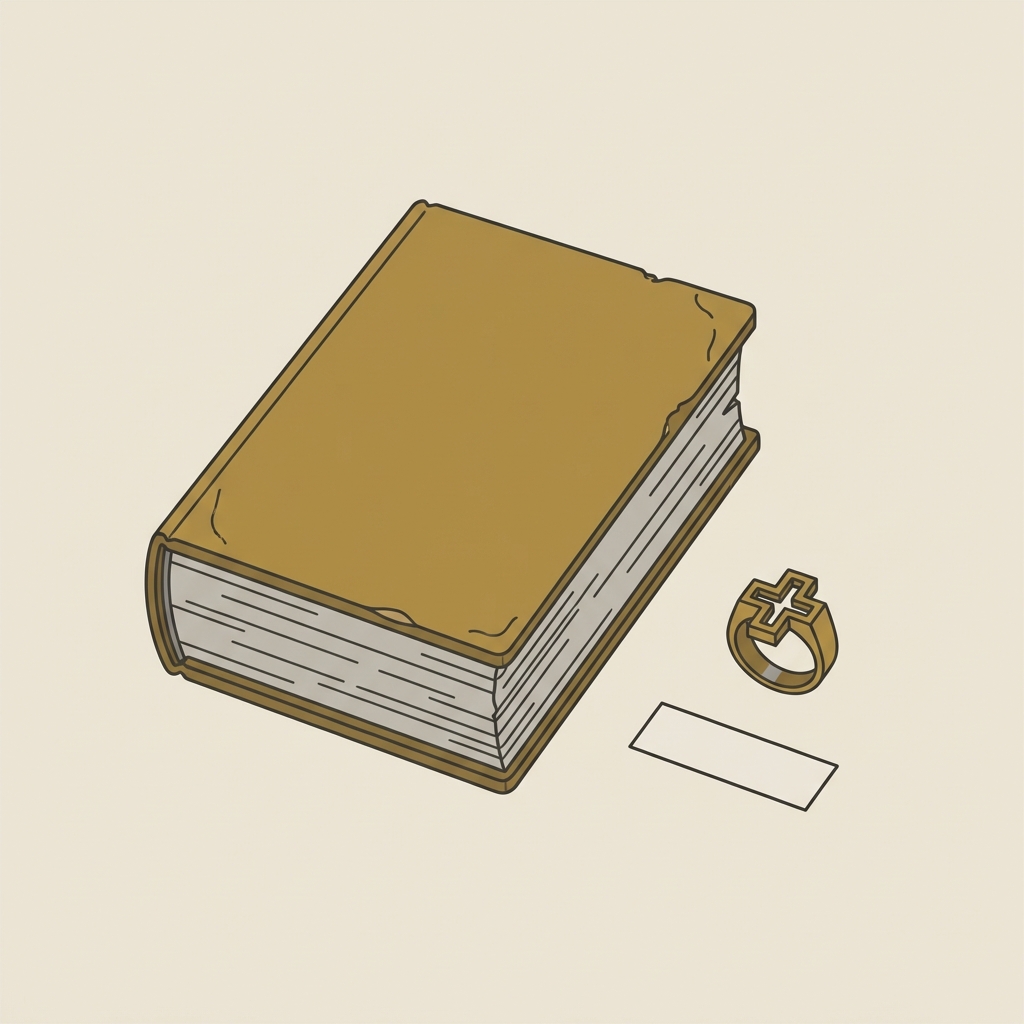
When you see modern political or revivalist claims attached to an object, step back and ask whether the attribution is based on object-level evidence and documented provenance, or on a later ideological reuse of the imagery. Most reliable readings come from object-based studies rather than contemporary rhetoric British Museum notes on Knights Templar seals.
Practical examples and short case scenarios
Scenario 1, a ring with a simple cross bezel. Step through the framework: record bezel form, measure and photograph the ring, compare the cross form with comparable pendants and rings in museum catalogues, and check for matching tool marks or signet impressions in published seals. If a close catalogue parallel exists, note the accession and any dating rationale supplied by the museum to move from a visual match toward a likely attribution Metropolitan Museum collection highlights on crosses and pendants.
Scenario 2, a signet combining a cross and a personal device. In this case, the composite nature of the motif narrows the field: consult seal catalogues that index combinations of cross and device, check regional workshop styles, and treat the attribution as probabilistic unless a named individual or office appears in provenance documentation Oxford handbook excerpt on seals and sigillography.
In both scenarios, condition notes and restoration records are decisive. A ring whose bezel has modern tooling or a replated surface will demand greater caution, while an object with layered provenance and conservative conservation reports becomes easier to place with confidence.
Conclusion: reading meaning responsibly and next steps for collectors
Symbols associated with crusading most often functioned as devotional marks, legal identity devices and group insignia, and reliable interpretation depends on object-based comparison and provenance-driven reasoning rather than visual guesswork Signet Ring, Victoria and Albert Museum, London.
For collectors, practical next steps are straightforward: request condition and restoration notes, high-resolution images, and any provenance documentation; compare the piece to museum catalogues; and treat attributions as probabilistic unless robust documentation is offered. Aurora Antiqua approaches listings with curated condition notes and provenance references when available to help buyers place objects in context while avoiding certainty language about authenticity. See our medieval crusader rings collection here.
Begin with object-level evidence: check condition notes, bezel imagery, metal type as described, and provenance. Then compare those details with museum catalogues and seal studies to see if close parallels exist.
No. A simple cross can signal devotion, pilgrimage or later reuse. Order membership usually requires composite motifs, documentary provenance, or catalogue parallels to support the attribution.
Ask for a provenance file, high-resolution images, detailed condition and restoration notes, and references to any catalogue entries or collection accession numbers cited by the seller.
More from Aurora Antiqua
References
- Signet Ring, Victoria and Albert Museum, London
- Home, Kunera, hervorgegangen aus dem Projekt der Kunstgeschichte der Radboud Universiteit Nijmegen
- Ring, Victoria and Albert Museum, London
- Devotional finger ring, London Museum (vormals Museum of London)
- Medieval gold signet ring, Collections Online, Amgueddfa Cymru, Museum Wales, Cardiff
- Lüneburger Stadtarchäologie e.V, Lueneburger Stadtarchaeologie e.V
- anello sigillo (anello a castone con sigillo) età medievale, Istituto centrale per il catalogo e
- anello, opera isolata, ambito Italia centrale (sec XV) anello ca, Istituto centrale per il catalogo e
- HID IN THE EARTH AND SECRET PLACES: A REASSESSMENT OF A HOARD OF LATER MEDIEVAL, Cambridge University Press
- Introduction to Byzantine Seals and the Online Catalogue, Dumbarton Oaks