


Looking for the real thing? Browse authenticated Ancient Roman rings, each piece one of one, individually authenticated, with documented provenance. For the background, see the guide to Roman jewelry.
What are ancient Roman rings? Definition and historical context
ancient roman rings refers to finger rings produced in Roman-period contexts, typically dating from the late Republic through the later Empire, and made for functions that ranged from signet use and personal ornament to social signalling. These objects often survive with surface wear, patina, and evidence of past handling, and they can include intaglio gems, engraved bezels, and plain metal hoops that together convey aspects of style and use.
Materials commonly used for Roman rings include gold, silver, and bronze or other copper-alloys, and the choice of material affects both how the object looks today and how it should be cared for. When discussing materials and care, conservators and museum collection notes offer specific guidance for preventing damage and preserving diagnostic surfaces, so buyers should look for condition descriptions that align with those practices Getty Conservation Institute guidance on metals.
See condition reports and restorations on @auroraantiqua
Read on for a practical, conservation-aware guide that helps beginners assess comfort, fit, and documentation when considering ancient Roman rings; sign up for condition-report alerts if you want to be notified when pieces with detailed notes appear.
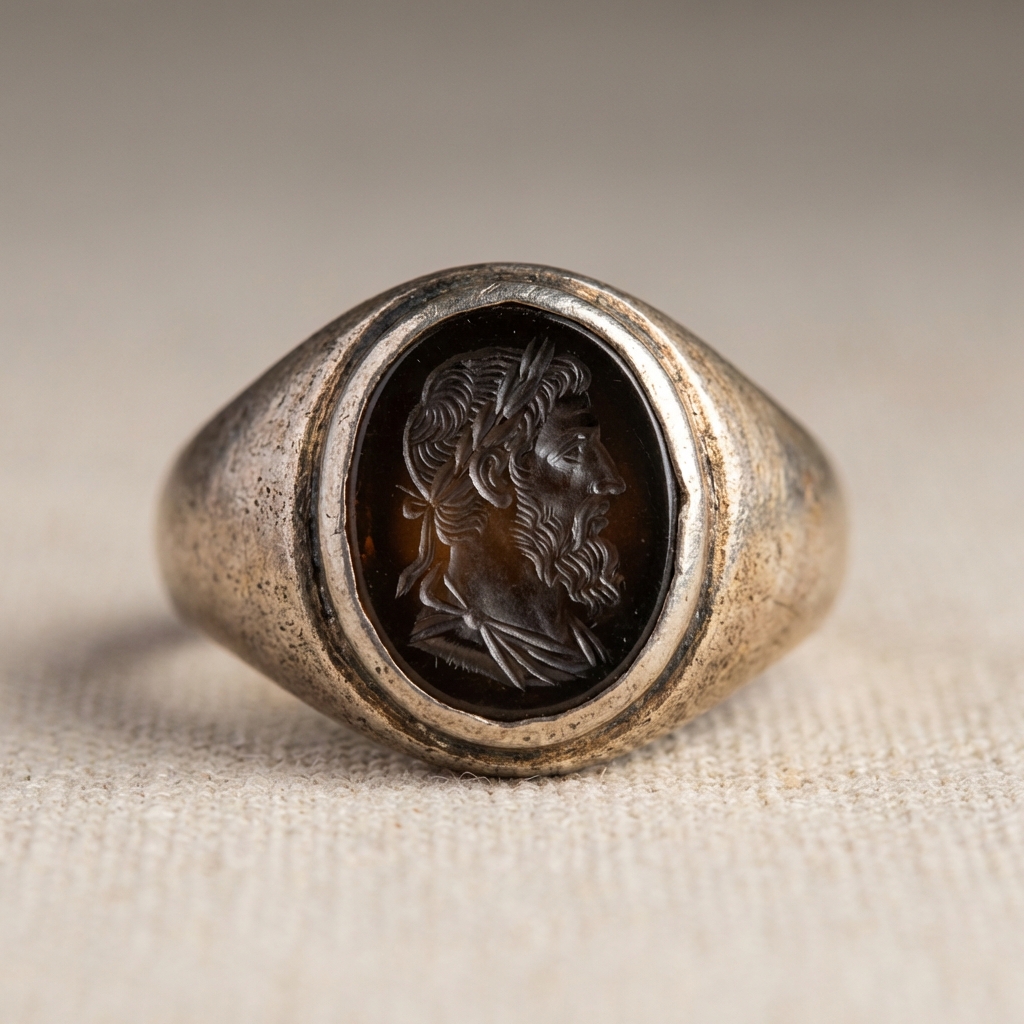
Typical motifs include engraved intaglio scenes, personal monograms, mythological figures, and geometric ornament. Intaglio gems such as carnelian and agate often sit in a bezel and may show wear consistent with long use rather than recent damage. These motifs, combined with manufacturing marks, can help place a piece within broad typological categories without implying absolute dating.
Rings reached modern collections by a variety of routes: excavation, chance finds, historical collecting, and nineteenth-century trades in antiquities. Many pieces in private and institutional collections have accompanying provenance notes or collection history entries; when present, these notes help contextualise an object and reduce legal uncertainty for potential buyers Portable Antiquities Scheme resources. See our ancient Roman rings collection.
Materials, typical periods, and common motifs
Gold rings were favoured for high-status jewellery and can retain fine detail on bezels despite surface wear, while silver was common for everyday ornament and may show moderate abrasion or old repairs. Bronze or copper-alloy rings are widespread archaeologically but require different care due to corrosion tendencies. Recognising these material differences helps set expectations about condition, appearance, and likely interventions recorded in restoration notes Metropolitan Museum collection notes on rings.
Motifs vary across periods and workshops; intaglio scenes might depict deities, animals, or civic iconography, while decorative bezels can be plain or gem-set. Gemstones described as carnelian, agate, or amethyst may be identified visually in listings but should be treated as attributed identifications unless laboratory testing is documented. Looking at bezel shape, intaglio carving style, and wear patterns together offers a cautious, evidence-based approach to understanding an object's probable context.
Materials and conservation basics for ancient Roman rings
How a ring’s metal behaves over time is central to what a beginner should expect in terms of care and long-term durability. Gold and silver are generally more chemically stable than copper-alloys, though silver can show surface wear and may have historic repairs recorded in condition notes. Museum and conservation guidance recommends minimal intervention for these metals to preserve patina and surface detail when possible Metropolitan Museum guidance on rings.
Bronze and other copper-alloys are particularly prone to active corrosion processes that can continue after a piece leaves the ground; conservators describe this broadly as bronze disease, and affected objects often need professional stabilisation before regular handling or wear overview of bronze corrosion and treatment. For additional technical discussion of environmental factors that influence corrosion, see this ICCROM note ICCROM guidance on metals in humid climates.

Conservators typically advise stabilisation for actively corroding bronzes and very cautious cleaning for silver to avoid loss of patina or engraved detail. When a seller includes restoration notes, look for language about stabilisation, consolidation, and any solder work rather than generic claims that an item was simply 'cleaned'. Clear restoration notes reduce uncertainty about what was done and why Getty Conservation Institute overview on metal conservation. See also Gettys analysis of copper and bronze conservation Sustainable Conservation of Bronze, J. Paul Getty Museum and Getty Conservation Institute, Los Angeles.
How gold, silver, and bronze behave over time
Gold, because of its relative inertness, can retain thin surface details even after centuries of wear, but it may also have been reworked historically. Silver can develop surface abrasion and may bear traces of past repairs; minimal, reversible cleaning is the conservator-recommended approach to protect such evidence. These material behaviours are important for understanding condition descriptions and likely handling needs.
Bronze alloys can develop powdery, greenish corrosion that sometimes accelerates under the wrong environmental conditions. That active corrosion can destabilise an object and change how safe it is to wear regularly, which is why professional stabilisation is often documented in condition reports for bronzes conservation literature on bronze disease. Recent studies also investigate soil and environmental influences on corrosion processes research on environmental effects.
Are ancient Roman rings good for beginners? Wearability, comfort, and expectations
Beginners often ask whether owning or wearing an ancient ring is a sensible choice. A practical answer is that ancient roman rings can be good for beginners when the buyer prioritises pieces with clear condition notes, stable materials, and accurate sizing information; otherwise, replicas or modern castings may be a lower-maintenance alternative. Many dealers and museum guides recommend this cautious, evidence-first approach to match the object to the intended use Metropolitan Museum notes on wearing historical rings.
Comfort depends on hoop shape, band thickness, and any historical repairs that alter fit. Small changes such as a flattened shoulder or a solder repair near the inner band can make a ring feel different from a modern band; buyers should ask sellers for specific notes about any interventions that affect fit before deciding to wear a piece regularly.
They can be, if a beginner chooses stable materials, requests clear inner-diameter measurements and restoration details, and accepts that some originals require conservation or are best used for occasional wear rather than daily use.
For beginners who want occasional wear, silver and gold pieces described as minimally cleaned and structurally sound are generally easier to manage than unrestored bronzes. An unrestored bronze that shows active corrosion is usually best kept for study or display unless a conservator has stabilised it and the seller documents that work bronze corrosion treatment guidance.
Which materials are easiest to wear daily
Gold and silver, when not actively corroding and when described with clear condition and restoration notes, are likely the most comfortable options for beginners who want occasional wearing. Replicas and modern castings typically provide greater comfort and lower maintenance demands because they use modern alloys and finishes that resist active corrosion Getty Conservation Institute on material differences.
When considering everyday use, factor in band thickness and hoop profile: narrow, thin bands may bend more easily, while thicker hoops can feel heavier and change balance with a bezel. Restoration notes that document reshaping or solder repairs are relevant because those interventions can change the original fit and how the ring feels on the finger.
How restoration and repairs affect fit and comfort
Repairs such as soldering a cracked hoop or consolidating a fragile bezel can make a ring wearable in a way it previously was not, but these interventions should be documented in restoration notes. Ask whether solder joints were remade or if the inner band was filed; such interventions can change the inner diameter or create sharp edges that need further finishing before safe wear.
Because replicas are usually designed for modern comfort, they can be the best practical option for frequent wear. Originals that have been properly stabilised and documented can be worn occasionally, but they generally require more cautious handling and storage than a modern piece collection care notes on rings.
Sizing and fit: a beginner's practical guide to ancient Roman rings
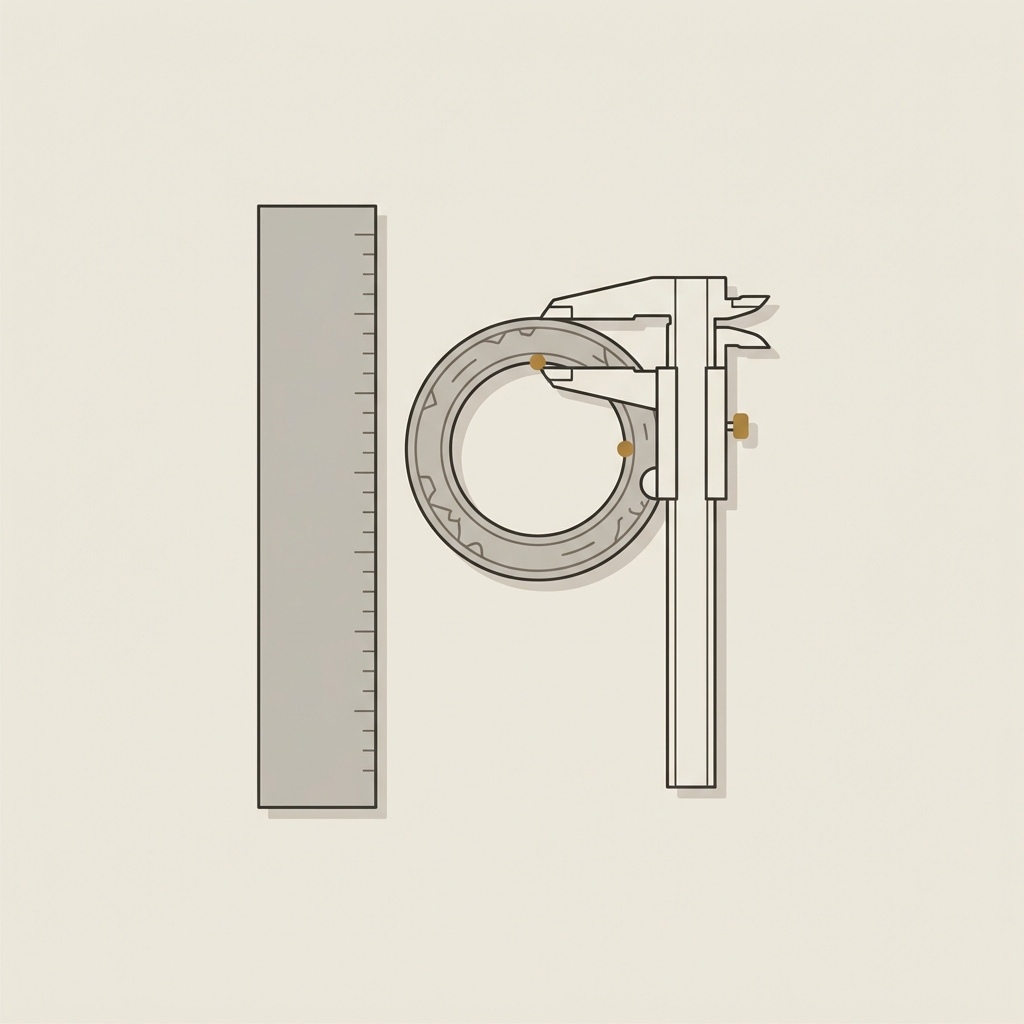
Measure inner diameter in millimetres whenever possible; curators and dealers advise using this measurement as the primary sizing reference rather than relying on photographs or estimated modern sizes. Inner-diameter measurements can be compared to modern ring-size charts to estimate a contemporary fit British Museum guidance on ring sizing.
To test fit safely, request the inner diameter and, if possible, measurements of band thickness. If a ring falls between sizes, consider short trial wear and avoid forcing resizing; altering ancient metal is complex and often inadvisable without expert conservation oversight British Museum sizing and care notes.
Simple steps to measure inner diameter and check fit for an ancient ring
Use gentle handling when measuring
When a ring has been reshaped or repaired historically, inner-diameter measurements may not reflect original geometry; sellers should indicate if an inner band was reprofiled or if solder repairs altered size. Comparing a ring’s inner diameter to a reliably sized modern band you already own is a low-risk way to judge probable fit before committing to a purchase.
Measuring inner diameter and converting to modern sizes
Use a caliper or a printable measurement strip to measure the inner diameter, record the value in millimetres, and then convert to a modern chart to find your approximate size. Many museums and dealers prefer millimetres because it is precise and independent of the ring’s external appearance; photographs alone rarely convey the subtle differences that affect comfort British Museum measurement guidance.
If the ring is between sizes, resist the urge to have it resized immediately; resizing ancient metals can remove diagnostic surfaces or introduce stress. Instead, request a short trial period and ask the seller whether minor adjustments were part of the restoration, as that can influence the advisability and method of any future resizing.
Provenance, documentation and legal checks beginners must know
Provenance and documentation reduce legal and ethical risk when buying ancient rings online. Key elements include collection history, previous ownership notes, and any export paperwork or verification letters that the seller can supply. These items matter for establishing lawful ownership and for understanding whether objects left their country of origin in compliance with applicable rules Exporting or importing objects of cultural interest, GOV.UK, Department for Culture, Media and Sport.
Reporting schemes and finder-reporting services provide additional context for some finds and can be helpful for buyers who want to trace an object's modern collection history. Asking sellers for dated documentation and clear condition notes is standard practice and helps buyers make informed decisions about acquisition and care Portable Antiquities Scheme resources.
What good provenance documentation looks like
Good documentation typically lists prior owners, acquisition dates, collection references, and any laboratory or conservation reports. A seller who provides these documents, along with clear restoration notes and high-resolution photographs, helps a buyer evaluate the object with less uncertainty. When export paperwork is unclear, seek further clarification before purchase and consider consulting national guidance to understand potential restrictions Exporting or importing objects of cultural interest, GOV.UK, Department for Culture, Media and Sport.
Even with documentation, some questions about origin or excavation context remain unresolved; treating provenance as a risk-reduction tool rather than an absolute guarantee is the prudent approach. Sellers connected to reputable curatorial practices will usually welcome reasonable requests for further detail and for time-limited returns if fit or condition differs from the listing.
Reading condition and restoration notes: what to look for and what matters
Condition notes that list stabilisation, consolidation, solder repairs, or specific cleaning steps are more useful than vague statements. Conservators generally prefer minimal, reversible interventions and will document any stabilisation of corrosion or structural repairs; when such language appears in a listing, it helps set realistic care expectations for potential wearers metal conservation practices.
Visible signs to check in photographs include consistent patina, coherent edges at solder lines, and stable-looking surfaces without new bright metal patches that suggest overcleaning. Request close images of the inner band, shoulders, and any repaired joins to judge whether interventions have altered the ring’s fit or appearance.
Common restoration answers and how they affect appearance
Common interventions include stabilising corrosion on bronzes, soldering cracks in hoops, and consolidating loose bezels. Stabilisation should arrest active processes and is usually described in restoration notes; soldered joins may be visible under magnification and can affect comfort if not well finished. Overcleaning, in contrast, can remove patina and obscure diagnostic surface details that help date and contextualise a piece bronze treatment literature.
When a listing states that only minimal cleaning was applied, that often indicates an effort to preserve original surfaces. Ask for detail on cleaning agents or methods if you are concerned, since abrasive or chemical cleaning can have irreversible effects on an artifact's surface.
Common mistakes and pitfalls beginners make when buying ancient Roman rings
A frequent mistake is trusting low-resolution images or brief descriptions that omit inner-diameter measurements and condition notes. Always request high-resolution photos, precise measurements, and explicit restoration records before you commit to purchase; these steps reduce the risk of surprises on arrival British Museum guidance on assessing jewellery.
Another common pitfall is assuming that an unrestored bronze is safe to wear; without professional stabilisation, some bronzes continue to corrode and may transfer corrosion products to skin or clothing. Beginners should request specific condition language about active corrosion before considering regular wear conservation overview on bronze disease.
Misreading photos and assuming fit or condition
Photos can be deceptive: lighting, contrast, and post-processing can hide surface loss or exaggerate shine. Check for consistent shadows, surface texture, and scale references, and ask for additional images of the inner band and the ring held next to a modern, well-known object for size context.
Finally, treating ancient rings as disposable fashion items is a mistake; these objects generally benefit from considered use, appropriate storage, and attention to conservation needs rather than impulsive frequent wear.
Practical buyer scenarios: choosing a first ancient Roman ring
Scenario 1, occasional wearer: If you want a ring for occasional wear, prioritise silver or gold described as minimally cleaned and structurally sound. Request inner-diameter measurements and close photographs of the inner band and bezel; those details help ensure comfort and reduce the chance of unexpected repairs after purchase Met Museum notes on condition.
Scenario 2, frequent wearer: If you plan to wear a ring daily, a modern casting or a well-stabilised original with documented repairs is often the safer choice. Replicas are designed for modern wear and typically require less care, while stabilised originals should come with explicit restoration notes describing what was done to make them suitable for regular use conservation guidance on stabilisation.
Scenario 3, collector or display focus: If your priority is provenance and study rather than daily wear, accept pieces described as conservation-only with the expectation that handling should be minimal and that the piece may show significant structural fragility. Detailed provenance and documentation are most valuable for this approach Research report: export licensing and provenance, GOV.UK, Department for Culture, Media and Sport (DCMS).
Deciding if an ancient Roman ring is right for you - short checklist and next steps
Checklist: prefer gold or silver for occasional wear unless a bronze is documented as stabilised; always request inner-diameter measurements in millimetres; ask for high-resolution photos of the inner band, shoulders, and bezel; and insist on clear restoration notes and provenance information before purchase metal care overview. You can also browse our rings collection.
Next steps: ask the seller for inner-diameter measurements, request a short trial wear window if possible, and verify any export paperwork or collection history that accompanies the listing. If provenance is unclear, consult national guidance or reporting schemes as part of your due diligence Portable Antiquities Scheme resources. For direct assistance, contact us.
Final thought: With careful selection, attention to condition and documentation, and realistic expectations about wear, beginners can responsibly collect and occasionally wear ancient Roman rings as wearable history.
Ask the seller for the inner diameter in millimetres and compare that to a modern ring you own; a caliper or printable diameter strip is a low-risk way to estimate fit.
Unrestored bronzes can show active corrosion and are generally not recommended for daily wear unless a conservator has stabilised them and the seller documents that work.
Request collection history, previous ownership notes, any export or verification paperwork, and detailed restoration notes to reduce legal and ethical uncertainty.
More from Aurora Antiqua
References
- Emilie Riha, Der römische Schmuck aus Augst und Kaiseraugst (Roman jewelry from Augst and Kaiseraugst), Römermuseum Augst
- Internet Archaeol. 40. Atkinson and Preston. Objects of personal adornment, Internet Archaeology, Council
- Exporting or importing objects of cultural interest, GOV.UK, Department for Culture, Media and Sport
- Research report: export licensing and provenance, GOV.UK, Department for Culture, Media and Sport (DCMS)
- Sustainable Conservation of Bronze, J. Paul Getty Museum and Getty Conservation Institute, Los Angeles
- Protecting silver cultural heritage objects with atomic layer deposited, Heritage Science (Springer Nature)
- Bronze disease, Conservation Wiki, AIC Wiki, American Institute for Conservation
- Archaeological materials, Icon, The Institute of Conservation (UK)
- ICCROM
- The influence of pesticides on the corrosion of a Roman bowl excavated in Kent, Nature
Browse the Aurora Antiqua catalogue
Every piece is independently identified, dated, and documented. Shipped insured from Belgium with DHL Express, free within the EU.
From Aurora Antiqua
We sell authenticated ancient & medieval pieces, each individually examined before listing and backed by a Lifetime Authenticity Guarantee. One of a kind, sold once, never reproduced.
Browse Ancient Roman Rings →