


Looking for the real thing? Browse our Ancient Roman ring collection, each piece one of one, individually authenticated, with documented provenance. For the background, see the guide to Roman jewelry.
Quick answer: what 69 looks like in Roman numerals
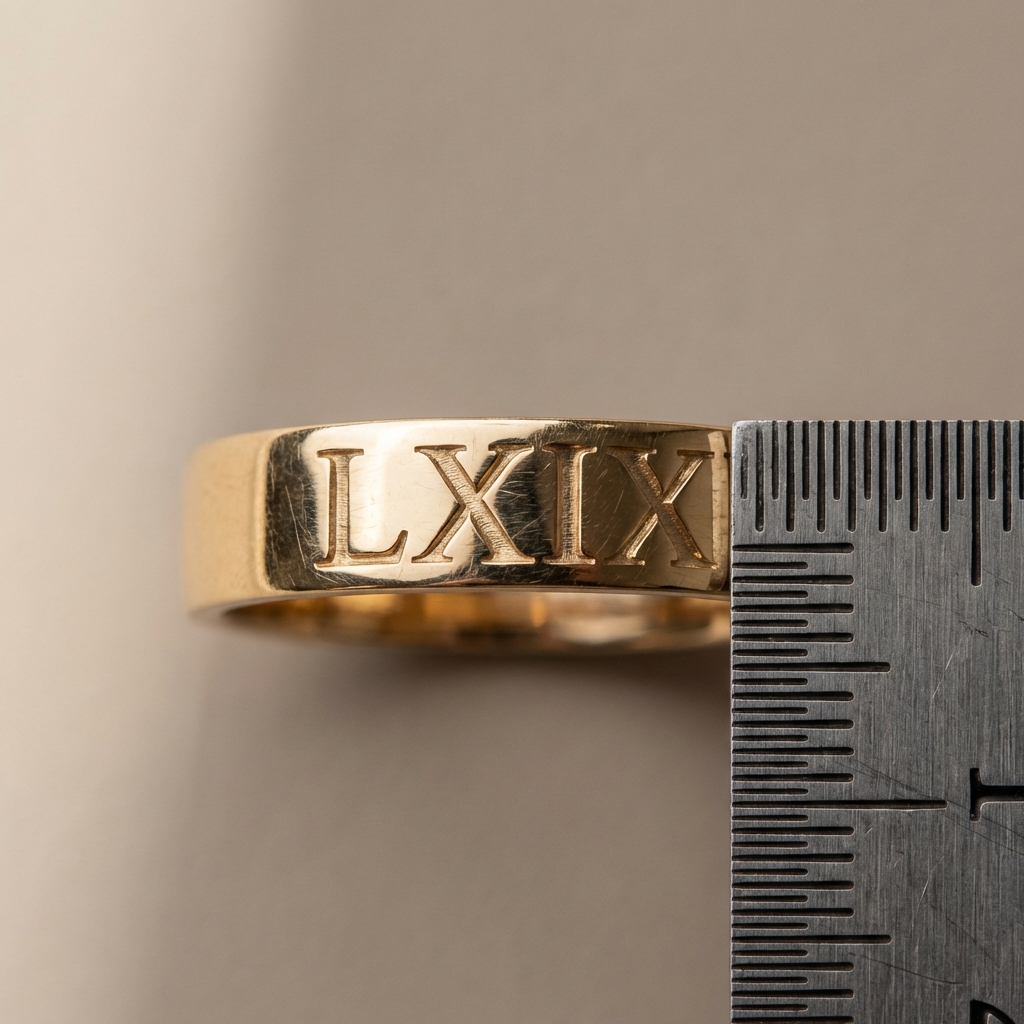
One-line answer: 69 is written LXIX, read as L = 50, X = 10, and IX = 9; the IX element uses the subtractive convention to show nine in one compact form, and this reading is the standard taught in reference works and used for inscriptions on small objects such as rings.
See behind the scenes on @auroraantiqua for condition-note examples
If you want a short checklist for photo and provenance checks, see the free quick checklist referenced below to compare listings and condition notes.
Why this matters on a gold roman numeral ring: when LXIX appears on a bezel or inside a hoop it is usually meant as the numeral sequence LXIX and not as separate motifs, so recognizing the canonical reading helps avoid misinterpretation when evaluating an item description or close-up photograph.
Encyclopaedia Britannica provides the standard rules for Roman numerals that explain this notation.
Brief context: how Roman numerals work and why LXIX is canonical
Roman numerals use a small set of capital symbols with fixed values that combine additively and, in defined cases, subtractively; the key symbols relevant to LXIX are I for 1, V for 5, X for 10 and L for 50, and they form larger numbers by grouping these symbols in expected orders.
Reference and epigraphic sources outline how the symbols combine: additive combinations place larger values before smaller ones to add, while specific subtractive pairs place a smaller symbol before a larger one to subtract; the IX pair is a standard subtractive form for nine and is widely used in inscriptions and teaching resources.
For practical reference on how numerals are recorded in inscriptions and texts consult standard materials on Roman numerals and epigraphy which summarise the accepted forms and conventions used by scholars.
Perseus Digital Library overview summarises how the basic symbols and their combinations are presented for learners and researchers.

How LXIX is constructed on a gold roman numeral ring
Read simply as L + X + IX, the sequence LXIX places the largest value first, adds ten, then uses the subtractive IX to complete sixty nine; on a small engraved surface the order of letters and their relative sizes communicate the intended numeric reading.
On an actual ring bezel or inside a hoop a maker will usually inscribe the letters left to right in a compact group so that L, X and IX remain distinct even when space is limited; spacing and letter depth are practical signals to help read the sequence on small objects.
Quick magnification and scale checks for ring inscriptions
Use neutral lighting and include scale
When interpreting an inscription on a gold roman numeral ring it helps to imagine the engraving as a short linear group rather than separate symbols spaced far apart, because jewelers and ancient makers aimed for legibility in small spaces and followed conventional orderings.
Perseus Digital Library epigraphy reference explains how epigraphers read grouped numeral sequences in inscriptions.
The subtractive principle and common inscription patterns
The subtractive principle places a smaller numeral before a larger one to indicate subtraction, with IX serving as the common form for nine; that convention is part of the canonical rules and appears frequently in recorded inscriptions and engraved objects.
Other common subtractive pairs include IV for four and XL for forty, and these patterns are part of the same set of rules that make LXIX the conventional representation of 69 rather than an alternative arrangement.
Because real-world inscriptions can show variant spacing and occasional local epigraphic habits, epigraphic references and standard numeral tables help confirm when a subtractive pair is intended and when a sequence might reflect wear or stylisation instead.
Encyclopaedia Britannica describes the subtractive pairs and their conventional uses in inscriptions.
How Roman numerals typically appear on rings: forms, placement and style
On rings, numerals generally appear in capital-letter forms, incised on a bezel or punched into the metal of a hoop, which yields compact, easily legible characters suited to the small scale of wearable objects.
Historical production methods shaped letter form and spacing: incised letters cut with a burin will differ visually from punched letters made with dies, and both differ from modern laser marks; those differences are useful to conservators and careful buyers when assessing photographs.
Sixty nine is written LXIX; verify it by requesting high-resolution macro images with scale, provenance and restoration notes, and consult a conservator for microscopic tool-mark or metal analysis if dating remains uncertain.
When you look at listing photographs, compare the letter proportions and the surrounding bezel or hoop finish to the guidance here to decide whether the numerals look hand incised, punched, or recently re-cut.
V&A conservation guidance outlines how marks and inscriptions typically appear on rings and what those appearances can imply about production methods.
Engraving and marking techniques: hand, punch, die and laser
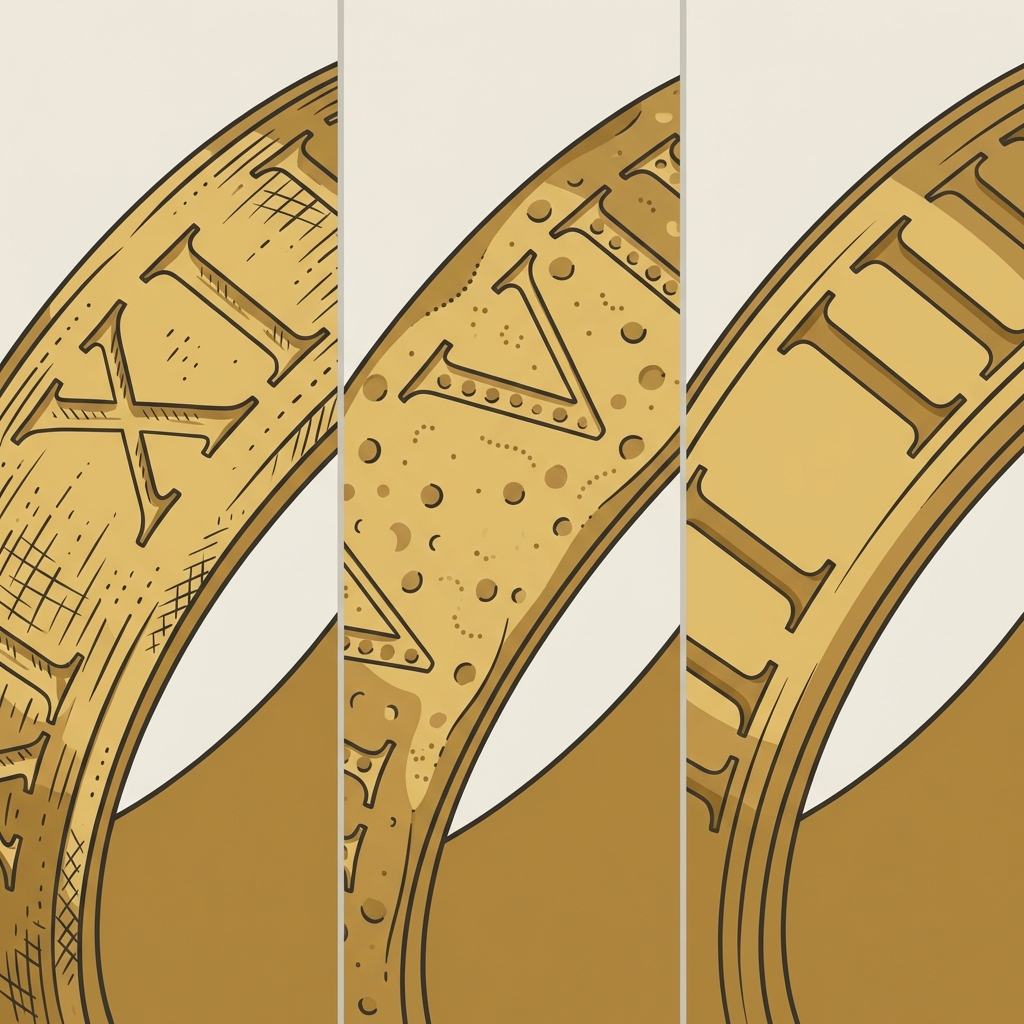
Three principal methods commonly encountered are hand engraving with a graver or burin, punch or die stamping which transfers letter forms, and modern laser engraving; each leaves characteristic surface signatures that can point to historic or modern work.
Hand engraving tends to show slight irregularities in line depth and stroke direction, punch or die work usually produces repeatable letter shapes and edge profiles, and laser engraving often yields a sharper, sometimes heat affected margin that looks different in macro photographs.
Conservators and gemmological laboratories examine these tool marks under magnification to assess whether engraving is consistent with historical practices or indicative of later recutting or modern treatment, but photographic evidence can often point a buyer in the right direction before formal testing.
GIA guidance on engraving and marking summarises typical signatures left by different engraving and marking techniques.
Practical inspection checklist for a gold roman numeral ring
Photo and listing checks: ask for high-resolution, well lit close-ups of the bezel, the hoop interior and the engraving area, include a millimetre scale in at least one view, and request macro images from multiple angles so letter profiles and tool marks are visible.
Documentation to request before purchase: request provenance or collection-history documents, any verification letters from prior owners or specialists, and explicit condition notes and restoration notes that explain what was stabilised or repaired.
Photo and listings checks: ask for high-resolution, well lit close-ups of the bezel, the hoop interior and the engraving area, include a millimetre scale in at least one view, and request macro images from multiple angles so letter profiles and tool marks are visible.

Look specifically for close-up images that show letter depth, the stroke terminations and surrounding patina, and ask the seller to indicate whether any modern re-cutting or laser work is known; if a seller cannot answer these basic questions, treat that as a gap to follow up on.
When documentation is incomplete or dating is unclear, plan to seek a conservator opinion or laboratory tests for metal composition and microscopic tool-mark analysis before making a final decision.
V&A guidance on marks and inscriptions highlights what close-up photographs and condition notes should reveal for small engraved objects.
Provenance, legal and ethical checks for buying engraved antiquities
Provenance and collection history are central: helpful documentation includes prior ownership notes, acquisition dates, and any verification letters or sale catalog entries that trace the object in time and help establish legitimate ownership chains.
International frameworks and museum practice recommend caution: check whether export or ownership documentation exists and be wary of pieces without verifiable records, because legal and ethical obligations around antiquities remain important when acquiring engraved or inscribed jewelry.
Buyers should ask sellers for clear statements about how an item was obtained and whether export paperwork or legal transfer documents exist, and they should consider declining purchases that lack verifiable evidence of lawful ownership transfer.
UNESCO convention guidance outlines the legal and ethical frameworks buyers should consider when acquiring antiquities.
When dating an engraved ring is uncertain: limits and next steps
Factors that complicate dating include iconography that may be reused across eras, bezel and mount construction alterations, partial repairs, and later re-cutting that can alter letter shapes or depth and obscure original tool signatures.
Certain questions require specialist methods: microscopic tool-mark study can show whether letter edges match historical tool use, and laboratory metal analysis can clarify alloy composition or surface treatments that affect dating and attribution.
Commissioning a conservator or a qualified laboratory report is the appropriate next step when photographic inspection and documentation leave key questions unresolved, and the report should explicitly address method, scope and any limitations.
V&A conservation notes explain which features usually need specialist analysis and what those analyses can resolve.
Typical mistakes and pitfalls when interpreting engraved numerals
One common mistake is misreading worn or re-cut numerals as original forms; corrosion, abrasion and later sharpening of letters can make an original shape look different and lead to incorrect conclusions about date or authenticity.
Another hazard is assuming a modern-looking finish automatically implies a recent origin; some historic pieces were reworked in period restorations and modern surface appearance alone is not definitive without microscopic examination.
To avoid these errors, rely on documented condition notes, compare multiple images under different lighting, and when in doubt seek a conservator who can inspect tool marks in person or provide a microscopic report.
GIA on identification of engraving marks outlines pitfalls and how specialists distinguish methods.
Practical examples: reading photos and listing descriptions
Good listing photos should include a full-view of the ring, macro details of the engraving with scale, side profiles of the bezel and hoop, and images showing patina across the surrounding metal to contextualise letter depth and edges.
When a listing describes provenance, check what the seller means by terms such as collection history or verification letter; ask for scanned copies or clearer descriptions, and request explicit restoration notes if any work was carried out.
Sample phrasing to request from a seller: ask for macro photos at 10x magnification, a dated provenance statement, and a short restoration note that lists any stabilisation, re-cutting or parts replaced so you can judge whether the LXIX engraving is original or a later intervention.
V&A guidance provides practical examples of what a useful photographic set and documentation package should contain.
Short walkthrough: hypothetical gold roman numeral ring listing
Hypothetical listing snippet: "Roman gold ring, bezel incised LXIX, wear consistent with age, provenance: private collection sale 1998, condition: small restoration to hoop, see images." From this snippet a buyer can glean the inscription and a basic provenance note but will need more detail on restoration and macro views of the engraving.
Follow-up questions to ask the seller: request close-up macro pictures of the LXIX engraving with a millimetre scale, a copy of the 1998 sale or provenance document, and a restoration note describing what was done to the hoop and whether the engraving was affected.
When to pause: if the seller cannot provide clear macro photographs, refuses to describe restoration work, or has no provenance beyond an unverified verbal claim, consider pausing and seeking a conservator opinion or declining the purchase until the documentation gap is resolved.
UNESCO guidance supports the position that buyers should seek verifiable ownership and export documentation before accepting provenance statements at face value.
Caring for and documenting a gold roman numeral ring after purchase
Simple preservation steps include storing the ring in a stable, low humidity environment, avoiding abrasive cleaning, and handling it with clean gloves to limit oils from skin transferring to the metal and obscuring tool-mark detail.
Create a documentation file that includes high-resolution images from multiple angles, the seller s provenance statements, any restoration notes, and any conservator or laboratory reports so future owners and experts can trace the ring s documented history.
For pieces lacking thorough provenance, consider commissioning an independent report that records metal composition and microscopic tool-mark analysis; that report becomes part of the permanent documentation file and supports informed stewardship.
V&A conservation guidance gives practical advice on documenting and caring for metalwork and inscribed rings.
Conclusion: reading LXIX on a ring and buying responsibly
Core takeaway: 69 is LXIX, formed from L + X + IX with the subtractive IX for nine, and this canonical reading is what scholars and collectors will expect when the letters appear on an engraved ring.
Primary buyer protections are straightforward: insist on clear provenance and collection-history documentation, request detailed condition and restoration notes, and look for diagnostic tool marks that match historic techniques or flag modern recutting.
When dating or attribution remains uncertain, seek specialist input from conservators or laboratories rather than relying on surface appearance alone, and keep legal and ethical considerations in mind when assessing provenance and export documentation.
Encyclopaedia Britannica and museum conservation guidance are useful starting points when confirming numeral readings and planning further specialist checks.
Sixty nine is written LXIX, combining L for 50, X for 10 and IX for 9 using the subtractive convention.
Tool marks can indicate likely technique but definitive dating usually needs a conservator or laboratory examination to confirm whether engraving is historic or recent.
Ask for high-resolution close-ups with scale, provenance or collection-history documents, and explicit condition and restoration notes describing any repairs or re-cutting.
More from Aurora Antiqua
References
- Ring, Victoria and Albert Museum, London
- Signet Ring, Victoria and Albert Museum, London
- Catalogue of the Engraved Gems and Finger-Rings in the Ashmolean Museum, II: Roman, BAR Publishing, via Fulcrum
- Philip Kiernan and Klaus-Peter Henz, Rings from the Forbidden Forest, Cambridge University Press
- A Corpus of Roman Engraved Gemstones from British Sites, University of Michigan Press / BAR Publishing
- SF-A79B96, Roman copper alloy and glass finger-ring from Norfolk, Portable Antiquities Scheme, British Museum
- Stolen Works of Art Database, INTERPOL
- Roman numerals, Wikipedia
- Fighting the illicit trafficking of cultural property, UNESCO