


Looking for the real thing? Browse authenticated Ancient Roman rings, each piece one of one, individually authenticated, with documented provenance. For the background, see the guide to Roman jewelry.
What 'black onyx' and an ancient ring are: definition and context
Black onyx is a banded variety of chalcedony, described in modern gemology by its layering and testable optical properties, and a reputable gem reference explains how layering and refractive tests are used to identify the material GIA onyx entry.
In the context of an ancient ring, the term ancient ring typically refers to an object with a period consistent mounting, wear consistent with age, and some form of archaeological or collection history; these factors shape how we read the piece, its function, and what wearing it might have signalled to contemporaries.
See close views and provenance notes on @auroraantiqua
Explore curated listings and editorial resources to compare photos, condition notes, and documentation before considering a purchase.
The distinction between the stone itself and the setting matters: an onyx intaglio set into a Roman hoop differs materially from a modern re-set onyx in modern settings when interpreting original use or symbolism.
Modern symbolic descriptions, for example strength or grounding, are widespread in contemporary gem literature but often reflect later cultural overlays rather than direct ancient testimony; treat such summaries as modern interpretation rather than proof of historical meaning The Gem Society on onyx meaning.
How Romans used dark stones and what wearers might have signalled
Museum catalogues and object studies document frequent use of dark gemstones, including banded chalcedony varieties, for intaglio rings across the Roman world, and these sources show the material appeared in many social contexts rather than exclusively in military circles Metropolitan Museum overview of Roman rings, and regional studies such as an investigation into signet rings in Roman Britain Making Your Mark in Britannia.
Rings bearing martial motifs have sometimes been associated with soldiers, but the presence of military iconography alone does not prove wearer identity; context such as findspot, documented provenance, and association with equipment or graves strengthens an interpretation but still requires caution.
Curatorial interpretations also note that dark stones could carry protective or funerary associations in certain contexts, so a black onyx ring discovered in a burial or with funerary inscriptions might reasonably be read in light of protective or memorial meanings British Museum Roman intaglio entry.
Attribution to a soldier is most persuasive when iconography, find context, and mounting all point in the same direction, for example a martial intaglio motif combined with a find context linked to military equipment or a documented grave of a soldier.
How specialists identify onyx today: tests and non destructive methods
For collectors, non destructive gem tests are the starting point for assessing a stone described as onyx; gem labs rely on observable layering under magnification and consistent refractive index measurements to distinguish onyx from other chalcedony varieties GIA onyx entry, and applied identification research discusses similar approaches in engraved gem studies The Original RMO Engraved Gem Collection.
Simple visual checks that can be done from high resolution photos include looking for parallel banding or layering at the stone profile and asking for profile shots that show the stone edge and bezel, because layering tends to be visible there.
Historically, dark intaglio stones could carry protective or funerary associations in some contexts, and martial imagery can suggest a military connection when supported by find context and provenance; for modern wearers the ring combines material heritage, personal meaning, and the interpretive limits set by documentation.
When a commercial listing includes a laboratory or third party report, expect it to summarise the methods used and the observed features, such as magnification notes and refractive index ranges, and these reports materially increase confidence if they are from recognised analytical facilities A. M. Caggiani u. a., Corroborating the autoptic identification, Wiley, Journal of Raman Spectroscopy, and case studies of Raman analysis are available such as a GIA report on historic objects GIA Raman investigations.
Bear in mind the limits of surface inspection: photos and seller statements alone cannot substitute for formal non destructive testing if the attribution is central to the purchase decision.
How to decide if a black onyx ring is plausibly Roman or a 'soldier' ring
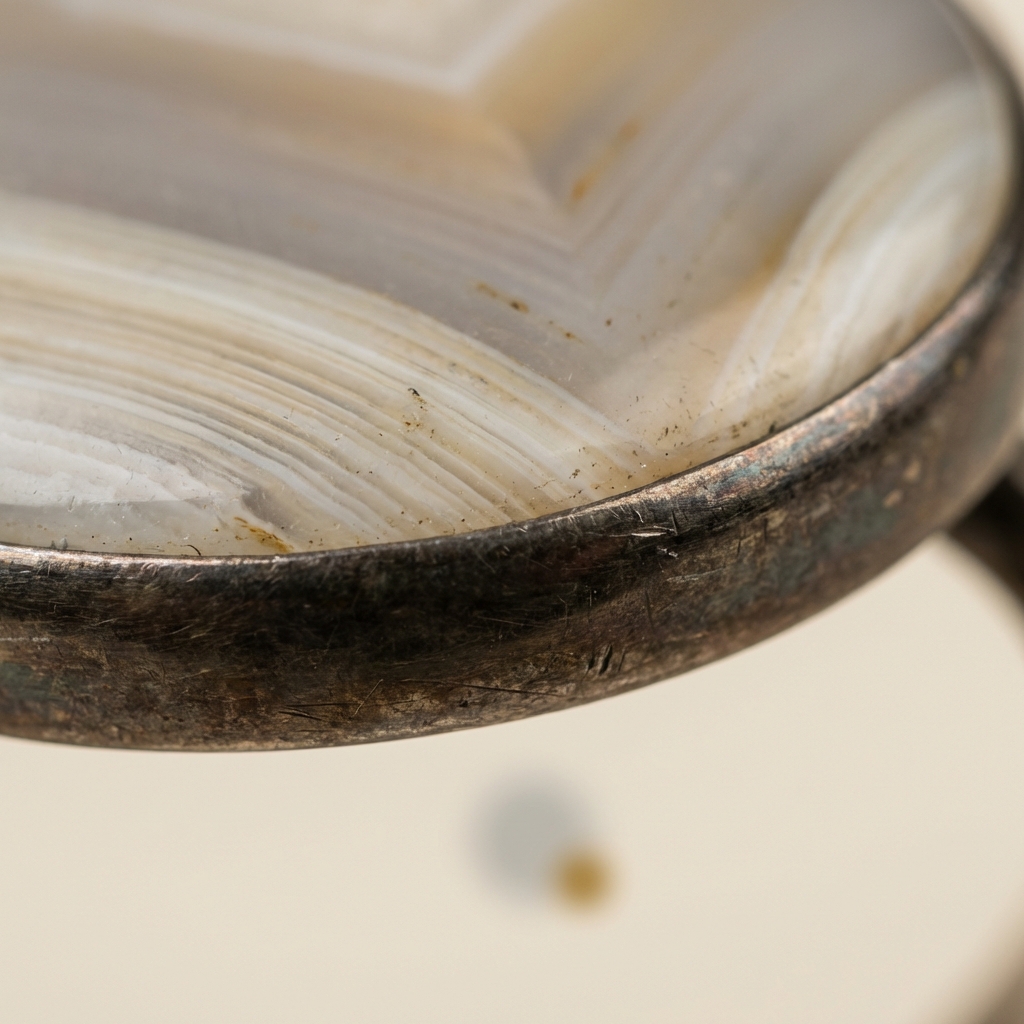
Deciding whether a black onyx ring is plausibly Roman requires weighing multiple criteria together rather than relying on a single feature; concrete decision criteria that together increase confidence include period consistent mounting, iconography consistent with Roman motifs, documented provenance or collection history, and supportive non destructive testing such as refractive index and magnification notes Metropolitan Museum overview of Roman rings, and you can compare similar listings in our Ancient Roman Rings collection.
Period consistent mounting and wear means the hoop profile, bezel construction, soldering style, and wear patterns align with known Roman typologies and do not display modern factory marks or modern soldering techniques that would contradict a Roman origin.
Iconography can strengthen an argument for a military wearer when the intaglio motif is martial and matches imagery known from Roman military contexts, but iconography by itself is a weak link unless corroborated by find context or provenance that ties the object to a military setting British Museum Roman intaglio entry.
Provenance and collection history are powerful when they provide continuous ownership records, previous cataloguing in a trusted collection, or findspot documentation; a standalone seller claim without supporting paperwork is less persuasive, while a named prior collection or catalog entry increases interpretive confidence.
Laboratory reports that summarise non destructive methods, including magnification observations and refractive index results, add another independent layer of evidence and should be requested where possible to support the material identification A. M. Caggiani u. a., Corroborating the autoptic identification, Wiley, Journal of Raman Spectroscopy.
Condition, restoration notes, and what they change about interpretation
Clear condition notes and professional conservation reports materially affect how a ring is read, because restorations such as resizing or re-setting can obscure original wear and soldering details that are used for dating and attribution Archaeological materials, Icon, The Institute of Conservation (UK).
Common restorations that can mislead include resized hoops where modern metal was added and re-set stones where a modern bezel or adhesive was used; such interventions can create the appearance of a more intact object and mask age consistent wear.

Condition statements should, ideally, note whether stabilisation or repairs were carried out, describe the materials used in any restoration, and include photographs of repair areas; such transparency makes it possible to separate original features from later interventions.
When a listing lacks explicit restoration notes or before and after images, ask for them; unresolved restoration questions create doubt about whether visible wear is original or the result of later repair.
Common mistakes and red flags when buying a black onyx Roman ring online
A first common mistake is overreliance on modern esoteric meanings as substitute for historical or material evidence; modern summaries are useful for personal significance but they do not replace gem tests, provenance, or condition reports The Gem Society on onyx meaning.
Red flags to watch for include no stated provenance or collection history, vagueness about restoration, photos that hide the bezel or hoop angles, and absolute claims about origin without supporting documentation; any of these are reason to pause.
Practical next steps when you see red flags are simple: request high resolution images from multiple angles, ask for profile photos that show the stone edge, request any third party lab or conservation reports, and seek explicit restoration histories that name work done and the conservator if available About us, International Association of Dealers in Ancient Art.
Practical examples and reading real listings: step by step
Start by scanning the listing photos: prioritize clear images of the bezel edge, hoop profile, and any hallmarks or solder lines that indicate past resizing or repair; a usable listing will show the intaglio face and the stone profile in close up. Compare with images in our rings collection.
Next, check the description for phrases such as described as, appears to be, or attributed to; these phrases can be honest ways sellers flag uncertainty, and they should prompt follow up questions rather than immediate rejection.
Quick listing evaluation checklist
Copy and use when you examine listings
Sample questions to send a seller or cataloguer include: Can you provide profile shots showing the stone edge and bezel? Do you have any third party lab or non destructive testing reports? Is there a documented collection history or prior catalog entry? Were any restorations done, and if so can you describe materials and show images of repair areas? Also see our Q&A on whether Roman soldiers wore rings Did Roman soldiers wear rings.
Interpreting common seller language: when a seller writes described as onyx, ask which tests support that description; when they write appears to be, treat it as a prompt to request magnification photos or a lab note rather than as a conclusive identification A. M. Caggiani u. a., Corroborating the autoptic identification, Wiley, Journal of Raman Spectroscopy.
Conclusion: what wearing a black onyx Roman soldier ring can mean today
Wearing a black onyx Roman soldier ring today can mean several things: as wearable history it can connect the wearer to ancient materials and motifs, and where documentation supports it, the ring can reasonably be read in light of Roman practical or symbolic uses such as protective or funerary associations documented by curators British Museum Roman intaglio entry.
For buyers, the checklist remains consistent: clear photos including profiles, detailed condition and restoration notes, provenance or collection history, and non destructive testing or lab summaries when possible; together these reduce uncertainty and help separate historical meaning from modern interpretation Research report: export licensing and provenance, GOV.UK, Department for Culture, Media and Sport (DCMS).
Approach such rings as one of a kind artifacts that carry layered meanings: material, motif, and find history together shape historical readings, while personal or modern symbolic meanings add another dimension for the modern wearer.
Ask for profile photos that show parallel layering and request non destructive gem tests or a lab summary noting magnification and refractive index; these features are commonly used to identify onyx.
No; martial imagery strengthens a soldier association but is not definitive without supporting find context, provenance, and period consistent mounting.
Request high resolution photos, explicit condition and restoration notes, any collection history or provenance documentation, and any third party non destructive testing reports.
More from Aurora Antiqua
References
- The Gemstone Book, CIBJO Blue Book, Coloured Stone Commission, CIBJO, The World Jewellery Confederation
- Chart of Commercially Available Gem Treatments (Gems & Gemology, Winter 2002), Gemological Institute of America
- An Introduction to Gem Treatments, Gemological Institute of America (GIA)
- Quartz, Handbook of Mineralogy, Mineral Data Publishing / Mineralogical Society of America, USA
- Fund des Monats August 2019 (Find of the Month), Landesamt für Denkmalpflege und Archäologie Sachsen-Anhalt
- A. M. Caggiani u. a., Corroborating the autoptic identification, Wiley, Journal of Raman Spectroscopy
- Archaeological materials, Icon, The Institute of Conservation (UK)
- About us, International Association of Dealers in Ancient Art
- Research report: export licensing and provenance, GOV.UK, Department for Culture, Media and Sport (DCMS)
- International Gem Society, gemsociety.org