


Looking for the real thing? Browse genuine Roman rings for sale, each piece one of one, individually authenticated, with documented provenance. For the background, see the guide to Roman jewelry.
Why study Roman rings: what this guide covers
Collectors and curious readers often ask what to look for when a listing describes a roman silver ring. This guide focuses on identification cues, typology, and practical documentation steps that can help you judge confidence without promising certainty.
The overview and examples here are based on patterns found in major museum catalogues and collection studies, which identify recurring materials and formal groups across the imperial period; these patterns are generalisations and can vary by region and date Metropolitan Museum overview on Roman jewellery.
Readers will find short signposts for visual identification, a curator's checklist for listings, and cautious guidance on when to ask for conservation reports or lab analysis. The aim is to equip buyers and enthusiasts to make informed questions and requests when evaluating an ancient ring.
What is a roman silver ring? Materials, function and historical context
In many collections the phrase roman silver ring describes a hoop and bezel made primarily in silver or silver alloy, often alongside gold and copper-alloy examples; metal choice can reflect social status and regional availability British Museum collection highlights.
Functionally, rings served multiple roles in the Roman world: signets or seals for making impressions, amuletic or symbolic jewelry, and simple personal ornaments; iconography on intaglios and wear patterns on the bezel often suggest which role a ring played Signet Rings and Identity in the Roman World (further reading).
Follow @auroraantiqua for behind-the-scenes documentation
For practical use, consider saving a short checklist of photos and measurements to request from sellers when a listing names a roman silver ring.
Describing a piece as a roman silver ring should therefore be conditional: the label is useful as a starting point but should be tied to visible patina, consistent wear, and any available documentation or conservation notes before certainty is assumed Museum conservation bulletin on materials and techniques.
Three common Roman ring types and what to look for
Simple bands
Simple bands are among the most frequent ring forms in collections; they range from plain circular hoops to slightly flattened or tapered sections and were often worn as everyday jewelry or as modest tokens Metropolitan Museum overview on Roman jewellery. For regional UK finds, see an example in the V&A collection V&A ring entry.

When assessing a plain band, look for consistent surface wear across the hoop and a patina that matches the metal throughout; inconsistent joins or modern solder marks can indicate later repairs or alteration.
Intaglio and signet rings
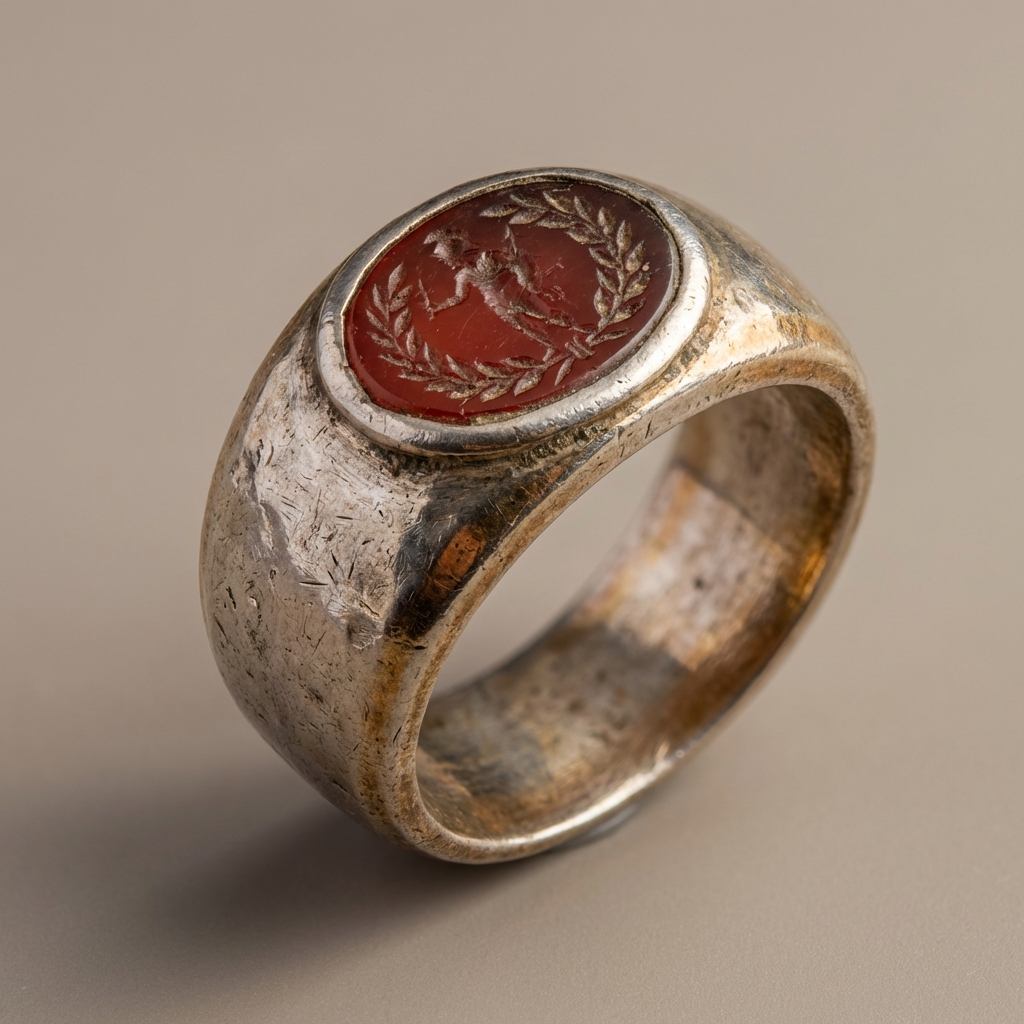
Intaglio or signet rings carry an engraved gemstone set into a bezel and were commonly used to impress a seal into wax or clay; the design, depth of cutting, and localized wear on the stone are key signals to study Met catalogue on Roman intaglios (Getty catalogue).
Practical cues when viewing listings include asking for close-ups of the intaglio face at oblique angles to show tool marks and wear, and measurements of the gem and bezel so you can compare proportions with museum examples.
Bezel-mounted gem and cameo rings
Bezel-mounted gem or cameo rings use a raised setting to hold a carved stone or gem and often show a wider variety of bezel shapes, commonly oval, teardrop, or rectangular; bezel shape and hoop profile are among the features scholars use to suggest broad date ranges Emilie Riha, Der römische Schmuck aus Augst und Kaiseraugst (Roman jewelry from Augst and Kaiseraugst), Römermuseum Augst.
When comparing examples, note whether the bezel sits flush with the hoop or is raised, and whether the hoop cross-section is round, flat, or tapered; those differences are useful typological cues but are rarely conclusive on their own.
Materials and techniques: how Roman rings were made
Casting and hoop construction
Hoops were commonly formed by casting and then finishing by filing and smoothing; the basic evidence of casting plus later hand finishing is regularly reported in conservation summaries and object catalogues Museum conservation bulletin on materials and techniques.
Look for consistent tool marks where metal was filed or burnished, and for a hoop section that matches the expected style for the period being suggested; sudden differences in surface texture near a join are a red flag.
Combine typological cues such as bezel shape and hoop profile with consistent patina and wear, then corroborate with condition notes, restoration history and any provenance or conservation reports; where uncertainty persists, request lab analysis or a conservator's assessment.
Intaglio cutting, granulation and filigree
Intaglio cutting on hardstones was done by hand and often leaves microscopic tool traces and a characteristic cutting style; higher-status gold rings sometimes show granulation or filigree work, features that are diagnostic but can require close inspection to confirm Metropolitan Museum overview on Roman jewellery.
If a listing claims fine gold work or granulation, request clear macro photos and, if possible, conservator notes describing whether the decoration is original or a later repair; such techniques are helpful clues but not definitive proof of date or origin Museum conservation bulletin on materials and techniques.
When lab analysis is needed
Some technical questions cannot be resolved by photos alone; microscopy, compositional analysis, or a conservator's report may be needed to confirm whether a technique or metal alloy is ancient or the result of modern intervention Museum conservation bulletin on materials and techniques.
Dating and attribution: bezel shapes, hoop profiles and patina cues
Curators commonly use bezel shape and hoop profile as typological indicators to suggest broad date ranges, for example contrasting early imperial proportions with late antique variants, but those readings remain indicative and should be combined with other evidence Bagues et anneaux à l'époque romaine en Gaule, Persée, Persee (CNRS, ENS de Lyon, Ministere francais).
Patina consistency and wear across the piece are central to attribution: a uniform ancient patina that extends into crevices and under the bezel increases confidence, while abrupt differences in surface finish or reenforced joins reduce it British Museum collection highlights.
When typology and patina leave questions, provenance, collection history, and lab or conservation reports should be used to raise or lower confidence in dating and attribution British Museum collection highlights.
A curator's checklist for identifying a roman silver ring
Start by requesting clear, high-resolution photos: front-on view, oblique lit view of any intaglio, side profile of the hoop, and detailed shots of any joins or repairs; these images form the basis of initial assessment British Museum collection highlights.

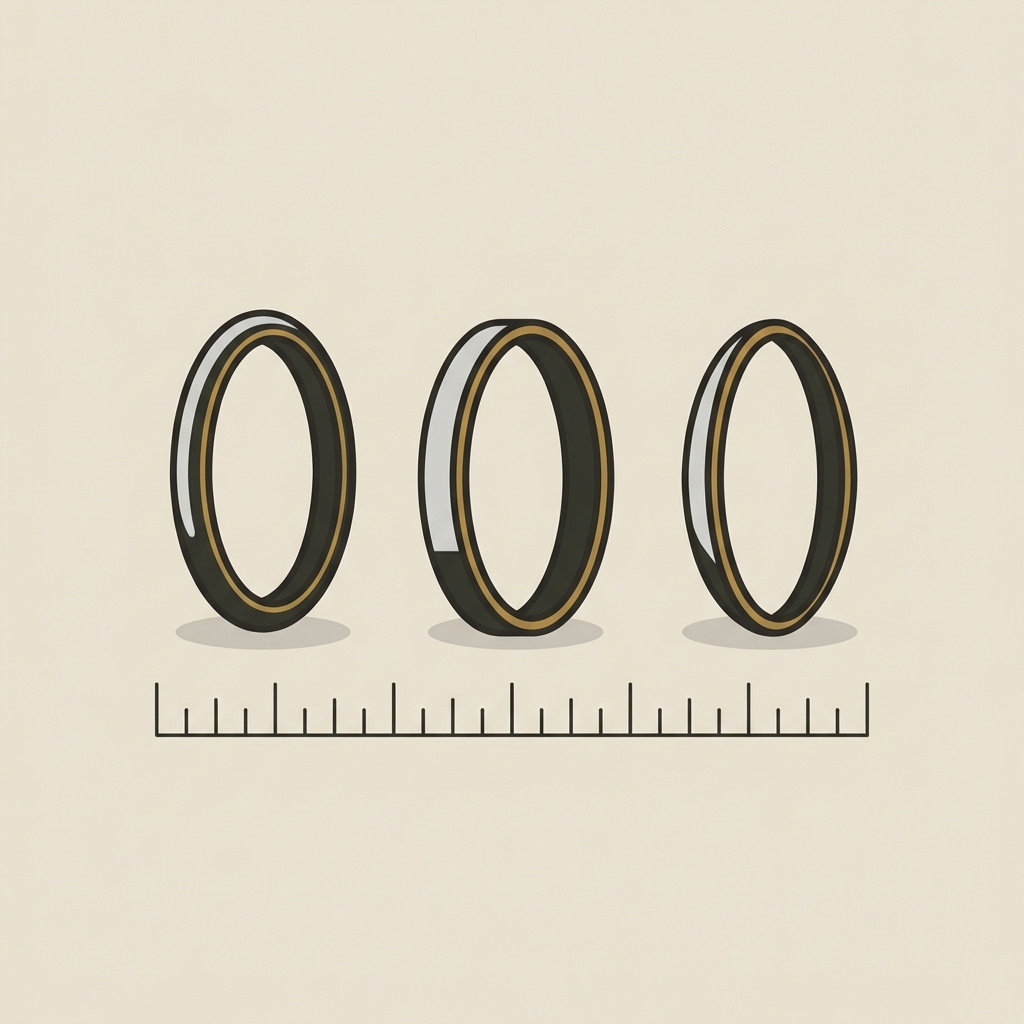
Record measurements: inner hoop diameter or ring size, bezel dimensions, and gem measurements in millimetres; compare these with catalogue examples when possible, and request scale in photos to verify measurements British Museum collection highlights.
Ask for explicit condition and restoration notes that state what was stabilised, repaired or left untouched; restoration and preservation notes help clarify whether observed surface features are original or the result of conservation Museum conservation bulletin on materials and techniques.
Seek provenance fields: collection history, prior ownership notes, any verification letters or lab reports; absence of provenance and technical documentation increases uncertainty and is an important factor in decision-making British Museum collection highlights.
Common mistakes, modern interventions and restoration pitfalls
Modern recutting of intaglios, added bezels, or recent solder repairs are common interventions that can obscure original tool marks and patina; conservators note these practices and advise caution when they are present Museum conservation bulletin on materials and techniques.
Restoration can alter surface patina and wear patterns so that outward appearance looks older or more uniform than the underlying metal; trustworthy listings will include restoration notes that describe what was done and why Conserve O Gram 10/2: Caring For Silver And Copper Alloy Objects, National Park Service, US Department.
Red flags include inconsistent patina across joining surfaces, mismatched metal joins, or listings that lack any provenance or technical reports; those signs lower confidence and merit further inquiry or independent testing British Museum collection highlights.
What to look for when buying: listings, documentation and condition notes
Trust listings that provide multiple high-resolution images, clear measurements, explicit restoration notes, and any collection history; these elements increase the ability to make an informed assessment British Museum collection highlights.
Ask sellers or curators specific questions: has the piece been X-rayed or microscopically examined, what conservation treatments were applied, and is there a documented collection history or previous lab report; each answer helps contextualise the object and its observed features Museum conservation bulletin on materials and techniques.
Photography and measurement checklist for evaluating ring listings
Use a ruler or scale in each photo
When buying from a curated seller, expect condition notes that describe any stabilisation or repair and provenance statements that acknowledge what is and is not documented; Aurora Antiqua presents restoration and preservation notes and provenance references where available to help buyers assess confidence.
Examples and common scenarios (visual descriptions, not catalogue claims)
Scenario A: worn intaglio with readable iconography
A worn intaglio that still shows a readable motif increases the likelihood the stone was used as a seal and that wear is consistent with long use; follow-up actions include requesting angled close-ups and a conservator note on stone condition Met catalogue on Roman intaglios.
Even where iconography is clear, seek provenance and condition records to rule out later recutting or resetting, since those interventions are known to alter original surfaces.
Scenario B: silver band with repaired hoop
A plain silver band with an obvious modern solder repair can still be an ancient hoop, but the repair complicates dating and value judgments; request a conservator's statement describing the repair and any tests that confirm original metal around the repair Museum conservation bulletin on materials and techniques.
If the listing lacks restoration notes, a prudent next step is to ask for magnified images of the join and for any prior photographs that show the hoop before repair, if available.
How to interpret mixed evidence
When typology, patina and provenance give mixed signals, prioritise documented conservation reports and known collection history; typological features alone can suggest a date range but rarely provide a definitive attribution British Museum collection highlights.
Requesting lab analysis is reasonable when visual cues conflict with stated provenance or when restoration history is unclear Museum conservation bulletin on materials and techniques.
Conclusion: summarising signs of a credible roman silver ring and next steps
Strong indicators of a credible roman silver ring include concordant typology, uniform patina and wear that extends into crevices, clear condition and restoration notes, and any supporting provenance or conservation reports British Museum collection highlights.
Where doubts remain, combine typological reading with requests for lab or conservation reports rather than relying on a single visual cue; when in doubt, seek expert input from a conservator or a trusted curator.
Aurora Antiqua aims to present curated ancient rings with clear condition notes and provenance references where available to help collectors and history-minded buyers make informed choices.
Concordant typology, consistent ancient patina, wear into crevices, clear condition and restoration notes, and supporting provenance or conservation reports all increase confidence in a Roman attribution.
Photos are essential for a first assessment but cannot always resolve technical questions; microscopic inspection or lab analysis may be needed to confirm techniques or metal composition.
Request high-resolution images from multiple angles, measurements, explicit restoration and condition notes, and any provenance or lab reports that accompany the piece.
More from Aurora Antiqua
References
- Emilie Riha, Der römische Schmuck aus Augst und Kaiseraugst (Roman jewelry from Augst and Kaiseraugst), Römermuseum Augst
- Bagues et anneaux à l'époque romaine en Gaule, Persée, Persee (CNRS, ENS de Lyon, Ministere francais)
- Internet Archaeol. 40. Atkinson and Preston. Objects of personal adornment, Internet Archaeology, Council
- Ring, Victoria and Albert Museum, London
- Signet Ring, Victoria and Albert Museum, London
- bague, Louvre site des collections, Musee du Louvre, Departement des Antiquites grecques, etrusques et romaines
- Conserve O Gram 10/2: Caring For Silver And Copper Alloy Objects, National Park Service, US Department
- Protecting silver cultural heritage objects with atomic layer deposited, Heritage Science (Springer Nature)
- Ancient Gems and Finger Rings: Catalogue of the Collections, The Getty
- Cambridge University Press