


Looking for the real thing? Browse genuine Roman rings for sale — each piece one-of-one, individually authenticated, with provenance.
What is a roman silver ring? Definition, context and why it matters
A roman silver ring is best understood as an ancient ring typically assigned to the Roman world on the basis of typology, manufacture and documented context, not a fixed guarantee about date or origin. In many cases the combination of an intaglio, bezel form and band profile supports a Roman attribution, but these features are probabilistic and should be interpreted in light of condition notes and proven provenance.
Collectors should expect ancient rings to show wear consistent with age and burial or long use, including patina and surface deposits; these characteristics help distinguish an antiquity from a modern copy. For basic guidance on recording find context and condition before testing, follow best practice for registering and photographing finds, which emphasises careful documentation as the starting point for any later analysis Portable Antiquities Scheme guidance
Photo and measurement checklist for seller images
Use with clear scale
When a piece is described as a roman silver ring in a listing, understand that the term ties to a period and typology rather than absolute dating. Dating is typically an estimate tied to comparative examples and documentation; museum catalogues and typology studies remain useful comparators when available (see our Ancient Roman Rings collection).
First visual checks for a roman silver ring: what to look for
Bezel, intaglio and iconography
Start with a close look at the bezel and intaglio carving. Many Roman engraved rings feature gem shapes like carnelian or jasper set into a raised bezel, and iconography that echoes contemporary motifs. Ask sellers for high-resolution close-ups of the intaglio from multiple angles and an in-focus profile shot showing how the bezel meets the hoop. These images help reveal whether the carving style and subject matter are consistent with known Roman examples, and can highlight modern recutting or re-cut intaglios that differ in patina or toolwork from the surrounding metal Metropolitan Museum of Art collection highlights
Look for subtle signs at the junction between gemstone and bezel: ancient settings often show slightly irregular seating and adhesion consistent with old repairs or original manufacture. Where the stone appears unnaturally crisp relative to the surrounding metal, it can indicate a replaced gem or recent work rather than an original Roman assemblage.
Examine the band cross-section, hoop width and shoulders. Roman hoops vary by period and function, from simple narrow bands to heavier signet-style shoulders that support a bezel. Profile shots that include a scale will let you compare thickness and construction to typological references. Consistent metal flow and wear along the hoop that matches the bezel area is a positive visual cue; abrupt differences suggest later modification.
Request clear images of any hallmarks or marks inside the band even when these are faint; some later repairs or reworking will leave diagnostic toolmarks or filing patterns visible under magnification. If you see modern punch stamps or crisp machine-made marks, treat them as a red flag that some later intervention has occurred.
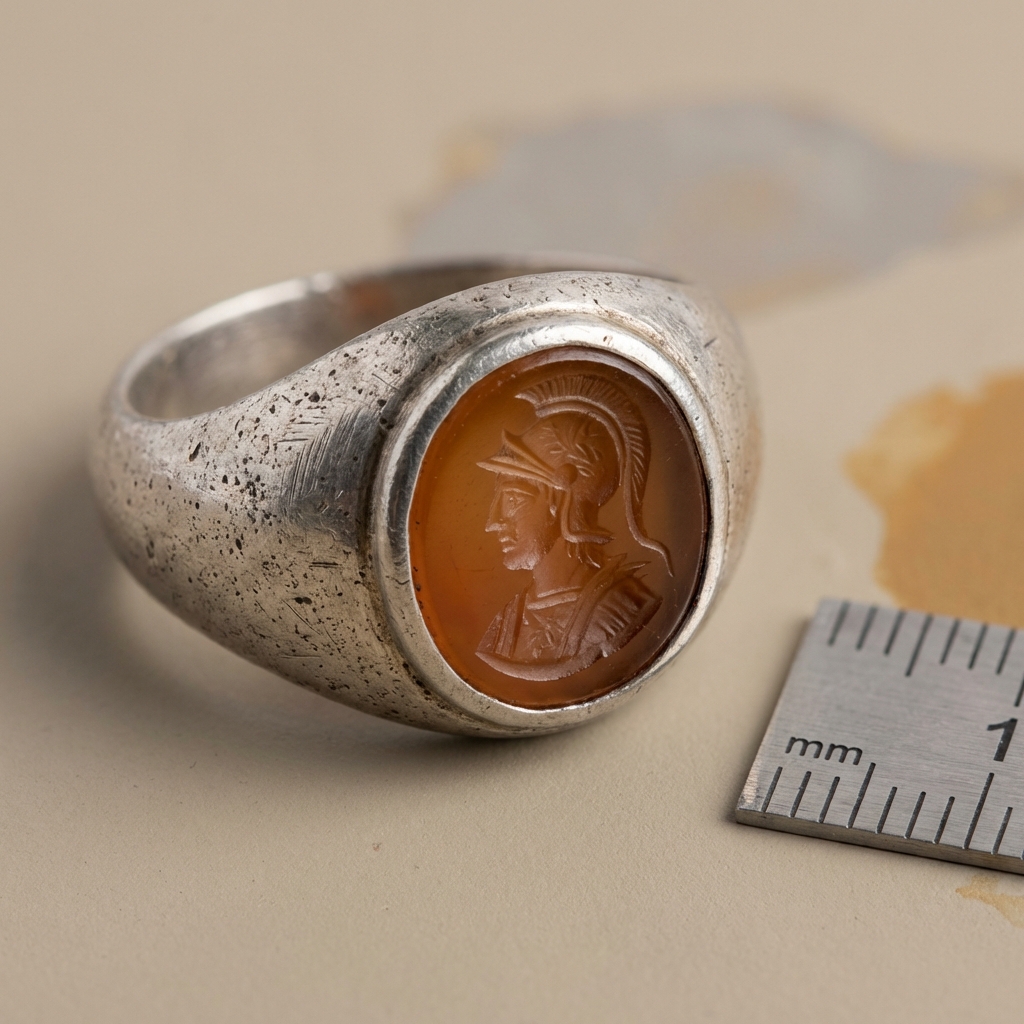
Wear consistent with age includes rounded high points, micro-pitting and adherent deposits that match burial or long-term handling. These subtle textures can be seen with strong directional light and magnification. Micro-pitting and softened edges at raised forms are often present where corrosion and handling have abraded sharper toolmarks; ask for macro photographs that show these details.
Adherent soil or mineral deposits can be an informative feature, but they should be documented and not removed before any agreed analysis. Photographs showing deposits in place are helpful because conservation or cleaning can alter the surface chemistry and obscure later testing.
Non-destructive testing and imaging for roman silver ring authentication
Portable XRF (pXRF) for roman silver ring: strengths and limits
Portable XRF is a first-line elemental screening technique used by museum science teams to assess surface alloy composition and surface chemistry, helping to identify expected silver alloys or modern plating anomalies. It is widely used as a non-destructive check because it can be performed in situ and gives a rapid readout of major elements, but it cannot by itself provide secure dating or a complete alloy profile British Museum science and collections. See a study on XRF uncertainty (PMC article).
When you request a pXRF report from a seller or consultant, ask for the instrument model, measurement location on the ring and a readable printout or photo of the spectrum or report. A transparent pXRF export helps you understand whether results were taken on a cleaned spot, over corrosion, or on a modern solder repair, which can all bias surface readings. See a guide to XRF limitations (limitations summary).
Microscopy and high-resolution imaging
Microscopy, including handheld digital microscopes and high-resolution macrophotography, reveals toolmarks, micro-pitting, and wear patterns that are invisible to the naked eye. Such imaging can show whether a carving was executed with period tools or modern rotary instruments, and it complements elemental screening by revealing surface structure and manufacturing traces Smithsonian Museum Conservation Institute guidance
Ask for images at several magnifications and lighting angles. Known conservation practice recommends documenting the state of the surface before any cleaning or testing so that microscopic evidence remains verifiable and reproducible. If the seller cannot supply clear images, treat that as a practical barrier to confident assessment.
See behind-the-scenes on @auroraantiqua for test demonstrations and provenance discussion
Request pXRF data and high-resolution images before proceeding with purchase; clear documentation helps you and any consultant evaluate the ring without immediate sampling.
How to interpret results and when they are inconclusive
Use non-destructive results as screening data rather than final proof. If pXRF shows an alloy consistent with Roman silver but the microscopic evidence or provenance is missing, treat the result as suggestive rather than conclusive. Inconclusive or borderline readings are common, especially where surface corrosion, restoration or modern soldering affect the measurement spot. See a discussion of testing limitations (non-destructive testing article).
When results are ambiguous, prioritise provenance documentation and independent specialist advice before agreeing a purchase. If a seller's tests are poorly documented or lack contextual images, insist on clearer records or a cooling-off period to consult an expert.
When visual and pXRF are inconclusive: accredited laboratory analyses
SEM-EDS and microstructural studies
Scanning electron microscopy with energy dispersive spectroscopy (SEM-EDS) and microstructural studies identify alloy phases, manufacturing technology and fine surface stratigraphy, providing greater confidence than surface pXRF alone. These laboratory techniques are considered higher-confidence methods when correctly applied by conservation scientists in accredited facilities Smithsonian Museum Conservation Institute guidance
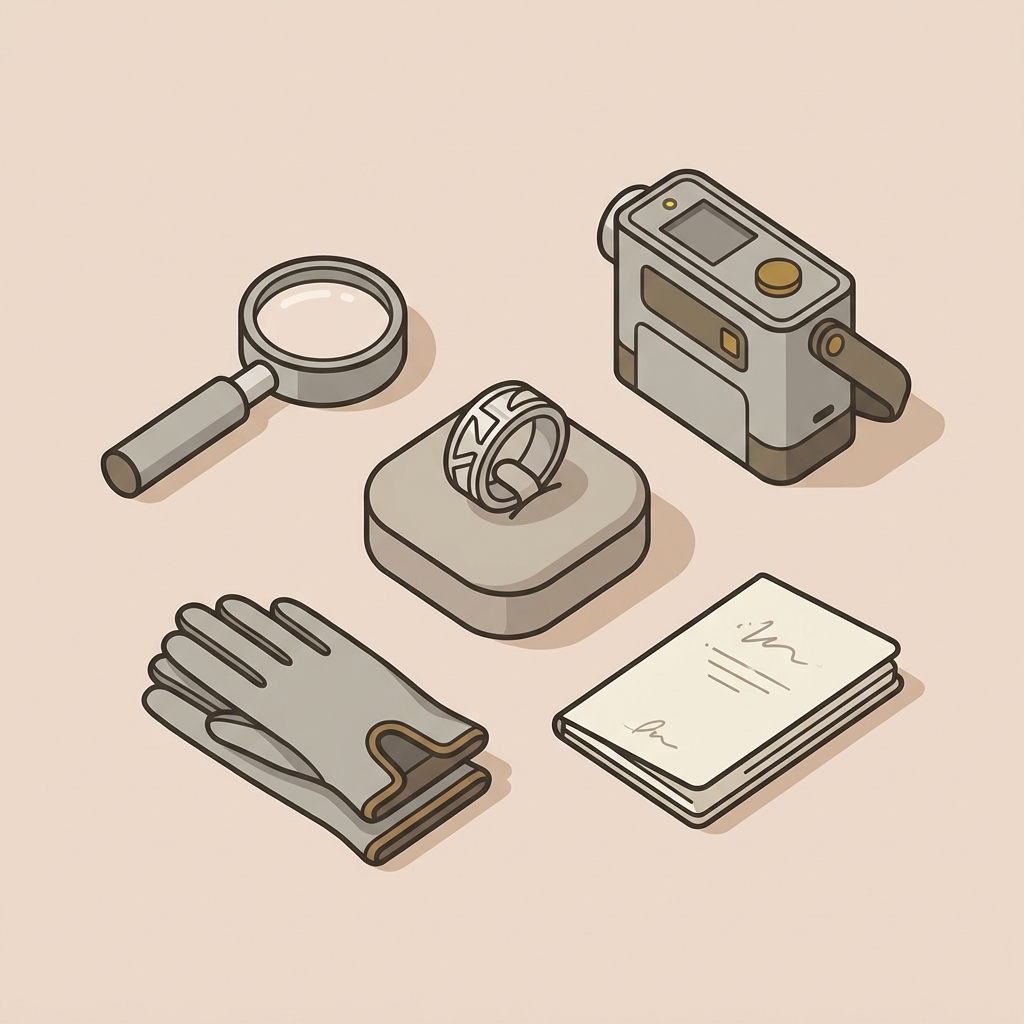
Bear in mind that SEM-EDS typically requires specialist facilities and trained operators, and while it is far more diagnostic about microstructure it may still rely on small sampling or specific preparation methods that should only be carried out with documented consent and conservatorial oversight.
Isotopic and trace-element analysis and sampling considerations
Isotopic and trace-element work can help trace metal sources and add weight to an attribution, but it is intrusive and usually requires careful sampling and accredited laboratory protocols. These analyses should be considered for high-value or contentious items where the potential benefit justifies the sampling and cost; always confirm the lab's accreditation and sampling plan in writing before any material is taken.
Independent specialist reports that integrate lab data with typological study and provenance review carry the most weight in contested cases. When commissioning such work, request a clear terms of reference, an explanation of sampling locations and a description of how results will be interpreted relative to known comparative data British Museum science and collections
How to commission an independent specialist report
Seek specialists with museum or conservation credentials and ask for recent examples of similar work. An independent report should state the methods used, lab accreditation, sampling details and an interpretation that separates observed data from interpretive judgements. When possible, prefer reports that include both imaging and elemental or microstructural outputs.
Remember that accredited laboratory analyses are not always decisive on their own; they are most powerful when combined with secure find documentation and a clear collection history.
Provenance, legal checks and documentation: steps every buyer should take
Provenance and find context materially affect both the legal status and the evidential weight of any authenticity claim. The Portable Antiquities Scheme and comparable national reporting schemes stress that recording find context and clear photography before testing is essential because provenance forms a primary part of authentication practice Portable Antiquities Scheme guidance
Check for paperwork such as collection history notes, prior ownership records, or explicit export licences where relevant; absence of documentation does not disqualify an item but should change your risk calculus. International cultural property principles emphasise the need for legal ownership checks and careful treatment of undocumented objects to avoid complicity in illicit trafficking UNESCO guidance on provenance and trafficking
Combine careful visual typology checks, non-destructive testing such as pXRF and microscopy, and thorough provenance and legal documentation; escalate to accredited lab analyses and independent specialist reports if results are ambiguous or the item is high value.
When a seller provides verification letters, confirm the author's credentials and whether the letter cites primary evidence rather than opinion. Treat a vague 'private collection' claim without dates or prior documentation as a provenance gap that warrants further enquiry before purchase.
Restoration, conservation and condition notes: what sellers should disclose
Sellers should list restoration and preservation notes in plain language, for example describing whether repairs were stabilised, whether any cleaning was performed by a conservator, or whether portions of a piece were left untouched. Clear condition notes allow buyers to understand alterations without assuming that restoration implies inauthenticity.
Conservation bodies warn against destructive testing such as acid or scratch tests because these damage patina and compromise future scientific analyses; conservation-led cleaning is the preferred route when surfaces need stabilisation or study Institute of Conservation guidance
Ask specifically whether any surface testing has been performed, what methods were used and whether a conservator supervised interventions. A documented conservation history increases the reliability of subsequent scientific readings because it explains where modern materials or adhesives may influence surface chemistry.
Common pitfalls and red flags when assessing a roman silver ring
Be alert to signs of modern tooling, such as consistent rotary tool marks that contrast with expected hand-cut chisel or burin traces under magnification. Anachronistic motifs or iconography that post-date the claimed period are also strong visual red flags; comparanda from museum collections are useful benchmarks for checking motifs and proportions Metropolitan Museum collection highlights

Vague provenance statements, stock photography, or pressure from a seller to accept destructive testing are practical signals to pause. Where a listing uses stock images or refuses to provide additional close-ups and condition notes, you are unable to complete even a reasonable visual screen and should consider asking for a return window or third-party inspection.
When in doubt, request an independent specialist assessment. For high-value purchases or items with ambiguous technical reports, pause the transaction until you receive an expert opinion that documents both method and interpretation.
Practical scenarios and short case examples for buyers
Scenario 1, a low-cost wearable piece: for modest purchases where budget or personal wear is the priority, rely on clear photographs, the seller's condition notes and a documented return policy. If the ring has consistent wear, straightforward condition notes and a sensible asking price, many buyers accept the residual uncertainty and treat the piece as wearable history rather than a long-term scholarly object (see our beginner's guide).
Scenario 2, a high-value purchase: pause and seek a combination of pXRF data, high-resolution imaging and published or independently verifiable provenance. If those elements remain incomplete or the pXRF report lacks context about measurement location, commission a specialist who can advise whether SEM-EDS or isotopic work is warranted Smithsonian Museum Conservation Institute guidance
Scenario 3, reading an independent report: a useful report separates observed measurements from interpretive claims, explains lab accreditation and shows images of sampling locations. Use the report to align the scientific outputs with the typological evidence and provenance notes to reach a balanced judgement.
Conclusion: short checklist and next steps for collectors
Four-step checklist before you buy: 1) Request clear photos and measurements that follow a simple checklist; 2) Ask for any pXRF or microscopy images and the instrument details; 3) Verify provenance notes, collection history and any export paperwork; 4) If high value or contested, commission an independent specialist report. These steps combine visual, technical and documentary checks to reduce uncertainty Portable Antiquities Scheme guidance (see our rings collection).
Keep your own record: save dated photos, seller messages and any test reports with the purchase paperwork. If you later seek conservation or lab work, this archive becomes the primary evidence trail that supports further study.
Finally, remember the ethical dimension: buy with attention to legal export, recorded find status and clear provenance to avoid contributing to illicit markets. When evidence is ambiguous, prioritise documented assessment and independent advice rather than an expedited purchase.
Visual checks provide useful screening information, such as intaglio style and patina, but they are indicative rather than conclusive and should be corroborated with provenance and scientific testing when needed.
pXRF can indicate surface alloy composition and highlight anomalies, but it cannot by itself securely date a ring and should be treated as a first-line screening tool.
Request condition and restoration notes, collection history or find reports, and any export or ownership documentation; unclear provenance deserves further inquiry or independent assessment.
References
- https://finds.org.uk/learn/recording-finds/
- https://auroraantiqua.com/collections/ancient-roman-rings
- https://www.metmuseum.org/
- https://auroraantiqua.com/products/roman-silver-ring-auriga-red-jasper-intaglio-of-cock-drawing-a-chariot-driven-by-a-mouse-1st-3rd-century-ad-eu-57-us-7-5
- https://auroraantiqua.com/blogs/questions-and-answers/are-roman-rings-good-for-beginners-a-comprehensive-guide
- https://www.britishmuseum.org/our-work/science-and-collections
- https://pmc.ncbi.nlm.nih.gov/articles/PMC9919644/
- https://www.xrfscientific.com/limitations-x-ray-fluorescence-technology/
- https://www.si.edu/mci
- https://www.thesafehouse.sg/articles/gold-and-silver-testing-limitations-of-non-destructive-testing-methods
- https://www.unesco.org/en/fight-illicit-trafficking
- https://icon.org.uk/resource/conservation-principles
- https://auroraantiqua.com/collections/rings