


Looking for the real thing? Browse our Ancient Roman ring collection — each piece one-of-one, individually authenticated, with provenance.
What a roman bronze ring is and why value varies
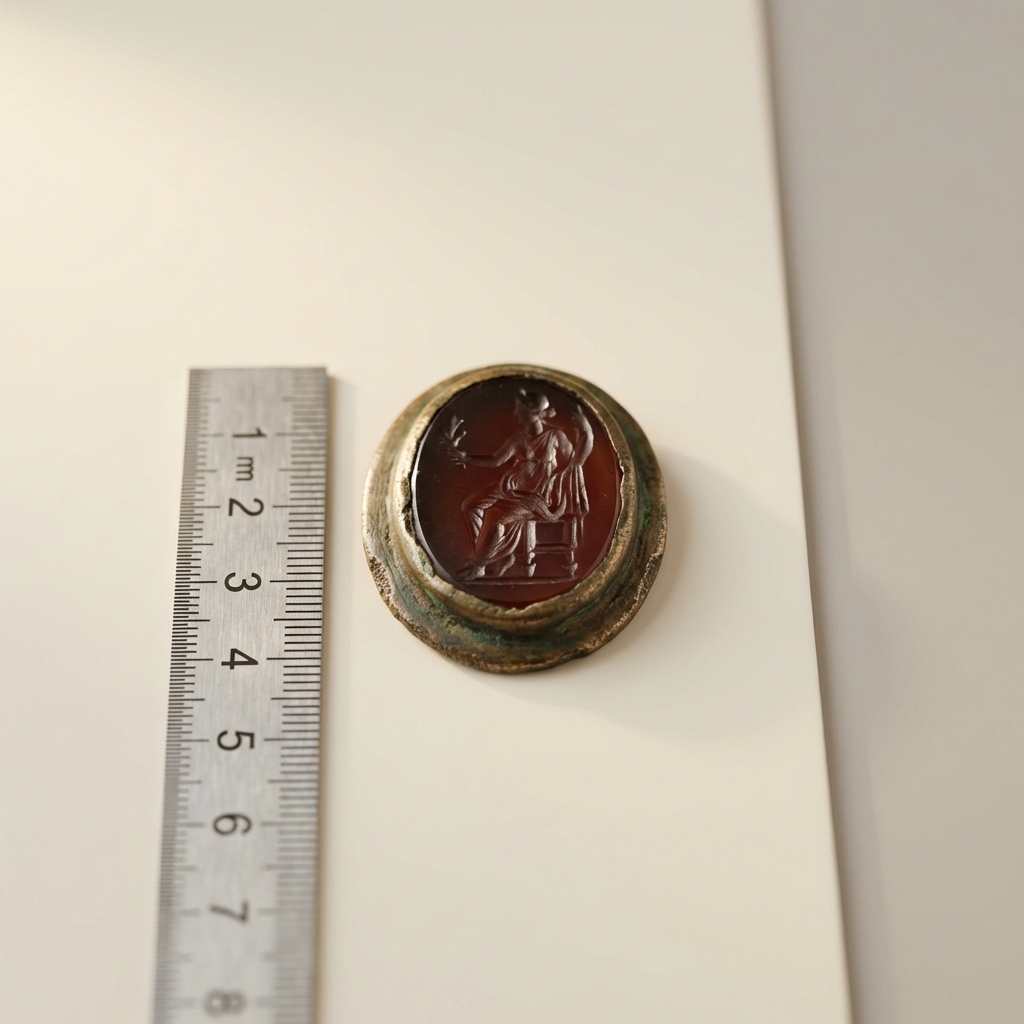
A roman bronze ring usually refers to an ancient ring made primarily of bronze and typically dated by typology and find context to the Roman period, though dating is often approximate and depends on published comparisons. Typical forms include plain hoops, rings with raised or engraved bezels, and settings that once held intaglios or small stones; metalworking techniques and simple decorative motifs can help place a piece within a broad chronology. Museum typologies and published collection records are the most reliable first step for comparative dating and valuation and should be consulted early in any assessment Metropolitan Museum of Art typologies.
Value varies because several interacting factors determine market interest: dating and typology, the physical condition and any active corrosion, the clarity and strength of provenance documentation, and distinctiveness in design such as an intact intaglio, an unusual bezel, or mixed-metal mounts like silver or gilding. Condition and patina affect whether a ring is considered a wearable artifact or better suited to conservation and display. Rarity and clear collection history often move a piece into different sale channels with different price expectations.
Collectors and sellers should note common terminology when evaluating listings. The bezel is the decorative or functional top of the ring that may bear an intaglio or motif. Patina describes surface chemistry and color that can signal age and burial conditions. Typology is the comparative classification system specialists use to group forms by date and workshop traits. Using these terms helps when requesting condition notes or matching a ring to published examples.
Conservative language is important when discussing a roman bronze ring: dating often can be stated as an estimate based on typological comparison rather than a precise century unless supported by excavation records or scientific analysis. For readers comparing pieces, focusing on the bezel type, signs of use around the hoop and shoulders, and any remaining gemstone or intaglio can quickly separate common examples from those that merit deeper study.
How experts date and authenticate a roman bronze ring
Specialists begin with typological comparison, matching a ring's form, bezel design, and decorative motifs against museum holdings and published typologies to establish a likely date range. Museum records provide documented parallels that are useful as initial comparators Metropolitan Museum of Art typologies.
After a typological match, experts request a set of standard materials: high-resolution photographs from multiple angles, clear calibrated measurements of hoop diameter, bezel dimensions and weight, and concise condition notes that describe patina, wear, and any suspected active corrosion. Auction-house collecting guides recommend this stepwise documentation because it allows remote specialists to form a preliminary opinion without handling the object auction-house collecting guides.
A realistic value comes from combining typological dating with museum comparables, a conservator condition statement if corrosion is suspected, clear provenance documentation, and market comparables from recent sales; together these form the practical basis for choosing sale channels and estimating price.
Where available and permitted, non-destructive scientific methods such as XRF elemental testing can assist by confirming metal composition and comparing alloy patterns with known regional practices; XRF results are typically treated as supportive rather than definitive for dating, and they work best alongside typology and context. When requesting or sharing XRF data, ensure the report is from a recognized instrument operator and note the instrument parameters and calibration when available. See Bruker's study of micro-XRF applications for instrument contexts Bruker micro-XRF study and examples of XRF investigations in the literature XRF investigation example.
Finally, documented provenance and legal history should accompany technical data. Specialists will want any collection history, prior sale records, or verification letters because those documents materially affect where a piece can be offered and the kinds of buyers who can participate. Combining typology, careful photography, measured dimensions, and scientific data when available forms the standard verification pathway that many dealers and auction advisors follow.
Condition and conservation: how bronze disease and restoration affect value
Active corrosion, commonly called bronze disease, is a chemically driven form of deterioration that can appear as powdery blue or green crusts and can progress if not treated. Conservators and institutional guidance make clear that active corrosion directly reduces market desirability and makes transport and display more complicated, so a professional assessment is advisable before sale or extensive handling Getty Conservation Institute guidance. Further technical discussion of patinated bronze and analytical pitfalls is available in broader studies on patinated bronze Pitfalls and Possibilities of Patinated Bronze.
Because bronze disease can be active beneath stable-looking surfaces, condition notes should explicitly state whether conservative tests were performed and what stabilizing treatments, if any, were applied. Restoration and stabilization are commonly documented in restoration notes; some treatments improve visual presentation but change the object record and therefore can alter how buyers and specialists assess authenticity and condition.
A conservator condition statement typically describes the present state of corrosion, records prior repairs or the addition of modern materials, and may recommend steps for stabilization. Buyers and sellers should expect a conservator to note if any mechanical consolidant, modern solder, or infill has been used, and to state the likelihood of recurrence of active corrosion under normal storage conditions. A clear condition statement helps determine appropriate sale channels and whether further conservation is needed before listing.
When active corrosion is suspected, consider obtaining a short, focused treatment plan that explains the risks and the likely benefits of stabilization versus leaving the surface untouched. Conservation is not solely an aesthetic choice; it informs whether an item can safely be shipped, displayed, or worn, and it should be reported in sale descriptions as part of transparent restoration notes.
Provenance, legal context, and why documentation matters for a roman bronze ring
Provenance documentation commonly includes collection history, prior ownership notes, catalog citations, and any verification letters from recognized specialists. Clear provenance expands legitimate sale options and is often required by reputable sale channels; readers should assemble whatever documentation exists before seeking a market estimate. Many buyers and institutions will treat provenance as a significant factor in acceptability and price.
The 1970 UNESCO Convention frames modern legal and ethical practice by restricting trade in cultural property without adequate provenance and export documentation. National import rules and the convention collectively limit where and how items with unclear histories can be offered, and they are frequently referenced in sale and export reviews UNESCO 1970 convention.
Beyond legal compliance, reputable specialists advise documenting the chain of custody as far back as possible. Verification letters or prior sale records increase confidence for buyers; conversely, gaps in collection history typically reduce value and narrow sale channels because auction houses and many institutional buyers will decline items lacking adequate provenance.
A short provenance checklist for sellers and buyers
Keep copies of original documents
If export or import permits exist for an item, retain copies and note the issuing authority and date. Even when permits are not required, a succinct provenance packet that lists who owned the ring, when it changed hands, and any prior publication or exhibition references will usually broaden acceptable sale routes and can reduce uncertainty for prospective buyers.
Market comparables: realistic price ranges for a roman bronze ring
Market analyses from recent years show trends that help set realistic expectations: many common Roman bronze rings at retail or dealer level trade in the low hundreds of US dollars, while distinctive or well-documented pieces with unusual bezels, intact intaglios, or silver or gilded mounts can reach low-to-mid thousands at auction. These conclusions come from consolidated reporting and market summaries that aggregate recent sale records and specialist commentary TEFAF market report. For item examples on the site, see our rings collection rings collection.
That range is a generalization and depends heavily on provenance clarity, condition and visible rarity. A plain hoop with stable patina and minimal documentation will usually be offered at conservative retail prices. In contrast, a ring with a securely traced collection history and a decorated intaglio or precious-metal mount can attract competitive bidding in the auction context where informed collectors participate.
Specialized market aggregators and sale records covering 2023 through 2025 show clustered patterns that support the same view: ordinary examples clustered in lower retail bands and well-provenanced or typologically rare pieces appearing at higher levels when presented with full documentation and condition reports ancient art sales analysis.

When using comparables, ensure that the sale venue, provenance disclosures and condition notes match the item you are evaluating. Auction prices can include buyer's premiums and vary by region and sale house policies, while dealer retail prices often reflect immediate availability and consignment costs. Treat published market ranges as guidance and not as guarantees of a particular sale outcome. See our ancient Roman rings collection for comparable listings ancient Roman rings collection.
Choosing where and how to sell or buy a roman bronze ring
Deciding between private sale, specialist dealer consignment, and auction depends on provenance clarity, rarity and condition. Consolidated analyses recommend that weak or undocumented provenance often favors private or dealer sales at conservative estimates, while strong provenance and clear rarity often favor auction exposure to reach specialized bidders market reports.
Private sale can be faster and more discreet, with lower transaction costs, but it typically reaches fewer specialized collectors and therefore may yield lower top prices. Specialist dealers provide expertise, condition and restoration notes, and curated buyer networks, which can be particularly helpful for items with limited provenance. Auction exposure may produce the highest visible price for well-documented pieces but usually requires clear provenance and condition documentation to enter leading sales rooms.
See @auroraantiqua for condition and provenance examples
Request a concise condition summary or provenance checklist from Aurora Antiqua to clarify sale options and next steps.
Regardless of channel, prepare a packet of high-resolution images, measured dimensions, condition and restoration notes, and any provenance documentation. Doing this work in advance clarifies expectations about price bands and sale timing, and it helps match an item to the channel that best suits its documentation level and condition.
A practical checklist for buyers and sellers of roman bronze rings
Use the following short checklist when assessing or preparing a ring for sale or purchase. These items form the minimum documentation specialists will request before offering a formal opinion.
- High-resolution photos showing obverse, reverse, bezel detail and interior of hoop
- Clear measurements: hoop internal diameter, bezel dimensions, and weight
- Detailed condition notes including patina description and any observed green or powdery corrosion
- Restoration notes that document any stabilizations, repairs or modern materials
- Provenance documentation: collection history, prior sale or exhibition records, verification letters
- Scientific test reports if available, such as XRF elemental readings
- Copies of export or import permits when relevant
If active corrosion is suspected, request a short conservator condition statement before listing. A conservator will describe the corrosion state, note any prior treatments, and recommend stabilization steps if needed. Keeping conservator and restoration notes with the sale packet reassures buyers and can expand sale venues.
For buyers, insist on seeing the full packet and ask specifically about any restoration that involved added metal, soldering or modern materials. For sellers, assembling these items in advance will typically speed the sale process and help ensure the item is offered in the most appropriate market channel.
Common mistakes, summary and next steps for understanding a roman bronze ring's worth
Frequent pitfalls include overstating provenance or condition without documentation, ignoring signs of active corrosion, and selecting the wrong sale channel for the level of documentation available. Each of these errors can reduce final sale proceeds or limit legitimate buyer pools. A cautious, documented approach usually leads to clearer outcomes.
Conservative next steps are to consult museum typologies for comparative dating, obtain a conservator condition statement if bronze disease is suspected, assemble provenance documentation and any prior sale records, and then compare recent market reports and sale records to understand realistic price ranges. Together, dating, provenance, condition and market comparables determine where a roman bronze ring is likely to sit within the market spectrum.
Ultimately, obtaining professional condition and provenance reports materially improves a seller's options and helps buyers make informed decisions. Treat the market ranges as indicative and always match expectations to the documentation available and the ring's physical condition.
Ultimately, obtaining professional condition and provenance reports materially improves a seller's options and helps buyers make informed decisions. Treat the market ranges as indicative and always match expectations to the documentation available and the ring's physical condition.
Typical common examples at retail or dealer level often trade in the low hundreds of dollars, while well-documented or distinctive examples can reach higher auction levels depending on provenance, condition and rarity.
Bronze disease is active corrosion that appears as powdery blue or green crust; it reduces desirability and should be assessed and documented by a conservator before sale.
Collect high-resolution photos, measured dimensions, condition and restoration notes, any provenance or sale records, and scientific reports such as XRF if available.
References
- https://www.metmuseum.org/toah/hd/jwl/hd_jwl.htm
- https://www.christies.com/features/collecting-antiquities-11500-1.aspx
- https://www.bruker.com/en/products-and-solutions/elemental-analyzers/micro-xrf-spectrometers/m4-tornado/origin-study-ancient-coins.html
- https://pmc.ncbi.nlm.nih.gov/articles/PMC11045461/
- https://www.unesco.org/en/fight-illicit-trafficking
- https://www.mdpi.com/2075-163X/11/7/697
- https://www.tefaf.com/news/tefaf-art-market-report-2024
- https://www.artmarketinsight.org/reports/ancient-art-sales-2023-2025
- https://auroraantiqua.com/collections/rings
- https://auroraantiqua.com/products/the-celestia
- https://auroraantiqua.com/collections/ancient-roman-rings
- https://auroraantiqua.com/blogs/questions-and-answers/what-does-intaglio-mean-in-jewelry-a-practical-guide-to-roman-carnelian-intaglio