


Looking for the real thing? Browse genuine Roman rings for sale, each piece one of one, individually authenticated, with documented provenance. For the background, see the guide to Roman jewelry.
Quick answer: what colour is a roman bronze ring?
Short summary
A roman bronze ring typically begins as a copper based alloy whose raw metal hue ranges from reddish to yellowish brown, but centuries of burial and corrosion can produce a very wide palette on the surface, from brown and brown black through olive and green to bluish green tones.
The underlying metal colour reflects the alloy, while surface patinas and deposits change what you see; smooth, adherent layers usually indicate long term stable patina, whereas bright, powdery blue green deposits often signal active chloride corrosion known as bronze disease Getty Conservation Institute guidance
Expect underlying metal hues from reddish to yellowish brown and surface colours from brown and olive to green and bluish green; assess texture and adherence and seek non destructive tests or a conservator if you see bright powdery blue green deposits.
Why colour matters for collectors
Colour helps collectors prioritise follow up checks because it can suggest whether a surface is a stable archaeological patina or an active, damaging deposit; use colour as one clue among texture, adherence and provenance rather than as proof of age or authenticity Mechanisms of patina formation on archaeological bronzes
What roman bronze rings were made of and what their base colour was
Common alloy recipes in antiquity
Roman bronze rings are copper based alloys, most often copper and tin with variable lead or other minor elements depending on region and date, and that alloy mix determines the intrinsic metal colour before corrosion A History of Metallurgy
How alloy composition shifts base metal hue
Copper contributes reddish tones, while higher tin content can shift the apparent hue toward a more yellowish brown; small differences in composition and trace elements can alter the starting colour that later patinas modify Mechanisms of patina formation on archaeological bronzes
How patinas form on archaeological bronzes
Basic corrosion chemistry
Patina formation is layered and chemical: initial surface oxides form, then carbonates and other secondary compounds accumulate depending on moisture, burial chemistry and available ions, producing a range of hues and textures over long time spans Mechanisms of patina formation on archaeological bronzes and in-depth analyses showing pitfalls and possibilities for patinated bronze
Stages from surface film to thick crusts
Early films can be thin and adherent, preserving tooling marks, while prolonged exposure in reactive soils can yield thicker crusts or localized pitting; chloride rich environments in particular can encourage cuprous chlorides that appear bright blue green and may remain active Canadian Conservation Institute corrosion guidance
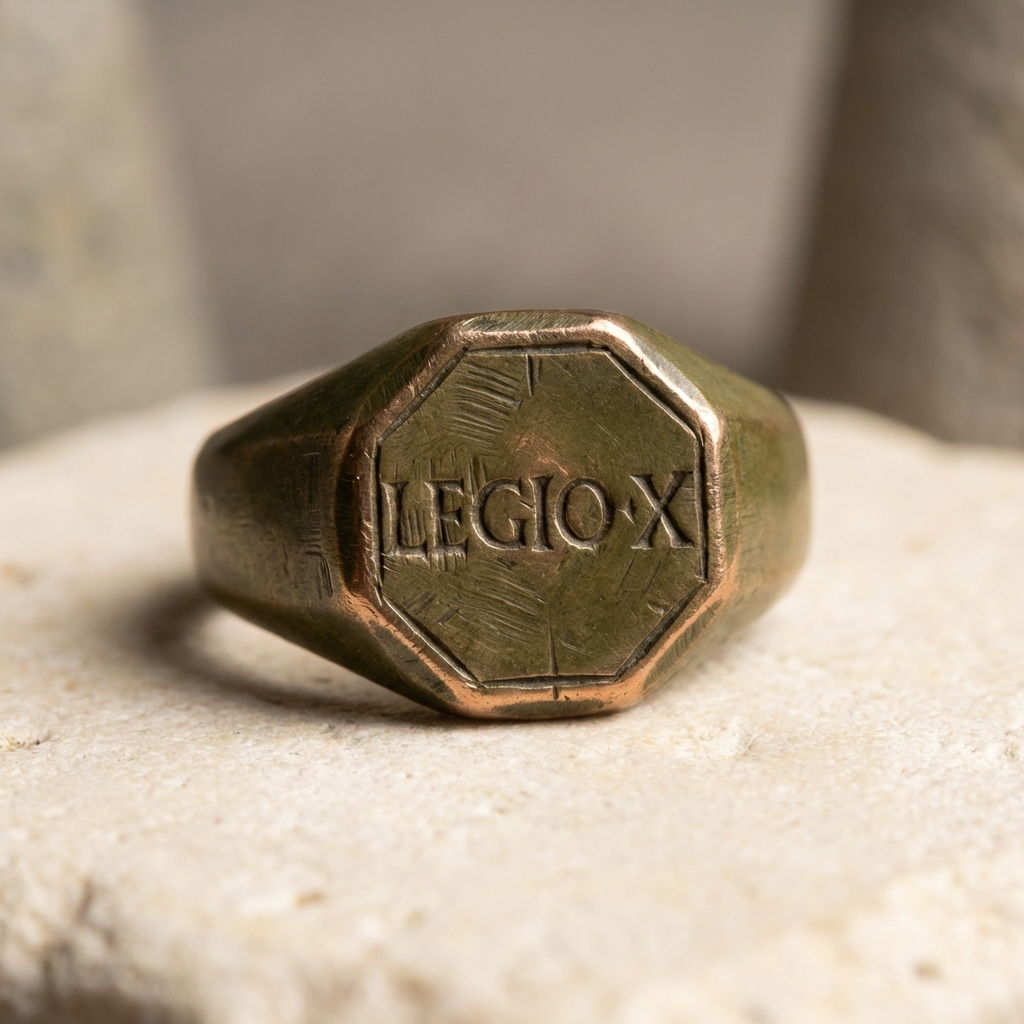
Stability is not only colour but texture and how the layer sits on the metal; conservators use these cues along with analytic methods to decide if treatment is needed British Museum conservation advice
@auroraantiqua: real time looks at rings, restoration and provenance
Aurora Antiqua presents curated ancient rings with condition and provenance notes so collectors can compare stable patinas and treated examples without guessing
Common colours and what they usually indicate
Brown and black tones
Brown and brown black surfaces commonly reflect stable oxides or carbonates that formed over long burial intervals; these tones often create a protective, adherent layer that follows the object contours Mechanisms of patina formation on archaeological bronzes
Olive, green and bluish greens
Olive and green shades arise when copper carbonates and basic copper compounds form, while bluish greens can indicate different copper salts or complex mixtures that depend on soil ions and moisture history Canadian Conservation Institute corrosion guidance
When bright blue green is a problem
Bright, powdery blue green deposits that are loose or that flake away are typical visual signs of active chloride driven corrosion; these cuprous chloride salts can continue to consume metal and should be treated by a conservator rather than with home remedies Getty Conservation Institute guidance
How burial environment and salts change surface colour
Effects of soil acidity and chlorides
Soil pH and the presence of chloride ions control which corrosion products dominate, and acidic or saline conditions accelerate localized attack and the formation of soluble chlorides that can later redeposit as bright green blue residues Canadian Conservation Institute corrosion guidance
Marine or saline burial examples
Marine or coastal burial commonly produces thicker green or blue cuprous chloride layers that are more likely to remain active and to cause progressive damage if not desalinated and stabilised by a conservator Getty Conservation Institute guidance
How manufacturing and surface finish influence appearance
Tooling marks and original finishes
Original tooling marks, casting texture and the finish applied at manufacture can remain visible under thin, stable patina and are valuable visual clues when assessing attribution and condition Mechanisms of patina formation on archaeological bronzes

How thin patinas can preserve manufacturing traces
A smooth, adherent patina that follows tooling marks often indicates long term natural ageing rather than a modern surface mask, but absence of visible marks does not alone prove recent work; combine these observations with provenance and testing Mechanisms of patina formation on archaeological bronzes
Visual identification checklist for collectors
Colour, texture and adherence
Assess colour together with texture and how well the layer adheres: smooth, continuous patina that follows contours suggests stability, while loose, powdery or flaking bright green blue deposits suggests active corrosion and further investigation Getty Conservation Institute guidance
Contextual checks to combine with visual assessment
Request photos of edges, interiors and any areas where the metal is exposed, ask about provenance and any conservation work, and prefer listings that include compositional testing or conservator notes Metropolitan Museum conservation or see our Ancient Roman Rings collection
Non-destructive tests collectors can request
What XRF reveals
Portable XRF can non destructively indicate the presence of copper, tin and lead and help distinguish alloyed metal signals from surface deposits, giving useful compositional context before any cleaning or intervention Metropolitan Museum conservation (see non destructive analysis investigations and hand held XRF limitations study)
When portable microscopy helps
Portable microscopy clarifies texture, shows whether deposits are superficial or penetrate pits, and can support a conservator's assessment of whether a deposit is active or stable British Museum conservation advice
Checklist to request basic non destructive tests from a seller
Ask seller to confirm tests were non destructive
Practical preservation steps for owners in 2026
Daily care and storage
Keep bronzes dry, store them in a stable low humidity environment, and avoid fluctuating temperatures that can encourage condensation and corrosive activity British Museum conservation advice
What to avoid at home
Avoid household acids, abrasive cleaners and mechanical scraping, and do not attempt DIY chemical desalination; such actions risk removing protective patina or activating latent chlorides Getty Conservation Institute guidance
Recognising and responding to bronze disease
Visual signs and urgency
Bronze disease often appears as bright, powdery blue green cuprous chlorides that flake and that can spread if humidity remains high; this condition requires professional assessment rather than home treatment Getty Conservation Institute guidance
Short term isolation and documentation steps
If you suspect active corrosion, isolate the object, photograph affected areas, record storage conditions and avoid handling until you can consult a conservator for desalination and stabilisation Canadian Conservation Institute corrosion guidance
Restoration and condition notes: what stabilisation looks like
Common conservation treatments and visual outcomes
Conservators may desalinate to remove soluble chlorides, consolidate flaking layers, or apply reversible coatings to reduce risk; each treatment can change colour and texture in ways that should be documented in condition notes British Museum conservation advice
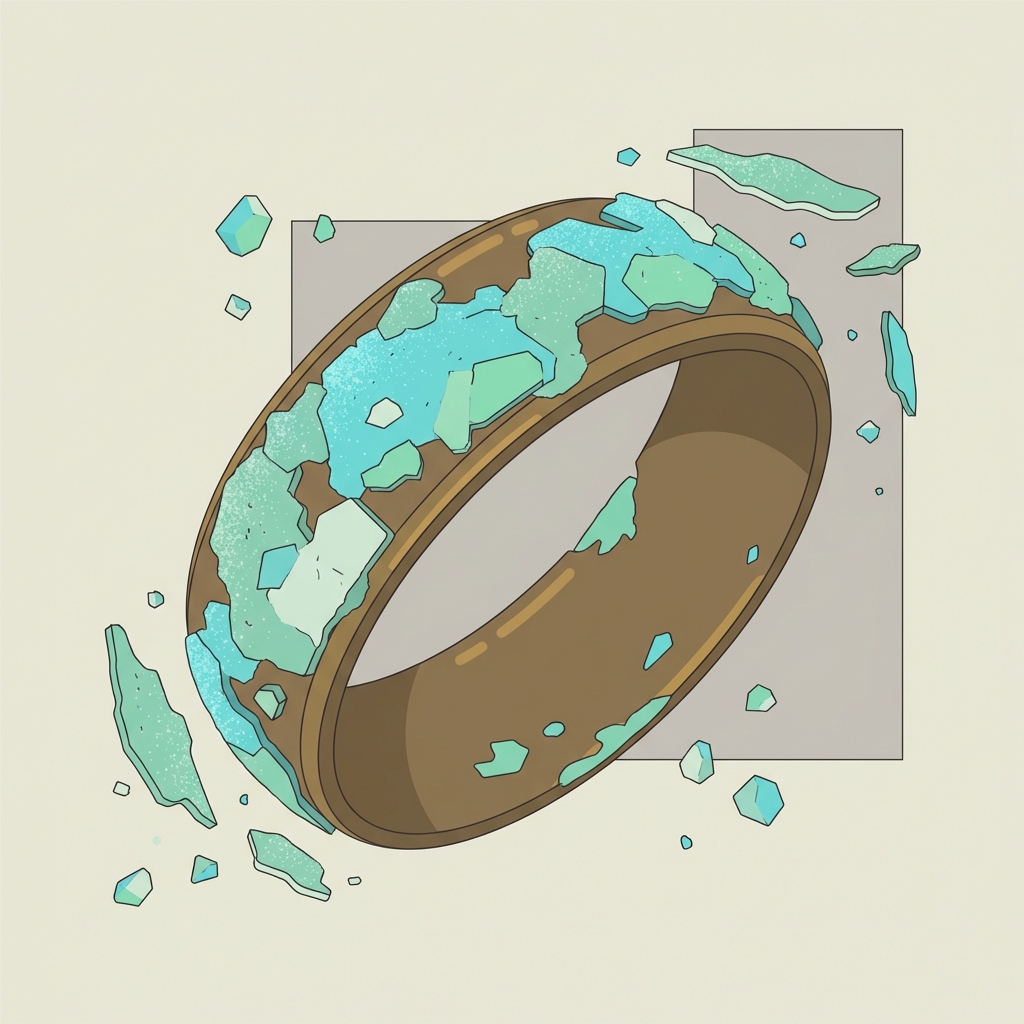
How restorations affect colour and interpretation
Stabilisation can darken or mellow bright deposits and make surfaces appear more uniform; ask sellers for clear restoration notes so you understand whether a change in appearance is original or the result of treatment Mechanisms of patina formation on archaeological bronzes
Questions to ask before buying a roman bronze ring online
Documentation and photographs to request
Ask for high resolution photos of the bezel, interior hoop and edges, request any XRF or conservator reports, and check condition notes that describe what was stabilised or left untouched Metropolitan Museum conservation
Red flags and positive signs in listings
Red flags include vague condition descriptions, refusal to show detailed photos, or pressure language; positive signs include documented testing, conservator reports and clear provenance or collection history British Museum conservation advice or visit our homepage for more information
Practical examples and scenarios
Scenario A: smooth olive patina on a ring with tooling marks
A ring showing a smooth, olive patina that follows tooling marks and shows a consistent surface across edges and interior often points to a long term stable patina; follow up by requesting interior photos and any XRF notes to confirm alloy context Mechanisms of patina formation on archaeological bronzes. See related items in our rings collection
Scenario B: bright powdery blue green deposits on a ring from a coastal find
A coastal find with bright powdery blue green deposits is likely affected by active chloride corrosion; immediately isolate the piece, photograph lesions and seek a conservator who can desalinate and stabilise the metal Getty Conservation Institute guidance

Short conclusion and colour checklist
Three quick checks to do now
Check colour and texture, look for adherence to tooling marks, and confirm provenance or testing; combine these three checks before making a decision or requesting treatment Metropolitan Museum conservation
When to seek a conservator or specialist
Seek a conservator if you see bright, powdery blue green deposits, active flaking or rapid changes in surface appearance, and do not attempt household cleaning in those cases Getty Conservation Institute guidance
Green patina can be a stable copper carbonate or a sign of chloride salts; assess texture and adherence and request testing if in doubt.
Avoid household acids and abrasives. Consult a conservator before any chemical or mechanical cleaning.
Ask for portable XRF results, high magnification photos, and any conservator reports that document treatment.
More from Aurora Antiqua
References
- Microstructure and chemical composition of Roman orichalcum coins emitted after, Scientific Reports, Springer
- EAP, Estonian Journal of Archaeology Publications, Estonian Academy Publishers
- Long-term corrosion of copper alloys in the soil, Heritage Science (Springer Nature)
- Conserve O Gram 10/2: Caring For Silver And Copper Alloy Objects, National Park Service, US Department
- Bronze disease, Conservation Wiki, AIC Wiki, American Institute for Conservation
- Sustainable Conservation of Bronze, J. Paul Getty Museum and Getty Conservation Institute, Los Angeles
- Standards: Konservatorische Behandlung von archäologischen Funden (conservation of archaeological finds), Bundesdenkmalamt Österreich
- Conserve O Gram 4/16: Creating A Microclimate Box for Metal Storage, National Park Service, US Department
- Investigating Ancient “Bronzes”, The Getty