


Looking for the real thing? Browse our Ancient Roman ring collection, each piece one of one, individually authenticated, with documented provenance. For the background, see the guide to Roman jewelry.
What a roman bronze ring is and why it matters
A roman bronze ring is an ancient personal adornment, typically dated roughly to the first through sixth centuries CE, and presented by dealers and curators as a wearable antiquity reflecting everyday life and taste. In many curated late Roman and Imperial-period listings bronze appears alongside silver and gold as a common material used across social groups, which affects how we read both form and symbolism Celestia product listing
For collectors and history minded buyers, the phrase roman bronze ring more reliably signals cultural resonance and one of a kind history than a fixed social rank or guaranteed financial return. Condition notes, restoration disclosures, and any available collection history shape how confidently a ring can be interpreted and compared with documented examples Numerius listing
See fresh finds and behind the scenes details on Instagram
Explore motifs, condition notes, and provenance carefully to see what a specific piece can reasonably tell you about use and meaning.
When approaching a roman bronze ring it helps to set expectations: many examples show wear consistent with age, simplified engraving on later pieces, and evidence of casting or tool work rather than the refined finish of precious-metal signet rings. These practical signals are central to identifying and assessing a piece for collection or study Diana listing
How scholars and curators interpret the symbolism of a roman bronze ring
Curators and scholars typically view Roman rings through multiple functions: decorative objects worn for personal display, identificatory devices when they carry numerical or signet traces, and occasionally amuletic items when motifs are read as protective symbols. This interpretive framework often comes from comparing bronze examples with better documented intaglio and silver rings in curated collections Auriga listing and in wider reference works such as the Getty Museum catalogue Getty Museum catalogue.
Attribution of precise meaning can be tentative. Motifs that suggest identity or protection are often inferred rather than proven, and researchers caution against firm statements about regional workshops or exact social roles without robust provenance or scientific testing Celestia product listing
Common motifs on a roman bronze ring and their likely meanings
Animals and mythological hybrids
Animal figures and hybrid creatures appear regularly in curated listings and are commonly read as symbolic images that can imply protection, personal affiliation, or mythic reference. Where an intaglio or engraved creature is clear, catalog descriptions tend to connect the image to a probable protective or evocative function rather than an exact statement of identity Chimaron listing and related scholarship (see a Yale publication Yale publication).
Motifs on Roman bronze rings were read variously as decorative, identificatory, or protective, with meaning inferred from parallels in better documented silver and intaglio rings and supported by bezel form, patina, and provenance.
Numerical and geometric marks and signet traces
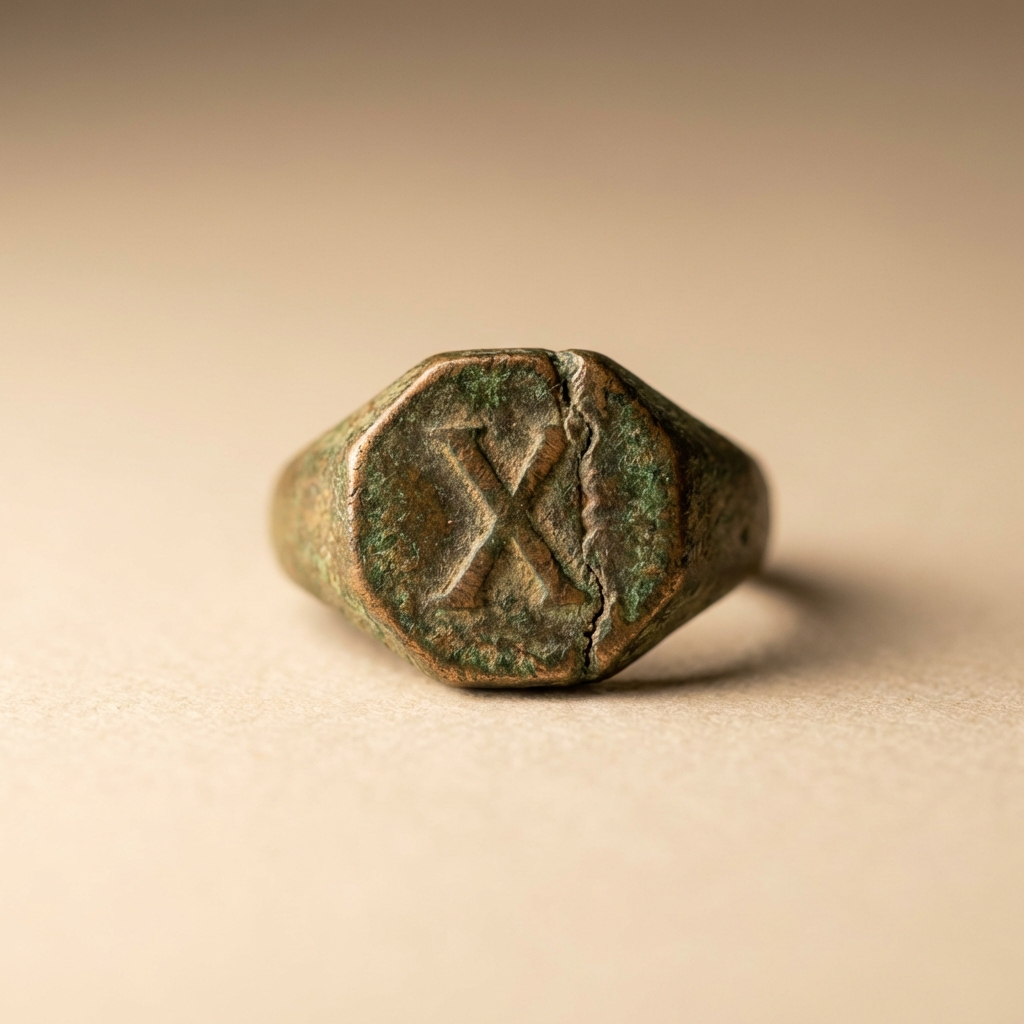
Numerical motifs, geometric marks, and worn signet traces often point to identificatory uses-owners using marks to indicate a name, a household, or a simple number code-though such readings commonly rely on parallels in better documented silver rings and inscriptions. When a bezel bears an octagonal shape or number stamp, sellers usually describe that feature as a potential signet or identity marker in listing notes Numerius listing
Common motifs on later pieces and changing aesthetics
Late Roman and early Byzantine bronze rings often show simplified ornament and a more schematic visual language, with circular or astral motifs and pared down engraving reflecting shifting tastes in late antiquity. Curated listings of late Roman pieces commonly note this simplification as part of stylistic dating and contextual description Celestia product listing
Recognizing simplified motifs helps place a piece in a broader timeline, but such stylistic signals remain approximate and are most reliable when paired with provenance information or clear condition notes rather than used alone to assign precise dates or workshop attributions Celestia product listing
How to visually identify a roman bronze ring: practical clues
Collectors and curators rely on a set of visual checks when assessing candidate roman bronze rings: the presence of an original patina, visible casting seams, tool marks where bezels or shoulders were finished, and characteristic bezel shapes such as round, oval, or octagonal. Each of these elements gives a different indication about manufacture and subsequent handling Celestia product listing
Patina that appears original, rather than artificially applied, typically has an uneven surface tone and adheres into tool marks and seams; casting seams and rough tool traces can support the reading of a piece as cast rather than modern cast reproduction. Sellers and curators often call attention to these features in condition notes and listing photography to help buyers judge authenticity and treatment history Numerius listing and in further analysis available in the literature further analysis.

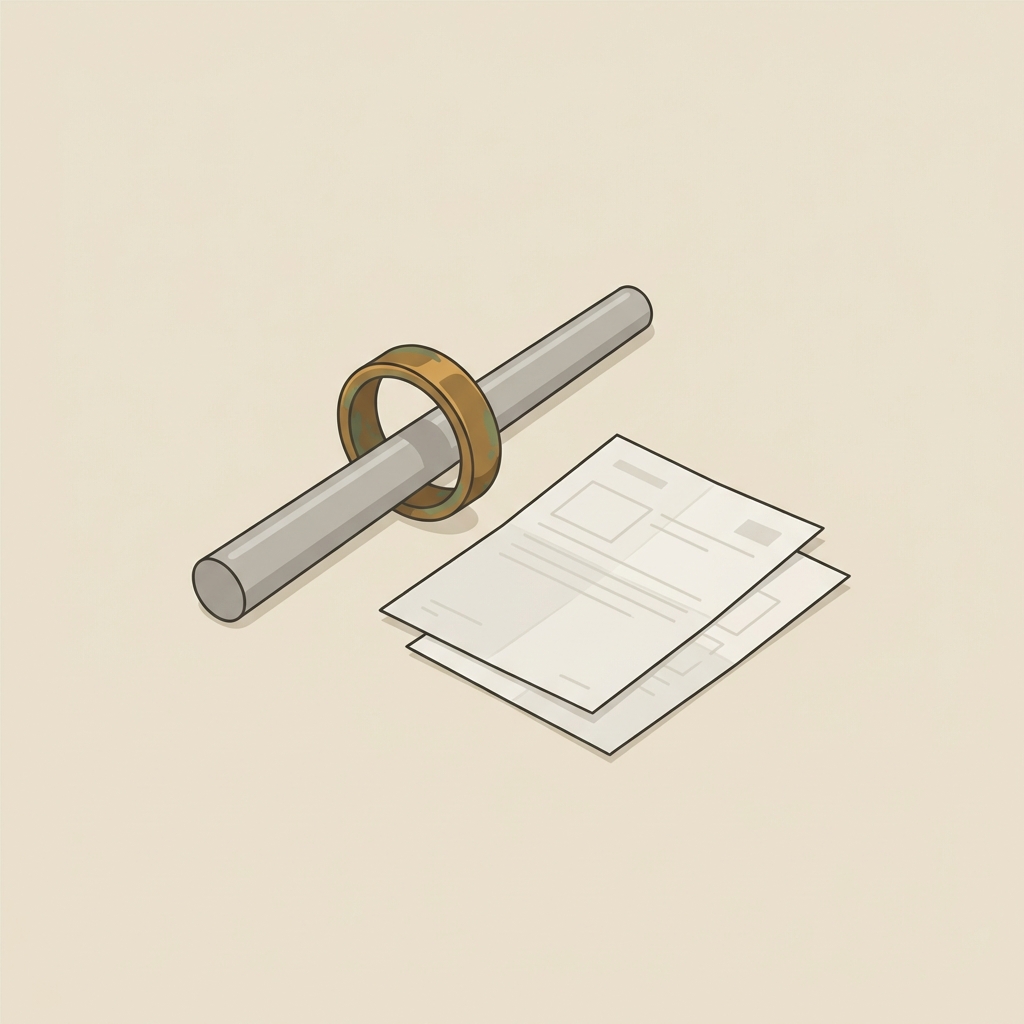
When examining photos ask for close views of the bezel edges, the inside face of the hoop, and any seams where the hoop meets the bezel. Clear measurements and scale photos that show the ring on a finger or mandrel help assess size and proportion alongside condition notes in the listing Diana listing
Dating and stylistic periods: what a roman bronze ring can tell you about time and place
Curated listings generally place Roman bronze rings in a broad range spanning roughly the first to the sixth century CE. This range is a practical, conservative bracket that reflects long production histories and stylistic overlap across regions and workshops Celestia product listing and you can explore related items in our Ancient Roman Rings collection.
Late Roman and early Byzantine pieces often show transitional details: simplified bezels, circular or astral motifs, and reduced figural refinement compared with earlier imperial intaglios. These features are helpful cues for tentative dating but should be balanced with provenance and condition information rather than used alone to make firm chronological claims Celestia product listing
Condition, restoration notes, and what they mean for interpretation
Condition notes and restoration disclosures are central to reading an ancient ring. Listings that describe what was stabilized, repaired, or intentionally left untouched allow buyers to separate original features from later interventions and to understand how restoration decisions alter the visible object Celestia product listing
Common conservation treatments might include stabilization of fractured joins, gentle cleaning, or the consolidation of fragile areas. Clear restoration notes describe the scope of work and, when present, should be accompanied by photos showing treated areas so collectors can judge visual impact and documentation quality Numerius listing
Provenance, documentation, and how they change what a roman bronze ring can tell you
Provenance statements in curated listings commonly take the form of collection history, prior ownership notes, or verification letters, and these references increase interpretive confidence by situating a ring within a documented chain of custody or comparison set Celestia product listing
That said, good provenance improves confidence but does not render interpretation absolute. Buyers should compare documentation across listings and ask targeted questions about earlier owners, where known, and any third party verifications that accompany a sale Numerius listing
A concise buying checklist for anyone considering a roman bronze ring
Before committing to a purchase, request high resolution photos from multiple angles, full internal and external measurements, condition notes that describe patina and any repairs, and any provenance statements or verification letters the seller can provide. These checks help you evaluate whether a listing gives enough information to support interpretation and confidence Celestia product listing and consider browsing our rings collection for comparable items.
Compare motif and bezel details against documented examples in curated listings to see if descriptions match visible characteristics; when a bezel shape is described as octagonal or a motif as numerical, ask for a magnified image centered on that feature to reduce guesswork in interpretation Diana listing
A short pre purchase question list to request from sellers
Use when messaging a seller about any ring
If documentation is incomplete, pause and ask for more detail rather than accepting vague statements; prioritizing clear photography and transparent restoration notes is a practical way to reduce risk when buying wearable antiquities
What collectors today generally mean when they buy a roman bronze ring
Contemporary collectors most often prize a roman bronze ring as wearable history or one of a kind cultural resonance, choosing pieces for their visual language, motif, and the story recorded in condition and provenance notes rather than for any assured financial outcome Celestia product listing
Condition and documentation largely determine purchase confidence. A ring offered with detailed photos, explicit restoration notes, and a clear collection history will allow a buyer to make a more informed reading of its symbolism and likely use than a listing that relies on short, general descriptions Numerius listing
Common mistakes and pitfalls when interpreting or buying a roman bronze ring
A frequent error is over reading motifs, treating a stylized animal or simplified mark as conclusive proof of function rather than a clue that needs comparison to documented examples. Sellers and curators caution that motif readings are probabilistic and tied to parallels, not absolute labels Iphios listing
Another common pitfall is ignoring restoration and provenance gaps. If a listing does not clearly state what was stabilized or repaired, or if provenance is described vaguely, ask for clarifying documentation and consider deferring purchase until the record is stronger Celestia product listing
Short case studies: reading motifs and clues in real listings
Example 1, a ring with a numeral on an octagonal bezel: when an octagonal bezel is paired with a numerical mark, listings commonly suggest an identificatory or household function, and curators point to parallels where numbers or initials served as simple personal identifiers in silver and bronze rings. Requesting close images and provenance notes can clarify whether the mark is original or a later punch Numerius listing
Example 2, a late Roman simplified motif: a late piece with a circular astral motif and restrained engraving is typically read as reflecting changing decorative priorities in late antiquity. Listing descriptions usually note such simplification as part of stylistic dating while pointing to condition and patina as supporting details Celestia product listing
Caring for and displaying a roman bronze ring safely
Handle ancient bronze rings with clean hands and avoid chemical cleaners; basic preventive care includes storing the ring in a stable, low humidity environment away from direct sunlight and in soft, nonabrasive padding to protect fragile joins and the patina. Avoid wearing pieces during activities that risk knocks or exposure to abrasive surfaces
Consult a professional conservator for structural problems, active corrosion, or when a repair decision could alter the object materially. When conservation work is done, document the treatment as part of restoration notes so future owners understand what changed
Conclusion: what a roman bronze ring ultimately symbolizes for collectors
For many collectors a roman bronze ring symbolizes wearable antiquity and cultural resonance, embodying personal ornament, possible identity signals, and occasional amuletic associations depending on motif and bezel type. That symbolic reading depends on condition notes and documented provenance as much as on the image itself Celestia product listing
Next steps for interested buyers are practical: compare listings, ask for targeted images and documentation, and prioritize pieces accompanied by clear restoration and provenance information. That approach provides a balanced path to collecting without assuming certainty beyond what the record supports Ancient Roman Rings collection and visit our blog for related updates Auriga listing
A roman bronze ring most often signals wearable antiquity with decorative, identificatory, or occasional amuletic associations; meaning depends on motif, bezel, condition notes, and provenance.
Look for original patina, casting seams, tool marks, clear condition notes, and provenance; request high resolution photos and compare with curated listings before deciding.
Not always; motifs offer clues that should be compared with documented parallels and combined with condition and provenance information for stronger interpretation.
More from Aurora Antiqua
References
- Philip Kiernan and Klaus-Peter Henz, Rings from the Forbidden Forest, Cambridge University Press
- Internet Archaeol. 40. Atkinson and Preston. Objects of personal adornment, Internet Archaeology, Council
- EAP, Estonian Journal of Archaeology Publications, Estonian Academy Publishers
- Emilie Riha, Der römische Schmuck aus Augst und Kaiseraugst (Roman jewelry from Augst and Kaiseraugst), Römermuseum Augst
- SF-A79B96, Roman copper alloy and glass finger-ring from Norfolk, Portable Antiquities Scheme, British Museum
- Long-term corrosion of copper alloys in the soil, Heritage Science (Springer Nature)
- Bronze disease, Conservation Wiki, AIC Wiki, American Institute for Conservation
- About us, International Association of Dealers in Ancient Art
- Research report: export licensing and provenance, GOV.UK, Department for Culture, Media and Sport (DCMS)