


Looking for the real thing? Browse our Ancient Roman ring collection, each piece one of one, individually authenticated, with documented provenance. For the background, see the guide to buying ancient artifacts.
Introduction: why the question 'Is roman glass jewelry real or fake' matters
Collectors and history minded buyers often ask whether roman glass jewelry is real or fake because the objects carry both historical meaning and a market value that depends on authenticity. In practice, assessing roman glass jewelry relies on a mix of visible inspection, compositional evidence and documented provenance rather than a single quick test; museum conservation guidance explains how documentation and condition notes change interpretive confidence Smithsonian conservation guidance.
The stakes vary by buyer. For a wearable curiosity the threshold for verification may be different than for a collector seeking a well documented antiquity. Aurora Antiqua positions itself as a curator and educator, providing condition notes, restoration notes and collection history where available to help buyers interpret listings and ask the right questions.
What roman glass jewelry typically is: materials and historical context
Common composition and Mediterranean production
Most Roman glass produced in Mediterranean workshops is a soda-lime-silica glass made with a natron flux, a compositional fingerprint that laboratories commonly use to help distinguish ancient glass from modern material, especially in analytical reviews and museum descriptions Corning Museum of Glass overview on Roman glass. Understanding the broad soda-lime-silica signature helps when interpreting portable XRF or lab reports (see portable XRF data studies portable XRF data), because those techniques look for elemental patterns consistent with historical recipes.
This composition can vary by workshop and period, and small jewelry pieces such as beads and intaglios may contain compositional variations from local production or later repairs. Understanding the broad soda-lime-silica signature helps when interpreting portable XRF or lab reports, because those techniques look for elemental patterns consistent with historical recipes.
Typical forms used in jewelry
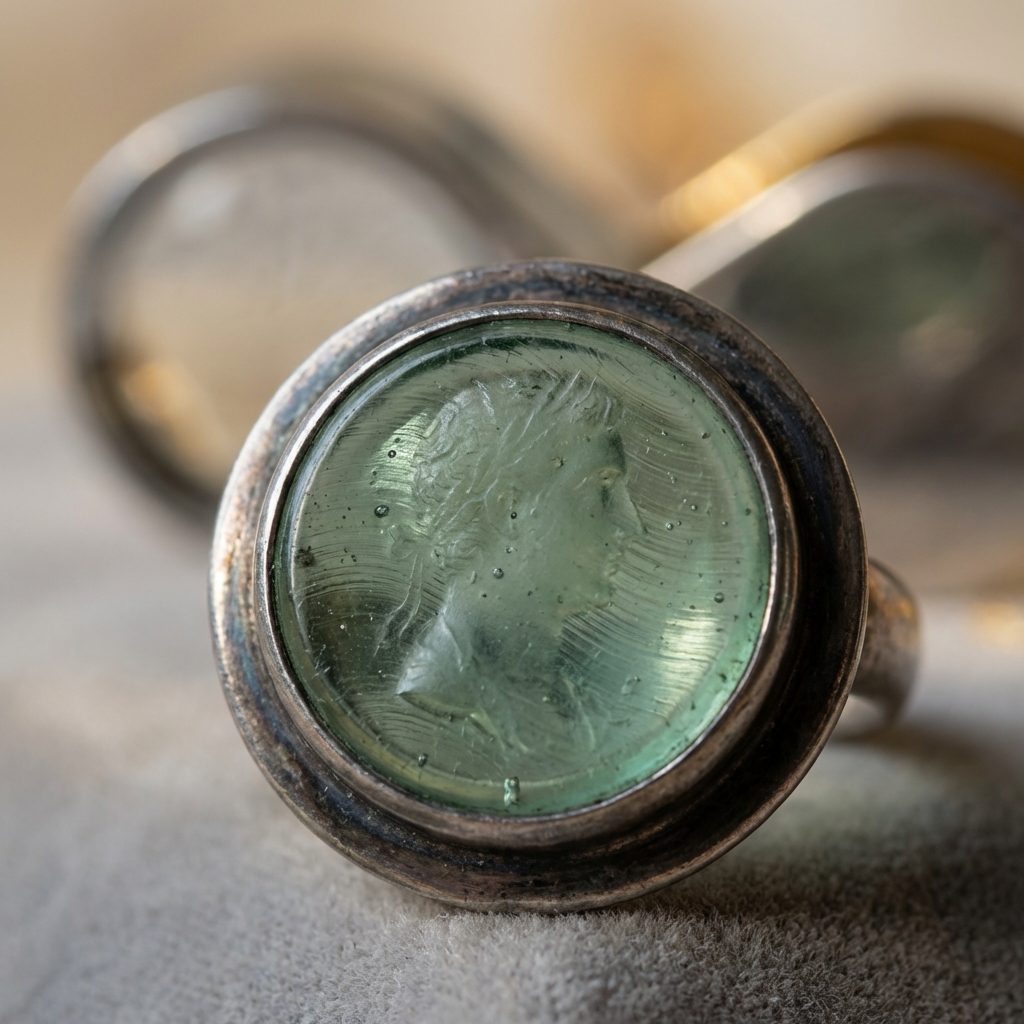
Roman glass jewelry commonly appears as beads, small pendants, and intaglios mounted in bezels or as inlaid fragments within metal settings. These small formats change how a laboratory sample can be taken and sometimes make non destructive testing more appropriate than sampling.
When reviewing a listing, prioritize clear photos that show the bead profile, the intaglio face and the bezel seating, and request condition notes that describe any loose fragments or visible restorations.
Visual manufacturing clues for roman glass jewelry
Core-formed, blown and formed shapes
Ancient manufacturing techniques such as core-formed and early blown methods leave characteristic internal flow patterns and bubble distributions that can be visible under magnification; conservators and curators draw on these manufacturing clues when assessing artifacts Corning Museum of Glass overview on Roman glass.
Core-formed beads often show wall thickness variation and asymmetry where glass was wound around a shaped core, while early blown or formed pieces can show uneven lips, pontil scars or internal flow lines where the glass stretched during finishing. These clues are subtle and require careful lighting and magnification to evaluate reliably.
quick inspection aids for manufacturing clues
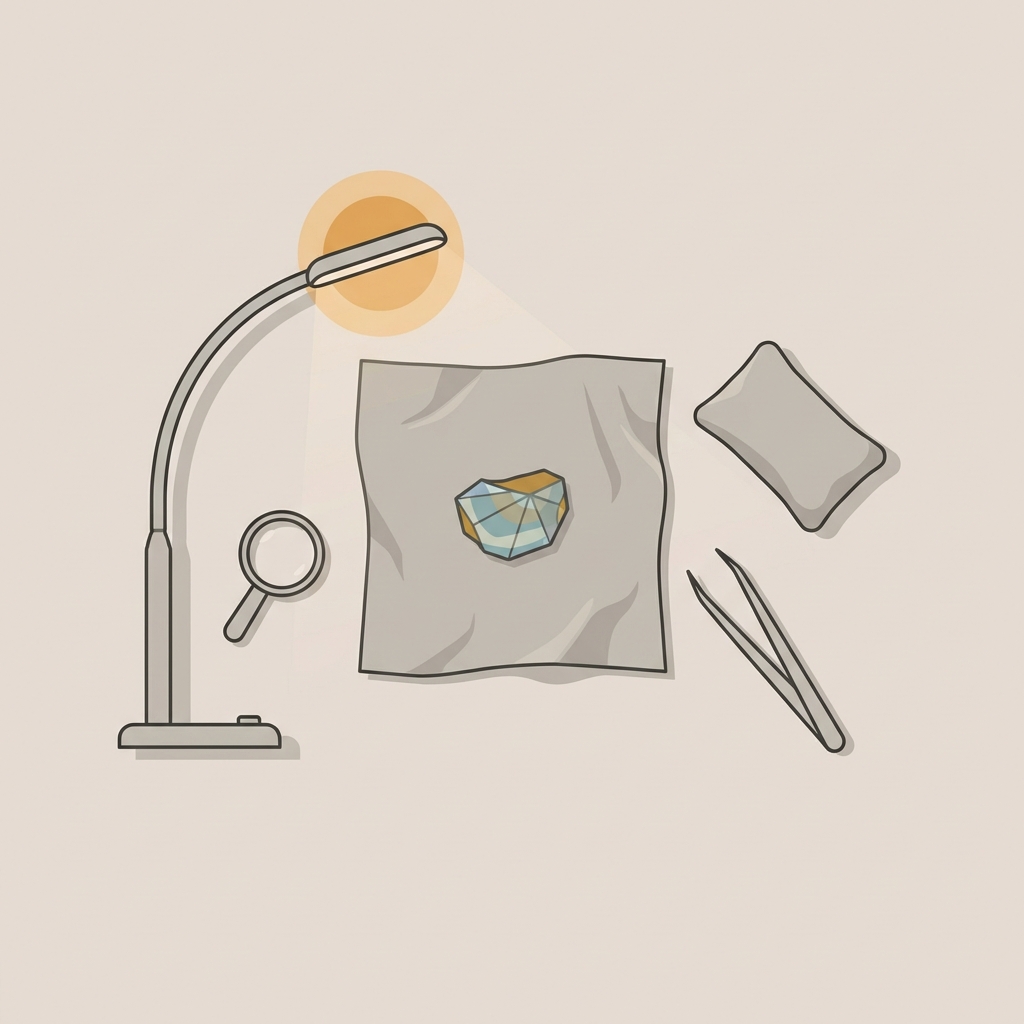
Use angled light to reveal flow lines
Flow lines, bubble populations and tool marks
Look for elongated bubbles aligned with flow, asymmetric flow lines and tool marks on edges where finishing tools shaped the object; such patterns differ from the uniform seam lines or trapped gas typical of modern casting. A detailed visual inspection under magnification will often reveal whether bubbles are oriented by flow or are randomly distributed.
Remember that some modern makers attempt to reproduce these signs, so visual manufacturing clues increase confidence but do not provide definitive proof on their own.
Surface weathering and patina: what genuine age looks like on glass
Hydrated, silica-rich leached layers and iridescence
Conservators often treat a hydrated, silica rich leached layer with iridescence as a strong indicator of long term burial and natural aging; this layered weathering produces a thin, often iridescent rind that forms when alkaline components are leached from the glass by soil water Metropolitan Museum of Art discussion of glass in the ancient world.
That iridescent sheen is usually a microstructure of altered glass rather than simple surface tarnish, and it can appear in a range of subtle colors depending on the soil chemistry and burial time. Conservators use microscopy to distinguish natural hydration layers from surface coatings or recent abrasions.
Roman glass jewelry may be authentic or modern; evaluate it using manufacturing and weathering clues, provenance and laboratory analysis to reach an evidence based judgment.
Pitting, micro-cracking and layered weathering patterns
Pitting and micro cracking, often combined with layered weathering patterns, are also consistent with long term burial and are noted in conservation literature as indicators that complement compositional evidence Heritage journal article on conservation of Roman glass.
Because skilled forgers can accelerate some surface effects, these weathering features should increase confidence but still be treated as part of a larger body of evidence rather than conclusive proof on their own.
Simple at-home checks you can try on roman glass jewelry
What UV light and specific gravity can indicate
Low cost checks such as UV inspection and simple specific gravity approximations can help flag suspicious items but are not definitive; analytical reviews recommend these as preliminary tools that should be followed by lab testing when questions remain Review of analytical approaches to ancient glass (for a recent analytical review see this sciencedirect article).
Under UV light some modern materials fluoresce differently than ancient glass, and a measured specific gravity that deviates from expected ranges may indicate modern inclusions or casting materials. However, accuracy is limited for small objects and measurement error can mislead the untrained observer.
Limitations and safety when testing small objects
Avoid any destructive testing on small or valuable items. For specific gravity tests, use non invasive methods such as photographing the item on a calibrated scale or asking the seller for weight and dimensions. If you must handle the object, work on a soft surface and use gloves to avoid oils altering condition notes.
Always photograph the object before and after simple checks and save those images with timestamps as part of the provenance chain you are building for any future verification.
When to seek lab tests: portable XRF, SEM, Raman and more
What portable XRF tells you and its limits
Portable XRF can provide elemental composition useful to detect soda-lime-silica signatures and natron associated elements, but it has limitations for light elements and for thin weathering layers; analytical reviews recommend portable XRF as a valuable non destructive first line tool Review of analytical approaches to ancient glass (field investigations using portable XRF are described in a spectroscopy article portable XRF investigations).

Microstructural tests and when they are needed
Methods such as SEM and Raman spectroscopy reveal microstructural details of weathering layers and surface alteration that are difficult to simulate convincingly, and conservation case studies show these techniques are often decisive when surface weathering must be distinguished from artificial coatings or accelerated ageing Heritage journal article on conservation of Roman glass.
For high value or uncertain pieces, commission non destructive microstructural work and seek a written conservation opinion; labs and museum conservators can also document limitations of their reports so buyers understand what was and was not tested.
Provenance and documentation: how records change the odds for roman glass jewelry
What useful provenance looks like
Useful provenance includes clear collection history, prior ownership notes, auction records and independent verification letters; museums and collectors often rely on such documentation as part of their assessment framework British Museum collection notes on Roman glass.
Provenance does not replace technical analysis but materially increases confidence because it situates an object in a traceable chain that can sometimes be independently checked against sale records or archival material. See related items in our Ancient Roman Rings collection Ancient Roman Rings collection.
How to interpret collection history and third-party letters
When you receive a third party verification letter, check the scope of the statement: some reports describe compositional findings while others note only visual observations. Ask sellers for copies of lab reports, and be mindful when letters lack methodological detail.
Keep all seller communications, invoices and condition notes together; these form part of a piece's collection history and can be decisive if later questions about authenticity arise.
A step-by-step decision framework for buying roman glass jewelry
Quick red flags to stop and ask questions
Immediate red flags include vague or implausible provenance, descriptions that use vague phrases like old or antique without documentation, and obvious modern casting seams or overly perfect condition that seems inconsistent with age Analytical review on ancient glass testing.
If you see any of these signs, pause and ask the seller for more images, measurements and documentation rather than proceeding to purchase.
A three-tier buy, no buy, verify flow
Use a simple tiered approach: visually convincing objects with solid provenance and clear condition notes represent lower risk; items with visual concerns or absent provenance should prompt verification requests such as portable XRF or conservation assessments; items with clear red flags should be declined. Document each step and keep the exchange record for provenance.
For pieces you decide to verify, specify non destructive testing and a written conservation opinion before completing high value purchases.
Common forgeries and typical seller pitfalls
How modern casting and heat treatments mimic age
Common forgery techniques include modern casting that leaves seam lines or uniform internal gas patterns, and artificial surface treatments that mimic iridescence or pitting; conservation studies emphasize that some simulated weathering can be convincing without lab tests Heritage article on conservation and forgeries.
Because of these practices, sellers who make broad authenticity claims without documentation or who decline reasonable testing requests should be treated with caution.
Seller claims to scrutinize carefully
Watch for vague language such as old or antique without supporting detail, and ask for precise phrasing regarding any conservation that was performed. Request photographs showing the work before and after restoration when restoration notes are provided.
Be particularly wary of listings that mix evocative language with no solid documentation or that offer provenance only on private request without an independent letter or invoice trail.
Restoration, conservation and condition notes: what repairs mean for authenticity
Common stabilizations and when they are disclosed
Typical conservation work for glass jewelry can include consolidation of fragile edges, adhesive fills for small losses and stabilization of metal mounts; reputable sellers disclose such interventions in their restoration notes and explain what was left untouched or reconstructed Heritage journal article on conservation practices.
Disclosed restoration does not equal forgery; instead, it clarifies the object's condition and helps buyers understand what was done to ensure safe handling and display.
How restoration affects interpretation but not automatic authenticity claims
Ask for before and after images or conservation reports for significant repairs. A documented repair means the object was stabilized, and that information can be included in condition notes and provenance records without implying that the piece is inauthentic.
When restoration is undocumented or hidden, treat that as a red flag and request further detail or independent examination before buying.
Practical examples and scenarios: reading listings and photos
Example 1: a bead with good provenance but odd surface
Scenario: a bead listed with a dated collection history and auction references but showing localized bright iridescence on one facet. In that case, the provenance reduces risk but the unusual localized surface calls for a conservator's opinion or a microstructural test before high value purchase British Museum guidance on interpreting collection notes.
Next steps would be to request high resolution detail photos, ask whether any conservation was performed, and, for an expensive item, arrange portable XRF or SEM analysis if feasible.
Example 2: a bezel with perfect polish and no documentation
Scenario: a bezel containing a glass intaglio described as ancient but with uniform polish and no provenance. Uniform polish can indicate recent recutting or modern polishing and should be treated as a red flag; request weight, dimensions, magnified images and a clear statement on any restoration performed Analytical review on testing ancient glass.
If the seller cannot provide credible documentation or allow non destructive testing for a high value piece, consider declining or insisting on a written condition and authenticity assessment from an accepted laboratory prior to purchase.
Questions to ask a seller before buying roman glass jewelry
Essential provenance and condition questions
Ask for the object's collection history, prior ownership notes, any auction or museum records, and copies of lab reports or verification letters. Also request clear condition notes detailing any stabilization, consolidation or adhesive fills Smithsonian guidance on provenance and condition.
Request high resolution photos with scale, magnified detail images of edges and interiors, and explicit descriptions of any restoration performed. These requests are standard for informed buyers and reasonable to pose to reputable sellers.
What to request if anything seems unclear
If an answer is vague, ask for timestamped images, permission to have a third party perform non destructive testing and for copies of any correspondence or invoices that support the provenance chain. Keep the exchange documented to preserve a traceable provenance path.
For pieces above a personal threshold of value, insist on portable XRF testing or a conservation opinion before finalizing the sale.
Conclusion: realistic expectations and next steps for buyers of roman glass jewelry
Summary checklist
In short, combine visual inspection, provenance requests and selective laboratory testing to form a robust judgment: look for manufacturing clues and surface weathering, request clear provenance and condition notes, perform basic at home checks as preliminary filters and commission portable XRF or microstructural analysis for uncertain or high value pieces Corning Museum overview on Roman glass.
Keep careful records and treat every piece as a candidate for further study rather than assume immediate authenticity. That approach protects both the buyer and the integrity of the object.
Involve conservators and accredited laboratories whenever the visual evidence or provenance is ambiguous, when restoration is extensive, or when a piece commands significant value. Specialist analysis and written conservation opinions materially raise confidence and help create a documented collection history.
Finally, save all images, condition notes and communications as part of the object's provenance chain to support future research or reappraisal.
Visual checks can flag obvious problems but are not definitive. They are best used with provenance and lab analysis to increase confidence.
Ask for portable XRF when provenance is incomplete or when visual features raise questions, especially for higher value pieces; it is a non destructive first line test.
No. Documented restoration indicates conservation work was done; it should be disclosed and considered alongside provenance and compositional evidence.
More from Aurora Antiqua
References
- Gold finger ring with glass intaglio: a lioness (1995.85.2), The Metropolitan Museum of Art, New York
- SF-A79B96, Roman copper alloy and glass finger-ring from Norfolk, Portable Antiquities Scheme, British Museum
- Internet Archaeol. 40. Atkinson and Preston. Objects of personal adornment, Internet Archaeology, Council
- bague, Louvre site des collections, Musee du Louvre, Departement des Antiquites grecques, etrusques et romaines
- Bague : satyre jouant de la double flûte devant une statue, Musee du Louvre, Paris, Departement des Objets d'art
- Echoes of Antiquity: Thorvaldsen’s Collections as a Reservoir of Motifs, Thorvaldsens Museum Archives
- A. M. Caggiani u. a., Corroborating the autoptic identification, Wiley, Journal of Raman Spectroscopy
- About us, International Association of Dealers in Ancient Art