


Looking for the real thing? Browse authenticated Ancient Roman rings, each piece one of one, individually authenticated, with documented provenance. For the background, see the guide to buying ancient artifacts.
What Roman glass jewellery is and why it matters
authentic roman glass jewelry
Authentic roman glass jewelry refers to ancient pieces that incorporate glass as beads, inlays, intaglios or set elements within metal mountings and rings; these items were produced across the Roman world and appear in forms such as blown beads, moulded inlays and cameo cut intaglios used in rings and pendants.
Surviving examples are well documented by major museum collections, which summarise the long use of glass in jewellery from the late Republic through Late Antiquity, and note both the common forms and the broad geographic spread of production within the empire Metropolitan Museum of Art overview.
Behind-the-scenes on @auroraantiqua
This article includes curated identification points and condition guidance to help collectors compare listings and documentation without assuming authentication.
Materials varied between natron-based and plant-ash-based glass batches depending on region and period, and collectors will encounter objects described as beads, intaglio inlays, or set glass elements in ring bezels; these material and form distinctions matter because they influence how weathering and patina appear after long burial.
While these traits can help place a piece in context, dating and attribution remain estimates that depend on clear documentation or scientific testing rather than on visual appearance alone.
How Roman glass for jewellery was made: techniques and workshops
Major manufacturing techniques
Roman workshop practices produced glass for jewellery through several methods that are visible in finished objects: blowing and mould-blowing for hollow forms and beads, trailing and canework for decorative surface lines, and cutting or carving techniques such as cameo cutting for layered pieces used as intaglios or inlays; museum collection accounts remain a primary reference for these techniques Corning Museum of Glass collection.
These manufacturing traces are often visible at small scale: micro-bubbles trapped during hot working, faint mould seams, and tool marks where glass was trimmed or ground; such features can be useful for assessment but require close, well-lit images or microscopy to read reliably.

Materials and workshop variation
Compositionally, Roman glass typically falls into broad groups described as natron-based or plant-ash-based, and each group can produce a range of colours depending on added metal oxides and workshop recipes; the variation between workshops and regions explains the palette and microstructure collectors observe.
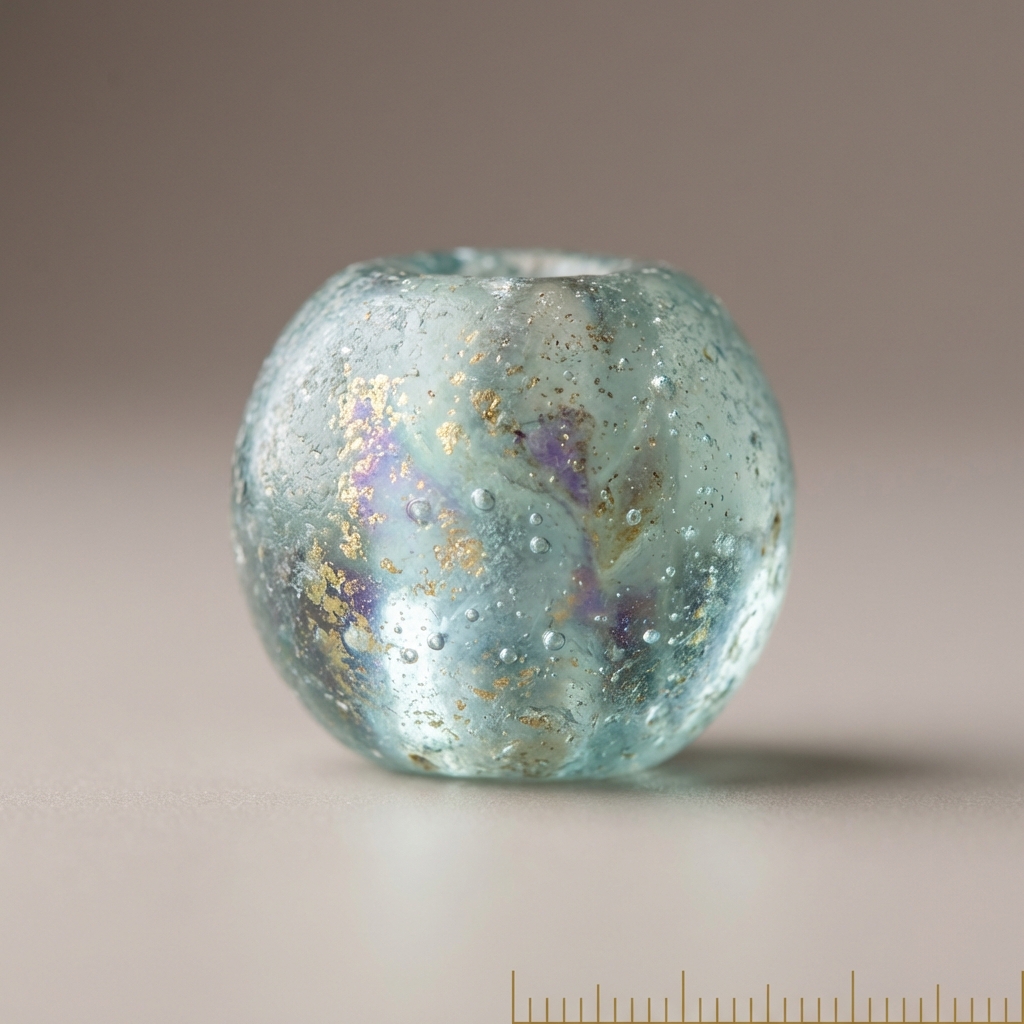
Beads and inlaid glass were commonly set into metal rings and mounts, with the setting technique affecting how much of the glass is visible and which surfaces are most useful for identification, for example undersides and joins where attachment materials and wear patterns may be examined British Museum Roman glass.
Visual and scientific markers of authentic ancient glass
Surface weathering and patina
Long-buried glass typically develops age-consistent weathering such as iridescence, surface crizzling and chemical leaching called saponification; these signs result from chemical interaction with burial soils and can appear as subtle layered sheens and roughened surfaces rather than as even artificial coating.
Request detailed provenance and restoration notes, scaled underside and join photos, and consider non-destructive compositional testing when documentation is insufficient; use conservative handling and consult a conservator for active work.
Because similar surface effects can be simulated, experts combine visual cues with scientific checks; for example, the pattern of iridescence and the presence of layered leaching are interpreted alongside compositional data to assess consistency with known ancient glass groups Metropolitan Museum of Art overview.
Microscopic and compositional indicators
At microscopic scale, characteristic micro-bubble distributions, mineral inclusions and working marks contrast with modern glass made using different fluxes and temperatures; such microscopic markers are routinely used in professional authentication workflows.
Compositional analysis that maps major and trace elements can group an object with known Roman glass types and is particularly decisive when provenance is incomplete, though access to such laboratory testing is often limited by cost and availability for private buyers compositional analysis British Museum Roman glass.
Authentication workflow: steps experts take when provenance is incomplete
Start with documentation review: request provenance statements, collection history, prior ownership notes and any verification letters that accompany a piece, because documentary context is the first line of evidence and can materially reduce uncertainty in many cases Portable Antiquities Scheme guidance.
Next, gather high-resolution images showing joins, undersides, rims and any attachment points, and ask for condition and restoration notes that explicitly say what was stabilised, repaired or left untouched; these details help determine whether visible features reflect ancient manufacture or later intervention.
When images and documents leave questions, non-destructive portable techniques such as handheld XRF or bench microscopy can provide compositional and surface evidence without harming the object; referral to a third-party laboratory for fuller compositional analysis is advisable when purchase depends on a firm attribution, but buyers should weigh cost and timing against risk.
Buyer checklist: what to request before buying ancient glass jewellery
Before deciding, ask for a clear condition report, detailed restoration notes, and any provenance documentation; these items are the minimum that can reasonably be requested from a seller and form the basis for due diligence Portable Antiquities Scheme guidance.
Insist on high-resolution photos of joins, undersides, and context shots, plus measurements and weight; images that include a scale and multiple light angles are especially useful for recognising surface weathering and toolmarks.
Image and document checklist for assessing ancient glass jewellery
Use natural light and include scale
Clarify return, authentication and dispute policies in writing before purchase; if the seller cannot provide reasonable documentation or refuses measured photos, consider that a material risk factor.
Condition, conservation and safe handling for glass jewellery
Conservation guidance for archaeological glass emphasises stable, low-humidity storage, minimal handling and avoidance of household cleaners or abrasive materials; these basic measures protect patina and reduce the chance of mechanical damage Getty Conservation Institute.
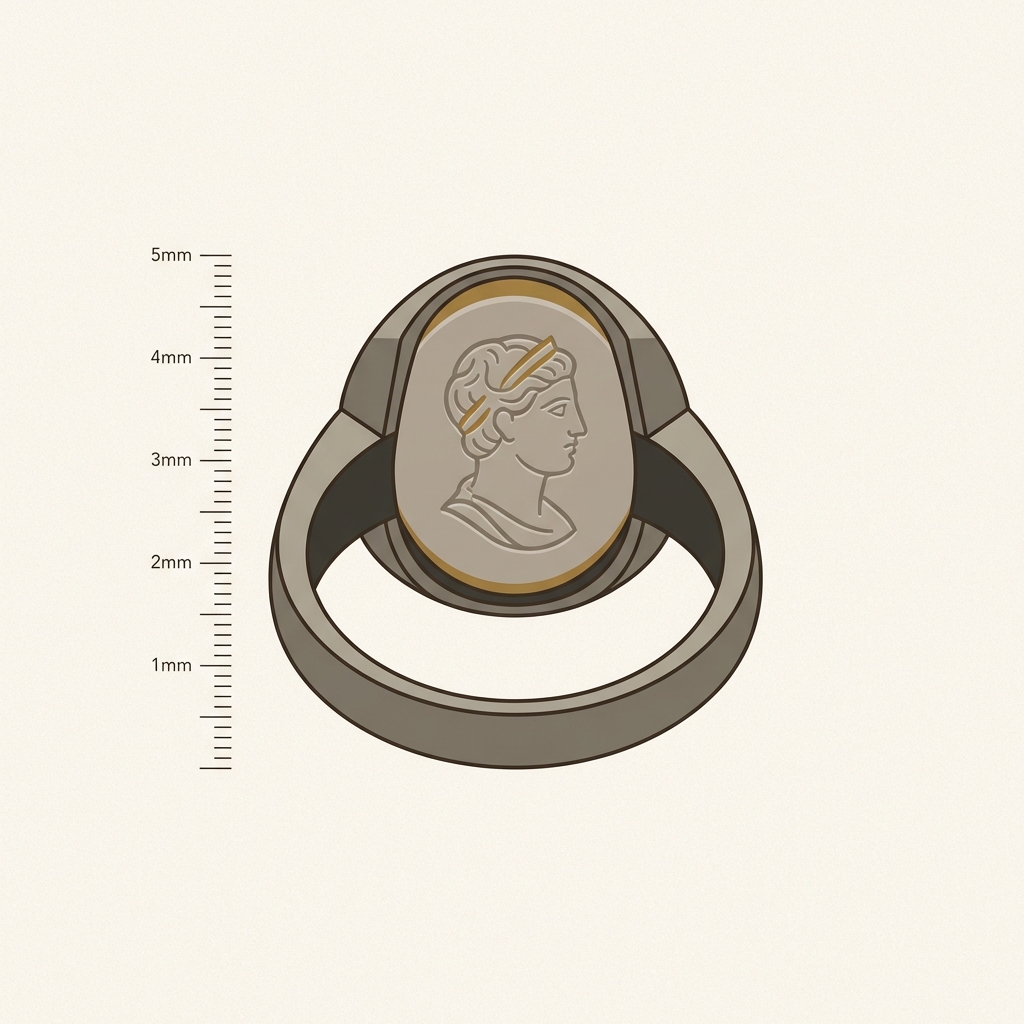
Active cleaning, structural repairs or any work that changes attachment materials should be performed only by accredited conservators who document interventions; restoration notes that state what was stabilised or repaired are important for buyers to understand the current condition and any limitations for display or wearing.
Common modern forgeries and red flags to watch for
Many modern forgeries mimic colour and surface patina but often fail compositional and microscopic tests, showing modern fluxes, inconsistent weathering or modern toolmarks that become visible under magnification; laboratory compositional analysis is therefore a primary check when provenance is incomplete British Museum Roman glass.

Red flags in listings include overly perfect condition for the claimed age, inconsistent weathering between different surfaces of the same object, missing underside images, and sellers who decline to provide provenance or close-up photos of joins and setting details.
Typical buyer mistakes and decision criteria
Common mistakes include relying on staged photos without scale or multiple angles, ignoring restoration notes, and assuming a polished patina equals age; these shortcuts increase the chance of misattribution.
A simple prioritisation rubric can help: first, insist on documentation and clear images; second, confirm condition and restoration disclosures; third, seek non-destructive testing if price or provenance warrants it; finally, weigh seller transparency and your own risk tolerance against budget.
Practical examples and photo-reading scenarios
Good listing scenario: a seller provides a clear provenance statement, scale photographs of the obverse and underside, close-ups of joins and the bezel, a condition report that notes any stabilisation, and a willingness to supply additional images on request. With those materials, a buyer can usually make a considered decision without immediate lab work Portable Antiquities Scheme guidance.
Ambiguous listing scenario: the catalogue photo shows a glossy surface with no underside view, the description lists only a period without provenance, and restoration notes are absent. In that case, ask for scaled underside images, close-ups of join lines, and any paperwork; if the seller cannot supply these, consider declining or insisting on a returnable trial period.
How sellers document provenance and restoration: what to ask for
Typical provenance elements useful to buyers include collection history, prior ownership notes, verification letters from specialists, and any catalogue or museum references; these items help situate an object within a traceable record rather than a lone listing Portable Antiquities Scheme guidance.
Restoration language should be specific: for example, a note that states an item was stabilised at a particular join and that loose fragments were consolidated gives materially different information than a generic statement that an item was repaired; request the exact wording and, if possible, before and after images of any intervention.
A role for expert curation, such as clear restoration notes and careful condition description, is to provide buyers with the context needed to judge a piece without implying guaranteed authenticity; Aurora Antiqua presents items with condition notes and documented context to help readers understand listing claims.
Conclusion: deciding with confidence and next steps
To decide with confidence, prioritise provenance documentation, condition and restoration notes, and clear images of undersides and joins; when those elements are insufficient, consider non-destructive testing or third-party compositional analysis as the next step, understanding that such testing may carry cost and lead time British Museum Roman glass.
When in doubt about handling or active conservation, consult an accredited conservator rather than attempting home cleaning; simple supportive steps like stable storage and minimal handling preserve surfaces and future testing options.
Look for consistent burial weathering such as iridescence or leaching, ask for high-resolution underside images and restoration notes, and request compositional testing if documentation is missing.
Daily wear increases risk of mechanical damage; limit handling, avoid moisture and chemicals, and consult a conservator before wearing fragile or heavily restored pieces.
They should state what was stabilised or repaired, describe materials used, and ideally include before and after photos or a conservator's report.
More from Aurora Antiqua
References
- Gold finger ring with glass intaglio: a lioness (1995.85.2), The Metropolitan Museum of Art, New York
- bague, Louvre site des collections, Musee du Louvre, Departement des Antiquites grecques, etrusques et romaines
- SF-A79B96, Roman copper alloy and glass finger-ring from Norfolk, Portable Antiquities Scheme, British Museum
- Internet Archaeol. 40. Atkinson and Preston. Objects of personal adornment, Internet Archaeology, Council
- Bagues et anneaux à l'époque romaine en Gaule, Persée, Persee (CNRS, ENS de Lyon, Ministere francais)
- Echoes of Antiquity: Thorvaldsen’s Collections as a Reservoir of Motifs, Thorvaldsens Museum Archives
- A. M. Caggiani u. a., Corroborating the autoptic identification, Wiley, Journal of Raman Spectroscopy
- Archaeological materials, Icon, The Institute of Conservation (UK)
- PubMed Central