


Looking for the real thing? Browse our Ancient Roman ring collection, each piece one of one, individually authenticated, with documented provenance. For the background, see the guide to buying ancient artifacts.
Can ancient Roman glass jewelry be valuable? A concise overview
Collecting ancient roman glass jewelry can be rewarding because a single bead or pendant can carry cultural meaning and centuries of wear, but value is rarely a function of age alone. Market confidence usually rests on a combination of documented provenance, condition notes and comparators from museum or auction records, rather than an isolated aesthetic claim, so begin with documentation and careful observation before assuming worth Portable Antiquities Scheme guidance on identifying glass.
A layered assessment is the standard used by conservators and many collecting institutions: start with a visual inspection that looks at colour, bubble patterns, mold seams and pontil marks; use non-destructive at-home methods such as UV and magnified examination for repairs; and reserve compositional or instrumental tests for cases where provenance is unclear or stakes are high Getty Conservation Institute guidance on glass conservation.
Adopt a conservation-first mindset from the outset: stabilise fragile objects, avoid solvents or abrasive cleaning that can remove original surfaces, and record clear condition notes and photographs before any appraisal or testing is arranged, because improper treatment can reduce both scientific and market confidence Christie’s Education guidance on caring for antique glass.
Download the quick visual-check checklist for small glass antiquities
Download a short printable visual-check checklist or sign up for more guides to help document and photograph small antiquities before seeking an appraisal or contact us for assistance.
What is ancient Roman glass jewelry? Definition, typical forms and period cues
By "ancient Roman glass jewelry" this guide refers to glass components made or altered in Roman-period contexts that were used as wearable elements, such as beads, pendants, inlaid intaglios and small glass settings set within metal mounts. These items often survive as fragments or stabilized pieces and should be understood as antiquities rather than modern fashion reproductions Corning Museum of Glass identification guide.
Typical period cues visible on Roman glass include certain colour ranges produced by known raw material recipes, bubble morphologies from hand-blown work, faint mold seams on pressed forms and occasional pontil marks where a glass object was detached from a rod during manufacture. These visual features are reliable first-line indicators but give an estimate rather than a definitive date without supporting provenance or analysis British Museum research on Roman glass technology.
Not every glass bead or pendant with an old appearance is Roman in origin. Workshop practices and styles evolved over centuries and were sometimes copied later, so treat visual dating as a reasoned estimate and consider escalation to laboratory approaches when attribution alters the object's importance or price Corning Museum of Glass identification guide.
How to examine ancient Roman glass jewelry: a step-by-step framework
1. Visual inspection checklist (color, bubbles, seams, pontil scars)
Begin with a systematic visual checklist: note colour (including tints that may indicate specific fluxes or corrosion layers), catalogue bubble types and sizes, look for mold seams on pressed elements, and search for pontil scars or other tool marks. These attributes are primary first-line indicators used by museum conservators for preliminary dating and assessment Corning Museum of Glass identification guide.
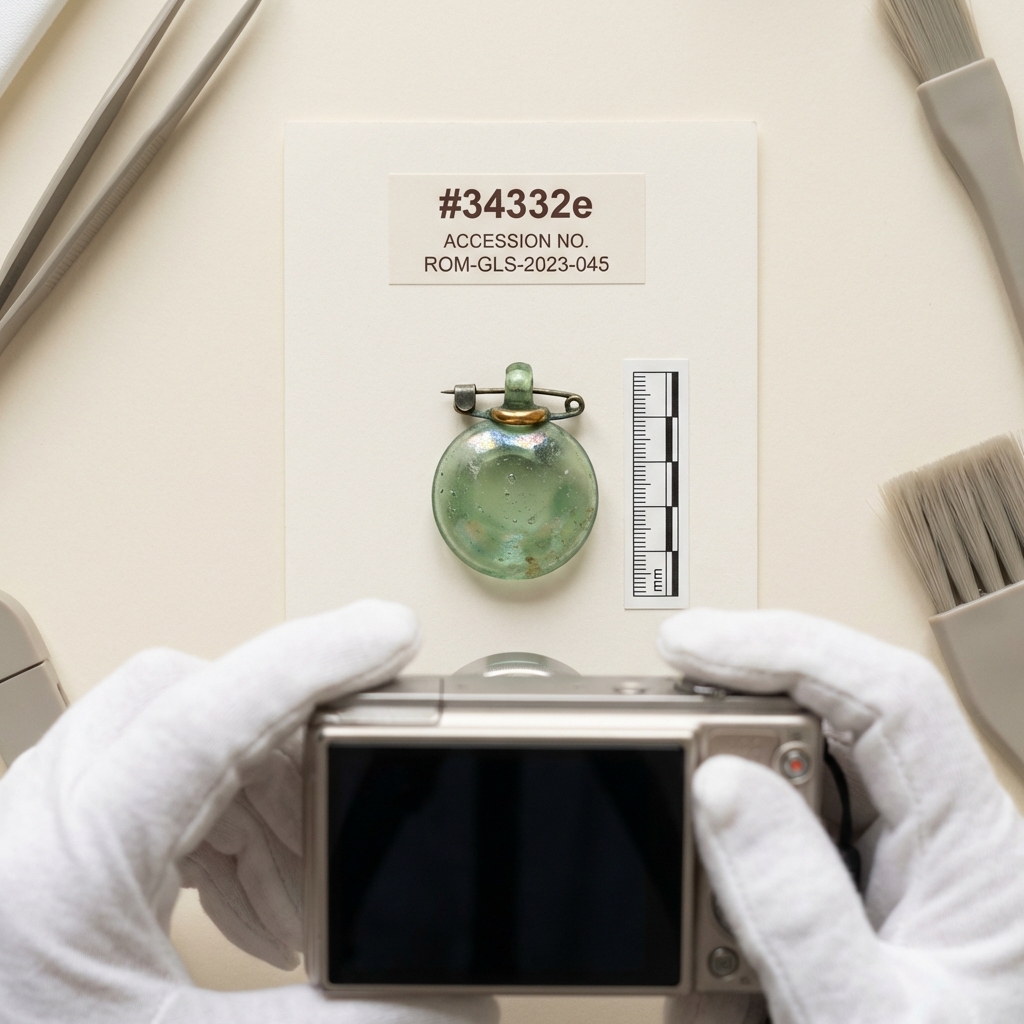
Record each observation in condition notes, using consistent terms such as bezel, patina, and intaglio where appropriate, and avoid making definitive dating statements without corroboration from provenance or tests. Keep the notes concise and use measurements and scale photographs to document features.
2. Non-destructive at-home checks (UV, magnification, specific-gravity)
Next, use non-destructive checks to look for later interventions. A handheld UV lamp will often reveal modern repairs, overpainted surfaces or surface consolidants that fluoresce differently than original glass, making it a standard part of at-home inspection routines recommended by conservation institutes Getty Conservation Institute guidance on glass conservation.
Use a layered approach: record condition notes and photos, perform careful visual inspection for colour, bubbles, seams and pontil marks, run non-destructive checks like UV and magnification, and consult a conservator or lab for compositional testing if provenance is unclear or stakes are high.
Magnified examination with a 10x loupe or low-power microscope can show fresh toolmarks, recent adhesive fills or sharp mold seams that differ from worn, ancient surfaces. Specific-gravity (weight relative to volume) and simple refractive-index checks can be useful, inexpensive ways to distinguish some modern blown glass from compositions typical of Roman material, but these tests are suggestive rather than conclusive and should be interpreted cautiously Portable Antiquities Scheme guidance on identifying glass.
3. Photographic and documentation protocol before any treatment
Photograph all sides with a neutral background and scale, record measurements, and log any labels or prior collection history. If the object will be moved or offered for sale, request written condition notes and any prior provenance statements before shipment, because provenance documentation significantly affects confidence in attribution Christie’s Education guide to antique glass.
Take high-resolution detail shots of suspected repairs, mold seams and the base or edges where pontil scars might appear. These photos serve both conservation and commercial needs and avoid the risk of losing context if the object is handled or treated.
4. Decision points for laboratory tests
If visual and non-destructive checks leave key questions unresolved, consider lab-based compositional analysis. Portable XRF, SEM/EDS and isotopic tests provide substantially stronger evidence about raw materials and manufacturing provenance and are commonly cited in published Roman-glass studies as decisive tools when attribution matters Journal of Glass Studies overview of analytical methods.
Use lab testing selectively: when provenance is absent or contradictory, when the object has unusual typology that could change its significance, or when a sale or loan requires a higher confidence level. Early consultation with a conservator or qualified appraiser will help define which test or combination of tests is appropriate and how to sample, if sampling is required Getty Conservation Institute guidance on glass conservation.
What makes old glass jewelry valuable? Provenance, condition and market comparators
Provenance and collection history are primary drivers of market confidence: clear prior ownership, documented collection history or written condition reports often increase the credibility of an attribution more than an unattributed age claim alone, so request and preserve any provenance notes connected to the piece Portable Antiquities Scheme guidance on identifying glass.
Condition and restoration history strongly affect both scientific and market value. Intact original surfaces, stable patina and minimal invasive repair typically make an object easier to place and compare with published comparators, while undocumented or heavy restoration can reduce confidence and desirability Christie’s Education guidance on antique glass.
For valuation context, use auction catalogues and museum collection records as comparators rather than relying on age language alone. Auction results and museum catalogues show how similar forms, iconography and states of preservation sell and are described, and they can be a practical starting point for realistic expectations British Museum research on Roman glass technology.
When and how to use technical tests for ancient Roman glass jewelry
Compositional and instrumental analyses provide the strongest scientific evidence for provenance and manufacturing period, and they are widely used in published Roman-glass studies for that reason. These techniques help move an attribution beyond visual probability to compositional consistency with known groups Journal of Glass Studies overview of analytical methods.
Portable XRF gives rapid elemental "fingerprints" that can show flux and colorant patterns typical of certain periods or workshops, SEM/EDS can reveal microstructural features and inclusions, and isotopic analysis can sometimes connect raw materials to geographic sources; each method has strengths and limitations and is best chosen to answer a specific question Getty Conservation Institute guidance on glass conservation.
Where to find testing: many university conservation science departments, museum labs and independent commercial specialists offer portable XRF and SEM services. Costs and lead times vary, so discuss objectives with a conservator to decide whether a non-destructive scan or a more detailed analysis is warranted for a particular item Journal of Glass Studies overview of analytical methods.

Conservation-first steps: stabilizing, documenting and handling old glass jewelry
Prioritise conservation-first actions: photograph, measure and write condition notes before any cleaning; avoid solvents and abrasive methods that can remove patina or evidence; or seek professional restoration and stabilise loose fragments with reversible supports rather than immediate adhesives, following standard conservation advice Getty Conservation Institute guidance on glass conservation.
For packing and shipment, use layered, stable cushioning and separate small items to prevent contact; label each object with a catalog number linked to your condition notes. If an object is fragile or flaking, pause before transporting and seek conservator input on handling and packaging Christie’s Education guidance on caring for antique glass.
When preparing for appraisal or sale, request written condition notes, any prior lab reports and collection history. These documents often carry more weight with specialists than a seller’s short description and help a conservator or appraiser decide whether further analysis is needed Portable Antiquities Scheme guidance on identifying glass.
Common mistakes when assessing old glass jewelry and how to avoid them
Over-cleaning and aggressive polishing are among the most damaging mistakes: removing patina or original residues can erase manufacturing traces and reduce both scientific and market confidence, which is why many conservation guides advise minimal intervention before documentation and appraisal Getty Conservation Institute guidance on glass conservation.
Relying on a single visual cue or on unsupported provenance claims can lead to misattribution. For example, a crisp mold seam might suggest a later pressed reproduction if it lacks surface wear consistent with age, so use multiple checks and document discrepancies rather than making definitive claims from one observation Corning Museum of Glass identification guide.
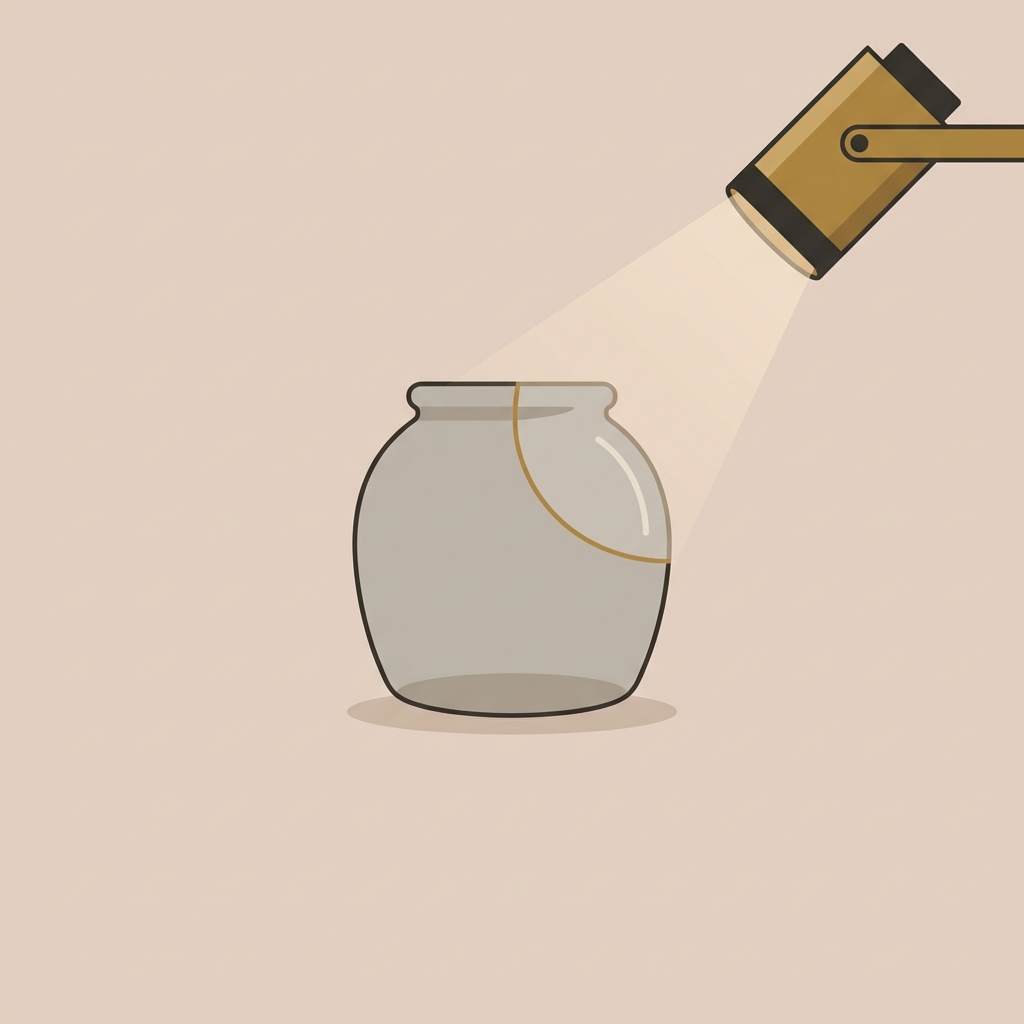
The misreading of modern repairs as original features is common but avoidable: use UV inspection and magnification to look for adhesives, fills or different fluorescence patterns that indicate later work, and record restoration notes clearly when they are present Getty Conservation Institute guidance on glass conservation.
assist at-home inspection of small glass antiquities
Use at low light and without solvents
Practical examples: reading features on representative pieces
Example A, a bead with bubbles and a pontil scar: if a bead shows small, elongated bubbles, a worn pontil scar and overall surface abrasion consistent with burial or long use, these visual cues together support an older origin, though compositional checks or provenance improve confidence Corning Museum of Glass identification guide.
Example B, a pendant with a visible seam and later repair detected by UV: a clear mold seam combined with a bright UV fluorescence along a fracture line often indicates a later pressed manufacture or a modern repair; magnification and condition notes will usually make this interpretation more reliable than colour alone Getty Conservation Institute guidance on glass conservation.
How provenance changes interpretation: a small glass intaglio that matches Roman typology but comes with documented 19th century collection history will be read differently than the same object with no history; documented collection notes, labels and prior conservation reports shift the evidentiary balance in favour of a confident attribution Portable Antiquities Scheme guidance on identifying glass.
Deciding next steps: when to seek experts and how to protect what you have
Stop and consult a conservator or qualified appraiser when the object shows fragile surfaces, undocumented repairs, or when attribution materially affects a sale or loan. High-stakes items, unclear provenance or contradictory visual cues are reasonable escalation triggers for professional analysis Getty Conservation Institute guidance on glass conservation.
When requesting documentation to support an appraisal, ask for written condition notes, any prior collection history or labels, and copies of lab reports if available. These items help a specialist assess comparators and recommend specific tests or conservation steps Christie’s Education guidance on caring for antique glass.
As interim preservation measures, keep the object in a stable, moderate environment, avoid direct sunlight and handle it minimally with clean gloves. Use cushioning and separate packing during storage or transport and maintain your recorded condition notes until professional advice is obtained Portable Antiquities Scheme guidance on identifying glass.
Visual inspection is a useful first step and can show indicators such as color, bubble types, mold seams and pontil marks, but it provides an estimate and is most reliable when combined with provenance or technical analysis.
You can perform non-destructive checks like UV inspection, magnified examination and basic specific-gravity comparisons to narrow possibilities, but these methods are suggestive and not definitive for attribution.
Seek professional input when provenance is unclear, the piece is fragile, suspected repairs affect attribution, or when sale or loan requires higher confidence from compositional or instrumental testing.
More from Aurora Antiqua
References
- Auction Terminology, Christie's
- Publication 561 (12/2025), Determining the Value of Donated Property, Internal Revenue Service (IRS), USA
- Archaeological materials, Icon, The Institute of Conservation (UK)
- E.C.C.O. Professional Guidelines (II): Code of Ethics, European Confederation of Conservator-Restorers'
- ICOM-CC, International Council of Museums, Committee for Conservation
- Gold finger ring with glass intaglio: a lioness (1995.85.2), The Metropolitan Museum of Art, New York
- SF-A79B96, Roman copper alloy and glass finger-ring from Norfolk, Portable Antiquities Scheme, British Museum
- Internet Archaeol. 40. Atkinson and Preston. Objects of personal adornment, Internet Archaeology, Council
- Handheld XRF In Cultural Heritage: A Practical Workbook for Conservators, The Getty
- XRF Technical Overview, archaeometry.missouri.edu
From Aurora Antiqua
We sell authenticated ancient & medieval pieces, each individually examined before listing and backed by a Lifetime Authenticity Guarantee. One of a kind, sold once, never reproduced.
Browse Ancient Roman Rings →