


Looking for the real thing? Browse authenticated Ancient Roman rings, each piece one of one, individually authenticated, with documented provenance. For the background, see the guide to Roman jewelry.
How to read this guide about old roman jewelry
This guide is written for collectors and history minded buyers who want clear, practical guidance on claims about old roman jewelry, including whether Romans wore diamonds. The main conclusion, stated plainly, is that classical texts mention adamas but archaeological and analytical evidence makes securely identified, faceted diamonds in Roman jewellery uncommon and conditional rather than assumed, a nuance I will return to in the steps below GIA history of diamonds
The evidence discussed here comes in three complementary kinds: classical literature that uses terms such as adamas, museum surveys and catalogue practice that record what survives in collections, and archaeometric and spectroscopic studies that test stone composition. When I cite a finding below I link to a representative source so you can follow the original catalogue or study British Museum exhibition overview
@auroraantiqua, Jakob's behind the scenes for Aurora Antiqua
Download the buyer's checklist PDF or view curated listings on the Aurora Antiqua site to see how documentation is presented.
Quick answer: did Romans wear diamonds?
Short answer for collectors: classical authors do refer to adamas, a term sometimes translated as diamond, but surviving Roman jewellery is dominated by carnelian, garnet, amethyst and rock crystal, and securely identified faceted diamonds in standard Roman settings are rare or unproven The Met: Jewellery in the Roman world
Because terminology in texts can be broad and because later gem cutting produced the polished brilliant facets associated with modern diamonds, a cautious approach is needed: demand clear provenance, high quality photos, and independent testing before accepting a 'Roman diamond' attribution About us, International Association of Dealers in Ancient Art

What classical texts say about adamas and how that relates to old roman jewelry
Pliny and the ambiguity of adamas
The Roman author Pliny the Elder uses the word adamas in ways that can mean very hard or irresistible stones rather than a single mineral as modern gemmology defines it, so a textual mention alone does not identify a cut diamond in a specific ring or brooch Pliny, Natural History
Why textual mentions alone cannot prove a gem ID
Classical descriptions often serve rhetorical or prestige functions and do not include the material tests modern science uses, which means a translation of adamas is suggestive but not definitive for material identification unless the object has independent analytical confirmation GIA history of diamonds

Archaeological and museum evidence: which gems actually show up in Roman jewellery
Survey findings from major collections
Large museum surveys and exhibition catalogues show that the surviving corpus of Roman gems is heavily weighted toward materials such as carnelian, garnet, amethyst and rock crystal, and that curatorial descriptions emphasize intaglio and cabochon forms in 1st to 3rd century contexts British Museum exhibition overview
Common gem types and typical settings
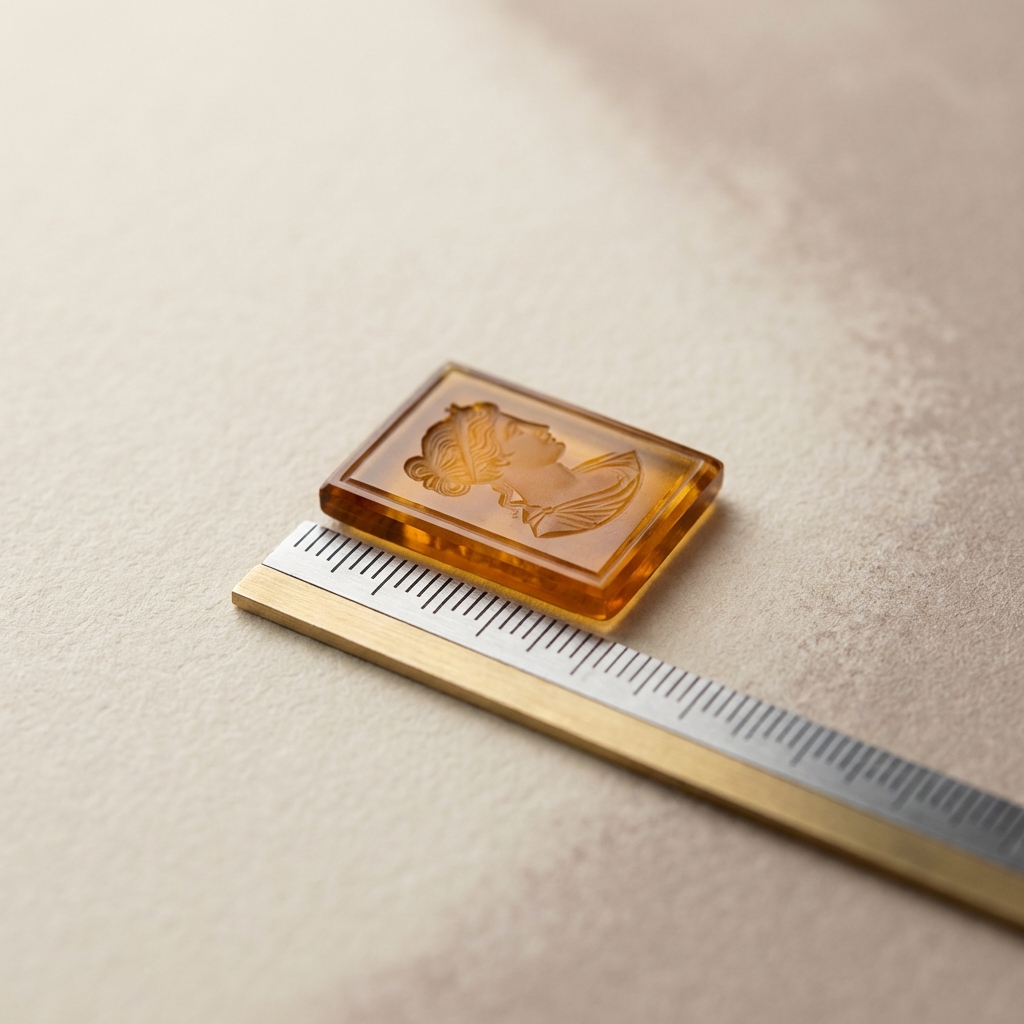
In museum entries and archaeological reports the common patterns are intaglio engraved gems set in closed bezels and cabochons, often on rings and signet pieces; these forms fit the physical properties of the common gem types named above more comfortably than they fit brilliant faceted stone cutting The Met: Jewellery in the Roman world
Gem cuts, settings and why faceted diamonds are archaeologically unlikely in old roman jewelry
Overview of Roman gem-working techniques
Roman gem-work often focuses on intaglio engraving, shallow relief portraits, and cabochon polishing rather than on faceting aimed at optical brilliance; those techniques produce wearable and durable surfaces suited to seal rings and signet use rather than to the optical play prized in modern diamond cutting The Met: Jewellery in the Roman world
Modern brilliant faceting, which increases light return by precise pavilion and crown angles, appears in the archaeological record later than the Roman imperial period; while exceptional finds could theoretically include early diamonds, the typical workshop tools and practices documented for the Roman period do not align with the production of polished brilliants Amnon Rosenfeld, Michael Dvorachek, Shua Amorai-Stark, Elsevier, Journal of Archaeological Science
Classical texts refer to adamas, but archaeological and analytical evidence shows faceted diamonds in Roman jewellery are rare and claims require provenance and scientific testing.
That technical mismatch is why archaeological contexts with documented Roman manufacture usually yield stones and cuts consistent with cabochon and intaglio approaches rather than with brilliant faceting The Met: Jewellery in the Roman world
Analytical studies: glass, rock crystal and intentional imitations
What archaeometric analyses reveal
Recent archaeometric work shows that many high sparkle stones in Roman contexts are glass or worked rock crystal, deliberately chosen or modified to imitate the appearance of more precious stones, and laboratory analyses such as spectroscopy and microstructural study distinguish these materials from true diamond Gold finger ring with glass intaglio: a lioness (1995.85.2), The Metropolitan Museum of Art, New York and Raman spectra can help with identification diamond Raman spectrum
How imitation materials were used to mimic diamond-like appearance
Glass cutters and rock crystal workers could produce high gloss and reflective surfaces that, in low magnification or in period inventories, were described with terms that later translators or cataloguers sometimes likened to diamond; curators therefore caution against assuming visual sparkle equals diamond without testing British Museum exhibition overview
Trade, provenance and the arrival of Indian diamonds into the Mediterranean
What trade history tells us about diamond availability
Trade evidence indicates that Indian diamonds reached the Mediterranean world by late antiquity, but quantities were limited and literary records mentioning precious stones often outnumber secure, tested archaeological finds, so historical availability does not equate to archaeological prevalence Oxford Research Encyclopedia article on gemstones and trade (see also the Vallerano Diamond study Vallerano Diamond from Ancient Rome)
Why limited supply matters for archaeological visibility
Even if some diamonds were imported as luxury objects for elite exchange, the small numbers involved and later reuse or recutting reduce the chances of finding an unambiguous Roman setting that retains both the original stone and clear documentation, which is why provenance and collection history are crucial when a seller claims a Roman diamond GIA history of diamonds
quick provenance and catalogue search guide
search museum catalogues and exhibition records for matching entries
A practical framework to assess a claimed Roman diamond
Step-by-step checks for collectors
Start with provenance: ask for collection history, acquisition records, and any prior catalogue or exhibition references, because clear documentation is the single most important early filter before technical testing is requested British Museum exhibition overview, or consult our Ancient Roman Rings collection
Request high resolution images that include the pavilion and under-bezel views, and ask for condition notes and restoration statements; images that show re-cutting, modern adhesive, or inconsistent mounting are red flags and should be followed by a request for laboratory analysis if the seller maintains the diamond attribution The Met: Jewellery in the Roman world. You can compare with examples in our rings collection
When to ask for independent testing
If provenance is incomplete or if the material claim has monetary or curatorial importance, request Raman spectroscopy, FTIR or X-ray analysis, because these non destructive methods can distinguish diamond from glass, quartz or other imitations and provide a reliable basis for attribution Echtheitsuntersuchungen (authenticity testing), Curt-Engelhorn-Zentrum Archäometrie (CEZA), Mannheim. For practical information about Raman spectroscopy in gem testing see an industry overview Raman spectroscopy overview
Condition, restoration and documentation notes to check on listings
What restoration can tell you about an item
Restoration notes should specify what was stabilized, what was repaired, and what was left untouched; a transparent statement about repairs helps identify modern interventions that can confuse material identification, for example a modern re setting or re cut stone British Museum exhibition overview

How documentation and provenance notes should be presented
Good listings include prior ownership notes, collection references, and any third party verification letters; when such documentation is missing or vague, treat an assertion of 'Roman diamond' as provisional and ask for lab reports or visible catalogue citations The Met: Jewellery in the Roman world
A buyer's checklist for collectors of ancient rings and artefacts
Immediate questions to ask a seller: can you provide the object's full provenance, high resolution photos including pavilion and underside, a clear condition and restoration statement, and any lab reports or prior catalogue entries before I consider a purchase British Museum exhibition overview
When to pass: if provenance is absent, if photos hide the setting or under-bezel area, or if the seller uses overconfident language without lab evidence, decline or request independent testing; acceptable seller phrasing includes 'described as' or 'appears to be' rather than categorical claims The Past Polluted: A Pigovian Approach to the Black Market in Antiquities, International Journal of Cultural
Common misidentifications and red flags
Glass and rock crystal can create convincing sparkle that is misread as diamond, and weathering or surface wear can mimic facet edges; modern re cutting and replacement stones also create false positives, so visual judgement alone is unreliable A. M. Caggiani u. a., Corroborating the autoptic identification, Wiley, Journal of Raman Spectroscopy
Wording that should raise concern includes broad historical claims without catalogue references, or phrases that downplay missing documentation; insist on specifics and be skeptical of vague provenance language British Museum exhibition overview
Museum examples and case studies from curatorial catalogues
Representative catalogue entries and what they show
Major collections such as The British Museum and The Met often describe materials cautiously when identification is uncertain, noting 'described as' or 'appears to be' and publishing condition statements rather than asserting a diamond attribution without testing British Museum exhibition overview
How museums treat ambiguous stones
Museum practice illustrates best practice for collectors: clear documentation, transparent restoration notes, and, where necessary, scientific testing before a firm material identification is published, which is a standard you should expect from reputable sellers as well The Met: Jewellery in the Roman world
How Aurora Antiqua approaches diamond claims and listing notes
Aurora Antiqua acts as a curator and reference layer for curated ancient rings and small artifacts, presenting condition notes, restoration notes and provenance references when available so buyers can assess claims about materials and dating in context.
When a listing mentions a possible diamond the language used is conditional and factual, and the shop will provide visible documentation or point to prior catalogue entries where they exist; buyers are encouraged to request lab reports when a diamond attribution is important to their purchase decision.
Takeaways and next steps for collectors
Treat 'Roman diamond' claims cautiously: require provenance, clear condition and restoration notes, good images of the setting and pavilion, and independent scientific testing where material identification matters Portable XRF for paintings and metals authentication, npj Heritage Science (Springer Nature), DOI
Next steps: ask sellers for Raman or FTIR reports, search museum catalogues for comparative entries, and use conservative language when interpreting descriptions until testing confirms the material The Met: Jewellery in the Roman world. You can also view curated highlights
No, sparkle alone is not reliable. Many Roman era stones that look bright are glass or rock crystal and need scientific testing to confirm diamond.
Request Raman spectroscopy, FTIR or X-ray analysis, as these non destructive methods can distinguish diamond from glass and quartz.
No, literary mentions are informative but not definitive; require physical documentation or lab reports for material identification.
More from Aurora Antiqua
References
- Luxury Arts of Rome, The Metropolitan Museum of Art, New York
- Amnon Rosenfeld, Michael Dvorachek, Shua Amorai-Stark, Elsevier, Journal of Archaeological Science
- A. M. Caggiani u. a., Corroborating the autoptic identification, Wiley, Journal of Raman Spectroscopy
- Gold finger ring with glass intaglio: a lioness (1995.85.2), The Metropolitan Museum of Art, New York
- bague, Louvre site des collections, Musee du Louvre, Departement des Antiquites grecques, etrusques et romaines
- Echtheitsuntersuchungen (authenticity testing), Curt-Engelhorn-Zentrum Archäometrie (CEZA), Mannheim
- About us, International Association of Dealers in Ancient Art
- The Past Polluted: A Pigovian Approach to the Black Market in Antiquities, International Journal of Cultural
- Portable XRF for paintings and metals authentication, npj Heritage Science (Springer Nature), DOI
- An Introduction to Gem Treatments, Gemological Institute of America (GIA)