


Looking for the real thing? Browse authenticated Ancient Roman rings, each piece one of one, individually authenticated, with documented provenance. For the background, see the guide to Roman jewelry.
What we mean by Roman jewellery: definition and scope
When curators and reference works discuss Roman jewellery they group it chiefly as rings, fibulae (brooches), necklaces, bracelets and earrings used across the Roman world from the late Republic through Late Antiquity; this grouping reflects both object function and how collections are catalogued in museums today, and it helps collectors understand what to expect when examining an object description Metropolitan Museum overview
Geographically, the term covers the Mediterranean heartlands and a broad set of provinces where local workshops adapted imperial fashions, so typologies vary by region and period; collectors should read regional catalogues when seeking close parallels to a given form British Museum collection overview
The material spectrum also helps define categories: high-status objects tend to use gold and silver while everyday jewellery commonly appears in copper-alloys or bronze, with glass and glazed faience appearing across social levels; this distinction will recur in later sections when we discuss materials and their social meaning Metropolitan Museum overview
Main types of Roman jewellery: rings and intaglios
Rings were perhaps the most personal and varied class of Roman adornment, ranging from simple hoop bands to signet rings with carved intaglios used as seals; typical ring anatomy includes a hoop, shoulders and a bezel that held a gemstone or an engraved seal, and wear on the bezel often indicates repeated use as a seal Oxford Research Encyclopedia section on jewellery (Wikipedia overview)
Signet and intaglio rings functioned both as identifiers and as practical seals for documents; the carved surface of a carnelian or agate intaglio can show characteristic contact wear and small chips where it was repeatedly impressed, which is a useful diagnostic when evaluating a listing or a photograph British Museum collection overview
Decorative rings include plain hoops, rings with bezel settings and rings set with cabochons; gemstones commonly used include carnelian, agate and amethyst, and these appear as both polished cabochons and carved intaglios depending on the ring's function and status Metropolitan Museum overview
Other common object types: fibulae, necklaces, bracelets and earrings
Fibulae were the practical fasteners for clothing and a primary non-ring jewellery class; they occur in many regional forms and were often adapted to local fashions and fabric types, so typology can help narrow a find to a particular area or period British Museum collection overview

ToolType: checklist Purpose: detailed photo and measurement checklist for listings Fields: Overall length, Weight, Photos, Close-up of joins, Material notes, Condition notes Defaults: , , , , , Params: Notes: Use with original photographs
Necklaces and bead strings commonly feature glass and faience alongside gemstone beads; because glass bead types and manufacturing styles change over time, bead typology is a helpful comparative tool for dating and regional attribution Materials and manufacture technical study Romanasum study
Bracelets and earrings range from simple bronze bands worn daily to more elaborate metalwork and gem-set pieces associated with higher status; the choice of metal and finish often signals likely use, whether everyday wear or display at formal occasions Metropolitan Museum overview
Materials Romans used and what that tells collectors
Roman jewellery uses a clear material hierarchy in many contexts: gold and silver feature in elite pieces and are often associated with carved intaglios, while copper-alloys and bronze are widespread in everyday items; understanding this pattern helps collectors assess whether a metal choice fits the claimed status of a piece Metropolitan Museum overview History overview
Gemstones such as carnelian, agate and amethyst appear across Roman jewellery and may be present as carved intaglios or polished cabochons; photographic examination of mount style and bezel can indicate whether a stone was carved as a seal or used purely for ornament Materials and manufacture technical study
See curated examples and condition notes on our social journal
If you prefer to inspect curated examples that include condition and provenance notes, consider reviewing listings with transparent documentation and clear photographs to see how materials and wear are recorded
Collectors should treat material identification from photographs as tentative; compositional analyses give firmer answers where available, but such tests are not yet complete for all provinces so combining visual assessment with documentation is the practical route Materials and manufacture technical study
Primary manufacturing techniques and finishes
Major techniques recorded in museum and technical literature include casting, filing and joining, chasing and repoussé for surface detail, granulation for decorative beadwork, and carved intaglio engraving for seals; each technique leaves characteristic traces that are visible to a careful examiner, such as filing marks along joins or the tiny spheres of granulation attached to a backing Oxford Research Encyclopedia section on jewellery
Casting often produces a slightly rough internal surface and a sprue mark that, when removed, leaves evidence of a join; by contrast, chased and repoussé work shows tool-directional marks on the surface that can be compared with conservation reports for confirmation Metropolitan Museum overview
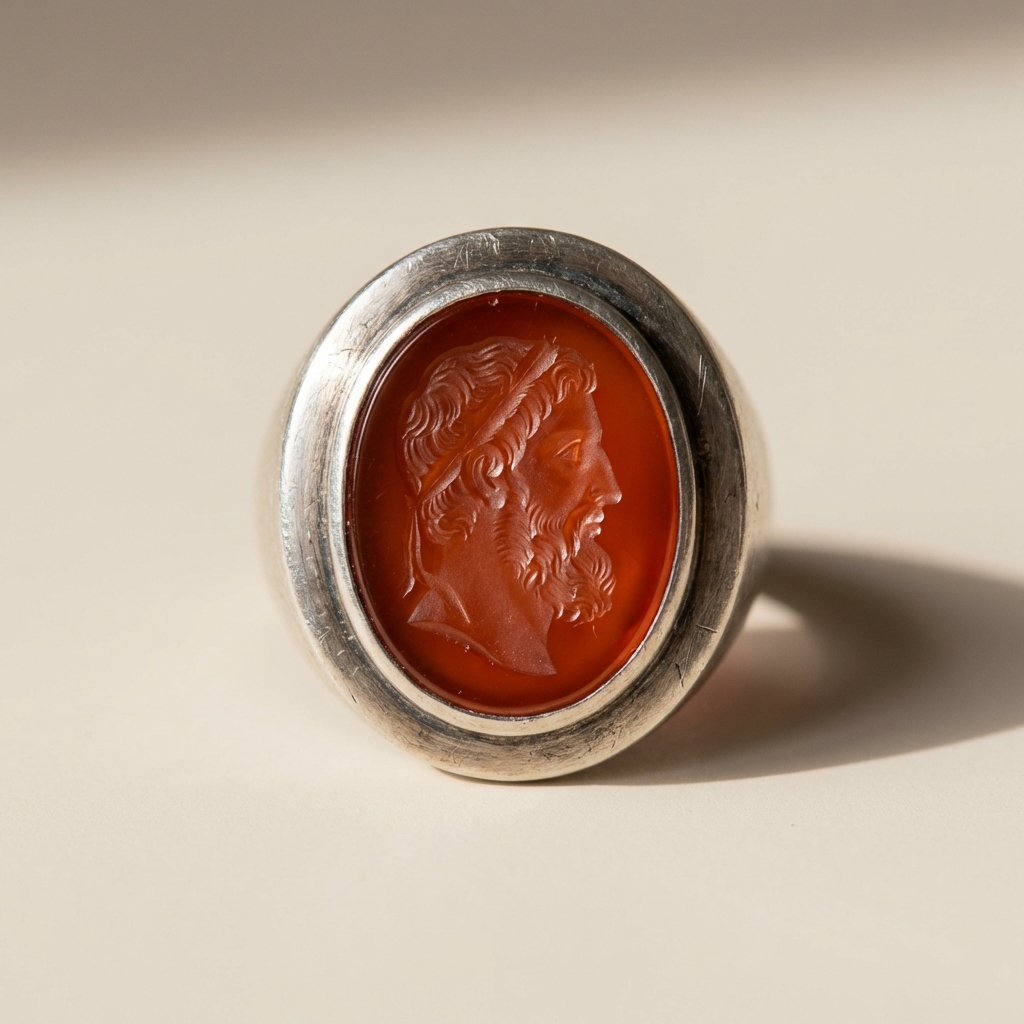
Carved intaglio engraving is itself a technical marker: the depth and microscopic tool marks on a seal can indicate hand-carving versus later recutting, and careful images or a conservation report can help distinguish historical wear from modern reworking Oxford Research Encyclopedia section on jewellery
Making sense of social meaning: status, gender and symbolism
Scholars link materials and motifs to social signalling: elites are more likely to wear gold and carved intaglios while lower-status individuals commonly used bronze and glass, but these patterns should be described as tendencies rather than universal rules Internet Archaeol. 40. Atkinson and Preston. Objects of personal adornment, Internet Archaeology, Council
Motifs-animals, deities, mythological scenes-could function as personal identifiers, fashion choices, or amuletic symbols; interpreting iconography benefits from contextual evidence such as findspot, associated objects or well-documented parallels in museum catalogues Gemstones from Roman Britain: Recorded in the Portable Antiquities Scheme, University Debrecen, Hungary
How dating and workshop attribution are established - and where gaps remain
Museums and scholars use stylistic chronology and object typology to date pieces, comparing forms and decorative vocabulary with securely dated examples in collections; this comparative method is a primary tool for attributing period and sometimes workshop influence Materials and manufacture technical study
Compositional analyses-metal assays and trace element studies-reveal regional variation and can suggest workshop networks, but the literature also notes gaps: province-wide, systematic surveys are still incomplete, so compositional evidence should be weighed with typology and provenance Materials and manufacture technical study
Romans wore rings, fibulae, necklaces, bracelets and earrings made in metals from gold to bronze and set with glass or gemstones; collectors can identify likely ancient pieces by examining materials, tool marks, patina, localized wear, and by requesting provenance and conservation documentation.
Given these limitations, the sensible collector verifies stylistic fits against museum catalogues and requests compositional or conservation reports where available before accepting a precise dating or attribution Bagues et anneaux à l'époque romaine en Gaule, Persée, Persee (CNRS, ENS de Lyon, Ministere francais)
Practical identification checklist for collectors
Start with condition: look for age-consistent patina, localized wear on intaglio faces, and signs of historical repairs recorded in restoration notes; these features are often noted in museum condition reports and help separate likely historic wear from modern interventions British Museum research blog on looking at ancient jewellery
Request documentation: collection history, prior ownership notes and any verification letters or conservation reports should be part of a responsible listing, and clear photographs of joins, the back of bezels and any hallmark or maker signs increase confidence British Museum research blog on looking at ancient jewellery

Red flags include suspiciously perfect surfaces, inconsistent patina across joins, or listings that omit condition and restoration notes; if a seller cannot provide clear close-ups and a conservation statement, proceed cautiously or seek an independent opinion British Museum research blog on looking at ancient jewellery
Restoration, preservation and how conservation notes affect value judgments
Restoration notes typically record what was stabilised, what repairs were carried out and what was left untouched; transparent notes allow a buyer to understand interventions that affect appearance and interpretive value British Museum research blog on looking at ancient jewellery
Conservation reports in listings should be read carefully: a note that pinpoints old repairs versus modern additions helps determine whether a feature is original workmanship or a later alteration that complicates attribution British Museum research blog on looking at ancient jewellery
When restorations are invasive they can obscure original tool marks or replace fragile elements, so request pre-restoration photographs or detailed conservator reports when possible to see what has been changed
Common mistakes and pitfalls when assessing Roman jewellery
Relying on a single stylistic trait-such as assuming a form alone fixes a date-can mislead; secure dating usually requires concordant evidence from typology, material analysis and provenance rather than a single visual cue Oxford Research Encyclopedia section on jewellery
Modern repairs or reconstructed mounts are sometimes mistaken for ancient joins; clear restoration notes and visible tool marks that match known ancient techniques help distinguish reworking from original construction British Museum research blog on looking at ancient jewellery
Ignoring provenance and condition data in favour of attractive photographs is a frequent error; a well-documented collection history and conservator notes often provide stronger evidence than stylistic guesswork alone British Museum research blog on looking at ancient jewellery
Short practical scenarios: reading three example listings
Scenario A: a gold intaglio ring with partial provenance. Positives would be a clearly photographed bezel with wear consistent with sealing, a stated collection history and a conservator note; red flags would be vague ownership claims and no images of the ring's interior or joins. In this scenario, asking for a high-magnification shot of the intaglio and any conservation documentation improves confidence Metropolitan Museum overview
Scenario B: a bronze fibula with modern repair. Look for inconsistent patina near the repair, different solder types or fresh tool marks that conflict with the rest of the surface; a seller who discloses restoration specifics and provides pre-repair images or a conservator's statement makes the piece easier to assess British Museum research blog on looking at ancient jewellery
Scenario C: a necklace of glass beads with unclear documentation. Positive signs include identifiable bead types that match dated parallels in museum catalogues and a clear description of stringing and clasp; if the listing lacks measurements, high-resolution photos and a provenance statement, request those before purchase Materials and manufacture technical study
How a curator or curated shop frames Roman jewellery listings
Reputable curators provide condition and restoration notes, clear measurements and high-resolution images that show joins, reverses of bezels and interior surfaces; such transparency helps buyers understand what they are purchasing and why certain features matter British Museum research blog on looking at ancient jewellery
Editorial context-short essays that explain iconography, dating reasoning and comparable museum examples-adds interpretive value and lets buyers compare a listing to established parallels without assuming an absolute conclusion
Quick buying checklist and next steps for collectors
Immediate questions to ask sellers: request provenance details, high-resolution images (including reverses and joins), measurements, and any conservation or compositional reports; keep responses and documents with the purchase record for future reference British Museum research blog on looking at ancient jewellery
Seek specialist input when a piece is expensive, unusually complete, or when conservation reports suggest complex interventions; compositional analysis can be requested when an attribution depends on material chemistry rather than typology alone Materials and manufacture technical study
Aurora Antiqua acts as an expert curation reference and trust layer for buying ancient jewellery online, presenting objects with contextual essays, condition and restoration notes and provenance where available to help buyers understand each piece
Key capabilities include curated ancient rings spanning Roman, Greek, Byzantine, Islamic, Celtic, medieval, and post medieval periods; select small artifacts and relic objects offered alongside jewelry; restoration and preservation notes that describe what was stabilized, repaired, or left untouched; provenance and documentation references when available; editorial and historical content that explains cultural context
Such context is offered to aid informed choices but does not replace specialist examination or formal testing when those are needed for firm attribution
Conclusion: reading objects with care and curiosity
Roman jewellery covers a broad range of objects, materials and techniques; rings, fibulae, necklaces, bracelets and earrings each have typologies and technical markers that are best understood by comparing photographs and documentation with museum parallels Metropolitan Museum overview
For collectors, the practical route is evidence-focused: seek provenance, clear condition and restoration notes, request detailed images, and consult museum catalogues or compositional studies for difficult attributions; that approach preserves curiosity while encouraging careful decisions British Museum research blog on looking at ancient jewellery
Look for age-consistent patina, localized wear on an intaglio face, clear restoration notes, and any collection history; request close-ups of joins and the reverse of bezels and consult museum parallels when possible.
Yes, glass and faience beads were widely used across social levels in Roman contexts and can be diagnostic when matched with dated parallels in museum catalogues.
Request compositional analysis when material chemistry is central to attribution or when a high-value piece lacks firm provenance; specialists can advise on which tests are appropriate.
More from Aurora Antiqua
References
- Internet Archaeol. 40. Atkinson and Preston. Objects of personal adornment, Internet Archaeology, Council
- Gemstones from Roman Britain: Recorded in the Portable Antiquities Scheme, University Debrecen, Hungary
- Bagues et anneaux à l'époque romaine en Gaule, Persée, Persee (CNRS, ENS de Lyon, Ministere francais)
- Luxury Arts of Rome, The Metropolitan Museum of Art, New York
- Emilie Riha, Der römische Schmuck aus Augst und Kaiseraugst (Roman jewelry from Augst and Kaiseraugst), Römermuseum Augst
- Ring, Victoria and Albert Museum, London
- Reproducing bronze archaeological patinas through intentional burial, Heliyon (Elsevier, Open Access)
- Archaeological materials, Icon, The Institute of Conservation (UK)
- Roman jewelry, Wikipedia
Browse the Aurora Antiqua catalogue
Every piece is independently identified, dated, and documented. Shipped insured from Belgium with DHL Express, free within the EU.
From Aurora Antiqua
We sell authenticated ancient & medieval pieces, each individually examined before listing and backed by a Lifetime Authenticity Guarantee. One of a kind, sold once, never reproduced.
Browse Ancient Roman Rings →