


Looking for the real thing? Browse our Ancient Roman ring collection, each piece one of one, individually authenticated, with documented provenance. For the background, see the guide to Roman jewelry.
ancient roman earrings: definition and what counts as evidence
By "ancient roman earrings" this guide means personal ear ornaments dated to Republican through Imperial Roman contexts and attributed to workshops or findsets within the Roman world. The focus is on material objects recorded in excavation reports and museum collections rather than on ambiguous literary mentions, because physical assemblages provide the most secure basis for attribution. The term therefore covers simple hoops, suspension drops and multi element pendants produced or used within broadly Roman-period contexts.
Archaeological and museum records are the primary evidence base for these attributions, and readers should expect regional gaps and preservation bias in what survives. Excavation synthesis and museum cataloguing show higher concentrations of surviving earrings from the eastern Mediterranean, which affects what we know about distribution and style variation; one accessible synthesis highlights this geographic pattern in the excavation record Mediterranean excavation synthesis.
Because written sources rarely describe specific forms or techniques, this article treats literary and iconographic references as supplementary. Dating and attribution therefore rely primarily on stratified finds, hoards and securely catalogued museum objects rather than generalized statements from later authors.
Quick evidence checklist to use when evaluating an earring listing
Keep this checklist with listing photos
Archaeological and museum examples of ancient roman earrings
Collections with catalogued Roman earrings include high quality examples that illustrate form, material and manufacture; a British Museum object record gives a representative example of a Roman earring in a well documented collection British Museum collection.
The Metropolitan Museum of Art also holds Roman earrings whose catalogue entries describe materials and form, which helps collectors compare museum-condition images with marketplace listings and spot telltale differences in workmanship and patina Metropolitan Museum object.
Excavation and hoard reports supplement individual museum objects by showing where certain forms cluster in the archaeological record. Regional syntheses of excavation finds reveal that eastern provinces yield a larger number of elaborate examples, while simpler hoops appear more broadly; this geographic trend is reflected in published excavation summaries and site catalogues.
Survivorship bias matters: metal survival, burial contexts and selective collecting practices influence which pieces reach museums. Many earrings known today come from burial deposits or hoards, and conservation choices determine how objects are presented in public records.

Types and styles of ancient roman earrings: hoops, drops and multi element pendants
Surviving Roman earring types can be grouped into a few broad families that help visual identification. The simplest and most widespread are plain hoops, typically formed from bent wire and closed by simple hooks or wire ends. Suspension drops, often composed of a small hoop plus a pendant element such as a bead or carved intaglio, appear in many eastern Mediterranean and provincial assemblages. Multi element pendants combine beads, wirework and tiny fitted components to create articulated drops that move when worn.
Decorated forms frequently incorporate beads made of glass, carnelian or other semi-precious materials and sometimes feature small intaglios set in metal. These combinations can indicate provincial tastes or workshop traditions and are useful comparators when reading a listing or a museum catalogue entry Journal of Roman Archaeology article on material evidence.
Materials vary: gold and silver examples tend to survive in museum collections because they resist corrosion, while bronze and copper alloys often need stabilisation and conservation treatment before display. Glass beads and carved gemstones such as carnelian occur across types and can be diagnostic of particular workshops or trade connections.
When comparing styles, a measured approach is helpful: think in terms of form families rather than trying to match a single motif to a narrow date. Photographic references in museum object entries are a reliable starting point for comparing shape, joins and wear marks.
@auroraantiqua behind the scenes and provenance details
If you prefer to view curated examples with condition notes and provenance language, consider listings that include clear photographs, measurements and conservation summaries.
Materials and manufacturing techniques found in Roman earrings
Technical examination of Roman earrings shows several recurring methods. Wire forming is a common technique for hoops and basic frames, while soldered joins are used where separate elements are assembled. More elaborate pieces sometimes show granulation and filigree decoration applied as small beads or twisted wires, which require specific craft skills and tools boucle d'oreille, Louvre site des collections, Musée du Louvre, Département des Antiquités grecques.
Conservation reports and craft studies also document how assembled beads and intaglios are fitted into metal mounts, and how adhesive or mechanical settings were used in different periods. These manufacturing signatures help conservators and collectors distinguish ancient techniques from modern repairs or tasteful reproductions.

Material choice influences visible ageing. Gold shows surface wear but no active corrosion, silver develops characteristic silvering and dark tarnish, and base metals can show green or brown corrosion layers that specialists interpret as patina. Conservation guides explain how to read these signs without jumping to conclusions about authenticity British Museum conservation guide.
Regional and chronological variation in ancient roman earrings
Regional patterns are prominent in the Roman record: eastern provinces such as Egypt and Syria often yield more elaborate and frequent earring finds, while many western contexts show simpler hoop types. Excavation syntheses and site catalogues make this geographic difference clear and help explain why museum collections contain a disproportionate number of eastern-style pieces Mediterranean excavation synthesis.
Local workshops and provincial traditions produced stylistic variants that can complicate attribution. A multi element pendant from an eastern site may reflect local decorative taste, while a plain hoop from a western find may represent a broad, utilitarian form. Understanding local workshop habits supports cautious dating and avoids overreliance on pan-imperial style assumptions.

For collectors this regional information matters when assessing a listing: provenance that ties a piece to an eastern Mediterranean findspot will change how one reads form and decoration compared with a western provenance. Always ask whether a listing references excavation records or a specific collection history when regional style is relevant.
Gender, social meaning and iconography around Roman earrings
In many Roman contexts earrings are principally associated with female dress, but the archaeological record records exceptions and regional variation. Some male burials and particular provincial assemblages include male use of earrings, so gender patterns depend on local customs and dating rather than a single imperial rule Dress and ornament overview.
Iconography on pendants and intaglios provides cultural clues but rarely proves specific social roles by itself. A motif carved on a small gemstone can indicate personal taste or protective imagery, but interpretation requires context from the findspot or associated burial goods. Where iconography aligns with securely dated assemblages, it can be one piece of evidence among many.
How to identify likely genuine ancient roman earrings: a collector checklist
Start with physical markers. Look for age-consistent patina, tool marks at joins, solder lines that match historic techniques, and wear consistent with repeated use. These features are often described in conservation guides and object studies and reliably separate many genuine old objects from modern replicas British Museum conservation guide.
Next, ask for documentation. Useful provenance elements include excavation records, a clear collection history, prior ownership notes and any verification letters or conservation reports. Museum-comparable catalogue entries provide helpful language and standards to which sellers can be compared Metropolitan Museum object.
Yes. Material evidence from excavations and museum collections shows Romans wore earrings from Republican into Imperial periods, with surviving types including hoops, drops and assembled pendants; attribution depends on provenance, technical markers and conservation notes.
When you receive photographs, request close views of joins, solder lines and the reverse of any intaglio. High-resolution detail that shows tool marks or patina is more informative than a single glamour shot. If restoration is mentioned, ask for a conservation report describing what was stabilised and why, because transparent restoration notes are a positive sign.
Consider technical markers of manufacture as additional evidence. Wire forming, granulation and filigree are craft indicators that often require specialist assessment; clear images of these features strengthen a listing when combined with provenance and condition notes Characterization of Castellani nineteenth-century gold jewellery by in situ, Scientific Reports.
Condition, restoration notes and conservation for ancient jewellery
Typical conservation treatments for ancient earrings include stabilization of corrosion, cleaning to reveal detail, solder consolidation of fragile joins and careful inpainting where losses risk structural failure. A good condition statement specifies what was done and why, and notes whether any material has been replaced or reconstructed British Museum conservation guide.
Reading restoration notes requires attention to language. Phrases such as "stabilised" or "consolidated" usually mean minimal intervention, while "reconstructed" or "missing elements replaced" indicate more invasive work. Ask sellers for micrographs or conservation reports if the description is brief and the price suggests a high level of intervention.
Common mistakes and pitfalls when buying or attributing ancient roman earrings
One frequent error is overreliance on style alone. Similar decorative motifs recur across centuries and provinces, so stylistic similarity does not equal secure dating. Without supporting provenance or technical analysis, stylistic attribution is provisional at best "Sappho" Earring, Harvard Art Museums / Arthur M. Sackler Museum, Cambridge, Massachusetts.
Vague provenance is another red flag. Listings that say "found in the region" without documented acquisition or previous collection history make confident attribution difficult. Likewise, unclear restoration notes or the absence of condition photos should prompt follow up questions rather than impulsive purchases.
Photographic limitations also matter. Reflections, shadows and image compression can obscure solder lines or patina. When in doubt, request original, unedited images of joins and reverse surfaces and, for high-value pieces, consider an independent conservation assessment before purchase British Museum conservation guide.
Practical examples and case studies: reading a listing for an ancient earring
Example 1: Museum comparable listing breakdown. Suppose a listing shows a suspension drop with a small carnelian intaglio and a fine twisted-wire hoop. Compare its photos to a museum object entry with similar components, confirm the museum record describes matching manufacture traits, and check whether the seller supplies a provenance trail that cites an excavation or prior collection. A Metropolitan Museum entry can serve as a photographic and descriptive benchmark for comparison Metropolitan Museum object.
Example 2: What a good provenance trail looks like. A useful provenance trail names a findspot or acquisition date, lists previous owners or collection entries, and ideally includes a conservation report explaining any stabilisation. Where available, cross-referencing a seller's claim against published excavation syntheses or museum records strengthens the attribution Research report: export licensing and provenance, GOV.UK, Department for Culture, Media and Sport (DCMS).
Specific photographic details to inspect include solder seams at joins, the reverse of intaglios for tooling marks, and wear patterns on inner hoop surfaces. These details often reveal consistent handling and age-related wear that are hard to replicate convincingly in modern copies.
Care, display and wearing considerations for ancient earrings
Handle historic earrings with clean hands and avoid wearing pieces with fragile joins or active corrosion. Occasional, cautious wear is possible for well-stabilised examples, but many collectors choose to reserve original pieces for display and use replicas for regular wear.
Store earrings in stable, low-humidity conditions away from direct light and in padded mounts that prevent mechanical stress. For display, use inert supports and keep labels with conservation and provenance notes nearby. Consult a professional conservator before any attempt to clean a suspected antiquity.
When provenance and documentation matter: questions to ask a seller
Ask for specific provenance elements: collection history entries, prior ownership notes, excavation or acquisition records, and any verification letters or conservation reports. Request scans of original documentation rather than paraphrases and ask how the seller established the published provenance.
Follow up by cross-referencing museum catalogues or published excavation reports where a claimed findspot or collection is named. If a seller references a conservation report, ask whether it can be shared or whether a conservator can be contacted for clarification.
Further research questions and areas of uncertainty about ancient roman earrings
Open questions remain in the scholarship, notably fine chronological sequencing of some provincial styles and the social meanings of certain motifs in local contexts. Ongoing excavation publication and technical study help refine dates and workshop attributions, but many granular questions depend on new stratified discoveries and laboratory analysis Emilie Riha, Der römische Schmuck aus Augst und Kaiseraugst (Roman jewelry from Augst and Kaiseraugst), Römermuseum Augst.
Iconography and literary references remain useful but supplementary; they rarely provide the close manufacturing or stratigraphic detail needed for confident attribution. Readers should therefore treat stylistic arguments as part of a broader, evidence-based case that includes provenance and technical markers.
Conclusion: what collectors should remember about ancient roman earrings
Archaeological and museum records make it clear that Romans wore earrings from Republican into Imperial periods and that surviving types include simple hoops, drops and assembled pendants. Museum collections and excavation syntheses remain the best sources for comparanda when assessing listings British Museum collection.
For collectors the priorities are consistent: look for age-consistent patina and technical markers, insist on clear provenance and conservation notes, and use museum object records and conservation guides as benchmarks. Aurora Antiqua aims to present one of a kind ancient rings and artifacts with contextual notes and condition information to help readers make informed decisions.
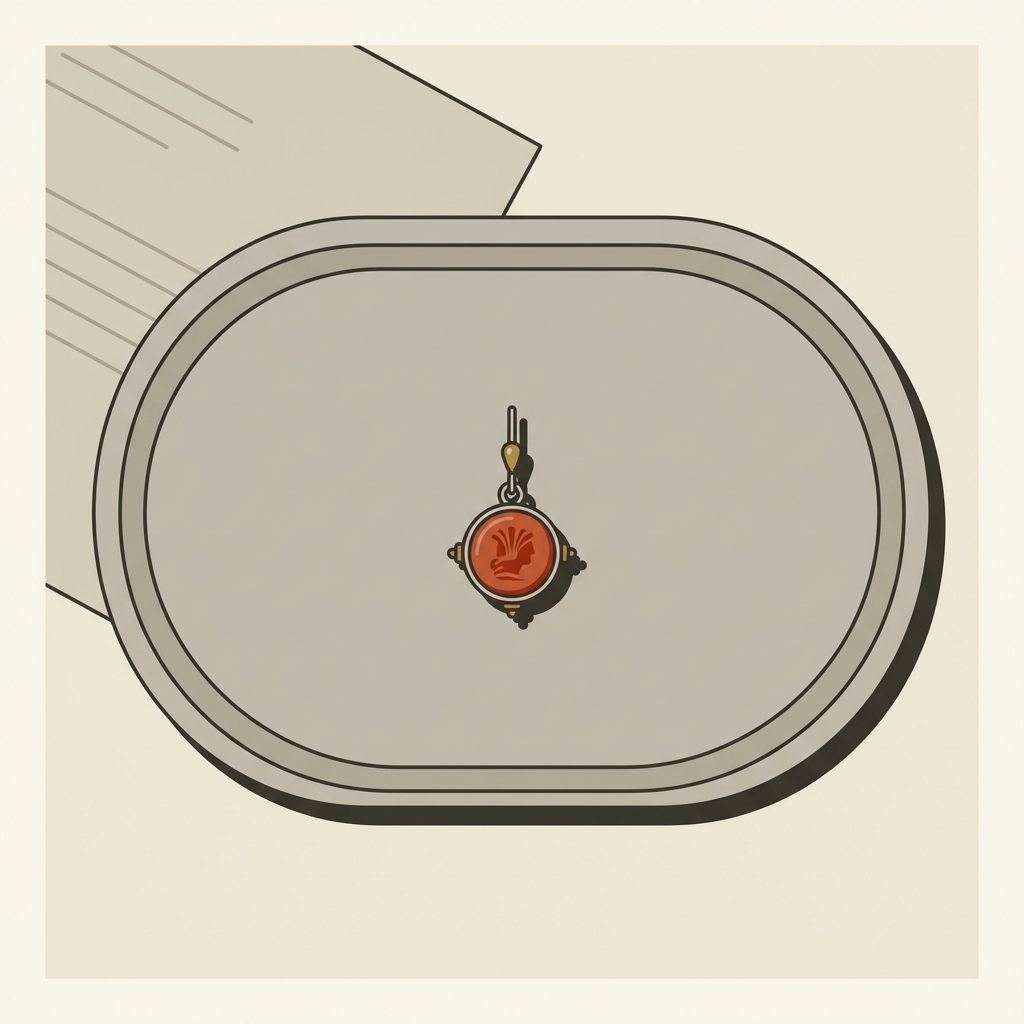
Archaeological and museum evidence shows earrings were worn from the Republican through Imperial periods, though frequency and style varied by region and context.
Common forms include simple hoops, suspension drops with beads or intaglios and multi element pendants in gold, silver, bronze and glass.
Look for age-consistent patina, tool marks at joins, clear provenance or excavation records, and transparent restoration notes; request close photographs of joins and reverses.
More from Aurora Antiqua
References
- boucle d'oreille, Louvre site des collections, Musée du Louvre, Département des Antiquités grecques
- Earring, Dumbarton Oaks Research Library and Collection, Trustees for Harvard University
- Pair of Earrings, Dumbarton Oaks Research Library and Collection
- Ganymede jewelry (Gold, rock crystal, emerald), Greek, Hellenistic, ca, The Metropolitan Museum of Art, New York
- "Sappho" Earring, Harvard Art Museums / Arthur M. Sackler Museum, Cambridge, Massachusetts
- Luxury Arts of Rome, The Metropolitan Museum of Art, New York
- Characterization of Castellani nineteenth-century gold jewellery by in situ, Scientific Reports
- Emilie Riha, Der römische Schmuck aus Augst und Kaiseraugst (Roman jewelry from Augst and Kaiseraugst), Römermuseum Augst
- Research report: export licensing and provenance, GOV.UK, Department for Culture, Media and Sport (DCMS)