


Looking for the real thing? Browse our Ancient Roman ring collection, each piece one of one, individually authenticated, with documented provenance. For the background, see the guide to Roman jewelry.
What we mean by an 'ancient Roman wedding ring' - definition and cultural context
Literal uses of rings in Roman marriage rituals, ancient roman wedding ring
An "ancient roman wedding ring" refers broadly to metal finger-rings found in archaeological or collection contexts that are plausibly connected to Roman marriage practice, whether as exchanged tokens, personal ornaments worn at a ceremony, or functional seal rings used to authenticate household or legal documents. This category can include simple, undecorated bands and more elaborate intaglio or seal rings with engraved stones set into a bezel, and the term is best read as a functional and cultural category rather than a single object type; where possible this reading is checked against classical descriptions and museum catalogues for comparable examples. For evidence that rings played both symbolic and practical roles in Roman matrimonial contexts see translations and commentary on ritual dress and objects such as the overview on Weddings in ancient Rome.
Material evidence in major collections confirms that both plain bands and intaglio rings survive from Republican and Imperial contexts, and that they are often catalogued in assemblages interpreted as personal or household items rather than exclusive ceremonial objects. Surviving examples appear in museum catalogues alongside contextual notes that link rings to personal identity, sealing practice and ornament, which supports reading the category as multi-purpose within marriage-related social practice.

Because Roman practice varied by region and era, the phrase remains a broad descriptor: the same label can apply to an unadorned hoop excavated in a rural villa and to an engraved intaglio from a city workshop, with dating and provenance determining how confidently a scholar or buyer can read a ring as bridal or simply personal. For this reason the cautious reader combines typology with documented provenance and condition notes before assigning a specific social use to any single object. For classical background on ritual garments and associated items consult primary and secondary literature.
How literary sources and material culture complement each other
Classical authors record the presence of ritual dress and objects at marriage, and archaeological collections preserve the rings and seals that often accompany those narratives; bringing the two together gives a fuller view of how rings could function in ceremony, in household administration, and as long-term personal ornaments. Literary details such as descriptions of ceremonial garments confirm the cultural logic that made certain colours and accessories meaningful, while museum entries and catalogues such as the British Museum image provide the physical evidence that these object types existed across social levels and over centuries.
Attribution of a ring to a wedding context therefore rests on converging evidence: textual mentions that identify a practice, material parallels in dated collections that show similar form or use, and provenance data that place an object within a social or depositional context consistent with personal or household rituals. Where dating is uncertain or documentation is absent, the category should remain open to more than one plausible interpretation.
Quick snapshot: what Roman brides commonly wore in a wedding ceremony
Tunica recta and stola: garments named in texts
A concise way to recognise Roman bridal dress in texts and images is to look for three recurring elements: a specialised ritual tunic often referred to as the tunica recta, a garment that many classical sources connect to marriage rites; a long outer dress or stola in later or elite contexts; and a flame-coloured veil, the flammeum, that covered the bride in public ritual. These garments appear in literary descriptions of the ceremony and in interpretive museum entries that relate surviving objects and iconography to those accounts.
The tunica recta was a specific type of tunic associated with ritual, while the stola is a later or class-specific outer garment that can replace or overlay the tunic in pictorial evidence and grave monuments; curators and scholars caution that the exact appearance of these garments changes over time, and that the terms can reflect idealised literary models more than everyday practice.
The veil known as the flammeum is repeatedly described in classical literature as flame-coloured, a red or orange hue that carried connotations of fertility, protection and ritual visibility for the bride. The prominence of this colour in textual descriptions helps explain why museum discussions of bridal dress often highlight red or orange textile fragments and pigments in funerary contexts as meaningful choices tied to marriage symbolism.

That said, the visual record and surviving textiles do not present a single uniform look: variations in dye availability, regional taste and chronological fashion mean that historians treat the flammeum and its palette as a strong but not exclusive indicator of bridal identity. For practical recognition, combine colour cues with garment names and contextual notes in catalogue entries.
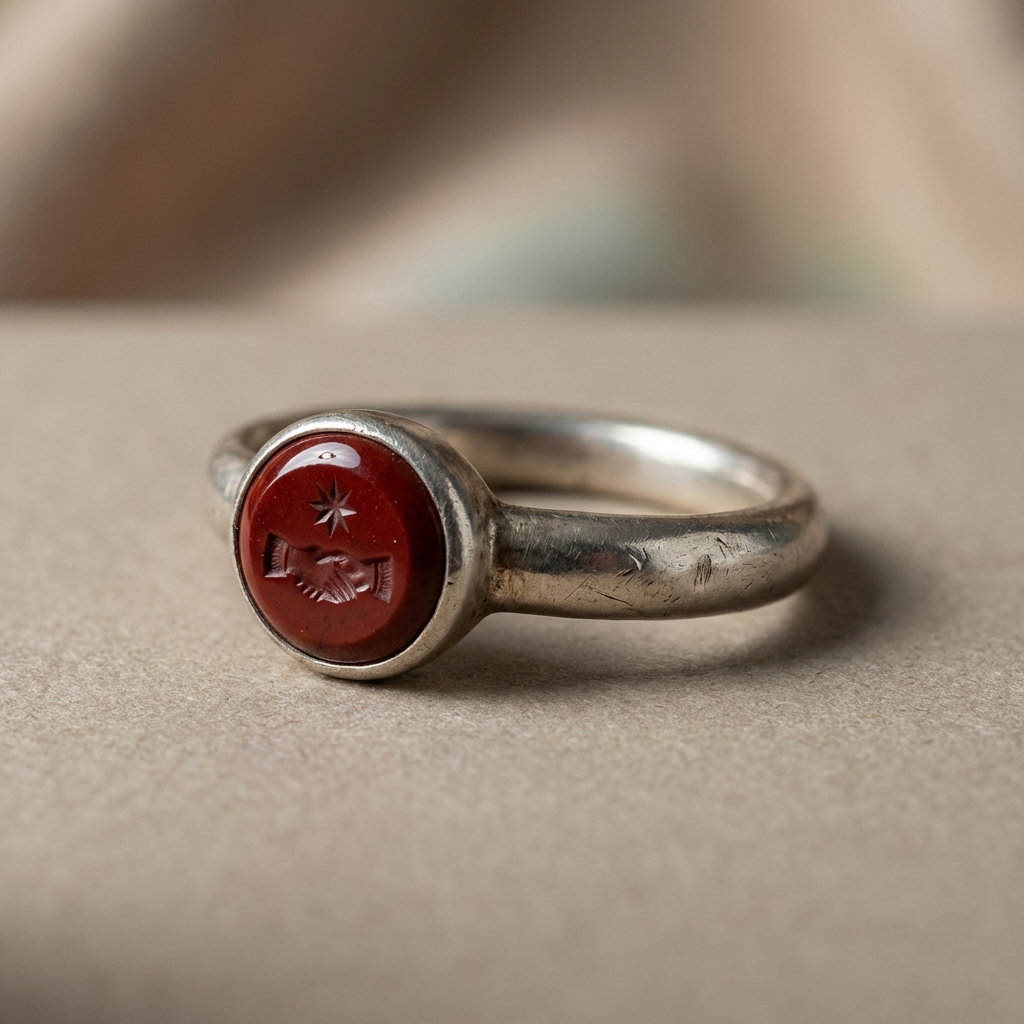
Because Roman practice varied by region and era, the phrase remains a broad descriptor: the same label can apply to an unadorned hoop excavated in a rural villa and to an engraved intaglio from a city workshop, with dating and provenance determining how confidently a scholar or buyer can read a ring as bridal or simply personal. For this reason the cautious reader combines typology with documented provenance and condition notes before assigning a specific social use to any single object. For classical background on ritual garments and associated items consult primary and secondary literature.
Flammeum: colour and ritual meaning
The veil known as the flammeum is repeatedly described in classical literature as flame-coloured, a red or orange hue that carried connotations of fertility, protection and ritual visibility for the bride. The prominence of this colour in textual descriptions helps explain why museum discussions of bridal dress often highlight red or orange textile fragments and pigments in funerary contexts as meaningful choices tied to marriage symbolism.
That said, the visual record and surviving textiles do not present a single uniform look: variations in dye availability, regional taste and chronological fashion mean that historians treat the flammeum and its palette as a strong but not exclusive indicator of bridal identity. For practical recognition, combine colour cues with garment names and contextual notes in catalogue entries.
Prepare before you evaluate or buy
Read the identification checklist and museum comparison below to learn how to evaluate a candidate ring or dress fragment with documented care.
Rings and seals in Roman weddings: types, materials, and roles
Plain bands, hoop rings and finger placement
Simple hoop rings and plain bands are common finds in Roman contexts and can serve multiple social functions: personal adornment, a token exchanged between partners, or a keepsake carried after a ritual. In many collections these rings are catalogued without an explicit ritual label, so their presence in a burial or domestic assemblage is often the first clue to possible matrimonial use rather than a conclusive proof.
Finger placement and wear patterns can sometimes suggest prolonged personal use, and conservators record these characteristics in condition notes when present. Such physical evidence can add weight to a marriage-related interpretation, but it is rarely decisive on its own without supporting provenance or literary parallels.
Roman brides typically combined a ritual tunic such as the tunica recta with a flame-coloured veil called the flammeum, distinctive hair arrangements, and jewellery including plain bands and intaglio seal rings; precise practice varied by period and region.
Intaglio and seal rings - personal and legal function
Intaglio or seal rings, with a carved gemstone set into a bezel, combine personal symbolism with functional utility: they could be worn as personal ornament and also used to impress a seal on wax or soft clay, linking the wearer to household administration and legal acts. Museum catalogues often group seal rings with other objects of daily use, reflecting how these items occupied multiple social roles from private identity to formal authentication. For example the V&A holds items such as a clasped hands ring that illustrate common bezel treatments.
The survival of intaglios in museum collections helps us trace common motifs and production techniques, and comparative study with literary descriptions illuminates why a ring might serve both as a token in a ceremony and as an instrument for signing documents afterwards. For a sense of how collections present these items and their uses consult major museum research pages and catalogues.
Reading motifs and iconography on Roman rings: what imagery can tell you
Common intaglio subjects and their likely meanings
Intaglio imagery on Roman rings ranges from portraits and deities to fertility symbols and geometric patterns; each motif can suggest particular associations but rarely yields a single, certain meaning without context. Deities or figures might indicate personal devotion, invocation of protection in marriage, or simply popular decorative taste among a ring's owner and workshop.
Because motifs circulated through workshops and across social groups, the safest approach is comparative: match a motif with dated, documented examples in museum catalogues to narrow likely meanings and dates rather than assume bridal association from a single subject alone. This method echoes museum practice of relying on typology and context to support interpretation.
Check museum images to compare motif, date and context
Use catalogued parallels for dating
How iconography links to marital symbolism
Certain motifs are more often read as marital or protective, such as fertility emblems or household deities, but iconographic reading depends on match with context: a fertility symbol on a ring found in a domestic shrine carries a different weight than the same symbol on an object from a funerary deposit. Always seek documented parallels and catalogue descriptions to situate a motif before assigning a ceremonial function.
Interpretive caution is especially important when motifs are generic or widely used in non-ritual contexts; in those cases motifs can reflect fashion or personal taste rather than explicit marital meaning. Museum comparisons and condition notes play a key role in testing motif-based readings against material evidence. Use museum databases and our collections of rings to locate similar typologies and motifs for comparison.
Hairstyle and colour symbolism: the flammeum and the bride's appearance
Hair arrangements in portraits and funerary art
Portraits, funerary reliefs and literary sources emphasise hair as a marker of marital identity: styles that bind and arrange the hair in regionally specific ways are frequently associated with bridal images, and curators often highlight hair treatment in catalogue essays on dress and identity. These visual cues operate alongside garments and veils to signal the socially recognised status of the bride in public ritual contexts.
Because hairstyle fashions change over time and can mark social identity as well as marital status, analysts combine hair evidence with garment names, motifs and provenance to read a depiction reliably. Single visual cues are useful but seldom decisive alone.
Meaning of colour and visibility in ritual
The red or orange hue of the flammeum is repeatedly tied in classical texts to ideas of fertility and ritual protection, and museum discussions often interpret surviving colour traces and pigment evidence through that lens. Colour made the bride visible in public ceremonies and linked ritual appearance to cultural expectations described in literary sources.
It remains important to remember that dye technology, regional preferences and funerary conventions affect how colours survive and are recorded; historians therefore treat flammeum-like red veils as strong contextual indicators rather than proofs of a single uniform practice across the Roman world.
Regional and chronological variation: why dating and provenance matter
How Republic and Empire practices differ
Dress and jewellery practices shifted across the Republic and Imperial periods: terms used in classical texts and examples in dated collections show changes in garment layering, veil usage and ring styles over time. These chronological differences mean that a ring form common in the late Republic may have different social resonance when reused or replicated in the later Empire.
Because of these shifts, secure dating and workshop attribution matter for accurate readings: museum catalogues that provide close comparisons or workshop attributions help narrow the likely period for a ring and therefore the social meanings available to its original owner.
Why workshop attribution and provenance change readings
Workshop attribution and a clear provenance or documented finding context can convert a plausible interpretation into a stronger one by anchoring an object in time and place; conversely, lack of documentation widens the range of plausible functions for a ring or garment. Provenance and collection history are central to credible identification.
In practice, treat any dating as an estimate supported by multiple lines of evidence, and prefer catalogue entries that combine typology, findspot information and condition notes when available.
How to identify and assess an ancient Roman wedding ring today - a practical checklist
Condition, patina, and restoration notes to read carefully
When assessing a candidate ancient roman wedding ring, start with condition notes and signs of wear: look for patina consistent with long burial, wear patterns on the band and bezel that match age rather than modern tooling, and clear restoration notes describing any stabilisation or repairs. Museum entries and catalogues routinely include this information when available and it should sit at the top of any evaluation checklist.
Documented restoration notes are especially important because repairs, re-polishing or later resizing can alter appearance and complicate reading of motifs and wear; reputable listings include clear restoration statements and photograph evidence to support claims about an object's history.
When assessing a candidate ancient roman wedding ring, start with condition notes and signs of wear: look for patina consistent with long burial, wear patterns on the band and bezel that match age rather than modern tooling, and clear restoration notes describing any stabilisation or repairs. Museum entries and catalogues routinely include this information when available and it should sit at the top of any evaluation checklist.

Provenance, documentation and comparative research
Provenance and collection history are the next critical layer: a ring with documented collection history, prior cataloguing, or published comparisons gives far more confidence than an undocumented object. Use museum databases to locate similar typologies and motifs, compare condition notes, and cross-check suggested dates against dated examples in major collections.
Red flags include vague ownership statements without verifiable paperwork, missing restoration notes, or inconsistent patina that suggests modern alteration; these should prompt further inquiry rather than immediate acceptance of a ceremonial attribution. For practical comparison and catalogue-based context consult museum collection pages and published essays on Roman jewellery.
Common mistakes and pitfalls when reading Roman wedding dress and rings
Over-interpreting motifs or assuming bridal use
A common error is to assign bridal function to a ring because it bears a single motif that might plausibly relate to marriage; without contextual provenance, motif parallels and condition evidence such readings tend to rest on conjecture rather than converging proof. Scholars and curators therefore recommend treating motif-based claims cautiously and seeking corroborating documentation.
Another frequent mistake is assuming a single funerary depiction or literary reference describes a universal practice; real behaviour varied by region, time and social standing, and museum comparisons reveal that similar objects could serve different roles depending on context.
Conflating later reproductions with ancient examples
Later copies and modern forgeries can mimic ancient styles and motifs, so carefully check for modern tool marks, inconsistent metal composition, or patina patterns that conflict with expected burial chemistry; condition and restoration notes, plus scientific testing when available, are tools museums use to separate ancient from modern examples.
Before accepting claims about an object's age or ceremonial use, request detailed condition and restoration reports, ask for comparative catalogue entries, and seek independent opinion if documentation seems incomplete or contradictory.
Practical examples from museum collections and concluding guidance
Selected collection examples to compare with candidate items
Major collections illustrate the variety of rings and matrimonial dress elements and are useful points of comparison for anyone studying a candidate object. Museum research pages and catalogues present typologies across the Republic and Empire and can be searched for parallels in motif, bezel style and ring hoop form, including curated pages such as our ancient Roman rings collection.
Consulting reputable collection records allows readers to compare ring types and garment descriptions against well-documented examples, which is a critical step before accepting claims of bridal use for any single ring. Use these catalogues to test attributions and to read curatorial notes about dating and provenance.
Next steps for buyers and researchers
If you are considering acquiring a ring described as an ancient roman wedding ring, prioritise clear condition notes, documented provenance and explicit restoration statements; ask sellers for catalogue comparisons and photograph evidence that shows wear patterns and bezel detail. Combining those practical checks with museum comparisons improves the reliability of any reading.
Aurora Antiqua presents curated listings with condition and provenance-style notes and places emphasis on contextual description rather than absolute claims, which can help buyers frame their expectations while they pursue further documentation or independent assessment.
It is a broad descriptor for rings associated with marriage contexts in Roman sources and collections, including plain bands and intaglio seal rings, whose specific function depends on context and documentation.
Look for converging evidence: typology matching dated examples, wear consistent with age, clear provenance or collection history, and transparent restoration notes; single cues are rarely decisive.
Vague provenance, missing restoration documentation, inconsistent patina, or visible modern tool marks are reasons to seek further information before accepting authenticity or ceremonial claims.
More from Aurora Antiqua
References
- Ring, Victoria and Albert Museum, London
- Pliny the Elder, The Natural History, BOOK XXXIII, Perseus Digital Library, Tufts University (edition Bostock)
- Pliny the Elder, The Natural History, BOOK XXXIII, Perseus Digital Library, Tufts University (edition Bostock)
- Aulus Gellius, Attic Nights, Book X, LacusCurtius, Bill Thayer, University of Chicago (Loeb Classical Library edition)
- Signet Ring, Victoria and Albert Museum, London
- Internet History Sourcebooks: Medieval Sourcebook, Internet Medieval Sourcebook, Fordham University, New York
- Emilie Riha, Der römische Schmuck aus Augst und Kaiseraugst (Roman jewelry from Augst and Kaiseraugst), Römermuseum Augst
- Luxury Arts of Rome, The Metropolitan Museum of Art, New York
- Weddings in ancient Rome, Wikipedia
- Ring, Victoria and Albert Museum