


Looking for the real thing? Browse our Ancient Roman ring collection, each piece one of one, individually authenticated, with documented provenance. For the background, see the guide to Roman jewelry.
ancient roman earrings: definition and historical context
The term ancient roman earrings describes a wide range of personal ornaments worn by women across the Roman world, often alongside layered garments such as the tunica, stola and palla; these earrings appear in museum catalogues and typological studies as hoops, pendants, globular drops and multi-component suspensions and can indicate taste and access to material culture in many contexts British Museum collection and research.
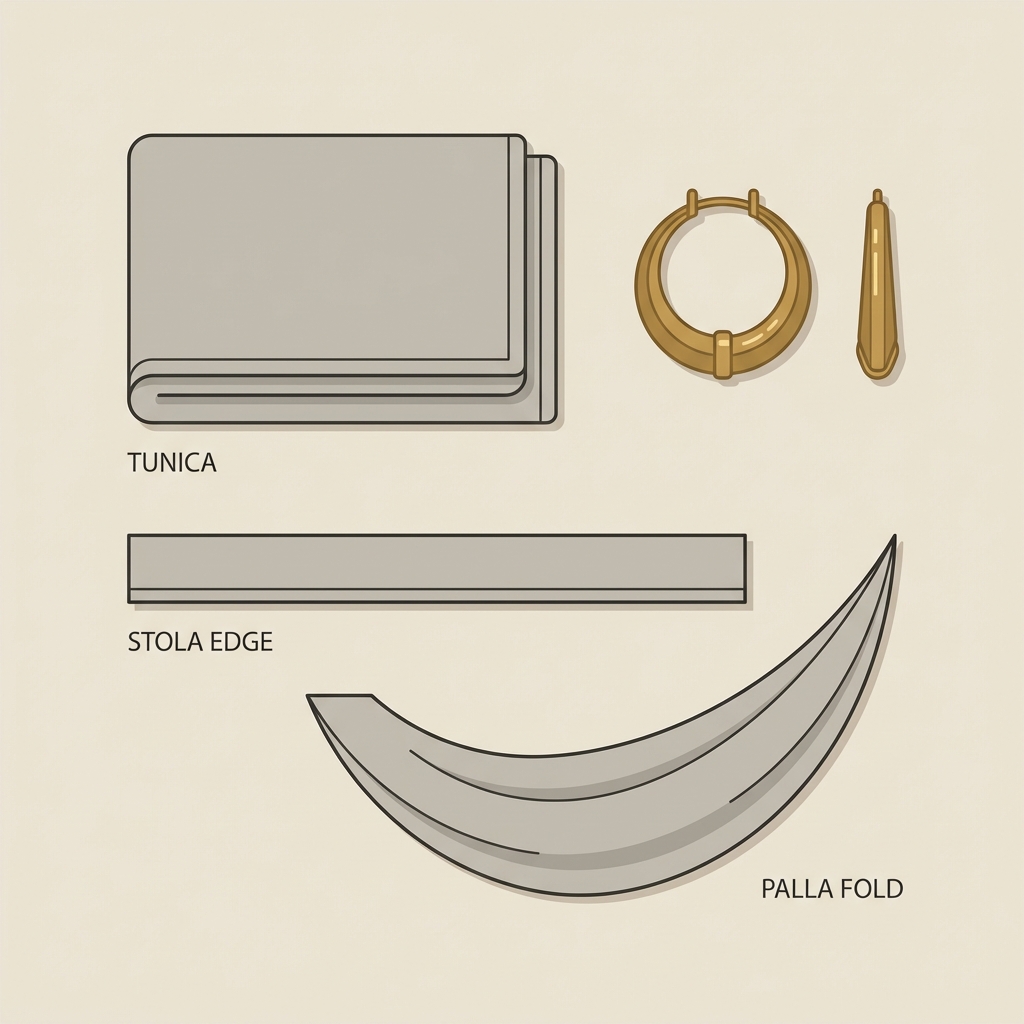
Earrings were part of a layered dress system in which the tunica, stola and palla provided the textile structure and metal or stone ornaments served as visible accents; interpreting social meaning requires contextual evidence from graves, literary sources and museum comparanda.
Women in Roman sources and in surviving dress assemblages are typically depicted and catalogued wearing a tunica as an underlayer, a stola as an outer garment commonly associated in literary texts with married women, and a palla as a rectangular outer wrap, and jewelry often complemented these layers in ways that varied by region and social class Metropolitan Museum of Art overview.
Archaeological finds show that earrings were widespread through both urban and provincial contexts, and while certain shapes recur in particular times and places, precise dating usually depends on stratigraphic context or associated finds rather than style alone Journal of Roman Archaeology research.
Across the empire, the same layered dress vocabulary could be realized in different fabrics and trims, with elites more likely to use fine wool or imported silks and decorated textiles while lower-status garments were often linen or coarser wool; jewelry choices typically reflected these material differences but require context to interpret fully Oxford Research Encyclopedia on textiles and identity.

For collectors and readers, an ancient Roman earring is best understood functionally and typologically: small metal or bead-based ornaments meant to be worn at the ear, ranging from simple hoops to elaborate suspended pieces that combine metalwork and gemstones, with variation by region and period British Museum collection and research.
What counts as an ancient Roman earring
Earrings typically complemented the tunica, stola and palla system, contributing to an overall appearance where textile layers set the architectural silhouette and metal or gemstone accents provided focal points; interpreting what an earring signified about status or ritual role requires comparison with burial assemblages, literary evidence and museum records Encyclopaedia Britannica article on dress.
Materials, types and how Roman earrings were made
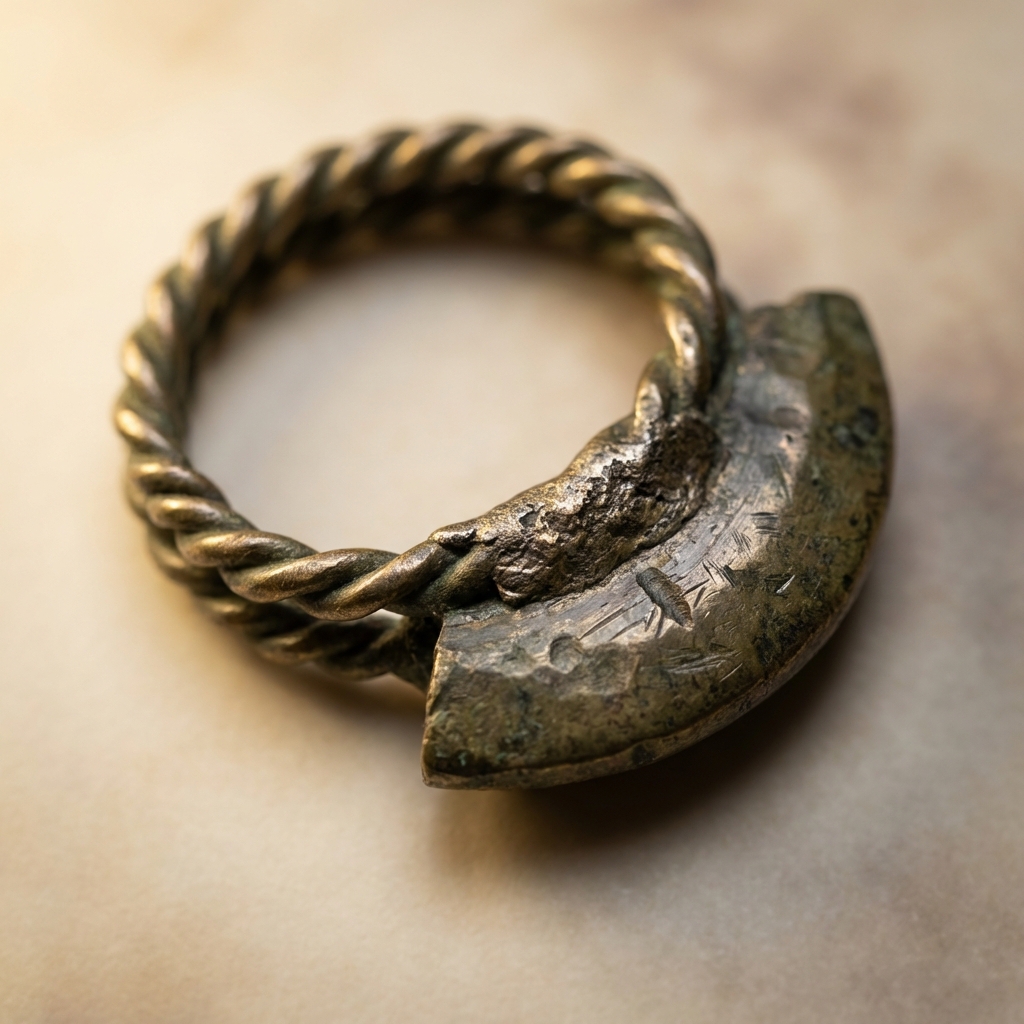
Roman earrings survive in a range of metals and materials: gold, silver, bronze and combinations with glass and semi-precious stones such as carnelian, agate and amethyst; museum series show these materials used in both simple and complex constructions British Museum collection and research.
Common types recorded in typologies include solid hoops, wire hoops with soldered or twisted joins, globular drops often made from sheet or cast metal, and multi-component suspensions where beads or intaglios hang from a metal framework; these forms appear repeatedly in excavation catalogues and publications Journal of Roman Archaeology research. Examples of loop-style earrings appear in museum records such as the Brooklyn Museum Loop Earrings, Roman Type.
Common materials and gemstones
Gold and silver pieces tend to show finer finishing and were more likely to feature gem settings and intaglios, while bronze and base metal examples often used glass beads to mimic more expensive stones; such material differences appear across museum object records and help indicate access to resources and workshop practices British Museum collection and research. See a gold and pearl example in the Met collection Gold and pearl earring - Met.
Construction techniques and production marks
Examine construction details for identification: look for wire joins, evidence of soldering, twisted wire terminals, and how beads are suspended; these features can point to particular manufacturing traditions and are described in museum object records and typological studies British Museum object records.
See provenance, restoration and live examinations on @auroraantiqua
When assessing a listed earring, consult condition notes and any provided documentation carefully; clear photographs of joins, close-ups of patina, and a description of restoration work make it easier to compare a piece with published objects.
Patina and corrosion patterns are important clues: stable, even patina and wear consistent with age can support an attribution, while fresh tool marks, modern solder, or uneven artificial patination can suggest later intervention or assembly; object records and conservation notes in museum catalogues provide useful comparanda Metropolitan Museum of Art overview.
The typological sequence of earring styles does show broad change from the Republic to the Late Empire, but dating by style alone can be uncertain in provincial contexts where local workshops may continue older forms; stratigraphy and associated finds are often decisive for precise chronology Journal of Roman Archaeology research.
How to evaluate an ancient roman earring before buying
Start with a prioritized checklist: clear, high-resolution photos from multiple angles, accurate measurements, detailed condition notes, and any documented provenance or collection history; these items form the minimum information to assess authenticity and state of preservation Metropolitan Museum of Art overview.
Request specific images that show construction details such as wire joins, solder lines and back views of settings; ask for scale indicators and for close-ups of hallmark areas or any maker marks that may be present British Museum object records.

Weigh provenance carefully: clear collection history, past sale records or publication references add confidence; seller notes that merely claim an item came from an old collection without documentation should prompt further questions and requests for paperwork Metropolitan Museum of Art overview, or visit our homepage Aurora Antiqua.
When reading restoration notes, prefer transparent statements that specify what was done: cleaning, stabilization, and any solder repairs should be described so a buyer can judge how restoration affects display and wearability; conservation descriptions in museum catalogues model this level of detail British Museum object records.
If a seller or catalog entry references comparanda, follow up by checking the cited museum catalogue or object record; published parallels in museum collections and typologies are a stronger basis for attribution than unsourced stylistic claims Journal of Roman Archaeology research.
Checklist: construction, condition, documentation
Use this short checklist to prioritise queries: 1. Photos and measurements, 2. Clear condition notes, 3. Provenance or collection history, 4. Any published comparanda, 5. Details of restoration, and 6. Requests for testing where necessary; these priorities reflect common practice among curators and conservators Metropolitan Museum of Art overview.
Weighing provenance, comparanda and published references
Comparanda in museum catalogues and excavation reports provide the most reliable parallels; when these are cited, verify the object record and consider whether the context of the museum item aligns with the listing under review British Museum collection and research.
Common mistakes and attribution pitfalls with Roman earrings
Over-reliance on style alone
Relying solely on style for dating can mislead collectors, especially in provincial sites where workshops reused or adapted older forms; typological sequences are useful but should be corroborated with stratigraphy or associated finds when possible Journal of Roman Archaeology research
quick verification step to compare a listing with a museum object record
use museum records as primary comparanda
Modern repairs and assembly are frequent traps: look for fresh solder, mismatched patina between components, or modern wire used to reattach drops; such signs often appear in detailed condition notes and close-up photos and should prompt a request for conservation records British Museum object records.
Misreading restoration, patina and provenance claims
Artificial patination and surface treatments can be mistaken for age; if a listing includes unusually even or glossy surface coloration, ask whether any chemical treatments, polishing or stabilizing agents were applied and request conservation details Metropolitan Museum of Art overview.
Provenance gaps are common; a long chain of ownership that lacks supporting documents should be treated with caution, and buyers should request any bills of sale, auction references or collection inventories that can be produced to substantiate claims Metropolitan Museum of Art overview.
Practical examples and scenarios for collectors
Read a listing step by step: begin with photos and dimensions, then read condition notes and any restoration statements, next check provenance claims and finally compare with museum catalogues or published typologies to see if the form and manufacture align with known examples Journal of Roman Archaeology research. For more context see our Roman Empire blog Roman Empire blog.
Example application: a listing shows a wire hoop with a soldered join and a globular drop. First, request close-ups of the join and the interior of the hoop; second, ask for scale and maker mark photos; third, check for similar objects in museum records to see whether the join technique matches a dated series British Museum collection and research, for example the British Museum object record ear-ring (2ndC) at the British Museum.
When a piece has heavy restoration but is compelling as wearable history, weigh the restoration notes: extensive soldering may affect display and future conservation, but transparent documentation that explains what was done allows a buyer to make an informed decision; museum conservation reports provide examples of acceptable disclosures Metropolitan Museum of Art overview.
Request scientific testing when doubts persist: compositional analysis can clarify metal content and help rule out modern alloys, while microscopic examination can reveal tool marks and repairs; ask sellers for any previous laboratory reports or permits that accompany the object British Museum object records.
Reading a listing: worked example (photo-to-checklist)
Apply the checklist to photos: verify measurements, check joins and patina, match elements to published comparanda, and only then assess the provenance narrative; document each step in writing so you have a record of the questions asked and answers received Metropolitan Museum of Art overview.
When to seek expert input or testing
Seek third-party reports when significant sums are involved or when provenance is incomplete; a trusted conservator or an independent laboratory can provide compositional or microscopic reports that clarify workmanship and repairs British Museum object records.
Summary: what ancient roman earrings tell us and next steps for curious buyers
Ancient roman earrings sit within the broader system of Roman female dress where a tunica, stola and palla provided the textile framework and metal ornament added visible emphasis; typical earring forms and materials are documented across museum catalogues, but careful contextual evidence is required to interpret social meaning reliably Encyclopaedia Britannica article on dress.
Key next steps for collectors are practical: consult museum catalogues for comparanda, insist on clear condition and restoration notes, seek provenance documentation and request testing when necessary; these steps reduce the risk of misattribution and help buyers make informed decisions Metropolitan Museum of Art overview and see our ancient Roman rings collection Ancient Roman rings collection.
Earrings were common across periods and provinces, appearing in archaeological assemblages in forms such as hoops, drops and pendants; their exact social meanings depend on contextual evidence.
Request high-resolution photos, measurements, detailed condition and restoration notes, provenance documentation, and any publication or comparanda references.
No, style can suggest a broad range but precise dating in provincial contexts usually needs stratigraphic evidence or associated finds and, where necessary, scientific testing.
More from Aurora Antiqua
References
- Luxury Arts of Rome, The Metropolitan Museum of Art, New York
- Pliny the Elder, The Natural History, BOOK XXXIII, Perseus Digital Library, Tufts University (edition Bostock)
- Pliny the Elder, The Natural History, BOOK XXXIII, Perseus Digital Library, Tufts University (edition Bostock)
- Ring, Victoria and Albert Museum, London
- Philip Kiernan and Klaus-Peter Henz, Rings from the Forbidden Forest, Cambridge University Press
- Pearl Care and Cleaning Guide, Gemological Institute of America (GIA)
- Nickel Allergy, DermNet, New Zealand
- How to Care For Your Jewellery: The Ultimate Guide by the National Association