


Looking for the real thing? Browse genuine Roman rings for sale, each piece one of one, individually authenticated, with documented provenance. For the background, see the guide to Roman jewelry.
Quick answer: can roman glass jewelry get wet?
Short verdict for collectors
Short answer, in many cases it is risky: some roman glass jewelry is stable and may tolerate careful, limited contact with very clean water, while other pieces have fragile, hydrated weathering layers or soluble salts that make any wetting dangerous.
For collectors the conservative takeaway is straightforward: avoid deliberate wetting unless a conservator has tested the object and given a safe cleaning protocol, because water can dissolve salts or lift fragile weathering films and cause rapid surface loss Canadian Conservation Institute guidance.
@auroraantiqua - behind the scenes and practical tips on care
If you are checking a listing or condition notes, read for words like crizzling, powdery deposits, or documented desalination before attempting any wet cleaning.
When to seek a conservator
If a piece shows active flaking, powdery deposits, or salt efflorescence, contact a trained conservator before you clean or wet the object; these signs indicate active deterioration that household wetting can make irreversible Archaeological materials, Icon, The Institute of Conservation (UK).
In short, roman glass jewelry can sometimes get wet safely, but only after testing and with controlled methods; when in doubt, favor dry, reversible maintenance and expert assessment.
Why roman glass jewelry can be vulnerable to water
How ancient glass weathers
Ancient glass often develops hydrated weathering layers over centuries in burial or environmental contexts, which can appear as iridescence, pitting, or a fragile film on the surface. That film may be stable in place, but if it is hydrated or loosely bonded, water can disturb it and accelerate loss Journal review on archaeological glass weathering.
Those weathering layers form because the original glass composition, often rich in alkali, reacts with moisture and elements in soil or air, producing alteration products that sit on the original surface and that may be physically weak or chemically soluble.
Role of soluble salts and alkali leaching
Soluble salts trapped in or on archaeological glass are a primary hazard: when wetted they dissolve, migrate, and recrystallize, expanding and breaking apart the surface. Institutional guidance highlights soluble salts and alkali leaching as central causes of rapid flaking when ancient glass is exposed to water Getty Conservation Institute overview.

Because these processes can be invisible to a casual inspection, conservators often treat soluble salts as an unseen risk that must be ruled out by testing before any aqueous intervention is attempted.
How to identify stable versus unstable pieces of roman glass jewelry
Visual signs to look for
Start with a careful visual inspection under good light and a gentle hand: red flags include active crizzling, powdery or powdering surfaces, active flaking, and white salt efflorescence. These observations suggest that soluble salts or unstable weathering layers may be present and that wetting would be unsafe peer reviewed review of weathering mechanisms.
Surface iridescence alone is ambiguous: it can be a stable weathering film that is not actively deteriorating, or it can indicate past leaching that left fragile layers. Because that distinction matters, the presence of iridescence should prompt further assessment rather than reassure you.
Some Roman glass jewelry may tolerate carefully controlled, conservator approved wet cleaning, but many pieces are at risk from soluble salts and fragile weathering layers; when in doubt, avoid wetting and consult a conservator.
Simple spot tests and their limits
There are quick, non invasive spot checks conservators use, but they have limits for small wearable pieces; for example, a gentle thumb pressure test or careful magnified inspection may reveal powdering, yet such observations cannot reliably quantify soluble salts or the depth of alteration.
Because visual checks and simple at home practices cannot definitively detect dissolved salts, collectors should treat quick tests as triage tools and seek professional spot testing when any doubt remains Corning Museum of Glass care guidance.
How metal mountings and repairs change the risk profile
Microenvironments and trapped moisture
When ancient glass is set in silver, bronze, or other metals, the setting often creates microenvironments where moisture can collect and salts can concentrate against the glass, increasing the risk of localized deterioration if the object becomes wet. Conservation literature identifies trapped moisture and galvanic interactions as important concerns for mounted glass and metal objects British Museum conservation notes.
For a mounted ring or pendant, the joint between bezel and glass is a likely place for salts or corroded metal products to accumulate, and those materials can be water sensitive or create electrolytic conditions that accelerate change.
Adhesives, fillers and water sensitivity
Older or modern repairs may include adhesives, fillers, or stabilizing materials that were not chosen for aqueous stability; some adhesives soften or dissolve when exposed to water, which can destabilize the glass or cause loss of inlays, so documenting any restoration materials is essential before attempting wet cleaning.
For any piece with visible restoration notes, or if the listing mentions restoration or stabilization, ask for specifics about the materials used and factor that information into whether professional assessment is needed.
What major conservation institutes recommend for glass care
Principles from CCI and Getty
Major institutions advise a conservative approach: avoid immersion, do not wet crizzling or actively degrading glass, and use testing and professional desalination protocols when soluble salts are suspected Canadian Conservation Institute guidance.
These principles reflect the shared recognition that aqueous treatments, when applied without prior testing or desalination, can dissolve salts and promote flaking or surface loss, so the default position for collectors should be caution.

Practical institutional do and do nots
Institutions recommend storage at stable relative humidity in moderate museum ranges and avoidance of chlorinated or hard water contact; for handling and simple maintenance they favor soft dry brushing and, where testing permits, very sparing use of distilled water for controlled surface cleaning Getty Conservation Institute overview.
That combination of stable storage, minimal handling, and professional testing before wet cleaning helps minimize the common pathways to damage that collectors face, especially with set or repaired pieces.
Everyday handling and storage advice for collectors
Safe display and wearing habits
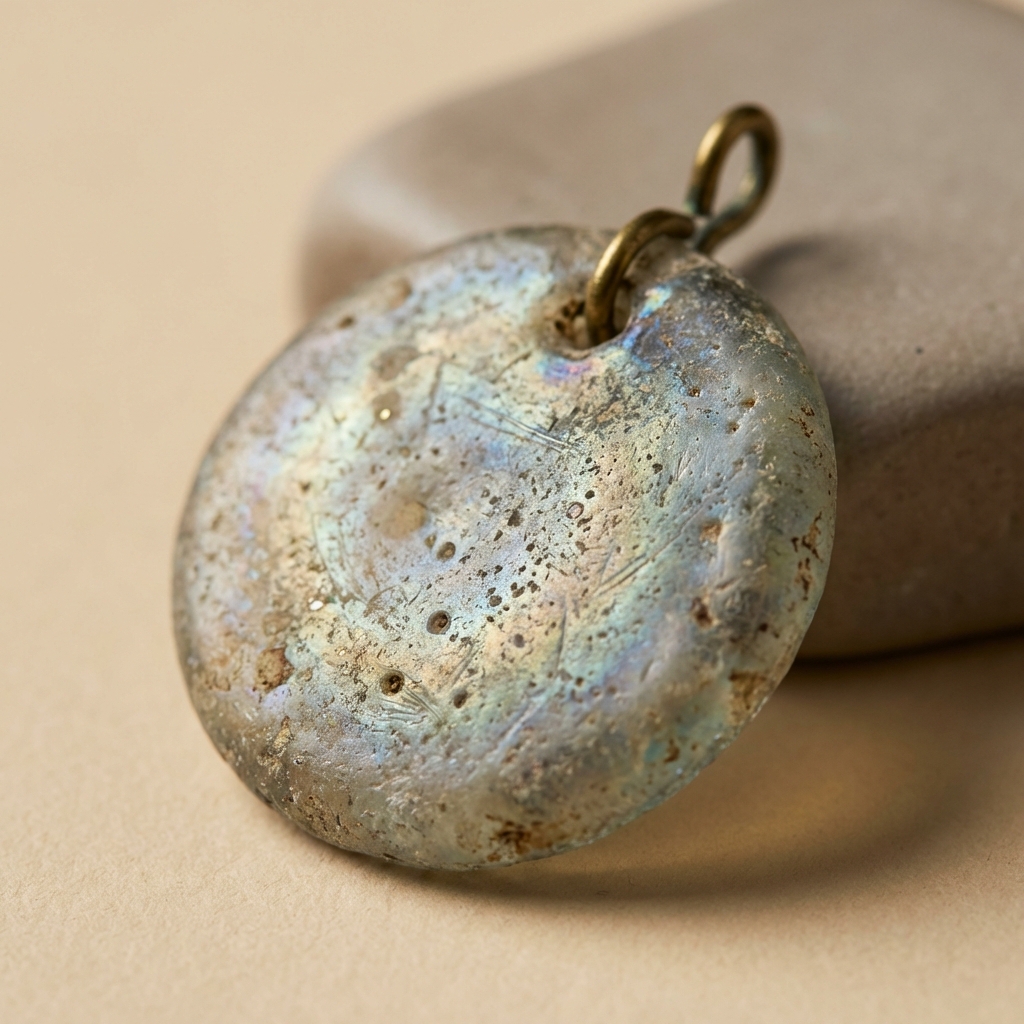
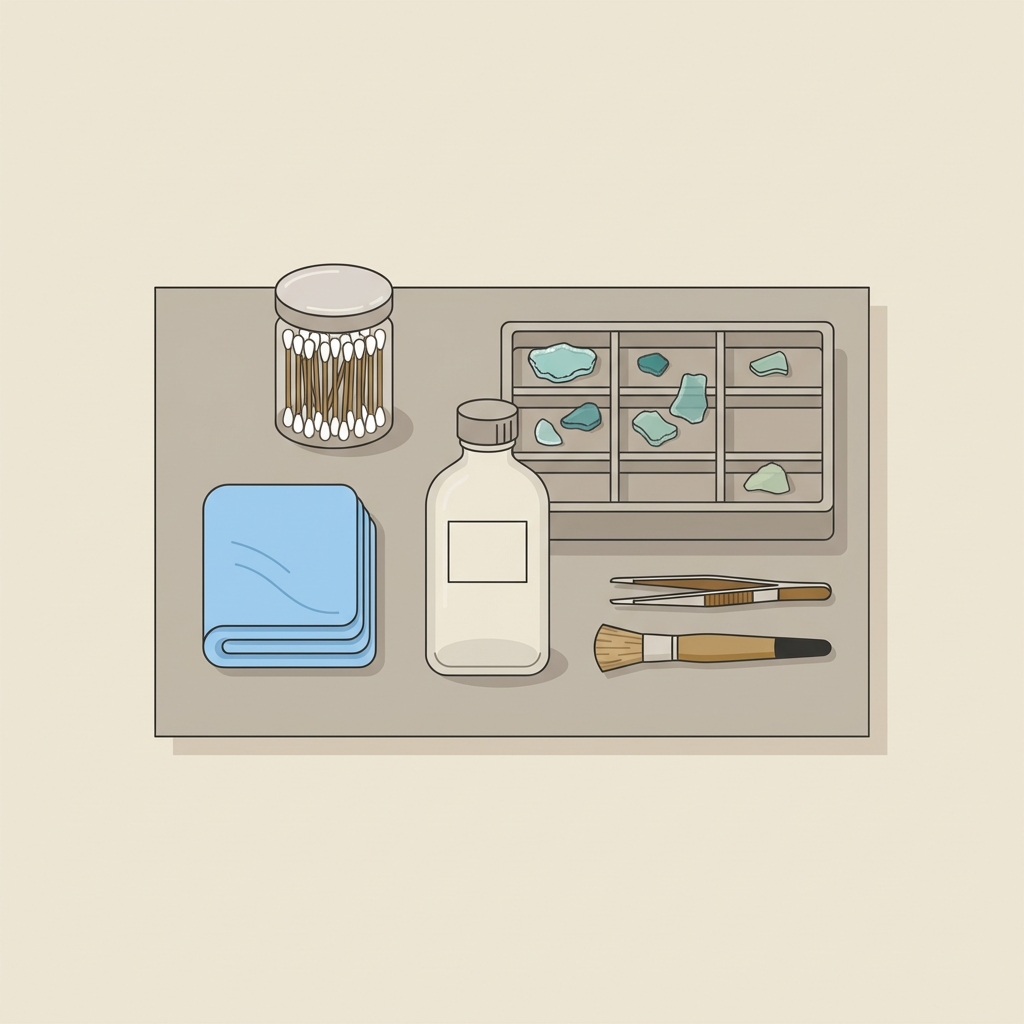
For gentle daily maintenance prefer a soft, dry brush or a lint free cloth to remove dust. If a conservator has confirmed a piece is safe for wet cleaning, distilled water applied sparingly with cotton swabs and immediate drying is the accepted conservative practice.
When transporting or storing ancient pieces use padded supports and individual compartments to avoid contact with other metal or corrosive materials, and keep items in stable, moderate relative humidity to reduce stress on weathering layers and adhesives.
Document the object's condition with photos before transit, and keep condition notes and any restoration documentation with the piece so a conservator can assess changes if they occur.
Red flags: when you must not get Roman glass jewelry wet
Visual and tactile warning signs
The clearest red flags that make any wetting unsafe are active crizzling, visible salt efflorescence, powdery or powdering surfaces, and active flaking. If you see or feel these signs, do not wet, do not rub, and seek professional conservation advice immediately E.C.C.O. Professional Guidelines (II): Code of Ethics, European Confederation of Conservator-Restorers'.
Because household wetting or mechanical cleaning can cause irreversible surface loss in these conditions, take steps to minimize handling and stabilize the object for safe transport to a conservator.
Quick checklist of major red flags before considering wetting
This article does not provide diagnostic tools
Why immediate professional help matters
Prompt conservator involvement matters because professionals can stabilize fragile layers, perform desalination where needed, and document interventions; delayed or DIY wetting often makes later conservation more invasive and less successful Canadian Conservation Institute guidance.
Stabilization before transport can mean simple dry packing with soft supports, avoiding vibration, and keeping the piece cool and dry to reduce further loss.
If roman glass jewelry gets wet accidentally: immediate steps
Do this first
If a piece becomes wet, remove excess liquid by gently blotting with a lint free material; do not rub or use heat, and avoid trying to speed drying with hair dryers or direct heat sources that can disturb fragile films.
Document the condition with close photos and notes about the exposure, including what kind of water was involved, because that information will be important for conservators assessing salt activation and subsequent treatment Getty Conservation Institute overview.
What not to do
Do not immerse the piece, do not apply household cleaners or solvents, and do not assume tap or pool water is harmless; these fluids can introduce chlorides, minerals, or electrolytes that worsen corrosion, damage adhesives, and activate salts.
Keep the object dry once you have blotted it and arrange for professional assessment as soon as practical, particularly if you observed powdering, flaking, or a change in surface appearance after the wetting event.
What conservators do before any wet cleaning or desalination
Testing and analysis steps
Conservators begin with non destructive spot testing and visual documentation, and may use small analytical techniques to detect soluble salts before any aqueous treatment is considered, because treating salt loaded glass without desalination risks accelerated deterioration Canadian Conservation Institute guidance. For more on analytical approaches see available analytical methods.
These tests help determine whether a desalination protocol is needed, and they also reveal whether weathering layers are intact or if mechanical consolidation is required first.
Desalination and controlled treatments
Where desalination is required, conservators use controlled aqueous methods, poultices, or laboratory techniques applied in stages with frequent monitoring rather than a single immersion; such procedures aim to remove soluble salts while minimizing mechanical stress on alteration layers Getty Conservation Institute overview. Practical guidance on detecting and identifying salts during desalination is discussed in conservation literature Detecting and Identifying Salts during the Desalination.
Treatment documentation is a core part of professional work; conservators record materials and steps taken so future caretakers understand what was done and what risks remain.
Controlled surface cleaning when testing shows it may be safe
Minimal wet cleaning steps used by professionals
If testing indicates stability, conservators may perform extremely limited wet cleaning using distilled water with cotton swabs, working in small areas and drying immediately to avoid water penetration or salt migration; the priority is reversible, low impact intervention Corning Museum of Glass care guidance.
Importantly, professionals emphasize no immersion and no use of chlorinated or hard water because those waters contain ions that can react with glass or adhesives and cause further problems.
Materials collectors can have on hand safely
Collectors who have had a piece declared safe for wet cleaning may keep distilled water, lint free cloths, soft brushes, and cotton swabs for minimal spot cleaning, but should only use them according to a conservator's instructions and with immediate drying steps in place.
When in doubt about a step, pause and consult a conservator rather than improvising; controlled simplicity is more protective than aggressive attempts to ‘restore’ surface brightness.
Practical display and wearing scenarios for collectors
Wearing pieces safely on occasion
For occasional wear choose pieces that show stable surfaces and no signs of crizzling or salts; even then, avoid exposure to perfumes, cosmetics, and sweat which can introduce chemicals and moisture that stress weathering layers and adhesives Corning Museum of Glass guidance.
Take sensible precautions such as removing pieces before physical activity, keeping hands dry when putting them on, and storing worn items in soft, padded compartments after use.
Exhibiting or photographing jewelry
When photographing or exhibiting ancient pieces use padded supports, low humidity display cases, and avoid humid lighting setups; keep a conservator informed if you plan longer exhibits so condition monitoring can be arranged.
If you must handle the object for photography, wear clean cotton or nitrile gloves and avoid contact with the glass surface itself to limit oils and salts from skin transfer.
Common mistakes collectors make when cleaning or storing ancient glass
Misplaced confidence in visual stability
A frequent error is assuming that attractive iridescence or a seemingly intact surface means the glass is stable; visual appearance alone cannot rule out soluble salts or internal deterioration, so reliance on looks is risky peer reviewed weathering study.
When sellers provide condition notes, use them to understand previous treatments and ask follow up questions where notes are vague or absent.
Harmful cleaning attempts
Common harmful steps include immersing jewelry in tap water, using household detergents, or vigorous scrubbing; these actions can remove original surface material and activate salts, producing irreversible damage and adhesive failure.
The safer alternatives are dry brushing, careful documentation, and contacting a conservator when surface change is suspected.
Practical examples: short scenarios and recommended actions
Scenario A: a ring with dull iridescence
If a ring shows dull iridescence but no powdering or flaking, the likely course is dry assessment and careful documentation; ask the seller for condition and restoration notes, and consider a conservator spot test before any wet cleaning is attempted Corning Museum of Glass care guidance. If you need to reach us about a listing, contact Aurora Antiqua through our contact page.
If testing shows no soluble salts and a conservator confirms surface stability, limited, documented cleaning with distilled water may be acceptable under professional guidance.
Scenario B: a pendant with powdery deposits
For a pendant with powdery or powdering deposits the correct action is immediate conservator referral because household wetting or mechanical action is likely to cause irreversible surface loss; pack the piece in soft, dry material and minimize handling while arranging assessment How to Care For Your Jewellery: The Ultimate Guide by the National Association.
Provenance and condition notes help the conservator understand prior burial environment or treatment history and can influence the choice of tests or desalination steps.
Conclusion: practical next steps for safe care and buying
Checklist before you wet any piece
Before considering any wet cleaning, check: does the object show crizzling, powdering, or salt efflorescence; is the glass set in a metal mounting; are restoration notes provided; has a conservator tested for salts? If any answer is yes or uncertain, do not wet and seek professional advice Getty Conservation Institute overview.
When buying, request clear condition notes, restoration and documentation references where available, and factor the cost of professional conservation into your stewardship plans for the object. See our Ancient Roman Rings collection for comparable listings.
How Aurora Antiqua frames provenance and condition in listings
Aurora Antiqua presents pieces with condition notes, restoration descriptions when applicable, and provenance references to help collectors assess risks and make informed care decisions. When restoration details are available they should be reviewed before any wet cleaning is attempted.
Conservative handling, documentation, and consultation with a conservator when in doubt are the best ways to keep wearable history intact for future enjoyment and study.
No, avoid showers, pools, and chlorinated water; these exposures can activate salts and damage both glass and mountings.
Iridescence can be either a stable weathering film or indicate past leaching; it requires assessment to interpret safely.
Stop handling it, document the condition with photos, pack it with soft supports, and contact a conservator promptly.
More from Aurora Antiqua
References
- Archaeological materials, Icon, The Institute of Conservation (UK)
- E.C.C.O. Professional Guidelines (II): Code of Ethics, European Confederation of Conservator-Restorers'
- ICOM-CC, International Council of Museums, Committee for Conservation
- Leitfaden Standards Bewahren, Deutscher Museumsbund e.V
- Conserve O Gram 4/16: Creating A Microclimate Box for Metal Storage, National Park Service, US Department
- How to Care For Your Jewellery: The Ultimate Guide by the National Association
- About us, International Association of Dealers in Ancient Art
- Conservation OnLine, American Institute for Conservation