


Looking for the real thing? Browse authenticated Ancient Roman rings, each piece one of one, individually authenticated, with documented provenance. For the background, see the guide to Roman jewelry.
What a Roman glass ring is and why its material matters
A Roman glass ring is an archaeological object made from hand- or mould-blown glass that has survived centuries of burial, use, and environmental change. These rings are typically described in listings by estimated date ranges and contextual notes rather than absolute certainties, and their surfaces often show wear consistent with age, such as weathered patina, healed fractures, or encrustation. Many owners and buyers think of them as wearable history rather than modern reproductions, and that distinction matters when considering how the material reacts to moisture.
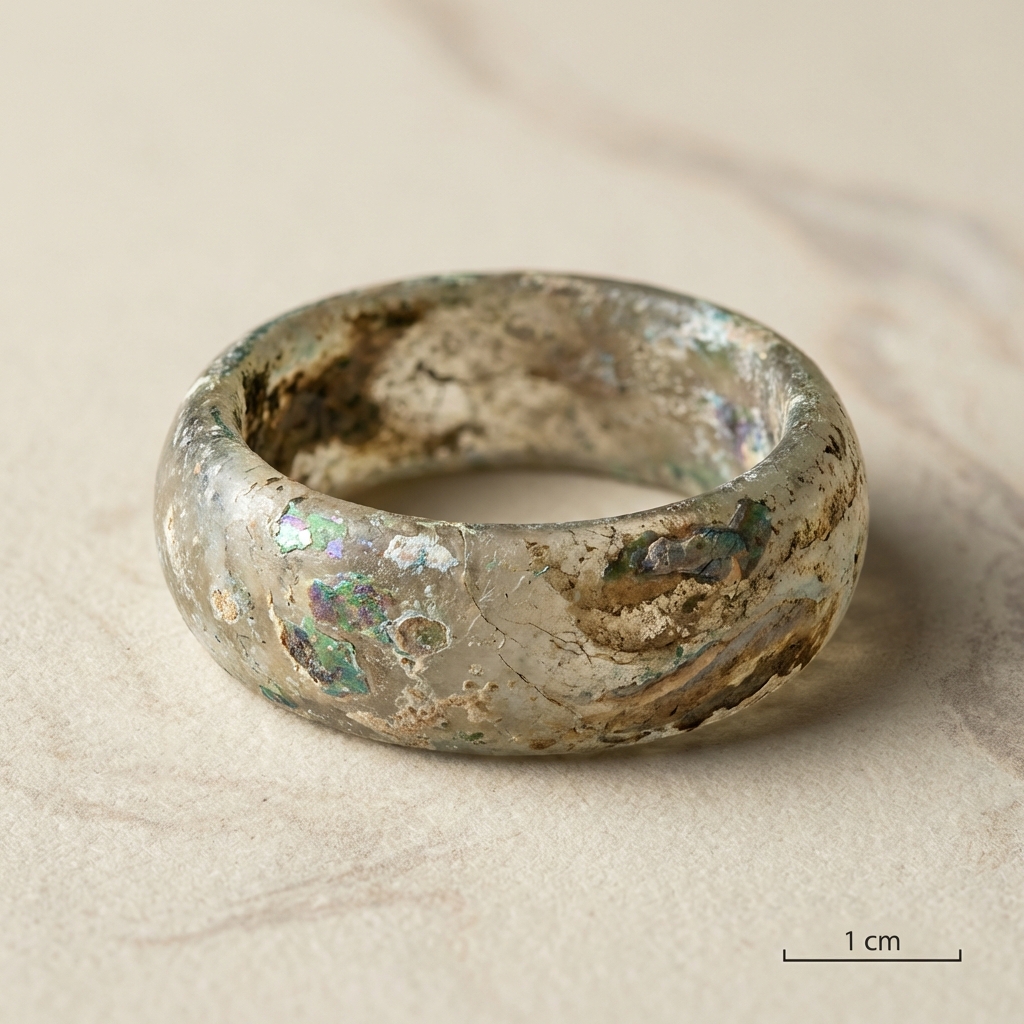
Many ancient glasses differ from modern commercial glass because they commonly contain higher proportions of alkali fluxes and other composition variations that make older glasses more chemically unstable. That instability can make ancient glass more sensitive to moisture and salts than modern glass, and recent museum guidance highlights composition and weathering as key factors in how archaeological glass behaves when wet The Corning Museum of Glass guidance.
Prior burial environment, contact with soil salts, or earlier conservation treatments can leave soluble residues in and on the glass that influence later reactions to water. A ring that spent centuries in a salty burial environment, for example, can retain salts that will migrate when wetted and then crystallize as conditions change, driving surface loss. Understanding an object’s composition, patina, and provenance helps owners and conservators assess moisture risk and appropriate care.
Short-term effects when a Roman glass ring gets wet
Short-term wetting often causes reversible visual changes rather than immediate structural failure. Common immediate effects include temporary darkening of the surface and heightened iridescence as light interacts with a wet, weathered surface; these visual changes frequently diminish on thorough air drying rather than indicating permanent breakdown British Museum guidance on glass care.
Blot excess water with a lint-free cloth, let the ring air dry in a stable indoor environment, photograph the condition, and consult a conservator if you see powdering, salts, crizzling, or flaking.
Warning signs that suggest more serious, active chemical damage include a matte, powdery or granular surface texture, white efflorescent deposits that indicate salt migration, or a network of fine cracking known as crizzling. Those features are linked with irreversible deterioration processes such as alkali leaching and layer loss, and they call for prompt assessment rather than casual cleaning ICON guidance on caring for historic glass.
It is important to distinguish temporary surface effects from signs of active corrosion. Temporary iridescence or darkening that fades on drying usually does not mean the object is actively crizzling. By contrast, persistent powdering, flaking, or visible salt crystals after drying are indicators that chemical instability is ongoing and that further moisture exposure will likely accelerate loss.
Immediate steps to take if your ring gets wet
When an ancient roman glass ring gets wet, act conservatively in the minutes and hours that follow. First, blot excess water gently with a lint-free cloth or unprinted cotton, taking care not to rub hard or apply pressure across encrusted areas. Avoid rapid heating, boiling, or using hair dryers at close range, since temperature shocks and forced drying can stress the surface and promote flaking The Corning Museum of Glass guidance.
If the item is visibly soiled with soil or salts, do not attempt home desalination or mechanical cleaning. Home desalination attempts or aggressive rubbing can redistribute salts into subsurface layers and cause further powdering and layer loss, so the conservative choice is to let the object air dry in a stable indoor environment while limiting handling British Museum guidance on glass care.
Document the condition immediately. Take clear photographs from multiple angles, note the time and circumstances of wetting, and keep any packaging or water samples separate and labelled. Good documentation helps later assessment and treatment decisions by conservators and helps sellers or buyers disclose condition accurately.

When to contact a conservator and what to expect from professional assessment
Contact a conservator promptly when you see signs of active deterioration, especially active powdering, flaking, a crizzling network of fine cracks, white efflorescent salts, rapid layer loss, or sections of adhesion failure. These red flags indicate chemical processes that often require specialist intervention rather than simple home care Getty Conservation Institute overview.
Emergency care checklist for wet antiquities
Download a concise one-page emergency care checklist for wet archaeological glass items to keep with your conservation notes.
On initial assessment a conservator will document condition, test for soluble salts and fragility where appropriate, and prioritise stabilisation steps. Treatment can include controlled desalination, consolidation of friable layers, and careful environmental control rather than aggressive cleaning. Conservators aim to stabilise active corrosion and prevent further loss, and they document any interventions in restoration notes so future owners and conservators understand what was done Getty Conservation Institute overview.
Remember that desalination or in-situ treatments require specialist knowledge and equipment to avoid causing greater harm. When a ring shows the active symptoms listed, prompt professional consultation is the safest route because poorly executed home treatments can make future conservation more difficult.
Long-term prevention: storage, handling and environmental control
Long-term preventive care focuses on stable, low-to-moderate relative humidity and minimal environmental fluctuation. Museum guidance consistently recommends avoiding rapid changes in relative humidity and keeping display and storage environments steady, because fluctuating humidity can drive salt migration and accelerate processes such as alkali leaching The Corning Museum of Glass guidance.
Store rings in padded supports and inert materials that do not off-gas or contain acids or alkalis. Avoid storage directly on untreated wood, newspapers, or rubber, and use unbuffered acid-free tissue or polyethylene foam to create a gentle cushion. Limit handling and always use clean hands or nitrile gloves when necessary to reduce skin oils and salts transferring to the surface Getty Conservation Institute overview.
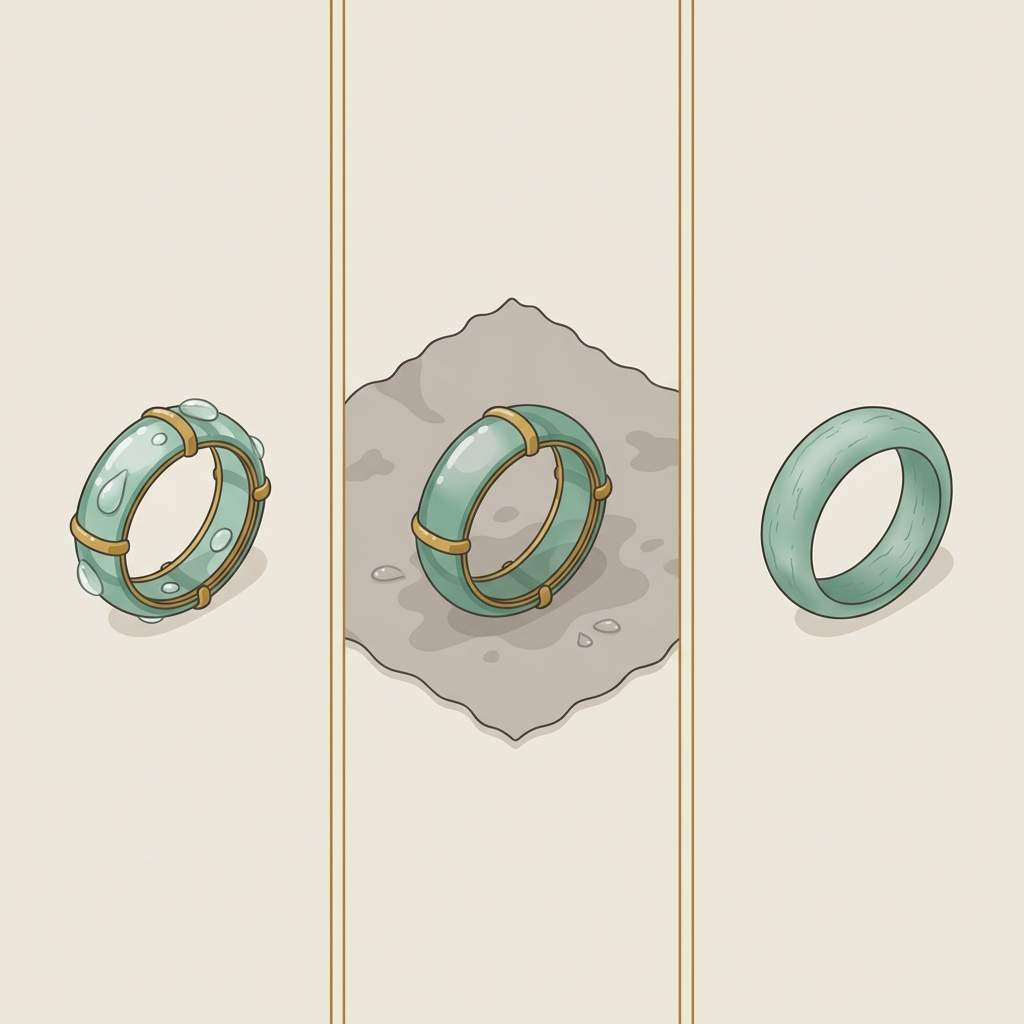
Regular condition checks help detect early changes. Keep dated photographs and condition notes with the object so that any slow deterioration is recorded and can be compared over time. These records are useful both for preventive care and for disclosure if the piece is offered for sale.
Common mistakes owners make that increase damage risk
A frequent error is attempting home desalination or abrasive cleaning with household detergents, toothpaste, or metal polish. Such cleaning can strip weathered patina, expose unstable glass layers, and accelerate alkali leaching, turning reversible surface darkening into permanent loss NPS Conserve O Gram on care of glass.

Using acidic or alkaline surfaces, or storing near household chemicals, is another common problem. Those contacts can change local pH at the glass surface and promote leaching or staining. Finally, delaying documentation after wetting reduces the value of photos and notes for later assessment, so record circumstances and visible features promptly.
Decision checklist and practical scenarios
A ring briefly wetted by rain, the pragmatic response is to blot gently, air dry in a stable environment, and document the condition. If no salts, powdering, or flaking appear after drying, further professional action is often not required.
Conversely, if a ring is recovered from excavation or appears to have white crusts or a matte, powdery surface after drying, treat the situation as high risk and consult a conservator. Those signs suggest soluble salts or active chemical deterioration that can continue if not stabilised under controlled conditions Getty Conservation Institute overview.
For sellers and buyers, disclose any wetting incidents in condition notes and update provenance or restoration entries where relevant. Keep treatment records and photographs with the listing so future owners understand what was observed and how it was handled.
How condition notes, provenance and restoration notes affect treatment and resale decisions
Good condition notes are crucial after wetting. Record the date, circumstances, photographs, visible salts or powdering, and any immediate steps taken. This information guides conservators during assessment and can influence prioritisation of desalination or stabilisation steps The Corning Museum of Glass guidance.
phone camera checklist for documenting condition
include a labelled ruler in at least one image
Restoration and preservation notes should state precisely what was stabilised, repaired, or intentionally left untouched and why. Transparent documentation helps buyers interpret prior treatment history and sets realistic expectations about condition, without implying guarantees about future behaviour.
Buyers should weigh restoration notes and provenance alongside clear photographs and condition records. Where documentation is sparse or absent, conservators can perform testing and assessment, but decisions about purchase or further treatment benefit from open disclosure of prior work and visible condition.
Summary checklist and next steps
Immediate checklist: photograph the ring from multiple angles, blot dry with lint-free material, air dry in a stable indoor environment, avoid rubbing or aggressive cleaning, and record the time and circumstances.
Escalate to a conservator if you observe active powdering, flaking, white efflorescent salts, crizzling, or rapid loss of surface layers. Preventive routine: maintain stable, low-to-moderate relative humidity, store in padded inert materials, limit handling, and keep condition notes with the object for future reference Getty Conservation Institute overview.
Blot excess water with a lint-free cloth, let the ring air dry in a stable indoor environment, avoid rubbing or heating, and photograph the condition for records.
Brief wetting often causes temporary darkening or iridescence that can reverse on drying; however, persistent salts or powdering after drying indicate higher risk and need assessment.
Seek a conservator if you see active powdering, flaking, a crizzling network, white salt deposits, or rapid layer loss, because specialist stabilisation may be required.
More from Aurora Antiqua
References
- Archaeological materials, Icon, The Institute of Conservation (UK)
- Conserve O Gram 4/16: Creating A Microclimate Box for Metal Storage, National Park Service, US Department
- Bronze disease, Conservation Wiki, AIC Wiki, American Institute for Conservation
- E.C.C.O. Professional Guidelines (II): Code of Ethics, European Confederation of Conservator-Restorers'
- ICOM-CC, International Council of Museums, Committee for Conservation
- Leitfaden Standards Bewahren, Deutscher Museumsbund e.V
- How to Care For Your Jewellery: The Ultimate Guide by the National Association
- Internet Archaeol. 40. Atkinson and Preston. Objects of personal adornment, Internet Archaeology, Council