


Looking for the real thing? Browse our Ancient Roman ring collection, each piece one of one, individually authenticated, with documented provenance. For the background, see the guide to Roman jewelry.
What romanjewelry and Roman glass are: definition and context
In Aurora Antiqua terms, romanjewelry refers to wearable antiquity, such as intaglio rings and small pendants made in the Roman period, presented as one of a kind collector pieces with condition notes and provenance when available. Roman glass for these items is usually a soda influenced, ancient glass used for beads, insets and intaglios that often survives as small objects in museum and private collections.
Many Roman period glasses are soda influenced and therefore more prone to moisture driven leaching, which affects how owners and curators care for them; museum conservation guidance highlights that soda rich glasses can be especially vulnerable to humidity and salt related damage CCI notes on glass deterioration.
See condition notes and behind the scenes with @auroraantiqua
When you are considering a purchase, consult condition notes and any provenance or restoration notes closely before assuming a piece is stable in display or cleaning.
Burial and soil history often explain why an object looks the way it does. A pendant recovered from a wet trench can show different surface weathering than one found in dry soils, and documentation of collection history helps assess whether surface layers are stable or likely to be actively deteriorating.
For collectors, the words provenance, documentation and condition notes are practical tools. If listing information includes burial history or prior conservation, use those details to form a care approach that prioritizes prevention and avoids risky household interventions.

Why romanjewelry glass reacts badly to water: hydration, alkali leaching and crizzling
The sequence that makes wetting risky starts with surface hydration, where water interacts with the glass surface and mobilizes soluble alkalis. This process can lead to alkali leaching and a progressive breakdown called crizzling, an active deterioration that produces fine cracking and powdery loss; conservators describe crizzling as a chemically driven, ongoing change rather than a single cosmetic fault Corning Museum of Glass guidance on crizzling.
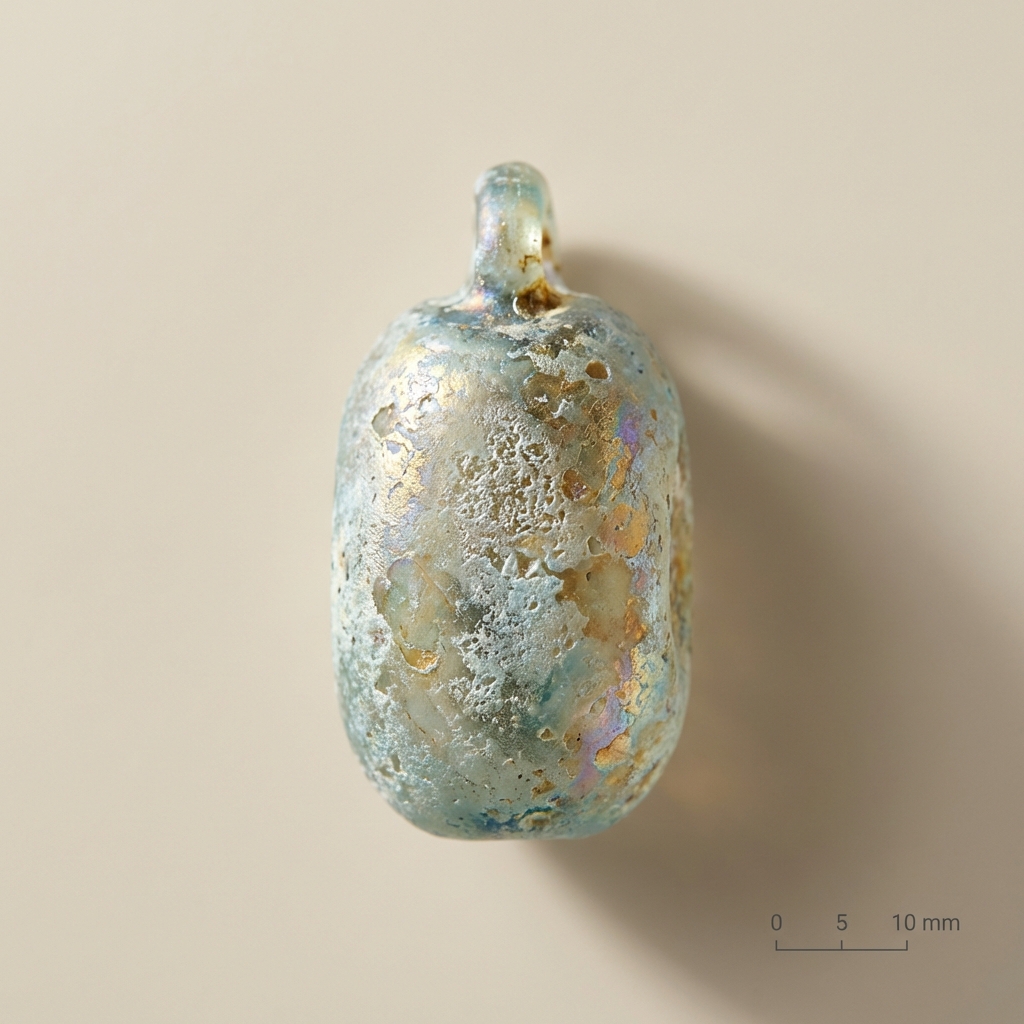
In soda rich glass compositions common in Roman objects, the alkali content that helped ancient glassmakers lower melting temperatures also makes the material more susceptible to water-driven leaching. When soluble salts form or migrate at the surface, repeated cycles of moisture can concentrate those salts and force microfracturing that develops into the characteristic fine network associated with crizzling.
Progression from initial surface hydration to structural weakening can take weeks to years and can accelerate with repeated wetting or exposure to high relative humidity. The result is often a matte, etched surface with microcracks and in some cases loss of tiny flakes or a powdery residue, which signals active material loss rather than a stable surface patina.
Understanding this chain of events helps explain why conservators and institutions advise owners to avoid wet cleaning and to control the environment around vulnerable pieces, because interruption of the hydration-leaching cycle is the primary way to slow or prevent crizzling.
Iridescence versus crizzling: how to tell stable weathering from active decay
Excavated Roman glass commonly shows iridescence, which is often a stable stratified weathering layer produced by corrosion products laid down in thin films. This iridescent sheen is usually an optical effect from layered deposits and is distinct from the active cracking and powdery loss that define crizzling British Museum note on iridescence.
Visually, iridescence tends to appear as a smooth, colourful shimmer that shifts with the angle of light, whereas active crizzling produces matting, fine network cracks and sometimes powdery flaking. Tactilely, stable iridescence will usually be adherent and not leave loose powder under gentle touch, while crizzling affected areas can crumble or rub away.
Roman glass, particularly soda influenced compositions, can undergo surface hydration and alkali leaching when exposed to moisture, leading to crizzling, a progressive deterioration that produces fine cracking and powdery loss; preventing moisture exposure and consulting conservators when problems arise are the recommended measures.
Some surfaces are ambiguous, especially when thin weathering films sit above early-stage microcracking. In those cases, non invasive examination with raking light and low power magnification is the recommended next step before any cleaning or consolidation is attempted, because the wrong treatment can remove informative weathering layers or accelerate loss.
When in doubt, treat the surface as potentially unstable and seek advice. Conservative decision making values documentation and minimal intervention, so an appearance of iridescence alone is not a reason to scrub or chemically clean a piece.
How museums and conservators identify unstable Roman glass
Collections staff use simple, non invasive checks first, such as raking light inspection to reveal matting and microcracks, and low power stereo microscopy to assess surface texture without touching the object. These visual methods are often combined with careful documentation of burial history and visible soluble salts to make an initial assessment NPS Conserv O Gram on caring for glass.
For owners, a cautious approach is to do the same low risk steps: view the object in raking light, photograph any suspicious areas, and avoid probing or scraping. Internal conservation labs reserve invasive or wet testing for controlled settings because sampling can itself introduce risks to unstable glass.
Non invasive observation routine for raking light and low power magnifier
Keep handling minimal
Simple soluble salt spot tests exist but should be treated cautiously and performed by professionals; interpreted correctly they can explain hygroscopic behaviour, but misapplied tests or rubbing can displace fragile layers and worsen results.
Practical care rules for owners: humidity, handling and what to avoid
Prevention is the best strategy for long term preservation. Museum guidance frequently recommends stable, low relative humidity for vulnerable soda-lime glasses as a primary control to reduce alkali leaching and salt mobility; many collection care notes use target ranges to guide storage decisions Getty Conservation Institute guidance on archaeological glass.
In practice, aim for relative humidity that is steady rather than fluctuating. Rapid changes in RH can drive salt migration and microfracturing, so avoid humid basements, unheated attics, and open windows in damp weather. Use buffered, acid free storage materials and closed display cases where possible to create a stable microenvironment for small antiquities.

Handling guidance is straightforward: minimize direct touching, support fragile shapes, and wear clean gloves when examining an object closely. Avoid exposing a vulnerable piece to skin oils, cleaning agents, or adhesive tapes. For display, choose a stable mount that supports the item without pressure points and place it away from direct sunlight and household humidity sources.
For those seeking a short checklist: control humidity, limit handling, store in buffered materials, and avoid wet cleaning. When care steps look uncertain, defer to a conservator with glass experience rather than attempting household treatments that can worsen alkali leaching or cause salt migration.
If a piece gets wet or shows active crizzling: immediate steps
If an object becomes wet, resist the urge to rub or aggressively dry it. Rubbing can move soluble salts and abrasive particles across the surface, increasing the likelihood of microfracture and powdery loss; conservators advise slow, controlled drying and minimal movement to reduce salt migration Corning Museum of Glass guidance on crizzling.
In the first hours after wetting, isolate the object from other items and from humid environments, document condition with dated photographs and notes, and allow slow drying in a stable, ventilated area at ambient temperature rather than applying heat or forced air. Quick drying with heat can trap salts and create internal stresses.

Visible active crizzling signs, such as spreading fine networks of cracks, powdery surface loss, or visible soluble salts that form crusts, are triggers to stop and contact a conservator. Prompt professional assessment can reduce long term damage and help determine whether desalination or stabilization is appropriate.
Common mistakes collectors make with ancient glass and how to avoid them
Frequent errors include wet cleaning, abrasive rubbing, and applying household adhesives or coatings. These interventions can remove stable weathering layers that hold information about burial and age, and they can accelerate chemical processes that lead to crizzling CCI notes on glass deterioration.
Another common misreading is assuming iridescence requires removal. Over treating an iridescent film can destroy a stratified corrosion layer that is both historically informative and sometimes stable. If a surface is uncertain, document it and seek non invasive examination before proceeding.
Safer alternatives are simple: photograph and record condition, avoid cleaning with liquids, keep soils and encrustations intact until a conservator can assess them, and when in doubt, choose documentation over intervention. A clear restoration notes entry can preserve information and prevent repeated harmful attempts at cleaning by future owners.
When to call a conservator and how to document condition before treatment
Red flags that require professional help include active flaking, powdery loss, rapidly spreading microcracks, and visible soluble salts. These signs point to active deterioration that household methods are unlikely to stop and may worsen Getty Conservation Institute guidance on archaeological glass.
Before contacting a conservator, prepare clear documentation: take photographs in raking light, capture overall and detail shots, record measurements, note any burial or collection history, and write down recent environmental conditions and events such as wetting episodes. Condition notes that include dates and circumstances help conservators triage and advise effectively.
Conservators may consider desalination or stabilization treatments when appropriate, but long term outcomes for some interventions remain active research topics, so professional judgement and careful weighing of risks are central to deciding whether to treat a given object.
Practical scenarios and a checklist for romanjewelry owners before purchase or display
Scenario 1: Buying an excavated glass intaglio ring. Immediate steps are to request condition notes and any burial history, view detailed photographs in raking light, and ask about prior conservation. If matting or microcracks are visible, plan for low RH storage and avoid wet cleaning upon receipt Corning Museum note on crizzling.
Scenario 2: Receiving a found fragment. Isolate the fragment, photograph it, and store it in buffered, acid free materials at stable humidity. Do not attempt to remove adhering soil without conservator advice, because soils and encrustations can protect fragile surfaces and hold contextual information.
Scenario 3: Displaying a known stable iridescent pendant. Keep it in a closed case with stable relative humidity, away from windows and heat sources. Regularly inspect for new matting or powdery loss, and keep condition notes current so any changes are detected early.
Printable checklist: 1) Photograph in raking light, 2) Record provenance and burial notes, 3) Avoid wet cleaning, 4) Store in buffered materials at steady low RH, 5) Contact a conservator if you see powdery loss or spreading microcracks.
Look for matting, a network of fine cracks, powdery loss or loose flakes to suggest active deterioration; stable iridescence usually appears as an adherent, smooth sheen. When unsure, document with photos in raking light and seek professional advice.
Cleaning with water is risky for soda-influenced Roman glass because moisture can mobilize soluble alkalis and trigger crizzling; cleaning should be avoided unless a conservator has advised and supervised the treatment.
Conservators typically recommend a steady, low relative humidity range and avoidance of rapid fluctuations; specific targets depend on material mix and condition, so when in doubt consult a conservator.
More from Aurora Antiqua
References
- Conserve O Gram 4/16: Creating A Microclimate Box for Metal Storage, National Park Service, US Department
- Gold finger ring with glass intaglio: a lioness (1995.85.2), The Metropolitan Museum of Art, New York
- SF-A79B96, Roman copper alloy and glass finger-ring from Norfolk, Portable Antiquities Scheme, British Museum
- Internet Archaeol. 40. Atkinson and Preston. Objects of personal adornment, Internet Archaeology, Council
- bague, Louvre site des collections, Musee du Louvre, Departement des Antiquites grecques, etrusques et romaines
- Echoes of Antiquity: Thorvaldsen’s Collections as a Reservoir of Motifs, Thorvaldsens Museum Archives
- Museums & Collections (U.S. National Park Service)
- Preventive Conservation, manual.museum.wa.gov.au
- American Institute for Conservation