


Looking for the real thing? Browse our Ancient Roman ring collection, each piece one of one, individually authenticated, with documented provenance. For the background, see the guide to Roman jewelry.
What does "Roman" mean on jewelry? A concise romanjewelry primer
The single word "Roman" on a listing can cover several possibilities, and understanding which one applies is central to responsible collecting. In many listings it can mean an ancient Roman object dated by museum typologies to the Roman Imperial period, roughly the 1st to 4th centuries CE, or it can indicate a modern piece made in a Roman-inspired style, or simply a commercial name without historical claim. Readers searching for romanjewelry should treat the label as a starting point, not a proof of age.
For genuine ancient attributions, specialists most often rely on typology and motif comparisons: bezel shapes, hoop forms and intaglio subjects are compared with museum parallels and published catalogues to suggest a likely date range. When typology is cited as the basis for a claim, ask for the comparanda or museum references used to make that judgement. For general guidance on typology and museum practice, see the Metropolitan Museum discussion on Roman jewellery Roman Jewelry at the Metropolitan Museum.
Follow @auroraantiqua for behind the scenes connoisseurship
Save or download the checklist in this article to use when evaluating listings labeled Roman; it will help you note measurements, marks, condition, and provenance statements before you buy.
Why this matters for buyers: a label alone does not establish antiquity. Stylistic similarity can be convincing to the eye but can also be reproduced by modern makers. Independent documentation, clear condition and restoration notes, and where appropriate non destructive testing are the practical steps that reduce uncertainty.
When you record your assessment, include field notes that mention typology, motif, any visible patina, and whether the seller provided restoration notes or provenance for antiquities. These notes will make later verification, resale or conservation work clearer.
Three ways sellers use the word "Roman" in listings
Writers of listings generally use "Roman" in one of three ways: to indicate a genuine ancient Roman object, to describe a modern piece inspired by Roman styles, or as a brand or model name unrelated to age or origin. Each usage has different consequences for how you verify the claim. Museum and collection practice illustrates how an item is treated when the label means an ancient object; that practice is useful to know when assessing commercial listings. For a museum perspective on common Roman forms and motifs see the British Museum material on Roman jewellery Roman jewellery at the British Museum.
1. Genuine ancient Roman object: Indicators that point toward an ancient attribution include a typology match to Roman Imperial forms, wear patterns and patina consistent with long burial or use, and parallels in museum collections. Sellers who claim antiquity should be able to explain the basis for a typological date and, ideally, provide provenance or collection history to support the attribution.
It can mean an ancient Roman object, a modern piece made in a Roman style, or a commercial name; confirm with typology, provenance, condition notes and tests before accepting the claim.
2. Roman-inspired modern design: Many contemporary makers borrow Roman motifs and intaglio subjects. Stylistic similarity alone does not prove antiquity; modern fabrication methods, modern hallmarks, or clearly recent metalwork usually show that a piece is a modern creation in a Roman style. Where visual similarity is the only evidence, request further documentation or testing to clarify age.
3. Commercial or brand usage: Some listings use "Roman" as a marketing label or product name without claiming historical origin. In those cases the listing’s provenance language and any hallmarks or assay marks are the decisive clues. If the description does not clearly state age, treat the word as stylistic language and ask the seller for explicit clarification.
How specialists date and attribute Roman rings: a practical framework
Contextual and provenance clues strengthen a typological case. Documented collection history, prior auction records, or consistent acquisition notes in a private collection reduce uncertainty. Provenance does not eliminate doubt, but a clear chain of custody or collection history makes an attribution more credible and easier to verify against published comparanda and previous scholarship.
Bear in mind that dating often remains an estimate. Typology provides a likely range, not an exact year. Specialists will cross check visual evidence against documented provenance, and where necessary recommend non destructive analysis to support or question a proposed attribution.
Visual signs that suggest a Roman origin
Buyers can screen images for visual cues that often accompany genuinely old metalwork. Wear consistent with age includes softening of high points, fine surface abrasion where fingers contact the hoop, and a natural patina or surface corrosion that corresponds with the metal type and burial or environmental history. These signs are suggestive but not definitive on their own. Museum examples and comparative collections provide useful visual benchmarks when a seller claims a Roman origin Roman jewellery at the British Museum. Getty Museum resource on ancient gems
Manufacturing traces visible in high resolution images can also guide judgement. Hand-carved intaglios tend to show irregular tool marks and asymmetry, bezel joins on ancient rings are often visibly different from modern soldering, and old repairs have characteristics that align with earlier conservation methods. If a listing shows only a single photo or cropped images that hide the join areas, ask for clear close ups of the bezel, the hoop shoulders, and any joins.
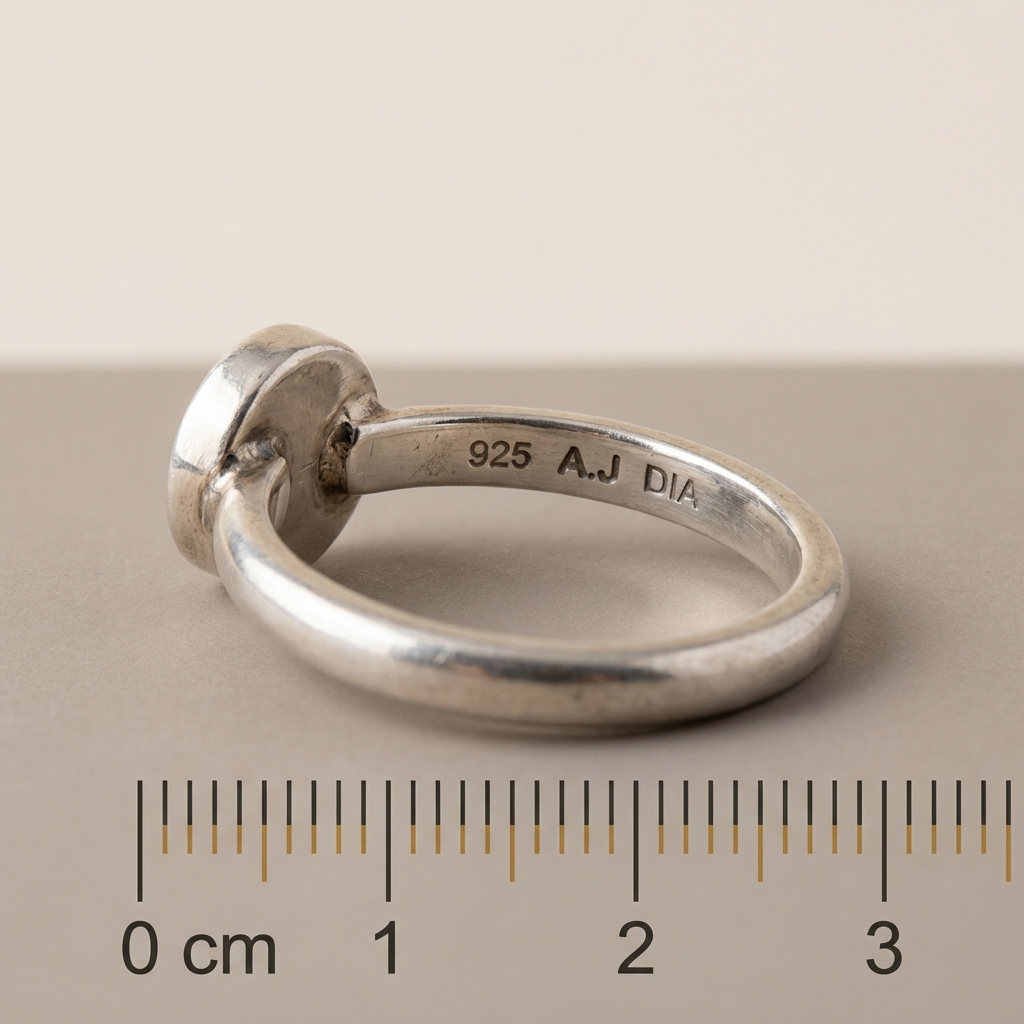
Practical photo request checklist: ask for a scale reference, macro close ups of the intaglio face, side profiles of the hoop and shoulders, clear shots of any marks inside the band, and images of any areas the seller describes as restored. High-resolution images that reveal tool marks and join details make it easier for specialists or independent reviewers to offer a preliminary opinion.
Scientific testing and specialist reports buyers can request
When attribution matters, non destructive testing can provide independent material evidence. XRF elemental scans give a snapshot of metal composition, which helps confirm whether an alloy is consistent with ancient practices or looks more like modern alloying. XRF does not prove age by itself, but it is a useful component of a combined approach that also uses typology and provenance notes. For a clear introduction to visual and scientific approaches to identifying antique and ancient jewellery see the GIA resource on identifying antique and ancient jewellery GIA on identifying antique and ancient jewellery.
Score confidence in Roman attribution
Use conservative inputs
Gemological reports for intaglios and gemstones can be useful when the carved stone is diagnostic or when gem treatments might mislead visual assessment. Specialist gem reports describe lapidary technique, possible treatments, and sometimes origin indicators, but they rarely give a definitive chronological attribution for a small carved gemstone on their own. Combining a gemological report with metallurgical data and provenance strengthens an overall opinion. See Gemmological analysis.
Remember the limits: non destructive tests have interpretation challenges for small objects and surface alterations. Test results should be read alongside photographs, restoration notes and provenance statements to avoid over interpreting a single dataset.
Hallmarks, assay marks and signs of later remounting
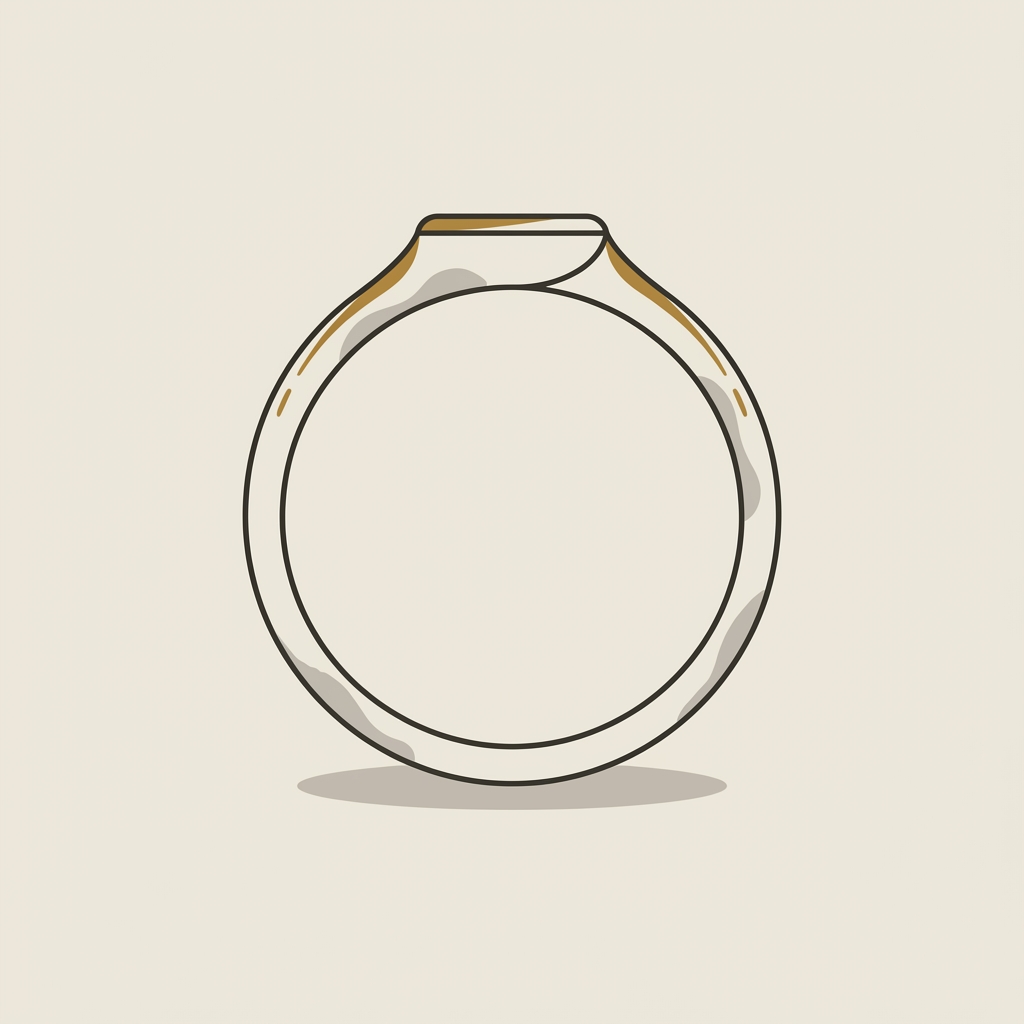
Visually, ancient join techniques differ from modern soldering. Older joins may show hammered joins, visible filing marks at the junctions, or patina continuity across joins that modern soldering often disrupts. Modern remounting can be identified by inconsistent metal patina, fresh solder fillets, or machine-cut seats for intaglios. Ask sellers to describe any known remount history and to provide images of the inside of the band where marks or joins are often visible.
When a modern mount is present over an older intaglio, the object can still have value as a wearable artifact, but the attribution should separate the age of the mount from the age of the intaglio. Clear condition and restoration notes help buyers understand which parts are original, which were consolidated, and which were replaced or remounted.
How to read a listing and request verification (checklist for romanjewelry buyers)
Essential listing items allow buyers to make an informed preliminary judgement. A complete listing will include clear measurements, high resolution images from multiple angles, explicit condition and restoration notes, any available provenance or collection history, and copies or summaries of independent lab reports when they exist. Auction and dealer guides recommend insisting on these items before purchasing expensive or historically significant pieces How to buy ancient jewellery guidance.

Sample questions to ask a seller: What is the measurable band internal diameter and weight? Is there a documented chain of ownership or collection history? Can you provide high resolution images of the bezel join, the inside of the band, and any marks? Has the piece undergone any conservation or restoration, and can you describe that work? These concise requests are common practice and are often answered by reputable sellers.
Also ask about return policies and independent verification. Reputable dealers or houses often note conditions for returns or consignment if attribution is disputed. If a seller refuses to provide routine verification items or to allow independent testing where reasonable, treat that as a significant warning sign.
Decision framework: is this likely an authentic Roman piece or not?
A simple weighted checklist helps translate observations into a confidence level. Score visual cues for typology and wear on a 0 to 5 scale, give provenance strength a 0 to 5 score based on documentation and prior ownership notes, and add a 0 to 5 score for scientific or independent test evidence. Use conservative inputs and prefer lower scores when evidence is ambiguous.
Thresholds and actions: a low total suggests passing on the piece or insisting on independent verification; a medium score suggests requesting an XRF or specialist report and keeping a clear written record of seller claims; a high score with good provenance and supporting tests indicates a higher confidence purchase, though continued caution is still reasonable. For more on combining visual and scientific approaches see the GIA overview on identifying antique jewellery GIA on identifying antique and ancient jewellery.
When confidence is in doubt, consider delaying purchase until you can obtain better images, documented provenance, or an independent report. Conservative choices protect both the buyer and the object's documented history.
Common mistakes and red flags buyers should avoid
Relying on motif alone is a common error: motifs circulate, and skilled makers replicate historical designs. A visually convincing intaglio subject does not by itself prove an ancient origin; always complement stylistic assessment with provenance and material checks. For practical buyer guidance that highlights these pitfalls see auction house buyer guides How to buy ancient jewellery guidance. ForumAncientCoins discussion on fakes
Other red flags include vague provenance statements that use imprecise language, absence of close images of joins or marks, unexplained modern hallmarks, and pricing that seems disproportionately low for a purportedly catalogued or museum comparable piece. Insist on clear responses to specific questions and record seller statements as part of the purchase file.
Third-party reports and documented collection history reduce risk. Even a succinct independent commentary or a simple XRF sheet attached to the listing gives future buyers and conservators a clearer starting point for assessment.
Practical scenarios: three illustrative examples a buyer might see
Scenario A: A catalogued ring with provenance. A listing provides a clear collection history, catalogue references to a published comparandum, and multiple high resolution images showing consistent patina across joins. These elements together increase confidence in an ancient attribution, though independent testing such as XRF remains helpful to confirm metallurgical expectations. Museum comparanda and collector records are valuable for cross checking Roman Jewelry at the Metropolitan Museum.
Scenario B: A modern ring described as "Roman style". The piece bears a modern hallmark inside the band, shows machine-soldered joins and a contemporary finish on the hoop. Here the hallmark and manufacturing clues clearly indicate a modern object using Roman motifs. A brief XRF scan and clear images of the mark settle the attribution quickly in most cases.
Scenario C: An ambiguous listing with limited photos and vague provenance. The listing uses the word Roman but provides a single photo and a short description such as "old excavated ring." In these cases the prudent choice is to request detailed images, ask the seller for any documentation, and if that is not forthcoming either pass or insist on the right to return if later tests disagree with the listing. Portable Antiquities and buyer guidance advise keeping a written record of communications when provenance is uncertain Portable Antiquities guidance.
What to ask sellers, conservators and labs-concise templates
Message template for sellers: Please provide internal band diameter in millimetres, current weight, and high resolution images showing the intaglio face, bezel joins, inside of the band, and any marks. Please also list any known restoration or conservation work and provide any provenance or collection history you can share. Clear, direct templates increase the chance of a useful reply.
Message template for labs or conservators: Please confirm whether a non destructive XRF scan is available and what elements will be reported. If you offer gemological reports for carved intaglios, please state the scope and typical outputs. Request written reports and a short interpretation that ties material data to likely period markers.
Reminder: keep all replies and attach seller statements to your records. A documented exchange forms part of the provenance trail and helps future verification or conservation work.
How reputable dealers and auction houses guide buyers
Reputable trade practice emphasizes transparency: expect measurements, condition and restoration notes, high resolution images, and any provenance documentation that exists. When sellers provide independent lab reports or clear return or consignment policies, they reduce buyer risk and make it easier to resolve later questions. For industry practice on buying and documentation, see auction house buyer guidance How to buy ancient jewellery guidance.
Ethical trade standards also encourage sellers to disclose uncertain provenance and to avoid definitive claims without supporting evidence. Codes of ethics and best practice help frame responsible behaviour for dealers and collectors and provide a reference when assessing listings that use historical labels without clear documentation ICOM code of ethics and best-practice guidance.
How Aurora Antiqua approaches listings labeled "Roman"
Aurora Antiqua acts as a curator and trust layer for wearable antiquities by offering Curated ancient rings spanning Roman, Greek, Byzantine, Islamic, Celtic, medieval, and post medieval periods, and by providing Restoration and preservation notes that describe work done or left untouched. Where available we include Provenance and documentation references and produce Editorial and historical content that explains cultural context and iconography. These capabilities are presented to help buyers understand the basis for an attribution and the object's condition.
We use careful, conditional language in attributions and encourage independent verification for purchases where the buyer needs a high level of certainty. When documentation is available we present it; when it is not, we describe what is known and what remains uncertain so collectors can make informed decisions.
Conclusion: practical next steps for responsible buying
Quick checklist recap: verify measurements and images, ask for condition and restoration notes, check for hallmarks or assay marks, request provenance or collection history, and obtain non destructive tests or independent reports when the attribution is critical. Keeping a written record of all seller communications helps form a clearer provenance for future reference. For guidance on buyer protections, insist on clear return or consignment terms if attribution is uncertain.
Wherever possible, adopt a conservative approach: pass on pieces with vague claims or insufficient documentation, or ask for further verification before committing. Use the checklist in this article for future romanjewelry evaluations and keep notes that tie images to seller statements and any lab outputs you obtain.
Look for multiple supporting signs: typology and motif matches to museum comparanda, consistent wear and patina, clear provenance or collection history, and ideally non destructive tests or independent reports. A single suggestive feature is rarely sufficient.
Legible modern hallmarks or assay marks typically indicate a later mount or remount rather than original Roman manufacture. When in doubt, request close images and an explanation from the seller.
Request high resolution images, measurements, condition and restoration notes, and consider an XRF elemental scan or a specialist gemological report for carved intaglios when attribution is important.
More from Aurora Antiqua
References
- Luxury Arts of Rome, The Metropolitan Museum of Art, New York
- Internet Archaeol. 40. Atkinson and Preston. Objects of personal adornment, Internet Archaeology, Council
- Emilie Riha, Der römische Schmuck aus Augst und Kaiseraugst (Roman jewelry from Augst and Kaiseraugst), Römermuseum Augst
- Bagues et anneaux à l'époque romaine en Gaule, Persée, Persee (CNRS, ENS de Lyon, Ministere francais)
- SF-A79B96, Roman copper alloy and glass finger-ring from Norfolk, Portable Antiquities Scheme, British Museum
- Philip Kiernan and Klaus-Peter Henz, Rings from the Forbidden Forest, Cambridge University Press
- About us, International Association of Dealers in Ancient Art
- Research report: export licensing and provenance, GOV.UK, Department for Culture, Media and Sport (DCMS)
- Stolen Works of Art Database, INTERPOL
- Code of Ethics, International Council of Museums, ICOM
Browse the Aurora Antiqua catalogue
Every piece is independently identified, dated, and documented. Shipped insured from Belgium with DHL Express, free within the EU.
Going deeper? See the ancient Roman rings buyer’s guide · buying ancient Roman coins.
From Aurora Antiqua
We sell authenticated ancient & medieval pieces, each individually examined before listing and backed by a Lifetime Authenticity Guarantee. One of a kind, sold once, never reproduced.
Browse Ancient Roman Rings →