


Looking for the real thing? Browse authenticated Ancient Roman rings, each piece one of one, individually authenticated, with documented provenance. For the background, see the guide to Roman jewelry.
What is an ancient roman key ring? Definition and historical context
The phrase ancient roman key ring is used by collectors and dealers to describe small ring-shaped objects that are either functional components for carrying keys or rings closely associated with keys in grave groups and hoards. In many cases the term can refer to a small hoop that appears to have been threaded through a key or a grouping of keys, or to a personal ring that shows signs of being linked to a keyring or key set.
Used cautiously, the term places the object within a broadly Roman cultural and chronological frame, generally assigned to the Roman period and to adjacent regions influenced by Roman material culture. This dating is often given as an estimate based on style and find context rather than an absolute scientific date. Archaeologists typically report similar small rings from domestic sites, graves, and hoards across the Roman world, and dealers may use the phrase to signal a likely functional connection rather than to assert a precise provenance.
How the term is used by collectors and dealers
Collectors use the phrase to communicate probable function and general age in a short form. When a listing says ancient roman key ring, it often signals that the seller believes the piece is an antiquity from roughly the Roman era and that it may have been associated with keys or rings used to gather small objects. In many cases the phrase is shorthand, not a definitive attribution. See Aurora Antiqua's Q&A on related terminology what is a roman key ring.

Typical archaeological and museum contexts where similar rings appear
Similar rings are commonly documented in inventories of domestic finds, in grave groups where personal items were deposited, and in small hoards with other metalwork. Where context is recorded, these finds can come from kitchens, door fittings, burial assemblages, and personal tool kits. Context matters: a ring found in a secure archaeological layer offers stronger dating than one without a recorded findspot. For museum examples see the V&A collection entry Ring | V&A and marketplace examples such as an antique listing at Antiquities Ancient Roman Bronze Key Ring.
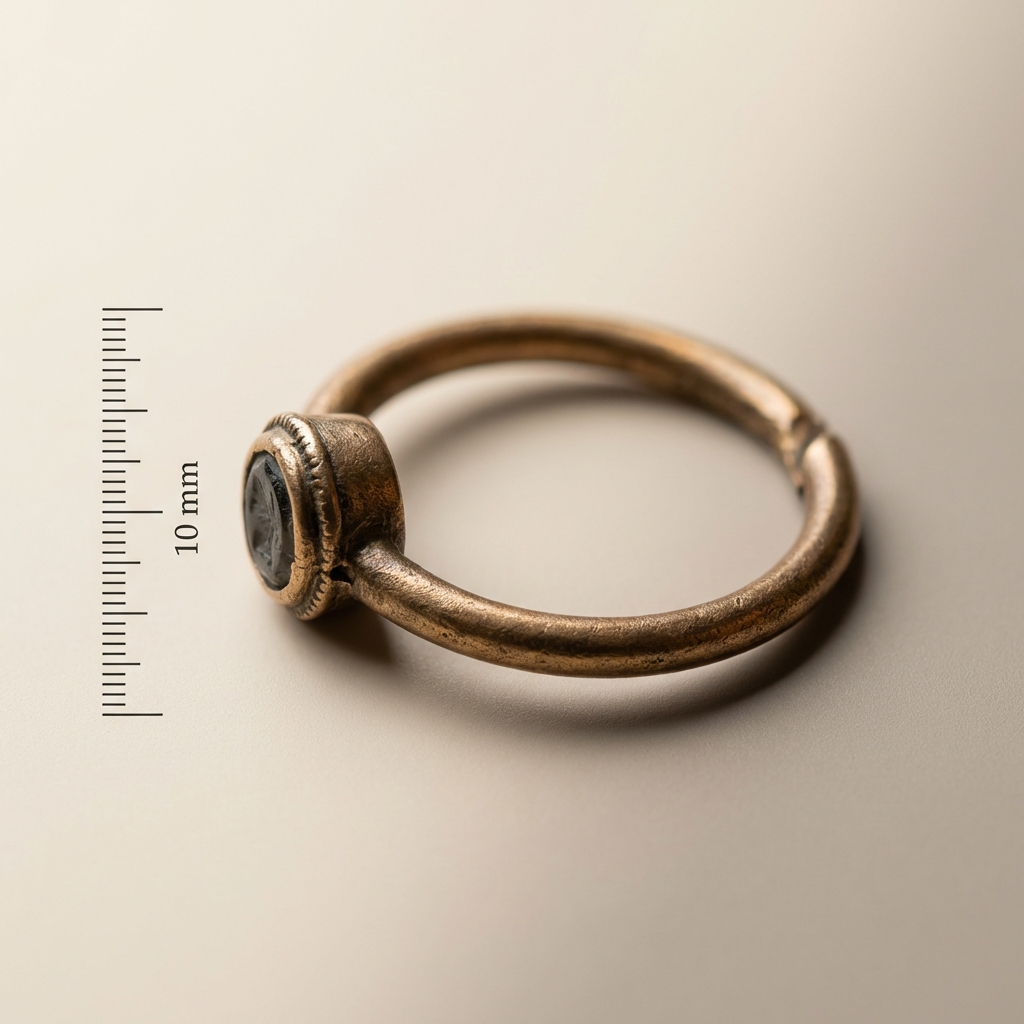
Materials commonly described for these rings include copper alloys, iron, and occasionally small set stones or glass in a simple bezel. Metalwork may appear to have a surface patina consistent with burial and long term exposure, but that appearance should be read alongside condition notes and documentation. Collectors prize such pieces because they are wearable history, they often show iconography or wear consistent with long use, and many examples are one of a kind in a collection history context.
How an ancient roman key ring was made and how it functioned
Construction techniques commonly discussed for ancient rings
There are several plausible manufacture techniques that can explain how small Roman period rings were made, described here as possibilities rather than certainties. A common method for small hoops is simple wirework, where a length of metal wire is shaped into a circle and the ends joined. Another frequent method is casting, where the basic form is poured in a simple two part mold and then finished by filing and polishing. For rings with a bezel or small setting, a thin sheet could be formed and soldered or riveted onto a hoop to hold a small stone or glass inlay.
Signs of joins, soldering marks, or filing remnants are all construction clues collectors note in condition notes. These features can indicate hand finishing and workshop practice. Likewise, repeated use marks at the join or on the hoop can suggest a long functional life. When assessing construction, observe whether the metal appears worked or cast, whether tool marks are consistent with ancient hand tools, and whether any repairs are visible that postdate the original making.
quick visual ID checks for small ring objects
Use to decide if further study is needed
Practical functions and likely uses in daily life
Mechanically, a ring form can be adapted to hold keys or to function as a loop on a larger keyring. A simple hoop attached to a key could be threaded through other loops or tied to leather, allowing several small keys to be carried together. In domestic contexts a small ring might have acted as a suspension loop for a key, a tag, or a token. In other cases a ring might have been worn as jewelry yet also doubled as a functional fastener for a small tool or key. See related discussion of rings with hidden keys Rings with Hidden Keys.
Wear patterns that suggest functional use include abrasion at the points where a hoop would rub against a secondary object, elongation of the hoop, and localized polishing where handling was frequent. Collectors compare these wear signs to typical patterns for hand carried objects to form a probabilistic view about function. Workshop attribution can be suggested by particular finishing techniques or small stylistic details, but such attributions usually remain provisional without documentation or specialist study.
Identifying an ancient roman key ring: what to check first
Visual cues: patina, tool marks, and wear consistent with age
Begin any assessment visually and systematically. Look for a surface patina that is uniform across the piece and congruent with expected corrosion for the metal type. Patina that appears layered, with subtle color variation and discrete encrustation, is more consistent with long burial than a flat applied finish. Tool marks, such as consistent hammering or file traces at joins, can corroborate a handmade origin.
Be alert to signs of modern tooling: crisp, parallel machining marks, unusually clean drill holes, or machining patterns that do not match hand finishing. Symmetry and regularity can be natural, but overly perfect symmetry on a small object can sometimes indicate modern reproduction methods. Condition notes should describe any cleaning or stabilization, and those entries are important to read carefully when judging surface character.
Measurements, photographs and what they should show
Request clear, high resolution photographs from multiple angles. Essential views include a full profile of the hoop, a close-up of any joins or solder lines, the interior of the hoop, any bezel or intaglio surfaces, and the reverse side where repairs are often visible. Include a scale reference in every image, ideally a metric ruler or a coin of known size, and request a weight in grams when possible.

Measurements to request include external diameter, internal diameter or ring size if worn, band width, and any bezel dimensions. Photographs should be well lit and sharply focused so that patina texture and fine tool marks are visible. These images allow an initial remote assessment and help you decide if a hands-on inspection or third-party evaluation is warranted. For similar items and comparative listings see the Aurora Antiqua ancient roman rings collection.
How to evaluate authenticity and provenance for an ancient roman key ring
Authenticity and provenance are distinct but related concerns. Authenticity asks whether the object dates to the claimed period. Provenance asks for the documented ownership history and find context. Both are matters of probability rather than simple conclusions without documentation. When a listing uses the phrase ancient roman key ring, treat it as an initial attribution to be tested against available evidence.
See @auroraantiqua for behind the scenes and listing examples
As a curatorial reference, Aurora Antiqua presents example listings with clear condition notes and provenance summaries to help buyers compare what to expect in a well documented listing.
Documentation to request and how to read it
Ask for any provenance information the seller can provide, including prior collection history, acquisition dates, and any verification letters. A provenance statement that traces chain of custody across named owners and dates is more informative than a brief, non specific claim. Read documentation with caution: vague phrases or missing dates do not prove inauthenticity, but they do increase uncertainty.
Verification letters or condition reports from recognized specialists can reduce uncertainty, but they are not absolute proof. If a scientific test is cited, ask for the testing laboratory and a copy of the report. Be aware that not every purchase will have laboratory tests; many collectors decide on the balance of photographic and documentary evidence alone.
Third-party checks and legal considerations
Third-party assessments include independent specialists, academic cataloguing, or laboratory analysis. These steps can be helpful for higher value pieces or where documentation is incomplete. Legal considerations can include export regulations and cultural heritage laws; these vary by country and can affect both shipping and long term ownership. If export or import paperwork is relevant to a listing, request copies so you can confirm compliance with applicable law.
Red flags include evasive answers about a findspot, inconsistent condition descriptions across images and notes, or provenance claims that lack supporting paperwork. When in doubt, pause and ask for more information or a second opinion rather than assuming the listing is complete.
Conservation, restoration and care for an ancient roman key ring
What restoration notes typically mean and how to read them
Common terms in restoration notes include stabilized, repaired, and cleaned. Stabilized generally indicates that an object has been treated to halt active corrosion or structural decline. Repaired means a physical intervention has been made to return a missing or damaged element to functional form. Cleaned indicates some surface treatment to remove encrustation or dirt; the scope of cleaning can vary widely and should be described in detail.
When you read restoration notes, look for specifics. A brief phrase such as stabilized in professional context often accompanies a short description of the intervention and the conservator if one was used. Listings that give transparent restoration notes allow you to assess how treatments may have altered surface appearance or structural integrity.
Practical handling, storage and display tips to preserve condition
Handle an ancient ring minimally and with clean, dry hands or cotton gloves to avoid introducing oils. Do not use household polishing compounds, dips, or abrasives. These can remove patina and damage fragile surfaces. If you must remove superficial dirt, consult a conservator or follow conservative cleaning methods recommended by professionals, typically limited to soft brushes and distilled water for short, controlled use.
Store rings in stable conditions, away from fluctuating humidity and direct sunlight. Use acid free materials and padded mounts to avoid pressure points. For display, support the object on inert mounts and avoid adhesives that touch original surfaces. Photograph condition carefully before and after any conservation work and keep restoration notes with the object record.
How collectors catalogue and document an ancient roman key ring
Keeping a clear catalogue supports provenance and future study. Essential fields include an accession number, dimensions, described materials, condition notes, restoration notes, and a provenance summary. Note uncertainties explicitly; for example, record material as described as copper alloy rather than asserting a metal without testing.
Photograph the object systematically: full profile, interior of hoop, joins, any intaglio or bezel, and contextual shots with scale. Use consistent file naming to link images to records, such as accessionnumber_view.jpg. Store digital copies of documentation and seller provided verification letters in more than one secure location and record when you received each document. For related items see our rings collection rings.
Aurora Antiqua product listingsHow to photograph and record provenance and condition
Good photographs and clear file organization make later verification easier. Include lighting that shows surface texture without glare, and capture any inscriptions or small motifs legibly. When recording provenance, save seller emails, invoices, and any attached documents along with dates of acquisition and any conversation notes that clarify claims.
Ethical collecting includes keeping notes on export or import paperwork when relevant, and respecting laws that restrict trade in cultural property. Treat documentation as part of the object and keep both physical and digital records together to maintain collection history over time.
Common mistakes and a short assessment checklist for buying an ancient roman key ring online
Buyers commonly rely on a single image, overlook restoration notes, assume gemstone identifications without tests, or accept vague provenance statements. These mistakes increase the chance of buyer regret. Instead, use a short checklist to structure what you request and how you evaluate answers.
Printable checklist summary
1. Request multiple high resolution photos with scale and weight 2. Ask for clear condition notes and any restoration records 3. Request provenance details and any verification letters 4. Inspect joins and tool marks in detail for signs of hand finishing 5. Note any legal or export paperwork and request copies if relevant 6. Pause if answers are evasive or inconsistent
When a listing fails to provide clear images or responds vaguely about restoration notes or provenance, consider seeking a second opinion. A specialist or an experienced collector can often identify issues visible in photos that are easy to miss for a new buyer.
Start with high resolution photos from multiple angles, clear measurements and weight, detailed condition and restoration notes, and any available provenance or verification letters; pause and seek more information if any of these are missing.
Final quick point: describe uncertainty explicitly in your records. Record what you know and what you do not, and keep copies of all correspondence and documents related to the purchase. Clear records protect both the collector and the object in the long term.
Look for a consistent patina, handmade tool marks at joins, contextual provenance or find information, and clear condition notes; if in doubt, ask for multiple high resolution photos and a specialist opinion.
Good restoration notes describe the intervention in plain terms, who carried it out when possible, and whether stabilization, cleaning, or repair changed the original surface.
No, many collectors rely on a combination of photographs, provenance documentation, and expert opinion; testing is recommended for higher value or uncertain pieces.
More from Aurora Antiqua
References
- Emilie Riha, Der römische Schmuck aus Augst und Kaiseraugst (Roman jewelry from Augst and Kaiseraugst), Römermuseum Augst
- SF-A79B96, Roman copper alloy and glass finger-ring from Norfolk, Portable Antiquities Scheme, British Museum
- Investigating Ancient “Bronzes”, J. Paul Getty Museum and Getty Conservation Institute, Los Angeles
- Testing and Retesting Alexander the Great, J. Paul Getty Museum and Getty Conservation Institute, Los Angeles
- Reproducing bronze archaeological patinas through intentional burial, Heliyon (Elsevier, Open Access)
- Bronze disease, Conservation Wiki, AIC Wiki, American Institute for Conservation
- Archaeological materials, Icon, The Institute of Conservation (UK)
- Act on the Protection of Cultural Property (Kulturgutschutzgesetz, KGSG), English translation, German Federal Ministry of Justice
- About us, International Association of Dealers in Ancient Art
- Ring, Victoria and Albert Museum