


Looking for the real thing? Browse authenticated Ancient Roman rings, each piece one of one, individually authenticated, with documented provenance. For the background, see the guide to Roman jewelry.
What historians mean by 'same-sex practices' in ancient Rome: definition and context
As historians approach questions about sexuality in ancient Rome they often avoid modern labels like homosexuality and instead speak of same-sex practices, roles, and social meanings. That cautious phrasing matters because the category 'homosexuality' can mislead readers when applied to texts and objects from a very different social world; scholars in recent syntheses recommend role-and-status frameworks to describe how Romans thought and wrote about sexual behavior rather than projecting twentieth century identity categories onto the past Cambridge Companion to Roman Sexualities.
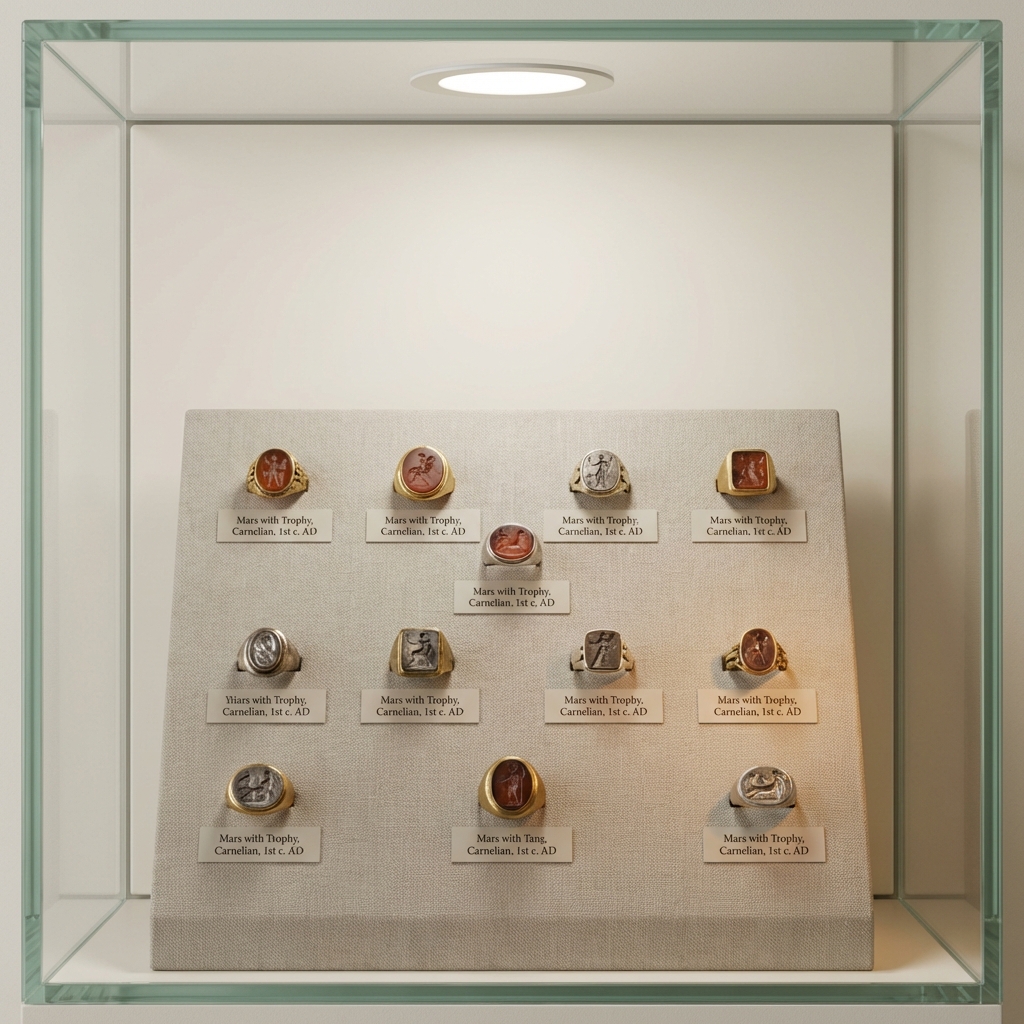
Evidence for same-sex practices comes in several distinct forms: literary genres such as satire and elegy, legal and rhetorical texts that address conduct, and material culture including graffiti, wall-paintings, lamps and especially engraved intaglio rings and sealstones used for personal display. Each evidence type carries its own biases. Literary sources are often rhetorical, law texts are selective, and objects need secure dating and findspot information before they can be taken as straightforward records of practice Oxford Research Encyclopedia of Classics.
Readers should expect that some claims about everyday practice rest on fragmentary bases. Elite men appear disproportionately in the surviving record, and many objects and texts preserve elite viewpoints or the literary imagination. Material culture can supply valuable counterpoints, but it is most useful when combined with contextual data like provenance and comparative cataloguing.
Social role, status and sexual behavior: the core Roman framework
A central point in modern scholarship is that Roman judgment of sexual behavior was organized around social role and status, notably the distinction between active and passive sexual roles. In many contexts being the active partner could be consistent with maintaining elite masculine status, whereas occupying a passive role could have social consequences for a freeborn male citizen Oxford Research Encyclopedia of Classics.
That framework does not mean the practice was uniform across time and place. Variation by period, such as differences in rhetoric and social expectations between the Republic and the Imperial centuries, and by region, such as Italy versus the provinces, can complicate a simple reading. Patronage networks, household hierarchies and the status of partners mattered as much as the gender of partners in shaping how sexual acts were perceived.
When thinking about consequences for status, it helps to remember that many of our sources come from elite men writing about elite practices; social penalties or stigma described in rhetorical contexts may reflect concerns about honor and reputation within particular social circles rather than a single, uniformly applied moral code Cambridge Companion to Roman Sexualities.
Romans typically judged sexual behavior by role and status, with elite expectations about active and passive roles shaping social meanings; modern identity terms are not a direct fit for Roman categories.
The active/passive distinction also intersected with other social categories: citizenship, freeborn status, and rank within patron-client relations. A freeborn elite male expected to display control and authority could face loss of reputation if publicly cast as a passive sexual partner. Understanding these intersections is essential to reading both texts and objects responsibly.
What literary and legal sources tell us and what they do not
Literary genres such as satire, elegy, and invective frequently portray male-male desire and related practices, but their primary aim is rhetorical effect rather than sociological reporting. Poets and satirists used erotic scenarios to criticize, shame, or amuse, and those uses shape how we should read such passages in context Perseus Digital Library.
Because these texts are rhetorically charged, they need corroboration from other sources if they are to be taken as evidence for common everyday behaviors. Elegists may adopt persona voices of lovers, while satirists use hyperbole and social mockery. Readers should therefore be cautious about extrapolating from literary trope to statistical frequency of practice.
Legal and moral texts address sexual conduct too, but the surviving legal evidence is often partial and context dependent. Some imperial rescripts and legal rhetoric touch on matters such as adultery, prostitution, or public decency; however, scholars note that a clear, empire-wide codification criminalizing consensual same-sex acts is not straightforwardly present in the sources and remains contested Journal of Roman Studies review article.
Translations of primary texts require careful handling. Many modern editions and translations provide notes and commentary that help readers evaluate rhetorical context and manuscript uncertainties, which can alter how a passage is interpreted in discussions about sexual behavior.
Material culture and personal display: roman intaglio ring and related evidence
The roman intaglio ring is a useful case study because intaglios and signet rings served practical sealing functions and visible social display, and their imagery can reflect personal taste, social affiliations, or playful erotic motifs. As small, portable objects they circulated widely and could be set into rings that functioned as identity markers and seals for documents and goods British Museum Research notes on intaglios. The topic is also discussed in our Ancient Roman Rings collection.
Interpreting erotic or male-male imagery on intaglios requires attention to dating, iconography, and findspot. An image that appears erotic in isolation may have multiple meanings depending on context: mythological scenes could carry erotic undertones, and playful or mocking images could be private jokes rather than public declarations of sexual practice. Secure attribution and cataloguing help restrain speculative readings and anchor iconography to comparable objects and dated typologies The Metropolitan Museum of Art timeline.
Because intaglios were used as seals, their subjects could be intentionally ambiguous or symbolic. An owner might choose a motif connected to a myth, a profession, or a private joke, and the same motif can mean different things in different social settings. Combining iconographic reading with catalogue entries and comparative parallels is therefore essential before suggesting a ring illustrates someone's private sexual life.
Because intaglios were used as seals, their subjects could be intentionally ambiguous or symbolic. An owner might choose a motif connected to a myth, a profession, or a private joke, and the same motif can mean different things in different social settings. Combining iconographic reading with catalogue entries and comparative parallels is therefore essential before suggesting a ring illustrates someone's private sexual life. For marketplace context see listings for intaglio rings at 1stdibs.
Quick provenance and catalogue checks for a personal object
Start with published catalogues
Because intaglios were used as seals, their subjects could be intentionally ambiguous or symbolic. An owner might choose a motif connected to a myth, a profession, or a private joke, and the same motif can mean different things in different social settings. Combining iconographic reading with catalogue entries and comparative parallels is therefore essential before suggesting a ring illustrates someone's private sexual life. Further material-context discussion can be found at Intaglios in the Roman World.
Interpreting images and texts together: methodology and common pitfalls
Researchers typically apply a stepwise method when evaluating an object or passage: establish secure dating, confirm findspot or collection history where possible, identify object function, and compare iconography to published parallels. This structured approach reduces the odds of overinterpreting a single image or phrase and helps place material and textual evidence on common footing British Museum Research notes on intaglios.
One common pitfall is privileging a striking image or a sensational literary passage without checking whether similar motifs occur in controlled archaeological contexts. Another is reading modern identity categories into fragmentary evidence. Good practice therefore emphasizes catalogue references, secure find contexts, and independent publication or scholarly commentary before major claims are advanced.
When combining literary and material evidence, weigh rhetorical purpose against everyday usage. A satirist's joke about a named figure might reflect elite invective strategies rather than a record of common behavior, while a ring with erotic imagery can suggest personal taste or social signaling without proving the owner's sexual life in modern terms.
How to evaluate claims about an object or a story: decision criteria for buyers and readers
For collectors and readers the most useful documentary supports are a clear collection history, bibliographic catalogue references, and any independent verification such as academic cataloguing or museum registration. These elements strengthen the credibility of an interpretation that links imagery to social meaning, because they provide the contextual backbone that isolated images lack British Museum Research notes on intaglios. You can also compare holdings or documentation in our rings collection.
Condition and restoration notes are also informative but have limits. They can tell you what was stabilized or repaired, whether a stone was reset, and if a bezel shows tool marks consistent with ancient working, yet they cannot on their own prove provenance or original use. Transparent restoration notes should detail what was done and why, helping readers assess whether an object remains intelligible for iconographic study Oxford Research Encyclopedia of Classics.

Where provenance is missing, skepticism is warranted. Seek published parallels in museum catalogues and reliable collection notes and ask whether the seller provides clear photographs of hallmarking, bezel mounting, and the reverse of the intaglio. Independent publication or cataloguing in a peer reviewed venue remains the strongest support for confident interpretation, while absence of documentation should lower the degree of certainty any buyer or reader assigns to dramatic iconographic claims The Metropolitan Museum of Art timeline. See related blog posts and documentation notes for examples of published parallels.
Typical errors and modern projection to avoid when reading Roman sexuality
One of the most frequent mistakes is projecting modern sexual identity categories onto Roman people. Modern terms like homosexual or heterosexual carry assumptions about identity and orientation that do not map neatly onto Roman categories organized instead around social role and power relations Cambridge Companion to Roman Sexualities.
An allied error is overreliance on isolated images or sensational textual passages. A single graffiti line or a single ring motif is rarely sufficient to revise broader interpretations; contextual corroboration is required. Sensational narratives that leap from one striking object to broad social claims usually lack the catalogue and provenance support that careful scholarship demands Oxford Research Encyclopedia of Classics.
Illustrative case studies: rings, graffiti and a few literary moments
Selected case studies model how to combine evidence. For instance, some intaglios show playful erotic scenes or seated lovers that, when dated and published with findspot information, illuminate private display choices rather than straightforward autobiographical disclosure. Published museum catalogues and collection notes provide the comparative material that makes these objects interpretable in context British Museum Research notes on intaglios. See also comparative intaglio material at ancient-art.
Graffiti and wall-paintings sometimes provide a more quotidian angle: informal inscriptions and pictorial jottings can reveal jokes, taunts, or private lines that differ from elite literary tropes. When graffiti are excavated in secure contexts and published with clear dating they add valuable perspective on behaviors and social circulation beyond elite manuscripts The Metropolitan Museum of Art timeline.
Explore curated listings and documentation practices
Explore curated listings and documentation notes to see how condition, catalogue references, and provenance shape claims about iconography and meaning.
Short literary moments, such as select passages in satire or invective, are best read as part of a larger rhetorical program. They can be paired with material evidence to suggest social practices, but neither type of source alone grounds sweeping conclusions about private identity. Responsible interpretation stays tentative and tied to the available contextual anchors Perseus Digital Library.
Conclusion: what scholarship reliably shows and important open questions
Scholarship in 2026 supports several secure points. First, Roman judgment about sexual conduct was organized primarily around role and status, with elite expectations that men present as active partners in many social contexts. Second, literary genres are rhetorically shaped and require corroboration. Third, material culture such as the roman intaglio ring can be highly informative, especially when objects are securely dated and catalogued, but iconography alone rarely settles questions about an owner's private life Oxford Research Encyclopedia of Classics.
Open research questions remain prominent: regional and chronological variation, the lived experiences of non-elite actors, and the limits of applying modern identity terminology. Readers and buyers should therefore prioritize transparent provenance, published catalogue references, and careful condition and restoration notes when evaluating claims about imagery or inscriptions. Doing so allows a responsible appreciation of ancient material without overstating what the evidence can prove.

No. Modern identity labels are anachronistic for Rome; scholars prefer role-and-status language and emphasize careful contextual reading.
Legal evidence is patchy and contested; some texts address related behaviors like adultery or public decency but an empire-wide codification against consensual same-sex acts is not straightforward in the sources.
Intaglio rings combine sealing function and personal display; when dated and published with findspot and catalogue references they offer secure comparative evidence for iconographic study.
More from Aurora Antiqua
References
- Ring, Victoria and Albert Museum, London
- Pliny the Elder, The Natural History, BOOK XXXIII, Perseus Digital Library, Tufts University (edition Bostock)
- Pliny the Elder, The Natural History, BOOK XXXIII, Perseus Digital Library, Tufts University (edition Bostock)
- Aulus Gellius, Attic Nights, Book X, LacusCurtius, Bill Thayer, University of Chicago (Loeb Classical Library edition)
- Philip Kiernan and Klaus-Peter Henz, Rings from the Forbidden Forest, Cambridge University Press
- Roman gold finger ring with intaglio, Collections Online, Amgueddfa Cymru, Museum Wales
- Ring, Victoria and Albert Museum, London