


Looking for the real thing? Browse our Medieval ring collection, each piece one of one, individually authenticated, with documented provenance. For the background, see the guide to medieval jewelry.
What we mean by medieval rings: definition and scope
Time span and geographic scope
In this guide, medieval rings refers to wearable finger rings produced in Europe roughly between the 10th and 15th centuries, understanding that regional terminology and dating practices vary between catalogues and find records. For practical identification and typology, museum catalogues and national find databases provide widely used reference frameworks and classifications, which collectors can consult for comparative examples Portable Antiquities Scheme.
Most surviving examples reflect social differences in material and finish. Everyday rings from non elite contexts were commonly in copper alloy, while silver and gold appear more frequently in wealthier assemblages; this pattern is visible across museum overviews and public collections Metropolitan Museum overview of rings.
Types of rings included in this guide
This article concentrates on small, wearable finger rings rather than large arm rings or purely decorative brooches, and treats terms like ancient ring and antiquity in the context of single personal objects offered as curated pieces. When the guide discusses bronze or copper alloy examples, it focuses on rings that show wear consistent with age rather than modern copies or intentionally distressed reproductions Portable Antiquities Scheme.
a starter resource for comparative research on medieval rings
start with the PAS records
Common materials and basic forms you will see
Metals and alloys: bronze, silver, gold, medieval bronze ring
Medieval rings were made from a limited palette of metals: copper alloy, silver and gold, with copper alloy or bronze most frequent for everyday wearable rings from non elite contexts. If an online listing identifies a copper alloy ring, it commonly reflects the routine material choices for practical, long lived rings in medieval Europe Portable Antiquities Scheme.
Recognising a medieval bronze ring in photos requires attention to surface colour and form, but also to catalogue descriptions that use terms like copper alloy or alloy. Museum summaries and online collection records typically describe these material choices and their social associations, which helps set realistic expectations when evaluating pieces Metropolitan Museum overview of rings.
Hoop and bezel shapes from simple hoops to mounted rings
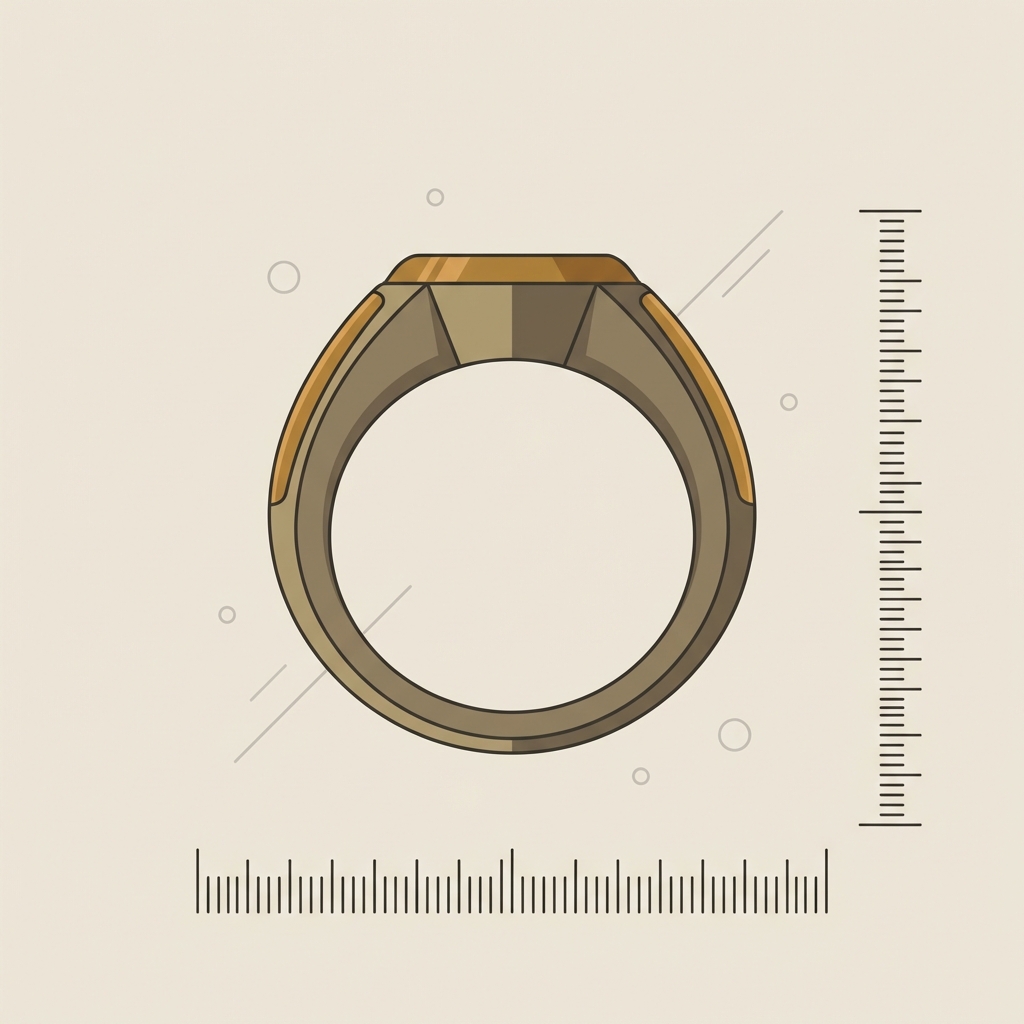
Basic silhouettes range from simple hoops and narrow bands to flatter bezels and tubular or raised bezels used for seals and mounted stones. Signet or seal shapes commonly have a flattened or slightly raised bezel suitable for incised devices, while devotional and posy rings often show shallower, flatter bezels with space for inscriptions Portable Antiquities Scheme.
When assessing images, note hoop thickness, bezel height and whether the ring shows a distinct shoulder or a continuous profile. These small features are frequently recorded in museum typologies and they are practical visual cues for initial comparison with published examples Metropolitan Museum overview of rings.

Common decorative programmes and iconography
Signet and seal devices
One major decorative programme is signet or seal rings, which carry incised or low relief devices used for identity or marking. These rings often have a deliberately level bezel to receive inscription or an intaglio and are prominent in museum typologies and catalogue entries that discuss function and form Portable Antiquities Scheme.
Devotional motifs, posies and animals
A second category includes devotional imagery, such as crosses or saints, and posy or sentimental inscriptions that were worn for devotion or personal messages. Public museum articles and V&A summaries show how these motifs were widespread and how they can indicate likely use or symbolic intent when they survive legibly on a bezel V&A article on jewellery through time.
Regional motif differences
Regional differences in motif and device can be observed in collections, with Crusader and Byzantine repertoires showing some characteristic stars and tubular crosses, while Western Gothic examples often favour flatter bezels with inscriptions; however, overlaps and trade complicate simple geographic attributions and require caution British Museum medieval Europe galleries.
Compare curated medieval rings with condition and provenance details
See curated examples with condition notes and provenance details to compare motifs and finishes without pressure to buy
How medieval bronze rings were made: manufacturing and finishing
Casting techniques and mould types
Medieval copper alloy rings were most commonly cast in simple two part or bivalve moulds, and in some cases produced with loss wax methods for more complex shapes. Technical studies and compositional research provide comparative evidence for these common workshop practices and help explain why seam lines or casting pits sometimes appear in surviving examples comparative metallurgical study.
Evidence of a bivalve mould or a casting seam in photographs can be an important clue that the object was produced with routine medieval workshop techniques rather than by modern machining; look for faint joining lines, irregular casting pits and asymmetry that are consistent with manual casting comparative metallurgical study.
Post casting finishing: engraving, chasing, setting stones
After casting, many bronze rings received limited finishing such as chasing, incision or light engraving; more refined intaglio carving and hard stone settings were often executed in silver or gold mounts where security and finer workmanship were required. These manufacturing differences are discussed in comparative technical literature and explain variation between plain bronze hoops and mounted signet rings comparative metallurgical study.
Photographs that show fine tool marks around a bezel or faint engraved strokes within a device are worth requesting at higher magnification, as these details can corroborate claims about manual finishing and typical medieval workshop practice Portable Antiquities Scheme.
Patina, corrosion and conservation: what age looks like
Typical patina colours and surface signatures
Bronze medieval rings frequently retain green or dark patinas and surface corrosion consistent with burial and long term ageing; this patination is a common diagnostic feature reported in conservation guidance and case notes British Museum conservation of metalwork.
Natural patina can have layered tones and localised encrustation, and it commonly follows casting seams and tool marks in a way that modern artificial ageing does not replicate. Condition notes that document a stable green or black patina are therefore an important part of assessing a ring's appearance British Museum conservation of metalwork.
Medieval rings commonly used bronze, silver or gold and appear as simple hoops, flat or raised bezels for signets and devotional rings. Recognise a likely medieval bronze ring by combining bezel and hoop form, casting and tool marks, layered patina consistent with burial, and transparent restoration and provenance information.
How conservation and restoration change appearance
Conservation treatments and cleaning significantly alter surface appearance, sometimes removing evidence that helps with dating, so restoration notes should state what was stabilised, cleaned or left untouched. Conservation guidance emphasises that documented treatment affects both appearance and future interpretive options for the piece British Museum conservation of metalwork.
When listings describe recent polishing or repatinating, that information should prompt follow up questions and request for condition photographs made under consistent lighting; documented restoration can still be entirely appropriate, but transparency in restoration notes is essential for informed purchase decisions British Museum conservation of metalwork.
A practical identification checklist: combining clues to date and attribute
Physical features to record
Record the bezel shape, hoop profile, internal diameter, bezel dimensions, visible tool marks, and any inscriptions when examining a listing. These basic measurements and observations form the core of a checklist used by collectors and researchers to compare objects with published typologies Portable Antiquities Scheme.
Where possible, note the presence of casting seams, pits, or chased decoration, and compare these features with illustrated examples in museum catalogues to place the object within a likely production range rather than relying on a single stylistic cue comparative metallurgical study.
Contextual and scientific supports
Contextual find information and database records such as those recorded in national schemes are crucial for dating and identification because they link the object to findspot data or comparable groups; this comparative approach is recommended by find specialists and curators Portable Antiquities Scheme.
Compositional and microstructure analyses can supply additional evidence that supports workshop attribution or chronological placement, and where such data are available they should be considered supplementary to physical typology and context records comparative metallurgical study.
Regional and period variation: what differs between areas
Crusader and Byzantine characteristics
Some regional tendencies are measurable in bezel shapes and motifs, with Crusader and Byzantine contexts showing certain tubular crosses and star motifs more frequently in collections; these patterns are visible in institutional galleries and collection records and can assist comparative identification when used cautiously British Museum medieval Europe galleries.
Because trade and reuse spread forms across borders, visual attribution by motif alone remains tentative, so collectors should treat regional attributions as hypotheses to be tested with additional evidence such as find context or compositional data Portable Antiquities Scheme.

Western Gothic and later medieval patterns
Gothic period rings often have flatter bezels suitable for inscribed posies and widely distributed sentimental devices in later medieval society, and comparing a candidate ring to dated museum examples can indicate where in the broad chronological range it may belong V&A article on jewellery through time.
Because the same forms appear across long time spans, regional and period claims should be cross checked with provenance information and, where available, compositional studies that strengthen the attribution beyond purely stylistic observation comparative metallurgical study.
How to read condition and restoration notes on listings
Key phrases to look for
Look for explicit language such as stabilised, conserved, or cleaned, and ask for details when those words are present. Conservation guidance recommends specificity in condition statements to help buyers understand whether treatment has altered surface patina or obscured diagnostic marks British Museum conservation of metalwork.
Absent or vague restoration notes should prompt a request for microscope images or a conservator's report; clear condition notes are part of responsible curation and can greatly affect how a ring should be interpreted and handled Portable Antiquities Scheme.
What documented treatments mean for appearance
Documented conservation that stabilised active corrosion is generally a positive note for long term preservation, but cleaning or repolishing can remove the very surface cues experts use for dating, so ask what methods were applied and whether changes are reversible British Museum conservation of metalwork.
Sample purchaser questions include requests for before and after images, details of chemicals used in any cleaning, and whether patina was intentionally reintroduced; sellers who provide transparent restoration notes and provenance details follow best practice in curation and documentation Portable Antiquities Scheme.
Common errors, red flags and misreadings to avoid
Relying on a single stylistic cue for dating is a common mistake, because many forms were used across long time spans and regions; practical dating should combine multiple lines of evidence including shape, tool marks and context Portable Antiquities Scheme.
Red flags in photos include inconsistent patina across joined parts, suspiciously uniform surface colour suggesting repainting, modern tool marks, and missing provenance or vague condition statements; any of these should prompt follow up questions or independent assessment British Museum conservation of metalwork.
What documentation and provenance to expect and request
Types of provenance notes and verification letters
Useful provenance information includes collection history entries, prior ownership notes, and verification letters or condition reports that describe treatment and sourcing; such documentation helps establish a chain of custody though it does not alone prove a specific date without supporting physical evidence Portable Antiquities Scheme.
Ask sellers for specific provenance language and any available documentation, and treat transparent, dated notes as stronger evidence for an object's recent history; accurate restoration notes and clear provenance together improve interpretive confidence Portable Antiquities Scheme.
How to assess collection history
Assess collection history by requesting dated ownership records, photographs in prior collections, or references to published catalogues; if an object has been in a documented collection this can support comparative study though physical and contextual data remain essential for dating Portable Antiquities Scheme.
When assessing provenance, remember that documentation strengthens claims but must be evaluated alongside patina, tool marks and any compositional data to create a robust picture of age and origin comparative metallurgical study.
Practical examples and scenarios buyers will recognise
Example 1: a corroded bronze posy ring with faint inscription
Imagine a corroded copper alloy ring with a shallow, flat bezel and traces of letter forms. The bezel shape, combined with a green layered patina and a faint inscription, might suggest a late medieval posy type, and comparing the object to museum examples and PAS records can help place it in a likely timeframe Portable Antiquities Scheme.
In that scenario, request close up photographs of the inscription at several angles, an internal diameter measurement, and any restoration notes that explain whether cleaning removed or revealed inscription strokes V&A article on jewellery through time.
Example 2: a flat bezel signet with unclear provenance
If a flat bezel signet is offered without provenance and shows an unusually bright surface, this could indicate modern polishing; ask the seller for before images, microscope photos of the bezel edge, and any available conservation reports to assess whether patina was removed British Museum conservation of metalwork.
Sample message to a seller might be: please provide a scale photograph of the ring from three angles, a close up of the bezel under magnification, and any restoration notes or provenance details you hold; such requests are reasonable and common among informed buyers Portable Antiquities Scheme.
Photo, measurement and micro detail checklist for listings
Essential photos and angles
Request full ring profile, bezel close up, inside of the hoop, and a scale photograph with a ruler; these views allow quick checks for casting seams, inscriptions and size, and are standard in many museum and dealer records Portable Antiquities Scheme.
Also ask for angled light photos to reveal tool marks and surface texture, and magnified images of suspected repairs or corrosion layers so a conservator or experienced collector can assess intervention British Museum conservation of metalwork.
Measurements and magnified detail
Key measurements include internal diameter, bezel width and height, and an approximate weight if available. These metrics help match the object to typological groups and provide concrete data needed for comparative research Portable Antiquities Scheme.
Request magnified photos of casting seams, tool marks and the inside of the hoop to check for maker's marks or signs of modern soldering; clear microscopic images can quickly clarify whether a visible anomaly is old corrosion or recent repair comparative metallurgical study.
Care, storage and handling advice for buyers who wear ancient rings
Short term handling and wearing notes
Avoid aggressive cleaning or chemical treatments and consult the restoration notes before attempting any surface work. Conservators advise caution with bronze jewellery because active corrosion or cleaning can change the object's surface and interpretive evidence British Museum conservation of metalwork.
For occasional wear, keep the ring dry and avoid water, lotions and household chemicals, and remove it for strenuous tasks; limited, careful use reduces stress on fragile or stabilised metalwork Portable Antiquities Scheme.
Long term storage and conservation referral
Store rings in stable, low humidity environments, ideally wrapped in acid free tissue and kept away from fluctuating temperatures. If active corrosion is noted, seek a professional conservator rather than home treatments to avoid irreversible changes British Museum conservation of metalwork.
For pieces intended to be worn regularly, consider a conservator's assessment to confirm that any stabilisation is durable and documented in restoration notes, adding transparency to future handling decisions Portable Antiquities Scheme.
Summary and next steps for collectors
Key takeaways

Identification of medieval rings rests on combining several cues including bezel and hoop form, manufacturing marks, patina and contextual records rather than a single stylistic detail, and using reference databases and museum catalogues improves comparative certainty Portable Antiquities Scheme.
When evaluating a medieval bronze ring, prioritise clear photos, transparent restoration notes and any provenance or verification letters, and request magnified detail where necessary to support dating or attribution comparative metallurgical study.
Where to learn more
Consult national find records, museum catalogues and published technical studies for comparative examples, and consider professional conservation advice for condition queries; these resources provide the most reliable pathways for deeper study Portable Antiquities Scheme.
For starting points, see the PAS recording guide Internet Archaeol. 33. Bland. Response: the Treasure Act and Portable, Internet Archaeology, University and comparative datasets such as research summaries on medieval finds Medieval Markets and PAS data. You can also browse related content on our site, for example the Aurora Antiqua rings collection, specific categories like medieval crusader rings, or our Medieval Jewelry overview.
Look for combined evidence: bezel and hoop shape, casting seams or tool marks, layered green or dark patina consistent with burial, and transparent restoration notes; ask for comparative photos and provenance to support any dating claim.
A green or dark patina is consistent with burial and age but not definitive on its own; consider patina pattern, manufacturing marks and documentation together and request conservation notes if in doubt.
Request clear scaled photographs from several angles, magnified images of the bezel and inside hoop, explicit restoration notes, provenance or collection history, and any scientific or compositional reports available.
More from Aurora Antiqua
References
- Internet Archaeol. 33. Bland. Response: the Treasure Act and Portable, Internet Archaeology, University
- Finger ring, London Museum (formerly Museum of London)
- Signet Ring, Victoria and Albert Museum, London
- Ring, Victoria and Albert Museum, London
- Ring, Victoria and Albert Museum, London
- anello sigillo (anello a castone con sigillo) età medievale, Istituto centrale per il catalogo e
- anello, opera isolata, ambito Italia centrale (sec XV) anello ca, Istituto centrale per il catalogo e
- Jaspar, Melchior, Bal…, ein Fingerring aus Kupfer (a copper finger ring), Lüneburger Stadtarchäologie
- Long-term corrosion of copper alloys in the soil, Heritage Science (Springer Nature)