


Looking for the real thing? Browse authentic Medieval & Crusader rings, each piece one of one, individually authenticated, with documented provenance. For the background, see the guide to medieval jewelry.
What medieval rings were made of: an overview and why materials matter
Across European collections and finds records, everyday rings from roughly the 10th to the 15th centuries are most often made from copper-alloy metals, commonly described in catalogues as bronze or brass; this practical reality is important for collectors who spot a medieval bronze ring in a listing because alloy type can determine likely condition and care needs Portable Antiquities Scheme rings and identification guide and examples in our rings collection
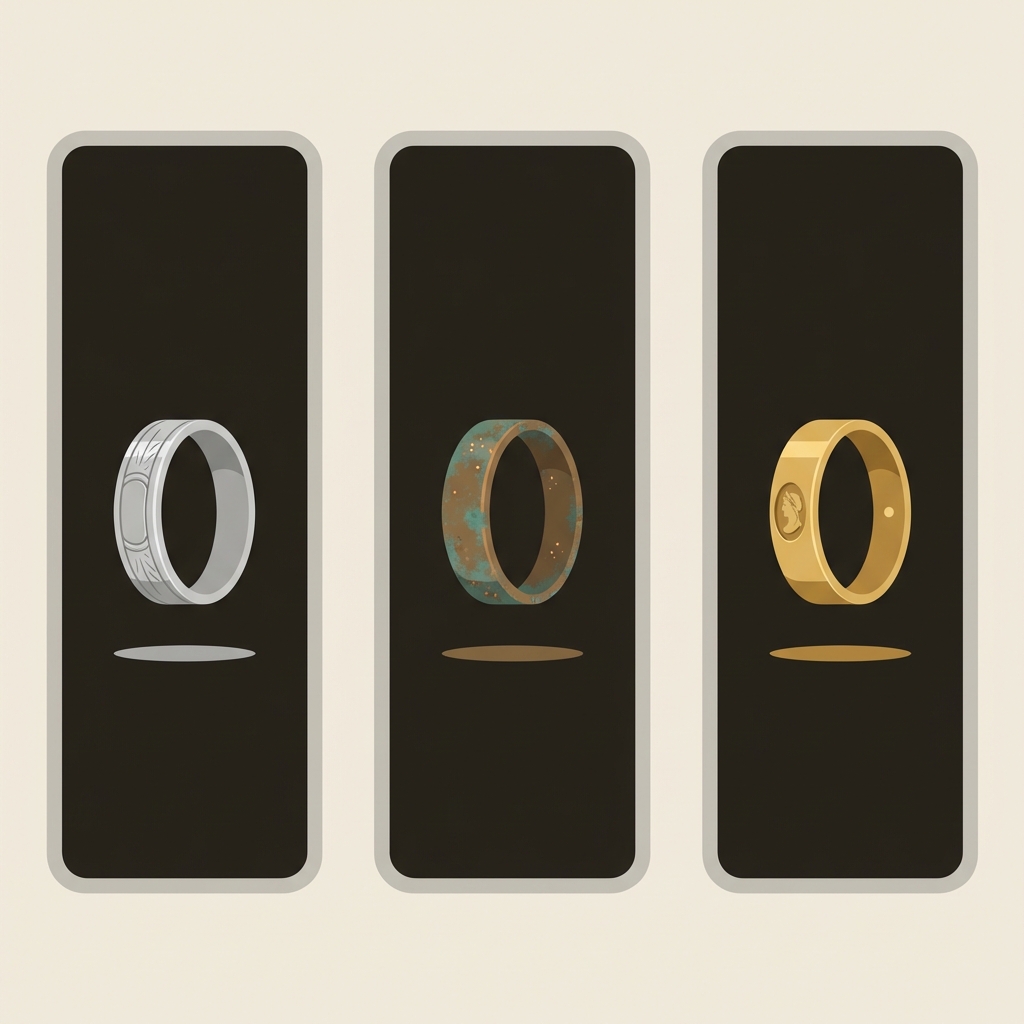
The choice of metal in medieval rings often reflected who wore the ring and the intended use. Silver appears frequently across social groups in museum holdings and can be found as plain bands or engraved bezels, while gold and gold-mounted intaglios tend to signal elite or liturgical contexts in curated catalogues Metropolitan Museum of Art overview of medieval jewellery
Medieval rings were most often made from copper-alloy metals, with silver and gold used depending on social status and function; material affects appearance, corrosion behaviour and conservation needs, so collectors should prioritise documented condition, measurements and provenance before accepting material or date claims.
For practical identification the most important point is that alloy recipes were not fixed. Recent compositional studies show variable tin and trace elements in copper-alloy rings, consistent with recycling and local mixing practices rather than a single standard formula, which helps explain why visually similar hoops can behave differently when conserved Journal of Archaeological Science: Reports on compositional analyses, see also additional compositional analyses
Knowing the material matters for dating and condition assessment, but it rarely gives a definitive date on its own; instead material should be combined with maker techniques, style, documented provenance and clear condition notes to form a responsible judgement about age and origin Portable Antiquities Scheme rings and identification guide
Period and regional variation
Regional practices and workshop traditions influenced material choice and finishing, so a copper-alloy hoop from one area can show different alloying traces and surface finishes than a hoop of the same century from elsewhere; museum catalogues and finds databases remain the best starting points for regional typology comparisons Metropolitan Museum of Art overview of medieval jewellery
Collectors should therefore avoid assuming a fixed alloy percentage for all medieval bronze rings; the archaeological record indicates a wide range of local recipes and recycled metal use that affects patina and corrosion behaviour Compositional analyses of medieval bronze artefacts

Why material matters for dating, condition and value assumptions
Material affects how an object ages, what conservation it will require, and which features are likely to survive: copper-alloys often develop green or brown patinas and active corrosion if destabilised, silver may show blackened sulphide layers, and gold typically preserves surface decoration well; these tendencies should shape condition expectations for any listing that claims a medieval date Historic England guidance on caring for archaeological metalwork
For collectors, pragmatic focus is more useful than romantic assumptions: ask whether condition notes are detailed, whether any stabilisation was performed, and whether documentation exists tying the object to a collection history rather than relying on surface appearance alone Portable Antiquities Scheme rings and identification guide
Materials explained: copper-alloys, silver, gold and other metals
Copper-alloy rings, often catalogued as bronze or brass, were the most common everyday choice for hoops used by many people in medieval Europe; they appear routinely in Portable Antiquities Scheme records and museum collections as plain hoops or modestly decorated rings, reflecting economy and availability of recycled copper sources Portable Antiquities Scheme rings and identification guide
Physically, copper-alloy hoops can range in colour from warm brown to greenish tones where copper corrosion products develop, and they can show a variety of surface textures depending on casting finish and post-depositional wear. These metals are often described in condition notes with words such as patina, encrustation or active corrosion, and these details help determine safe handling and display options Historic England guidance on caring for archaeological metalwork
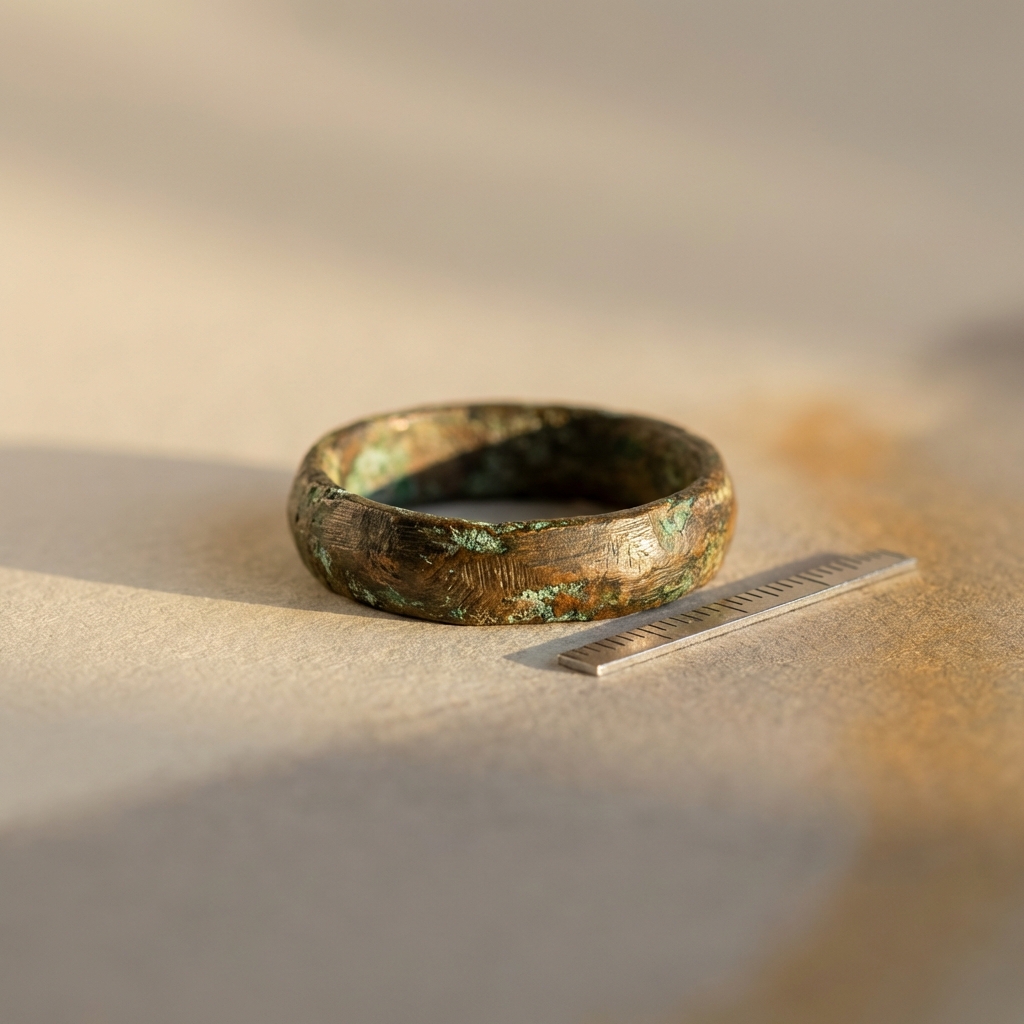
Scientific compositional work published in 2024 emphasises that medieval copper-alloy rings rarely conform to a single recipe. Studies report variable tin content and trace metals that point to recycling, local alloying practices and workshop variability, which explains why two bronze hoops with comparable appearance can require different conservation approaches Compositional analyses of medieval bronze artefacts
Brass variants and higher copper content alloys shift the visual character of a ring. Brass can look yellower and can be mistaken for low-karat gold at a glance, while bronze with higher tin can harden slightly and take different surface finishes. These subtle differences matter in photo-based assessments and should be reflected in condition notes and restoration descriptions Metropolitan Museum of Art overview of medieval jewellery
Silver appears across the social spectrum in medieval contexts, often as simple bands, signet-like engraved bezels, or modestly ornamented rings. In many collections silver objects are catalogued with notes on wear patterns, hammering marks and engraving technique that are useful for typological comparison Portable Antiquities Scheme rings and identification guide
Gold rings and gold-mounted intaglios or gemstones are characteristic of elite ownership or liturgical use and usually survive in better-defined decorative states because gold does not corrode like base metals. Museum catalogue entries often treat these items as high-status examples and link them to provenance or liturgical contexts when such documentation exists Metropolitan Museum of Art overview of medieval jewellery and examples may appear in our medieval crusader rings collection
Other metals such as iron occur less commonly in rings and usually signal specific functions or later repairs; iron corrodes rapidly and often survives only with extensive conservation treatment, which should always be disclosed in restoration notes Archaeological materials, Icon, The Institute of Conservation (UK)
Copper-alloys: bronze and brass characteristics - medieval bronze ring
Copper-alloy hoops typically show evidence of casting or simple forging, and their patina can range from compact, dark-brown surfaces to green copper salts depending on burial environment; these observable traits are commonly recorded in museum and PAS catalogue descriptions and help identify likely metal families visually Portable Antiquities Scheme rings and identification guide
Because alloy composition can vary significantly, collectors should treat visual identification as a first step and seek measurements and condition notes to reinforce any assessment. When a listing explicitly calls an item a medieval bronze ring, confirm whether compositional or conservation reports support that description Compositional analyses of medieval bronze artefacts
Silver: common forms and uses
Silver bands are often plain or show simple engraving; where bezels are present they may carry engraved symbols or linear decoration rather than high-relief portraits, and catalogues will frequently note hallmarks, tool marks or solder seams when present Metropolitan Museum of Art overview of medieval jewellery
In practice silver objects can be misidentified if they have heavy surface soiling or corrosion that obscures the metal colour, so clear macro photography and condition statements are essential for confident identification Portable Antiquities Scheme rings and identification guide
Gold and high-status settings; other metals
Gold rings, often used with intaglios or gemstones, usually appear in catalogues linked to documented provenance or liturgical contexts; surviving decoration and gem settings are important indicators of status but should always be treated in conjunction with listing documentation Metropolitan Museum of Art overview of medieval jewellery
When other metals such as iron or pewter are present they may indicate repair, later modification or specific functional uses; conservation notes should flag these materials and describe any stabilisation that has been undertaken Archaeological materials, Icon, The Institute of Conservation (UK)
How medieval rings were made: casting, forging and settings
Many medieval rings were produced using casting methods, including single-piece and two-part moulds; cast seams, sprue remnants or typical casting surface textures are features recorded in museum object records and are useful to look for in photos to understand manufacturing method Compositional analyses of medieval bronze artefacts, and conservation and analysis summaries are discussed by Getty Investigating Ancient "Bronzes"
Forging and hammering of hoops was also common, particularly for thicker cross-sections or for work that required a firm, homogenous band. Evidence of forging can appear as tool marks, tapered shoulders or hammered profiles that survive in good condition and are often described in specialist catalogues Metropolitan Museum of Art overview of medieval jewellery
Finishing techniques such as simple engraving, chiselling of bezels, and intaglio mounting are important markers of status and workshop skill. Intaglios set into bezels or flush mounts are typically noted as higher-status features in museum records and can indicate use by elite owners or in liturgical settings Metropolitan Museum of Art overview of medieval jewellery
When assessing a listing, examine the band for casting seams or filing marks and the bezel for signs of tooling that match known medieval methods; photographs taken at oblique angles can reveal moulding lines or soldering evidence that are otherwise invisible in head-on shots Portable Antiquities Scheme rings and identification guide

Simple stone mounting techniques and bezel styles used in silver and gold follow recognisable patterns; for example, a flush-set intaglio in a gold bezel usually implies more careful finishing than a crudely formed base-metal setting, and such distinctions are commonly highlighted in catalogue descriptions
Casting techniques and mould types
Single-piece mould casting leaves distinct surface patterns and sometimes a visible parting line, while two-part moulds can create join lines that are smoothed or filed; awareness of these marks helps separate cast hoops from later reproductions or repaired pieces Compositional analyses of medieval bronze artefacts
Hoop forging and finishing
Forged hoops may show asymmetric cross-sections or hammering marks; such characteristics are often recorded in museum catalogues and can indicate a smithing rather than a purely cast production route Metropolitan Museum of Art overview of medieval jewellery
Engraving, bezels and intaglio mounting
Engraving and bezel work can be diagnostic: incised lines, punched dots or tool-hatching are common on silver bezels, while intaglio gems set into gold show carefully formed seats and retaining rims; catalogue notes or macro photographs should describe these features when present Portable Antiquities Scheme rings and identification guide
How to identify what a ring is made of: a practical checklist for collectors
Start with high-quality photographs: macro images of the band in raking light, close-ups of the bezel and interior shank, and at least one scale shot with measurements clearly visible. These photo types are the minimum needed to make an informed preliminary assessment and are commonly requested by museums and finders schemes Portable Antiquities Scheme rings and identification guide
Request key measurements and weight where possible, and ask for condition and restoration notes that describe patina type, evidence of repair, and any stabilisation that was performed; these details help distinguish a copper-alloy hoop from a silver or gold band when colour alone is ambiguous Historic England guidance on caring for archaeological metalwork
Use simple visual cues: green or blue-green encrustation commonly indicates copper corrosion products, a dark grey to black surface can indicate silver sulphide formation, and a consistent yellow surface with fine detail often points to gold. Remember that surface dirt, corrosion and restorations can mask these cues, so always seek corroborating documentation Archaeological materials, Icon, The Institute of Conservation (UK)
When material determination is central to purchase decisions, ask the seller whether any compositional, XRF or conservation reports exist and whether you can see copies. Compositional reports and conservators summaries add weight to material claims, particularly for copper-alloy rings where alloy variability is common Compositional analyses of medieval bronze artefacts
Consult catalogue references or PAS records for typological matches: if a ring closely resembles a well-documented type in a museum catalogue, request the comparison reference and any provenance notes that accompany the similar object; these cross-checks are often decisive in forming a likely date or origin Metropolitan Museum of Art overview of medieval jewellery
If in doubt, budget for a professional assessment. A conservator or a qualified archaeometallurgist can provide targeted analysis and interpret reports correctly; this is especially important when listing descriptions are brief or when restoration history is unclear Historic England guidance on caring for archaeological metalwork or contact us here.
Conservation, condition and common mistakes to avoid
Safe handling begins with documentation: photograph the object before any cleaning, record visible patina and surface deposits, and avoid aggressive mechanical or chemical cleaning that can remove diagnostic layers; these steps are part of standard best practice recommended to collectors and finders Historic England guidance on caring for archaeological metalwork
Common mistakes include accepting a material or date from surface appearance alone, failing to note evidence of repair, and trusting cleaned surfaces without restoration notes; these errors can lead to misattribution or damage and are avoidable with a careful checklist approach Archaeological materials, Icon, The Institute of Conservation (UK)
Quick pre-purchase identification checklist for medieval rings
Keep records with listing
Restoration notes should clearly state what was stabilised, what repairs were undertaken and what was left untouched; a simple entry such as stabilised loose corrosion or reattached bezel parts gives buyers a realistic sense of condition and any interventions that might affect valuation or display
Active corrosion or chemical stabilisation should prompt consultation with a conservator; a conservator can advise on storage, display humidity and whether further treatment is advisable before wearing or shipping the piece Archaeological materials, Icon, The Institute of Conservation (UK)
Do not assume a single alloy recipe. If a seller describes a ring as a medieval bronze ring, ask whether composition tests were performed or whether the description is visual; variability and recycling practices mean that compositional confirmation is valuable for confident attribution Compositional analyses of medieval bronze artefacts
Practical examples and scenarios: interpreting common ring types
Everyday bronze hoops recorded in PAS and museum datasets are typically plain or show modest decoration such as simple moulded rims. When a listing includes close-up photographs of the shank and interior, look for casting marks or filing that match similar catalogue entries to increase confidence in a medieval attribution Portable Antiquities Scheme rings and identification guide
A bronze hoop with a greenish compact patina and no signs of modern tool marks is likely to have an archaeological surface, but compositional variability can mean that the same-looking patina appears on different alloy recipes; when this distinction matters, request a compositional report or XRF analysis from the seller or an independent analyst Compositional analyses of medieval bronze artefacts
Silver bands with engraved bezels commonly appear in museum catalogues as middle-status personal items and can carry stylistic cues such as linear engraving, punched decoration or short inscriptions. These stylistic features are often useful for typological dating and should be compared to catalogue entries when available Metropolitan Museum of Art overview of medieval jewellery
Gold rings with intaglios or set stones usually have better survival of fine detail, and when they come with provenance notes or collection history in a listing they are easier to contextualise; absence of documentation in such cases reduces the strength of a high-status claim and should prompt further enquiry
Workshop attribution is still an active research question for many plain bronze hoops. Catalogues and compositional studies help narrow possibilities, but many attributions remain likely rather than certain until more provenance-linked compositional datasets are published Compositional analyses of medieval bronze artefacts
Summary checklist and next steps for buyers
Checklist: request clear macro photos in raking light, ask for measurements and weight, require detailed condition and restoration notes, request any provenance documentation or catalogue comparisons, and seek compositional or conservator reports when material is central to the purchase decision Historic England guidance on caring for archaeological metalwork
Use cautious language when describing finds: describe an item as likely or appearing to be a medieval bronze ring unless compositional or conservation reports confirm material and age. Prioritise documented evidence over visual guesswork to reduce the risk of misattribution Portable Antiquities Scheme rings and identification guide
Follow @auroraantiqua for condition and provenance insights
Review listings with the checklist above and request condition, restoration and provenance details before making an offer; contact the seller for copies of any analysis or conservator summaries when available
Aurora Antiqua presents curated ancient rings with condition notes, restoration summaries and provenance references when available to help buyers assess wearable antiquities responsibly. These listings are intended as a reference layer rather than a substitute for professional conservation or scientific reports. Visit our homepage for more information.
Look for green or brown patina, signs of casting or filing, and detailed condition notes; request macro photos, measurements and any compositional or conservator reports to confirm material.
No, avoid cleaning or aggressive handling. Ask the seller for condition and restoration notes and consult a conservator if active corrosion is reported.
When material identification affects the purchase or display decision, for high-value items, or when a listing lacks clear provenance or detailed condition documentation.
More from Aurora Antiqua
References
- anello, opera isolata, ambito Italia centrale (sec XV) anello ca, Istituto centrale per il catalogo e
- anello sigillo (anello a castone con sigillo) età medievale, Istituto centrale per il catalogo e
- Ring, Victoria and Albert Museum, London
- Finger ring, London Museum (formerly Museum of London)
- Ashmolean Museum: British Archaeology Collections, Gold, University of Oxford
- Standards: Konservatorische Behandlung von archäologischen Funden (conservation of archaeological finds), Bundesdenkmalamt Österreich
- Bronze disease, Conservation Wiki, AIC Wiki, American Institute for Conservation
- Archaeological materials, Icon, The Institute of Conservation (UK)
- Signet Ring, Victoria and Albert Museum, London
- PubMed Central
From Aurora Antiqua
We sell authenticated ancient & medieval pieces, each individually examined before listing and backed by a Lifetime Authenticity Guarantee. One of a kind, sold once, never reproduced.
Browse Medieval & Crusader Rings →