


Looking for the real thing? Browse genuine crusader rings for sale, each piece one of one, individually authenticated, with documented provenance. For the background, see the guide to medieval jewelry.
What is a medieval locket? Definition and historical context
Quick seller checklist for evaluating descriptions
Ask for close views of mounts and interiors
A medieval locket is a small pendant or reliquary designed to carry an object or image and often to be worn close to the body. In many cases a medieval locket appears as a hollowed pendant, a box-like reliquary or a flat plaque with a cavity for relic material, and it differs from later Victorian lockets in form and frequent devotional function rather than mainly commemorative portraiture, a distinction shown in typological records and finds reporting from portable finds projects.
Surviving examples are typically made from metals such as bronze or silver, and where gold or inlaid gemstones occur they often indicate deliberate high status use; materials and construction influence both how many pieces survive and how they are described by finders and dealers. For medieval pendants the Portable Antiquities Scheme entries offer practical typology and find-context notes that illustrate the range of forms often labelled as lockets, including small reliquary pendants and devotional badges. Portable Antiquities Scheme and see our medieval pendants collection.
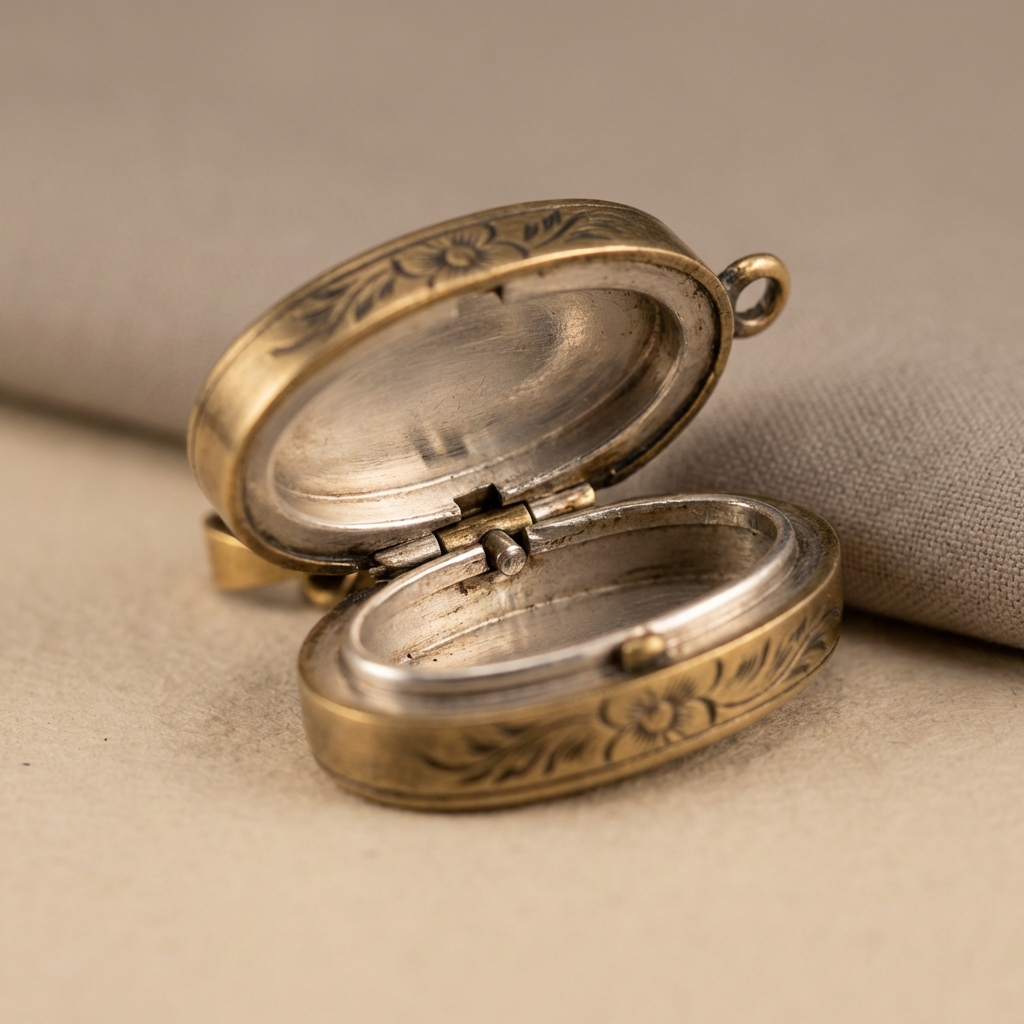
Dating is usually presented as an estimate tied to comparative typology or documentary context rather than absolute precision. A seller or catalogue will typically provide a date range and the basis for it, such as stylistic parallels, find context or prior cataloguing; readers should treat dating as an interpretive judgement and prefer listings that explain how the date was reached.
Common medieval forms to recognise include reliquary pendants that held physical relics, small devotional images meant for daily wear, and occasionally lockets adapted to carry an image or carved intaglio. Materials such as carnelian intaglios, small glass inserts or simple metal loops for suspension are typical, and the presence of an intaglio or gemstone affects both survivability and how catalogues prioritise condition notes.
How materials and techniques drive price for a medieval locket
Intrinsic materials set a baseline cost: solid gold, inlaid precious stones and careful enamel work add replacement value and rarity that collectors and museums note when assessing a piece. Museum care guidance describes how precious metals and enamel are treated in conservation, and how those materials are considered when estimating value and care needs. V&A guidance on jewellery care
Enamel, gem-setting and gilding are labour-intensive and require specialist skills both to create and to stabilise. Techniques such as cloisonnenead work, miniature painting when present, or fine gem-setting increase the time a piece took to make and later to conserve, which can raise market prices because specialist conservators and skilled restorers are more expensive to employ.
Guilloché and miniature portrait work are examples from later antique jewellery that help explain why highly finished surfaces command premiums; where similar fine-work techniques appear on medieval pieces they often require careful microscopy and stabilisation before display or sale. Conservators advise that complex surface treatments should be disclosed and documented because they change how a piece is cared for and conservators must plan interventions accordingly (see archaeometric studies on medieval silver jewellery). British Museum conservation guidance

Gemstones inside a medieval locket can materially affect price because stones have intrinsic replacement value and because setting them securely can complicate any required conservation. When a stone is described as carnelian, agate or amethyst, careful catalogue language will indicate whether it appears to be original, replaced, or later reset; such notes are essential for judging long-term marketability.
Specialist techniques also mean specialist testing. Non-destructive methods can confirm elemental composition of metal and surface treatments, which helps separate later repairs from original craft (see scanning X-ray fluorescence data analysis), which helps separate later repairs from original craft. Such testing is increasingly expected for high-end pieces because it both supports attributions and informs the scope of conservation needed.
Authentication, scientific testing and provenance: premiums and buyer confidence
Non-destructive analysis methods such as XRF and microscopy are commonly used to characterise metals, surface treatments and manufacturing traces, and these tests are valuable because they can support an attribution without harming the object. For buyers seeking confidence, reports that document methods and findings add practical evidence that a piece has been examined with appropriate techniques. Journal of Archaeological Science review. See complementary in situ studies in Nature.
See provenance and technical checks on @auroraantiqua
Request provenance notes and any available technical reports early in a purchase conversation to understand how a piece was dated and tested
Provenance and documented collection history regularly produce price premiums because they reduce uncertainty about a piece's history and legal status. Where a pendant has cataloguing in a collection, a prior sale record or documented exhibition history, collectors and institutions often treat that documentation as a confidence-building factor that justifies higher bids or higher asking prices. Auction Terminology, Christie's
Typological comparisons and catalogued parallels can also play an important role in attribution. Comparative typology links an object to known forms and workshops and is often used alongside scientific tests to form a coherent attribution that buyers can evaluate. When available, ask for copies of typology notes or references used to support a dating claim.
Technical reports are not absolute proof but they materially affect what a buyer can reasonably expect from condition and future care. Requesting a copy of any laboratory or non-destructive testing report, and checking which methods were used, is a practical step to reduce risk when considering higher priced pieces.
Condition, restoration and conservation: what affects marketability
Condition notes are critical because they describe what remains original and what has been stabilised or replaced. Conservation practice usually distinguishes stabilisation, which aims to slow deterioration while leaving original material in place, from invasive restoration that reconstructs missing areas, and buyers should prefer listings that explain which approach was taken. V&A guidance on jewellery care
Undocumented aggressive restoration, such as re-cutting surfaces or replacing major elements without disclosure, often reduces collector trust and can lower value. Conservation ethics emphasise transparency, and reputable sellers provide restoration notes that say what was done, who performed it and why the intervention was chosen. British Museum conservation guidance
Read condition notes for language about patina, repaired mounts, replaced stones and losses to original structure. A well-described patina and stable mounts may make a piece more attractive to collectors who favour wear consistent with age, while newly replaced elements should be clearly described and photographed so a buyer can make an informed judgement.
When a seller includes technical imagery such as microscope views of joins or XRF spectra, those materials help specialists and informed buyers evaluate the piece remotely. If such images are not provided, it is reasonable to ask for targeted images or a short report that explains the rationale behind any restoration choices.

Auction demand and the concentration of sales through specialist houses and fairs can create rapid price spikes for well-documented pieces, because a single competitive sale may set new comparative benchmarks for similar pieces with equivalent provenance. Market reports show that concentration of sales and collector appetite have driven variability in certain segments of the antiques market. Auction Terminology, Christie's
Specialist collectors and dealers may prize provenance and exhibition history, so a pendant with prior museum cataloguing or collection links often reaches a different pool of bidders than a similar object without documentation. That change in buyer pool is one reason documented pieces can command significant premiums in a single sale. See our medieval crusader rings collection.
Medieval lockets can be expensive because of valuable materials, complex techniques, documented provenance and market demand; collectors should prioritise documentation, condition notes and non-destructive testing to reduce risk.
Short-term volatility is normal and exact price ranges shift with demand, so buyers should use auction records comparatively rather than as definitive pricing guides. Market commentary underlines the importance of provenance verification and careful comparison when interpreting high and low results. Antiquity market trends in Cycladic figurines, 2000 to 2019, International Journal of Cultural Property
Because auctions, dealer sales and fair transactions operate under different terms and buyer expectations, a single auction record should be contextualised against multiple comparable listings to avoid overinterpreting one sale as a universal market floor or ceiling.
How to evaluate a medieval locket before you buy: a practical checklist
Start with clear photos and measurements, including interior views where possible, and ask for specific close-ups of joins and any repair areas; these practical items are often decisive for remote assessment. Condition photos should be sharp, well lit and show the object from multiple angles so that patina, mount construction and any losses are visible. V&A guidance on jewellery care
Request condition notes that explain restoration history, and insist on provenance documentation or a statement of prior ownership when available. Useful documentation can include collection labels, past catalogue entries or sale records that show the piece's collection history and help with provenance verification.
If a technical report exists, request a copy; if none is available, consider whether a non-destructive test such as XRF would be appropriate prior to purchase for a higher value piece. Technical evidence, combined with typological references, gives a stronger basis for attribution than descriptive language alone. Journal of Archaeological Science review
Use short, copyable questions when you contact a seller: ask who performed any conservation, whether all images are of the actual object, what basis is given for dating, and whether there are any export or legal encumbrances. These focused queries help you compare listings consistently across dealers and auctions.
Typical buyer mistakes and how to avoid them
A common error is overvaluing cosmetic restoration because a visually 'perfect' appearance can mask later repairs or replacement elements. Buyers who focus on untouched patina and clear restoration notes tend to make more informed decisions because those notes explain what is original and what was altered. British Museum conservation guidance
Another frequent mistake is accepting vague provenance claims. Statements without supporting documentation are weaker than clear collection history or prior sales records; insist on copies or references that can be independently checked. Portable Antiquities Scheme

Corrective actions include asking for condition photos, requesting details of any restoration and seeking third-party input for higher value items. Consulting an independent specialist for a short condition review or a targeted non-destructive test can materially change confidence in a listing and is often worth the cost for expensive pieces.
When a seller provides transparent restoration notes and clear provenance, buyers can weigh the trade-offs between condition and documented history more effectively and choose pieces that match their collecting priorities.
Practical examples and realistic price guidance (how to read ranges)
Small reliquary pendants that are entirely base metal and lack documented provenance often attract interest from local collectors or archaeologically minded buyers, whereas a reliquary with a known collection history or museum catalogue entry is likely to reach a different price tier because documented provenance reduces uncertainty. Use auction records comparatively to see how provenance shifts outcomes for similar typologies. Auction Terminology, Christie's
Gold-set enamel lockets that retain original enamelling and have clear condition notes and technical reports typically attract bidders who can budget for specialist conservation if needed; the combination of high-value materials and detailed documentation explains why such pieces are treated as premium objects. V&A guidance on jewellery care
Victorian hair lockets are a separate category where sentimental function and a well-understood market history make comparisons easier, yet the same rules apply: provenance, documented condition and any testing materially affect how a listing is perceived by buyers and dealers. Auction and dealer listings should be used as comparative data points rather than absolute valuations. Antiquity market trends in Cycladic figurines, 2000 to 2019, International Journal of Cultural Property
Always consider how provenance, condition and testing together move a piece between tiers; a well-documented example with minor wear and a supporting technical report can command a premium relative to a superficially similar but undocumented object.
Conclusion: balancing passion, evidence and care when buying a medieval locket
Materials, specialist techniques, provenance, testing and market dynamics combine to explain why some medieval lockets are expensive. Buyers should prioritise clear documentation, condition notes and any available technical reports to reduce uncertainty and make informed choices. V&A guidance on jewellery care
Practical next steps are straightforward: ask for detailed photos and measurements, request restoration and provenance documentation, consider non-destructive testing for higher value pieces and consult a specialist when in doubt. Aurora Antiqua positions itself as a curator offering contextual notes and documented listings to help informed collecting, but buyers should still request and review primary documents and reports before purchase and consider browsing our artifacts collection.
Authenticity is assessed through combined evidence: typological comparison, clear provenance documentation and non-destructive scientific testing when available; no single item of evidence is definitive without supporting documentation.
Not always; transparent stabilisation that preserves original material can maintain marketability, while undocumented aggressive restoration or replacement parts often reduce collector confidence and may lower value.
Request non-destructive testing for higher value pieces or when material questions affect attribution; XRF and microscopy reports can provide useful confidence without harming the object.
More from Aurora Antiqua
References
- Auction Terminology, Christie's
- Antiquity market trends in Cycladic figurines, 2000 to 2019, International Journal of Cultural Property
- The Past Polluted: A Pigovian Approach to the Black Market in Antiquities, International Journal of Cultural
- Publication 561 (12/2025), Determining the Value of Donated Property, Internal Revenue Service (IRS), USA
- Research report: export licensing and provenance, GOV.UK, Department for Culture, Media and Sport (DCMS)
- About us, International Association of Dealers in Ancient Art
- Stolen Works of Art Database, INTERPOL
- Getty Provenance Index, J. Paul Getty Trust, Getty Research Institute, Los Angeles
- 1995 Convention, UNIDROIT, International Institute for the Unification of Private Law, Rome
- Client Challenge, Springer