


Looking for the real thing? Browse authentic Medieval & Crusader rings, each piece one of one, individually authenticated, with documented provenance. For the background, see the guide to medieval jewelry.
What is a medieval locket and why it matters
Definitions and common types
A medieval locket is an object that was made to be worn and to hold something personal, often a small relic, a fragment of scripture, or an image wrapped in cloth. This class of object overlaps with reliquaries and pendants, but the emphasis is on containment and intimacy rather than only decoration. Museum studies show lockets and small pendants served as personal devotional items in medieval Europe, which establishes a direct precedent for wearable objects that carry narrative weight for the wearer, a point that helps explain why modern buyers are drawn to similar pieces as story-bearing accessories Victoria and Albert Museum

In practice, medieval examples range from small metal boxes with hinges to simple bezel-set containers and sealed pendants that could hold earth, hair, or a relic fragment. Forms vary by region and period, and many surviving examples emphasize construction details such as a bezel, a small hoop for suspension, and interior fittings to keep contents secure. The distinction from modern lockets is often one of use and intent: medieval pieces were typically devotional or commemorative rather than purely sentimental or fashion driven.
How medieval lockets were used in daily life and devotion
Lockets and pendants in the medieval period are repeatedly interpreted as functional, private objects used to keep a physical connection to a saint, a memorial, or a protective token. This role made them part of daily dress and ritual for many owners, not just occasional ceremonial wear Metropolitan Museum of Art
The personal narrative function of these items matters for collectors and stylists today because it shows a long history of small wearable objects carrying meaning. When Gen Z layers pearls and small pendants or references a medieval locket in styling, they are tapping into a historical precedent for jewelry as a portable story rather than inventing a new symbolic language.
Quick comparison prompts for viewing a locket listing
Use as a starting prompt when comparing listings
How museum research explains medieval lockets
Select findings from major collections
Museum catalogs and interpretive essays emphasize that many medieval lockets were devotional rather than decorative, and curators use object labels to explain likely functions and contents. That reading helps curators and collectors understand these pieces as containers first, ornament second Victoria and Albert Museum
Major collections often provide contextual notes that discuss likely contents, dating estimates, and comparisons to related forms. These notes are not definitive scientific proofs but are important interpretive tools that help buyers and scholars situate a piece within historical practice.
Dating approaches and common materials
Curatorial literature shows that dating of small metal and composite objects frequently relies on stylistic comparison, contextual records, and any available documentary provenance. Common materials include base metals such as bronze or copper alloys, occasionally set with glass or semi-precious stones in simple bezels, and sometimes carrying traces of organic deposits where interior contents survived Metropolitan Museum of Art
Because many datings are estimates tied to catalog language, collectors should treat period assignments as interpretive and, when needed, seek written documentation or specialist input. Placing a piece in a workshop attribution or a date range can help set expectations for condition, patina, and likely restoration history.
Why Gen Z is wearing pearls and referencing the medieval locket in styling
Platform dynamics and influencer styling
By 2024 and 2025 fashion reporting recorded a clear uptick in pearl styling among younger influencers, who reframed pearls as casual, layered elements rather than exclusively formal heirlooms. This coverage links editorial observation to visible influencer behavior and highlights how pearls are used in everyday looks rather than only for special occasions comeback of pearls
That reframing creates a visual vocabulary where pearls and small pendants can be combined to suggest personal history or narrative, a use that echoes the medieval locket's role as a portable story container. The medieval locket functions in contemporary styling as a motif that signals intimacy and layered meaning.
Sustainability and second hand demand
Alongside aesthetics, younger buyers are often motivated by circular consumption and resale dynamics; vintage pearls and antique lockets fit a sustainability-oriented approach because they are reused goods that avoid new mass production. Research into consumer attitudes shows that circular buying is an important driver for selecting vintage jewelry as a practical and ethical preference Journal of Consumer Culture
For sellers and curators this means demand can be both stylistic and pragmatic: buyers seek the look and the lower environmental footprint that vintage or antique items can offer, while also valuing documentation that clarifies what they are buying.
Platform mechanics that turned pearls into everyday accessories
How short form formats change styling norms
Short form video formats make it easy to demonstrate quick styling hacks like layering a baroque pearl necklace with a small pendant, or converting a pendant into a focal point on a mixed-metal chain. The format favors demonstrations and before-and-after styling that normalize unconventional pairings for wide audiences WGSN
Because short clips repeat and remix looks rapidly, micro trends can spread with unusual speed. What starts as an influencer edit can quickly become a common visual shorthand for an entire generation, encouraging viewers to try similar combinations with items they already own or can source second hand.
Follow @auroraantiqua for provenance and restoration insights
Explore curated listings with clear condition and provenance notes to see how historical pieces can be used in modern layering and everyday looks.
The visual clarity of short clips also encourages DIY customization, from clasp swaps to pairing a small medieval-style pendant with baroque pearls. These visible, replicable edits make pearls and pendants feel accessible and low barrier for younger buyers.
Micro trend life cycles and visible layering
Layering is central to how platform mechanics convert formal elements into casual wear. A single pearl strand, when layered with chains and a small pendant, reads differently than the same piece worn alone, and platforms make these pairings easy to replicate and share. The result is a shift in perceived utility for pearls and for narrative pieces like the medieval locket motif Vogue
Platform speed creates uncertainty for long-term collector demand, but it also creates occasions where historic motifs become culturally legible to new audiences. For collectors this can be an opportunity to bridge historical knowledge with contemporary styling.
Design patterns connecting pearls and medieval lockets
Textural contrast and mixed materials
One recurring design pattern pairs baroque pearls with rougher metal tones and small pendants, creating a tactile contrast that highlights both texture and history. This mix often emphasizes patina and irregular forms rather than polished uniformity, aligning with a taste for objects that show wear consistent with age Vogue
These combinations can be gender neutral in silhouette, which broadens appeal and aligns with Gen Z preferences for less strictly gendered jewelry. The medieval locket motif often appears as a small, worn pendant used as a narrative accent rather than a literal reproduction.

Medieval motifs as narrative accents not literal replicas
Designers and stylists commonly reuse medieval motifs to suggest history or story, but they rarely attempt strict historical replication in everyday styling. Instead a small pendant that resembles a reliquary or a sealed bezel functions as a visual shorthand for continuity with the past, without claiming to be a precise reproduction Victoria and Albert Museum
For collectors the implication is twofold: some pieces are genuine antiquities and carry documentation, while others are modern pieces inspired by historical forms. Recognizing which category an item belongs to is a key skill discussed later in this article.
Why provenance and condition notes matter when buying antique lockets
Practical provenance signals to look for
Provenance elements such as written collection history, prior ownership notes, or verification letters help a buyer understand an object's documented journey. These notes do not remove ambiguity but they do provide context that can support a dating or attribution claim Journal of Consumer Culture
When provenance is absent or vague, buyers should treat period assignments as provisional. Good listings include clear condition notes and any available documentation rather than broad or definitive dating claims.
How restoration notes affect expectations
Restoration and preservation notes explain what was stabilized, what was repaired, and what was intentionally left untouched. For small jewelry this can range from solder repair on a hoop to surface cleaning or the consolidation of fragile interior fittings Metropolitan Museum of Art
Clear restoration notes shape expectations about wear, display, and possible further treatment. They also help a prospective buyer understand how much visible original material remains and whether a piece is suitable for everyday wear or only for careful display.
The medieval locket demonstrates a long history of jewelry used as personal, narrative-bearing objects; that precedent helps explain why pearls paired with small pendants resonate as intimate, wearable statements for younger buyers.
Readers deciding between similar listings can use restoration descriptions to weigh whether a piece meets their needs for wearability versus historical integrity.
How to evaluate a medieval locket before you buy
Five decision criteria for buyers
When assessing a potential purchase, consider these five criteria: documented provenance, clear condition and restoration notes, physical condition including closure and hoop integrity, evidence of original materials or patina, and whether third party reports are available. Each element contributes to a measured decision and helps avoid impulse buys on the basis of style alone Journal of Consumer Culture
Apply the checklist systematically: ask for additional photos if closure or interior fittings are not shown, request measurement and weight information, and confirm any restoration work in writing. When possible, request a written description of prior ownership or a verification letter from the seller.
Red flags and typical misattributions
Common red flags include overly confident but undocumented dating, inconsistent patina across a piece that suggests recent replacement parts, and vague or missing photographs of the interior. These signs can indicate heavy modern alteration or misattribution rather than straightforward age Metropolitan Museum of Art
If a seller claims a specific date range without supporting documentation, treat that claim as provisional and request the evidence. Specialist input or a third party report can be decisive when significant value or historical interest is at stake.
Restoration and preservation notes explained
What stabilizing versus repairing typically means
Stabilizing typically refers to measures that prevent further deterioration without changing a piece's original material, for example consolidating a fragile interior lining or securing a loose hinge. Repairing usually implies intervention that restores function, such as re-soldering a hoop or replacing a missing pin Metropolitan Museum of Art
Understanding the difference helps buyers set expectations: a stabilized item may retain more original surface material while a repaired item may be structurally sound for wear but include modern additions.
When a restoration note is brief, ask follow-up questions about when the work was done, who carried it out, and whether any modern materials were used in the repair.
How restoration choices affect display and wearability
Restoration affects both safety for wear and the visual character of an object. Conservative conservation is aimed at preservation, while more invasive repairs focus on usability; each approach has trade-offs depending on buyer priorities.
Buyers seeking wearable history might prefer minimal intervention that preserves original patina, while those who want everyday wearability may accept documented repairs that restore function. Clear restoration notes let buyers make that choice with information rather than assumption.
Styling ideas for mixing pearls with a medieval locket
Everyday looks and layered combinations
For an everyday look, layer a single small pendant or medieval-style locket with one or two short pearl strands and a thin metal chain. Keep scale contrast in mind: a small locket reads as intimate next to larger baroque pearls, which helps the pendant function as a narrative accent rather than compete visually Vogue
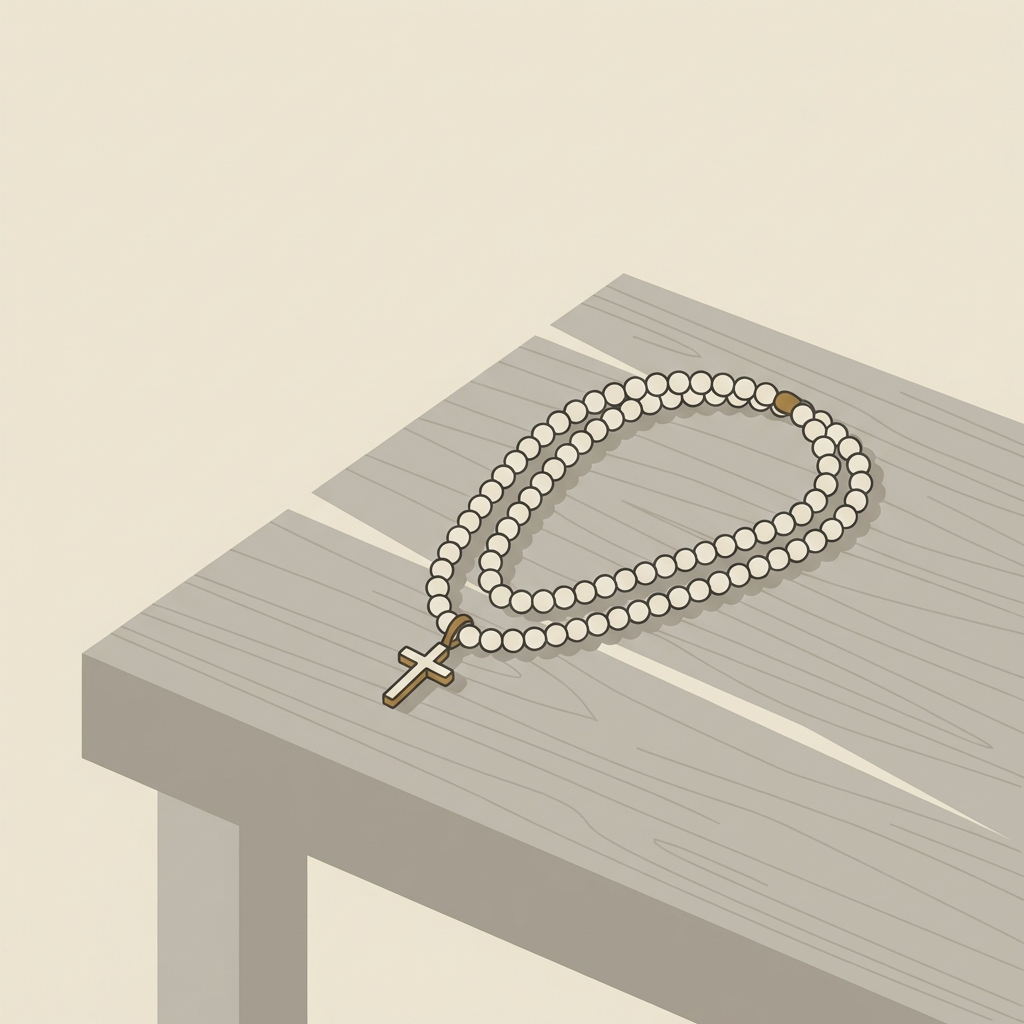
Another approachable pairing is a choker-length pearl strand with a longer chain that holds a small pendant. This creates vertical interest and keeps the locket visible without overpowering the pearls.
Occasion dressing and gender fluid styling
For dressier occasions, combine a modest medieval-style pendant with a matched pearl strand and simple metal cuffs or rings. The aesthetic can be styled in gender-fluid ways by focusing on balance of proportions rather than strictly feminine or masculine cues.
Using medieval motifs as accents allows wearers to suggest depth and history without adopting a costume approach; the pieces read as personal marks rather than theatrical props.
A buyer checklist for purchasing antique lockets and pearl pieces online
Photos measurements and documentation
Request these essentials: high-resolution images from multiple angles, close-ups of closures, interior photos if the locket opens, exact measurements and weight, and clear photos of any marks or repairs. Ask the seller to include a scale reference in at least one image and to show the piece on a neutral background Journal of Consumer Culture
Documentation to request includes any written provenance, collection history notes, and explicit restoration descriptions. When a claim of age or workshop attribution matters, ask for the basis of that claim and any supporting paperwork.
Questions to ask the seller
Key questions include: When was the last restoration performed and by whom? Is there written provenance or a verification letter? Are there unpublished photographs of the piece from prior ownership? Does the seller offer returns if a later expert report contradicts the listing description?
These direct questions prompt sellers to provide material that clarifies ambiguous claims and help buyers decide whether further specialist input is required.
Common pitfalls and how collectors get misled
Misattributed dates and stylistic mismatches
Misattribution often occurs when decorative elements are mistaken for period-specific features or when modern parts are combined with older components. A careful comparison to museum-documented forms can reveal mismatches that suggest reassessment is needed Metropolitan Museum of Art
Buyers should be wary of listings that rely on stylistic language alone without documentation or clear photographic evidence of original construction.
Overrestoration and hidden repairs
Overrestoration can obscure original surfaces and make it harder to interpret an object's age or use. Hidden modern repairs, especially when not disclosed, are a frequent source of dispute and disappointment for collectors Journal of Consumer Culture
Look for inconsistent patina, seams that do not match the surrounding surface, or non-matching solder marks as visual clues that a piece may have been reworked extensively.
Real world scenarios and case studies
Example 1 buying a small medieval style locket
A buyer found a small bronze pendant described as a medieval locket but with only a brief listing. By requesting interior photos, provenance notes, and a condition report, they discovered a modern hinge had been soldered in place; the piece was best described as a restored fragment rather than a fully intact antiquity. That information changed their willingness to pay and their intended use for the piece Victoria and Albert Museum
The lesson: documentation and clear restoration notes can change both value perception and practical expectations, especially for small, repair-prone objects.
Example 2 integrating an antique locket into pearl layering
A stylist paired a genuine small pendant with baroque pearls and photographed the set for social media. The pendant's visible patina and the irregular pearl shapes created a textured contrast that read as both historic and modern. Viewers responded to the layered narrative more than to the individual pieces, showing how context can change interpretation Vogue
For buyers and collectors, this scenario shows that provenance and condition notes are as important for styling choices as they are for scholarly interest: knowing what a piece is and what was done to it informs how it will be styled and cared for.
Key takeaways for collectors and buyers
The medieval locket provides a useful historical precedent for the Gen Z interest in pearls and small pendants. Both forms emphasize personal narrative and intimate display, which explains part of their contemporary appeal Victoria and Albert Museum
Practical steps for buyers are consistent: seek clear provenance, demand specific restoration and condition notes, and use comparative museum literature to evaluate stylistic claims. Thoughtful collecting reduces risk and supports enjoyment of wearable history.

For historical context consult museum articles that discuss lockets, pendants, and reliquaries and their social uses. These sources provide grounded interpretive language and object comparisons useful for buyers and scholars alike Victoria and Albert Museum
Further reading and where to learn more
Select museum and research sources
For historical context consult museum articles that discuss lockets, pendants, and reliquaries and their social uses. These sources provide grounded interpretive language and object comparisons useful for buyers and scholars alike Victoria and Albert Museum
For market context and consumer motivations consult research on circular consumption and resale trends, which explains why younger buyers choose vintage pearls and antique lockets for both aesthetic and sustainability reasons Journal of Consumer Culture
A medieval locket is a wearable container, often a pendant or small reliquary, used historically to hold relics, images, or personal mementos; museum notes describe them as devotional and intimate rather than purely decorative.
Younger buyers favor pearls because platforms show versatile styling, and circular consumption motivates many to choose vintage or second hand pearls as sustainable, narrative-rich alternatives.
Request clear photos including interior views, written provenance or collection history, explicit restoration and condition notes, and any verification letters or prior ownership records when available.
More from Aurora Antiqua
References
- The Pearl Book, CIBJO Blue Book, Pearl Commission 2024-1, CIBJO, The World Jewellery Confederation
- X-Ray Computed Microtomography: Distinguishing Natural Pearls from Beaded, Gemological Institute of America
- Optical Whitening and Brightening of Pearls: A Fluorescence Spectroscopy Study, Gemological Institute
- Age Dating, SSEF, Schweizerisches Gemmologisches Institut SSEF, Basel
- Pearl Care and Cleaning Guide, Gemological Institute of America (GIA)
- How to Care For Your Jewellery: The Ultimate Guide by the National Association
- 16 CFR Part 23, Guides for the Jewelry, Precious Metals, and Pewter Industries, Federal Trade Commission, eCFR
- Ashmolean Museum: British Archaeology Collections, Gold, University of Oxford