


Looking for the real thing? Browse genuine ancient rings for sale, each piece one of one, individually authenticated, with documented provenance. For the background, see the guide to ancient jewelry.
Quick answer: why Caligula is remembered
Short summary for readers who want the gist
Gaius Julius Caesar Augustus Germanicus, commonly called Caligula, ruled as emperor from 37 CE until his assassination in January 41 CE, and his name endures largely because later writers turned a brief, politically charged reign into a lasting symbol of alleged excess and erratic behaviour. The basic chronology and succession are established in modern reference works, which also note how later narratives shaped the lasting image of the ruler Encyclopaedia Britannica entry on Caligula.
See behind the scenes on @auroraantiqua
This article weighs literary anecdotes against coins and inscriptions so you can judge which claims rest on secure evidence and which remain debated.
In many cases, the most memorable stories about Caligula come from biographical works written decades after his death and reflect senatorial and moralizing agendas rather than contemporary reportage. Readers should expect that sensational anecdotes are often contested by modern scholars and that independent material corroboration is needed before accepting lurid details as fact Suetonius, Caligula.
How this article treats sources and evidence
This article treats narrative sources and material evidence as complementary but distinct categories. It foregrounds the widely agreed facts of accession and assassination, then shows how literary conventions, authorial bias, and selective survival of documents have shaped later perceptions of Caligula. Where possible, the piece points readers to numismatic and epigraphic records that provide independent context Encyclopaedia Britannica entry on Caligula.

Caligula in context: reign, rise, and fall
Basic chronology and accession
Caligula became emperor in 37 CE following the death of Tiberius, inheriting the political structures of the early Principate. His accession, short reign, and violent end are treated as fixed chronological facts in reference literature, which places his rule firmly between those two dates and marks his assassination in January 41 CE as the terminus of his reign Encyclopaedia Britannica entry on Caligula.
Circumstances of his assassination
Ancient narratives describe an equestrian and praetorian conspiracy that culminated in Caligula's murder, after which the imperial office passed to his successor. While the broad outline of a plotted assassination is consistently reported, the motives and precise factional dynamics are less certain because surviving accounts were written by authors with their own political perspectives Encyclopaedia Britannica entry on Caligula.
The institutional backdrop matters: the early Principate concentrated military and civic authority in the emperor while the senate, equites, and praetorian guard each retained influence. That institutional context shapes how historians evaluate reports of arbitrary punishments or public spectacles, since many actions attributed to Caligula must be read against the structures of imperial power rather than as isolated acts.
The literary witnesses: Suetonius, Tacitus and Cassius Dio and how stories form
Who these authors were and when they wrote
The main narrative sources for Caligula's life are later biographical and historiographical authors, notably Suetonius, Tacitus and Cassius Dio. These works were composed decades after the events they describe and often aim to instruct or moralize as much as to record facts; that context affects how a modern reader should use their reports Suetonius, Caligula.
Caligula is most famous for a short, controversial reign that later writers depicted as a case of imperial excess and alleged madness; modern historians treat many sensational stories as contested and weigh literary accounts against coins and inscriptions.
Literary conventions, senatorial bias, and rhetorical aims
Suetonius, Tacitus and Dio wrote for readers who expected dramatic life stories and moral lessons, and they employed anecdotes, character sketches, and rhetorical devices that can magnify or distort events. These authors often reflect the values and memories of the senatorial and literary elite, which can produce a narrative emphasizing excess and moral failure rather than providing an even handed administrative record Tacitus, Annals.
Because the major anecdotes that define Caligula's popular image come from this literary tradition, historians must ask whether stories were intended to illustrate a moral point, to entertain, or to record an eyewitness account. The rhetorical aims of these texts make them valuable but also require cautious interpretation.
Material evidence: coins, inscriptions and what they tell us
Numismatic evidence for titulature and public image
Coins and official inscriptions from Caligula's reign commonly show conventional imperial titulature and imagery, indicating routine execution of some public functions and an official self representation that resembles those of other early emperors. Such material records complicate a simple narrative of uninterrupted chaos and suggest continued administrative normality in many areas Encyclopaedia Britannica entry on Caligula. For discussion of the coin types and issues associated with his reign, see this overview at CoinWeek.
Epigraphic and administrative traces of routine governance
Epigraphic evidence and selected administrative acts attest to the formal workings of imperial office, from titulature on monuments to documented decrees. These traces do not prove or disprove particular anecdotes about private behaviour, but they provide an independent baseline for understanding what the regime officially proclaimed and carried out Encyclopaedia Britannica entry on Caligula.
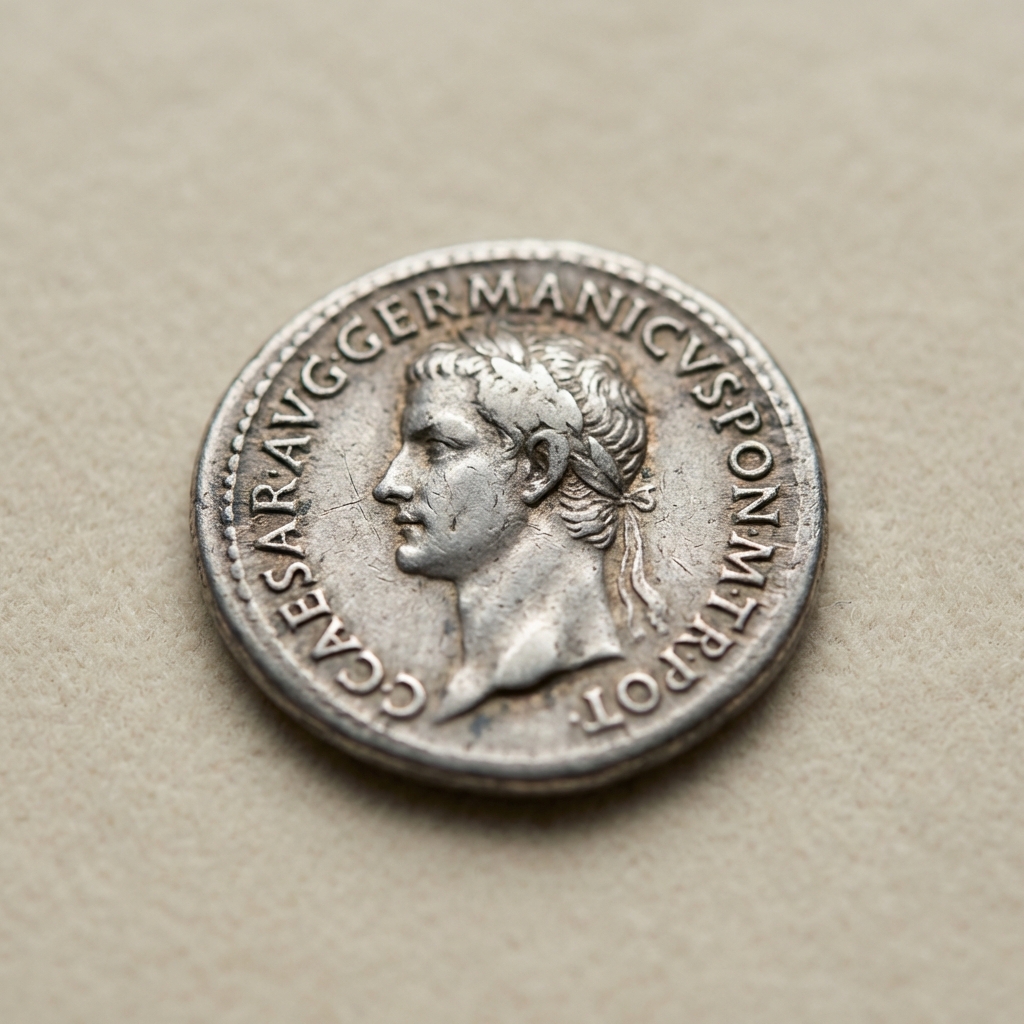
Numismatics in particular helps scholars track how the emperor was presented to provincial audiences and how official imagery was managed, offering a corrective to literary portraits that focus narrowly on scandal rather than institutional action British Museum coin records.
Numismatics in particular helps scholars track how the emperor was presented to provincial audiences and how official imagery was managed, offering a corrective to literary portraits that focus narrowly on scandal rather than institutional action British Museum coin records. See also NGC's Ancients overview for a collector oriented perspective.
Contested incidents: bridge-building, spectacles and executions
Famous anecdotes and their literary provenance
Several of the most famous stories about Caligula derive from the later biographers rather than independent contemporary records. Examples often cited in popular retellings include an ostentatious claim to have built a bridge across the Bay of Naples, spectacular public displays, and accounts of arbitrary executions, all of which appear first in literary sources with clear rhetorical aims Suetonius, Caligula.

Which incidents have independent support and which do not
Some actions attributed to Caligula, such as administrative appointments or coin issues, have independent attestation in inscriptions or coins and therefore rest on firmer ground. By contrast, extravagant tales like the sea bridge or theatrical displays often lack corroborating material evidence and must be treated as possible rhetorical inventions or exaggerations unless supported elsewhere Cassius Dio, Roman History.
Readers should note the difference between acts that leave official records and personal anecdotes that depend entirely on later narrative sources. Where numismatic or epigraphic traces exist, they usually concern titulature, public works, and official pronouncements rather than private conduct.
Why modern historians are cautious: reassessments and debates
Recent historiographical shifts
Since the late twentieth century, scholars have urged caution about the most sensational stories and emphasized the role of political hostility and literary convention in shaping Caligula's posthumous image. Modern syntheses reassess anecdotes against material culture and stress the need to separate rhetorical flourish from administrative reality Selected modern historiography on Caligula.
Open questions: illness, factional politics, and literary shaping
Important open issues include whether episodes described as madness might stem from physical illness, how factional politics within the elite contributed to hostile portrayals, and which specific anecdotes can be independently verified. These remain active areas of debate because the surviving evidence combines partisan narrative with partial material traces Encyclopaedia Britannica entry on Caligula.
The mixed evidentiary picture explains why historians often present multiple plausible readings rather than a single definitive account of motives or mental state.
Objects and reputation: how rings, coins and inscriptions shape popular memory
Material culture as narrative: what surviving objects can and cannot show
Objects such as rings, intaglios, coins, and inscriptions contribute to the public imagination by offering tangible links to an emperor's image, but they rarely confirm anecdotes about personal behaviour. A labeled or documented object can illustrate iconography or titulature, yet it is only part of a larger evidentiary puzzle that includes texts and context Encyclopaedia Britannica entry on Caligula. Interested readers can also browse our rings collection for examples of related objects.
quick numismatic and provenance checklist for initial evaluation
Use as a starting point for further research
Why an object associated with Caligula does not settle contested stories
An artifact that can be dated to the early first century CE and bears imperial imagery helps place material culture in time, but linking a single ring or coin to a personal anecdote reported by a later biographer requires separate evidence. Provenance, catalogues, and careful condition notes are necessary before an attribution can be persuasive; numismatic records often speak to public titulature rather than private actions Encyclopaedia Britannica entry on Caligula. For practical collector guidance see NGC Ancients: Caligula.
Collectors should therefore treat objects as pieces of a broader historical argument rather than as standalone proof of dramatic stories from literary sources.
How to evaluate claims about famous incidents
Checklist for source reliability
Use a simple checklist when you encounter a dramatic claim: check the date proximity of the source, identify authorial bias, seek independent material corroboration, and consult scholarly consensus. These steps help distinguish well supported claims from rhetorical invention Suetonius, Caligula.
Practical steps to seek corroboration
Practical actions include searching numismatic databases for contemporary coinage, consulting epigraphic corpora for inscriptions, and reviewing modern critical syntheses that evaluate primary sources against material evidence. When possible, prefer documented catalogue entries and reputable museum records for verification Encyclopaedia Britannica entry on Caligula.
Common mistakes when reading ancient biographies
Accepting anecdotes at face value
A common error is to treat rhetorical anecdotes as literal reportage. Biographers often use striking stories to make moral points, so literal acceptance can mislead the reader. Always ask whether an anecdote serves an authorial theme or offers verifiable detail Suetonius, Caligula.
Overinterpreting metaphor or rhetorical flourish
Another mistake is applying modern diagnostic labels or psychological interpretations to passages meant as metaphor, invective, or satire. Scholars typically warn against retrofitting modern categories onto ancient moralizing narratives without independent evidence Selected modern historiography on Caligula.
Practical examples: reading three well-known claims step by step
Method applied to the Bay of Naples bridge story
The Bay of Naples bridge anecdote is a useful test case because it is vivid yet depends on later narrative attestations. Applying the checklist shows the story's literary provenance and the lack of contemporaneous material confirmation, which leaves it plausible as rhetorical demonstration rather than proven fact Suetonius, Caligula.
Method applied to executions and purges
Executions and purges can sometimes be cross checked against inscriptions, legal records, or coin issues that indicate changes in property or titles. Where such material confirmation exists, claims gain weight; otherwise, they remain primarily literary allegations and should be treated cautiously Cassius Dio, Roman History.
Method applied to claims of 'madness'
The phrase 'madness' in ancient texts often reflects moral judgment rather than a clinical description. Medical hypotheses have been proposed in modern scholarship, but these remain speculative without corroborating evidence from contemporary records or consistent material traces Selected modern historiography on Caligula.
What collectors and readers should look for in objects linked to Caligula
Documentation, provenance, and condition notes
Collectors should insist on clear provenance, measured descriptions, condition notes, and any third party catalogue or museum references before accepting an attribution to a particular emperor or period. Good documentation helps place an object within existing numismatic and epigraphic frameworks Encyclopaedia Britannica entry on Caligula.
How to read attribution claims responsibly
Read attribution claims with an eye to language: cautious terms such as appears to be, described as, or dated to are more credible than absolute assertions. When provenance or catalogue references are missing, treat claims as provisional and seek external verification in specialist literature or museum catalogues Encyclopaedia Britannica entry on Caligula.
How historians balance texts and objects when reconstructing reputations
Methodological principles
Historians combine corroboration, contextualisation, and attention to authorial bias when reconciling texts and objects. A reported incident gains credibility if multiple, independent lines of evidence point in the same direction; otherwise, it remains a contested claim Selected modern historiography on Caligula.
Examples from recent scholarship
Recent work shows how numismatic and epigraphic study can nuance or correct literary narratives by revealing continuities in titulature, administrative practice, and public representation that contrast with later tales of total disorder. These examples illustrate the value of a mixed evidentiary approach Encyclopaedia Britannica entry on Caligula.
Conclusion: what we can say, cautiously, about Caligula’s fame
Summing up settled points and open questions
Firm points include the chronological framework of Caligula's reign and his assassination in January 41 CE; much else rests on later, hostile narratives that modern scholars read with caution. The emperor's enduring fame is therefore as much a product of literary shaping as of specific documented actions Encyclopaedia Britannica entry on Caligula.
Final guidance for readers
Weigh dramatic anecdotes against numismatic and epigraphic records and consult recent scholarly syntheses when possible. For collectors interested in rings or coins tied to the early first century, transparent provenance, careful condition notes, and third party catalogue references offer the best starting point for responsible evaluation Encyclopaedia Britannica entry on Caligula. You can also view our ancient Roman rings collection for related items.
Further reading and reliable sources
Primary texts and where to find them
Principal editions and translations of Suetonius, Tacitus and Cassius Dio are available in public digital libraries and classic print series; these remain the cornerstone for reading the literary tradition, but they must be read in light of their composition dates and purposes Suetonius, Caligula. For additional contextual posts see our Roman Empire blog.
Recommended modern syntheses and catalogues
Readers seeking reliable modern overviews should consult up to date encyclopaedia entries and numismatic catalogues housed at major museums; those resources provide factual checks and curated records that complement narrative sources Encyclopaedia Britannica entry on Caligula.
The famous bridge story is reported in later literary sources and lacks independent material confirmation, so historians treat it as contested rather than settled fact.
Many lurid anecdotes come from biographers writing decades later and reflect rhetorical aims and senatorial bias, so they require independent corroboration to be treated as reliable.
No. A ring or coin can illustrate imperial iconography or dating, but linking such an object to a dramatic personal anecdote needs separate documentary or scholarly evidence.
More from Aurora Antiqua
References
- Online Coins of the Roman Empire, American Numismatic Society and Institute for the Study of the Ancient World
- Online Coins of the Roman Empire: RIC II Trajan 109, American Numismatic Society
- Online Coins of the Roman Empire: Search, American Numismatic Society
- American Numismatic Society: Silver Quinarius of Augustus, Emerita, 25 BCE
- Aureus of Trajan, AD 103 to 111, Münzkabinett der Staatlichen Museen zu Berlin
- Coin Hoards of the Roman Empire, University of Oxford
- International Association of Professional Numismatists (IAPN), IBSCC
- Research report: export licensing and provenance, GOV.UK, Department for Culture, Media and Sport (DCMS)
- LacusCurtius, penelope.uchicago.edu