


Looking for the real thing? Browse genuine carved intaglio rings, each piece one of one, individually authenticated, with documented provenance. For the background, see the guide to Roman jewelry.
What is a carnelian cabochon ring? Definition and why the cabochon cut matters
A carnelian cabochon ring refers to a ring set with a polished, domed piece of carnelian, a reddish orange variety of chalcedony commonly used for both smooth cabochons and engraved intaglios in antiquity and later periods, a point documented in modern gemological literature GIA Gem Encyclopedia.
The cabochon cut, a smooth dome rather than a faceted surface, can highlight carnelian's warm color and translucence and often suits historical carving and setting techniques that favour a continuous surface rather than light refraction; museum object essays detail how carved and domed treatments were chosen for different uses Metropolitan Museum of Art collection highlights.
Typical settings for cabochon carnelian are protective bezels and simple hoops where the bezel, shoulders and hoop work together to secure the stone and reduce exposure to knocks; these practical design elements are common in both ancient and later examples and help explain why many survivals show closed bezels and robust hoops GIA Gem Encyclopedia (see comparable auction records Timeline Auctions).
Follow @auroraantiqua for behind the scenes views and provenance details
Explore curated carnelian rings presented with condition notes and collection context to see how bezel choices and wear affect how a piece sits on the hand.
A short history of carnelian cabochon rings across cultures
Carnelian appears repeatedly in classical and Roman contexts, often used for signets and personal seals where either an intaglio carving or a smooth cabochon was set depending on the object's intended use and the carving tradition of the workshop Encyclopaedia Britannica.
In medieval and Islamic traditions carnelian continued to be valued for its color and carving potential, with intaglios and cabochons both present in collections and object histories described by curators and historians Metropolitan Museum of Art collection highlights.
Across later periods the stone remained in use for personal rings and devotional objects, showing continuity in material choice while regional preferences shifted between carved intaglios and plain domes; this variability supports treating finger associations and symbolic readings as interpretive traditions rather than universal rules Encyclopaedia Britannica.

Which finger do you wear a carnelian cabochon ring on? Historical meanings by finger
Historical studies show that finger associations varied: in some Roman contexts the thumb or index were used for signet-style display, while other cultures placed importance on the ring or little finger for different social or personal reasons, so single rules do not apply across time and place Encyclopaedia Britannica (see our Q and A what finger did Romans wear rings on).
In general, thumb and index placements often relate to authority or expressive gestures where a ring could be shown when delivering a message or sealing a document, whereas ring and pinky placements carried different social meanings depending on local custom; museum essays note these differences without prescribing a single interpretation Metropolitan Museum of Art collection highlights.
Choose a finger based on comfort, bezel height, band balance and your daily activities; historical finger associations vary by culture and should inform rather than dictate personal choice.
When choosing a finger today, treat these historical associations as options to inform personal style, not as binding prescriptions; the same ancient ring might have been worn differently in different periods and places Encyclopaedia Britannica.
Modern customs: how people wear a carnelian cabochon ring today
Recent jewellery trend coverage highlights warm gem tones and cabochon shapes as fashionable choices that work either as single statement pieces or as part of low-profile stacks, a pattern that helps explain current styling advice about pairing carnelian with cooler metals or neutral palettes for contrast Vogue trend coverage.
Practical modern wearing choices are guided by bezel height and balance: a tall cabochon often reads as a statement and suits an index or middle finger, while low bezels and thinner bands lend themselves to stacking on the ring or pinky where profiles stay compact Vogue trend coverage.
Left versus right hand choices remain largely cultural or personal; some wearers prefer a signet effect on the dominant hand while others choose the non dominant hand for preservation and to reduce the chance of knocks, making hand selection a matter of taste and activity rather than fixed rule GIA Gem Encyclopedia.
Choosing the right finger: comfort, fit and bezel considerations for a carnelian cabochon ring
Comfort and fit are practical first concerns: a ring should be snug enough to stay in place but removable without force, and correct sizing guidelines for cabochon rings echo standard consumer advice about achieving a balance between security and comfort American Gem Society consumer guidance.
Band width and bezel weight affect rotation and balance; a heavier bezel can cause a ring to turn on a narrow shank, so matching band width to bezel mass helps keep the cabochon upright on the finger American Gem Society consumer guidance.

Bezel profile matters for everyday wear: high domes can catch on clothing and are less suited to fingers used in frequent tasks, whereas closed low bezels offer protection and are more practical for daily wear American Gem Society consumer guidance.
Ring sizing specifics for cabochon rings
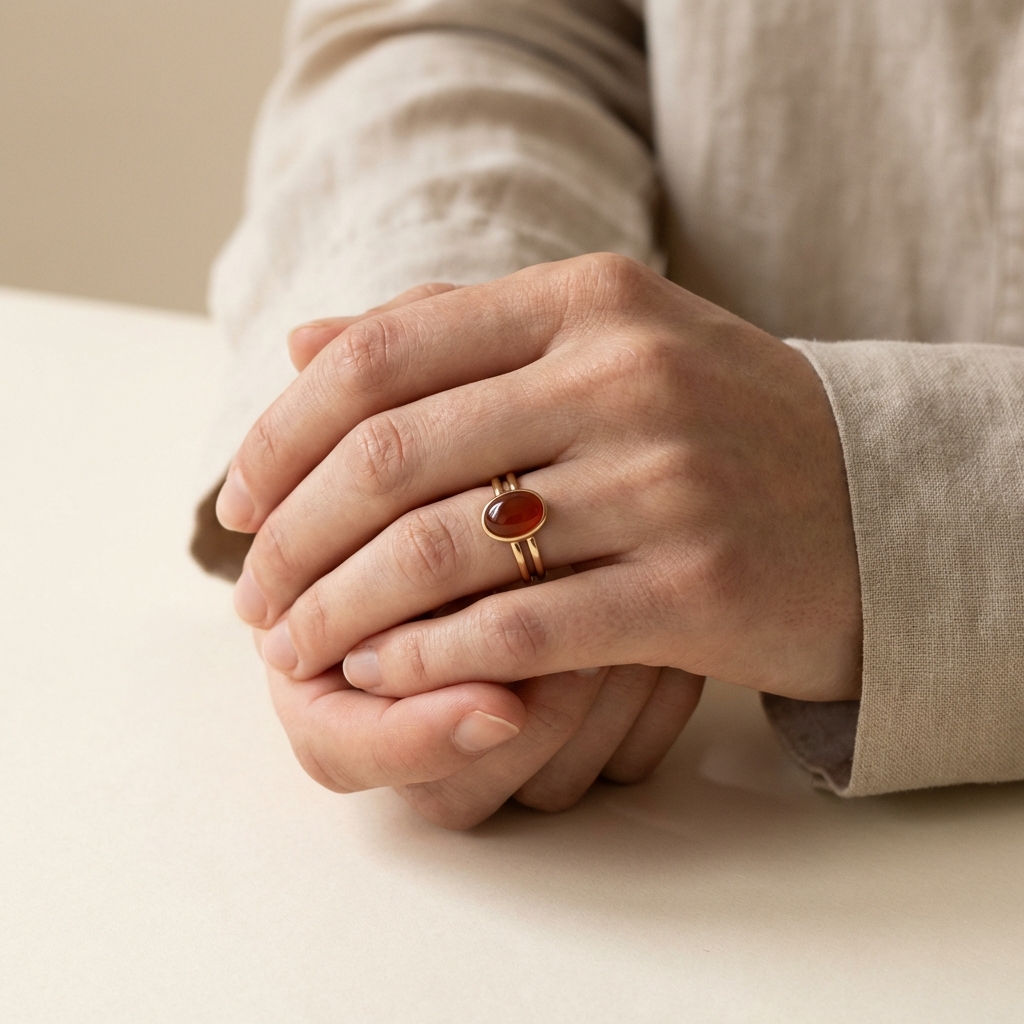
Measure for comfort by accounting for bezel width and dome height rather than only inner diameter; a practical trial is to slide a ring down off the knuckle and back on several times to assess whether the stone shifts or snags during normal hand movements American Gem Society consumer guidance.
When rings feel persistently tight because of a tall cabochon, consult a jeweller about shank adjustments: a modest shank widening or thinning can improve balance and comfort, and a professional can advise about keeping the work reversible and conservation conscious for older pieces American Gem Society consumer guidance.
Band width, balance and how cabochon profile affects finger choice
Wide bands stabilize heavier bezels and reduce rotation, a practical solution when a cabochon is tall or heavy and you want it to sit upright on middle or index fingers that show the piece clearly American Gem Society consumer guidance.
Narrow bands can be comfortable on smaller fingers or for low-profile bezels, but they may permit rotation if the bezel is heavy; matching band width to bezel mass reduces that tendency and keeps the stone visible where you expect it to be GIA Gem Encyclopedia.
quick balance and rotation check on finger
perform while hands are warm
Consider activity level when choosing a finger: avoid placing tall cabochons on fingers you use for repetitive tasks to limit knocks and abrasion, and prefer lower profiles or protected bezels for everyday wear GIA Gem Encyclopedia.
Styling tips: pairing metals, outfits and stacking for carnelian cabochon rings
For visual contrast, pair warm orange carnelian with cooler metals such as white gold, silver or steel, or with neutral clothing palettes; this makes the stone's tone stand out without relying on large sizes alone, an approach echoed by recent trend discussions Vogue trend coverage.
Stacking works best with low bezels and thinner bands so rings nest together comfortably; when a cabochon is tall, choose it as the single star of the hand and keep adjacent rings lower profile to avoid imbalance Vogue trend coverage.
Example looks include a single statement cabochon on the index or middle finger for a bold effect, or a low-profile stack on the ring or pinky that reads as elegant and understated; adapt the choice to your wardrobe and the ring's bezel profile to keep comfort and preservation in mind GIA Gem Encyclopedia.
Caring for the stone and setting: preservation for ancient and modern pieces
Conservation guidance for historical jewellery emphasises gentle cleaning and avoiding harsh chemicals, and it recommends asking sellers for restoration notes so you understand what work, if any, was done before attempting cleaning or wear Victoria and Albert Museum conservation guidance.
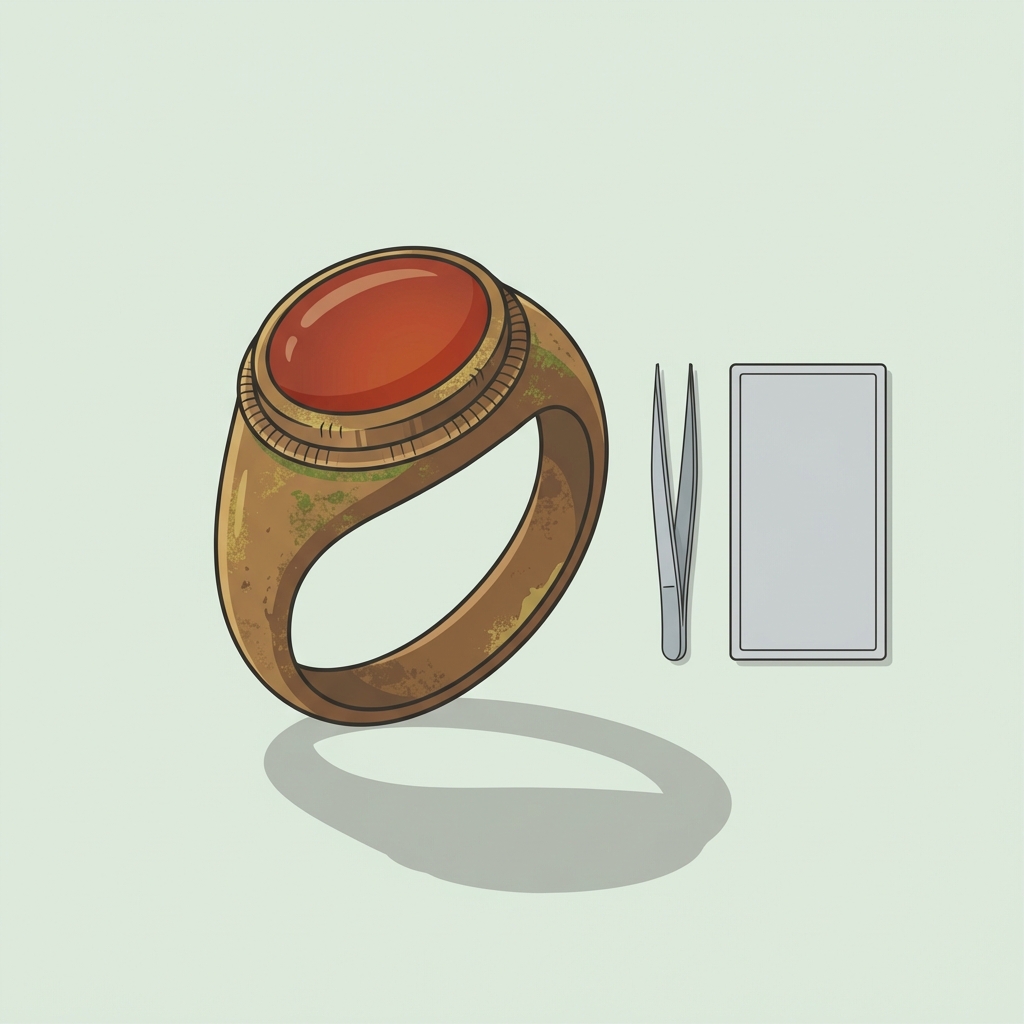
Do not over polish a patina that is consistent with age; curators often advise preserving age related surface character because aggressive polishing can reduce the historical information a piece carries and may damage thin edges of a bezel Victoria and Albert Museum conservation guidance.
Store cabochon rings separately to reduce abrasion and wrap them in soft cloth or padded compartments, and avoid exposing warm tone chalcedony to strong chemicals or ultrasonic cleaners that could affect surface stability Victoria and Albert Museum conservation guidance.
Restoration and condition notes: what to ask for if buying vintage or ancient
When buying a vintage or ancient carnelian ring request condition notes that state what was stabilised, repaired or left untouched and any materials used in repairs, because clear restoration notes help you understand how the piece will behave in wear and what maintenance it may need Victoria and Albert Museum conservation guidance.
Ask whether solder joins, replaced shanks or glued settings were used and whether any modern adhesives or soldering materials could affect future conservation; such specifics allow informed decisions about wearing a piece regularly or reserving it for occasional use Victoria and Albert Museum conservation guidance.
Reasonable expectations include some wear consistent with age, a clear statement of any stabilisation, and photographs documenting repairs; vague provenance statements or missing restoration details are sensible grounds for follow up questions before purchase Encyclopaedia Britannica.
Provenance, documentation and testing for ancient carnelian cabochon rings
Provenance elements to request include collection history, prior ownership notes and any verification letters that accompany a piece, because these documents explain how a ring moved through collections and provide context for its dating and condition Metropolitan Museum of Art collection highlights (see a related museum object Met Museum object and compare with our Ancient Roman rings collection).
When material or treatments are in question ask the seller for any available third-party testing or gemological identification, which can confirm a stone's material type and highlight treatments that affect how the piece should be cared for GIA Gem Encyclopedia.
Use documentation to inform wearing decisions: a ring with stabilisation or modern repairs may be suitable for occasional wear but not for daily tasks that risk loosening a repaired joint; treat provenance and testing as part of routine due diligence rather than guarantees about future value Metropolitan Museum of Art collection highlights.
Common mistakes buyers and wearers make with carnelian cabochon rings
A common error is assuming universal symbolic meanings for fingers; historical sources show variable practices across Roman, Byzantine and Islamic contexts, so avoid treating any single association as definitive Encyclopaedia Britannica.
Another frequent mistake is neglecting bezel profile and balance: buyers sometimes select rings with tall cabochons for decorative effect without testing for rotation or catching, which can lead to discomfort or damage in everyday use American Gem Society consumer guidance.
Finally, over polishing or failing to request restoration notes can reduce a piece's historical character or hide prior repairs; always ask for condition documentation before undertaking any cleaning or restoration of a vintage ring Victoria and Albert Museum conservation guidance.
Practical examples and scenarios: index, middle, ring and pinky explained
Scenario A, statement index or middle ring: a tall cabochon with a stable wide band sits well on the index or middle finger for occasional public wear; test the ring by moving your hand through common gestures to ensure the bezel does not catch and the ring does not rotate Vogue trend coverage.
Scenario B, low-profile stack on ring or pinky: choose a low bezel and thin bands for stacks, keeping the carnelian ring low so it layers neatly with other rings and reduces the chance of snagging during daily tasks GIA Gem Encyclopedia.
Scenario C, signet-style thumb or index ring: for a signet effect use a carved intaglio or modest cabochon on a wider hoop placed on the thumb or index, but confirm fit and movement because those fingers see more handling and need a secure, comfortable shank Metropolitan Museum of Art collection highlights (see similar auctioned examples LiveAuctioneers).
Decision checklist and conclusion: choosing finger and caring for your carnelian cabochon ring
Quick checklist before wearing: ensure ring size is snug but removable, check bezel profile for catching, match band width to bezel weight, and request condition and restoration notes when buying vintage or ancient pieces American Gem Society consumer guidance.
Summary: balance symbolic choices with comfort and conservation priorities; historic finger associations can inform a personal choice but are not binding, and fit, bezel protection and documented condition should guide daily wear decisions Victoria and Albert Museum conservation guidance.
Next steps for buyers include asking sellers for provenance details and any testing reports, trying similarly profiled rings when possible, and consulting a professional jeweller for shank adjustments that respect conservation best practices rings collection.
There is no single historical rule. Different periods and cultures associated different fingers with specific uses, so any association should be treated as an interpretive tradition rather than a universal prescription.
You can, but consider bezel protection, band width and your daily activities; tall domes are more likely to catch or be knocked, so low-profile settings are better for frequent wear.
Ask for condition and restoration notes, any provenance or collection history, and any third-party testing or identification reports that are available.
More from Aurora Antiqua
References
- Pliny the Elder, The Natural History, BOOK XXXIII, Perseus Digital Library, Tufts University (edition Bostock)
- Aulus Gellius, Attic Nights, Book X, LacusCurtius, Bill Thayer, University of Chicago (Loeb Classical Library edition)
- Gimmel Ring, Victoria and Albert Museum, London
- Thumb Ring, The Cleveland Museum of Art
- Ring, The Cleveland Museum of Art
- BS EN ISO 8653:2026, TC, BSI, British Standards Institution
- Evaluation of a two rubber band technique for finger ring removal, PMC, Annals of the Royal College of Surgeons
- Quartz, Handbook of Mineralogy, Mineral Data Publishing / Mineralogical Society of America, USA
- How to Care For Your Jewellery: The Ultimate Guide by the National Association