


Looking for the real thing? Browse genuine carved intaglio rings, each piece one of one, individually authenticated, with documented provenance. For the background, see the guide to ancient jewelry.
What a carnelian cabochon ring is and why it matters, carnelian cabochon ring
Basic gemology: carnelian as a chalcedony variety
Carnelian is a red-to-orange variety of chalcedony, a silica mineral often chosen for small wearable gems because of its colour range and cutting versatility, which makes it appropriate for both cabochons and engraved intaglios in rings; this identification and the cutting styles are described in standard gemological references GIA carnelian entry.
The physical qualities of carnelian, including typical hardness and how it accepts a polish, explain why it was used historically in signet and seal rings as well as in set stones; museums and collection catalogues illustrate this continuity of use across the Mediterranean and Near East Metropolitan Museum of Art collection.
Historical uses: signets, intaglios and wearable contexts
Collectors encounter carnelian most often in two forms: a polished cabochon set for colour and silhouette, or an intaglio engraved for sealing and image reproduction, and both approaches have long precedents in antiquity as shown in major collections British Museum carnelian objects.
Understanding whether a piece is a cabochon or an intaglio matters for both aesthetics and use: cabochons emphasise colour and surface while intaglios carry engraved imagery and function, and that difference is useful when assessing a candidate ring for wear or display.

How astrological and gem-therapy traditions characterise carnelian
Common descriptors in modern sources: warming, activating
Contemporary astrological and gem-therapy sources commonly describe carnelian as a warming or activating stone, often likened to qualities associated with Mars and the Sun; this characterisation is frequently noted in modern editorial resources on gemstones and signs Cafe Astrology gemstone guidance, and other guides such as The Vedic Crystals also discuss who should wear carnelian in astrological practice.
Because these traditions treat carnelian as an energising stone, many practitioners advise extra caution where a wearerhart is already strong in Mars or Sun placements; advice of this kind varies between authors and systems and is not universally prescriptive Astrology discussion of carnelian.
See live finds and provenance notes on @auroraantiqua
Download a printable compatibility checklist that helps you note Mars and Sun placements, current transits, and your wearing intent in one simple sheet
Different systems emphasise different factors: Western editorial resources typically focus on symbolism and sun-sign tendencies, Vedic approaches favour calculated placements and planetary periods, and folk uses may follow local custom; taken together they show why a case-by-case reading is common.
Gemological durability and practical suitability for everyday wear
Durability and cutting styles that matter for rings
The gemological profile of carnelian, including its typical durability and the common cuts used for rings, affects whether a cabochon will withstand daily wear, and gemology references describe those physical traits in detail GIA carnelian entry.
As a practical matter, a low, well-seated cabochon with a full bezel can tolerate more frequent wear than a high, exposed mount, and vintage or ancient mounting styles often require adjustment or special care before regular use.
How condition, bezel and mounting affect wear
On curated ancient rings, condition notes and restoration notes are vital: a ring described with stabilised joins or minimal restoration may be safer for occasional wear than one needing structural work, and those restoration notes should be read carefully in any listing.
Patina and wear consistent with age do not necessarily reduce usability, but they change the conservation approach; a conservator or jeweller familiar with antiquities can advise whether a bezel should be tightened, relined, or left intact to preserve character.
A practical framework to decide if a carnelian cabochon ring suits you
Step 1: check chart placements for Mars and the Sun
Begin by noting the natal placements of Mars and the Sun in your birth chart, since astro-gemstone guidance commonly links carnelians warming quality to those planets and suggests they are the most relevant placements to review Cafe Astrology gemstone guidance. Other resources on choosing carnelians include Natural Gemstones.
Step 2: consider current transits and wearer intent
Next, note any current transits or major planetary periods that emphasise Mars or the Sun and pair that information with your intent: are you seeking activation, protection, or simply the colour and history of the piece; combining chart data and intent gives a clearer, personalised recommendation Astrology discussion of carnelian.
A simple worksheet to map Mars and Sun placements alongside wearing intent
Use this sheet to prepare questions for a chart reader
Step 3 is an integrated decision: if Mars or the Sun are heavily placed and your intent is to reduce tension, consider a milder alternative; if the chart shows supportive placements and your goal is increased energy, a carnelian cabochon ring may be a reasonable match.
When to choose alternatives: garnet, red jasper, amber and others
How alternatives map to different goals: grounding vs energising
If concern about warming effects arises, alternatives commonly recommended include garnet for steady vitality garnet, red jasper for grounding colour similar to carnelian, and amber for gentler warmth; these suggestions appear across gem-therapy and practical guidance resources GIA carnelian entry.
Choosing an alternative should match your intent: select grounding materials when you want to moderate activation, or choose a more energising stone if your objective is increased momentum; visual similarity and durability also matter for a ring that will be worn.
Comparative notes: look, durability and historical acceptability
Garnet and red jasper can approximate the colour range of carnelian but differ in hardness and historical use; many ancient and medieval collections include garnet and jasper settings, so these are historically defensible alternatives for collectors.
Amber offers a different feel entirely and is softer, so its conservation and mounting needs differ; match the material to the expected wear and the conservation requirements laid out in condition notes.
Common mistakes people make when choosing a carnelian ring and how to avoid them
Relying only on sun-sign rules
One frequent mistake is using only sun-sign rules to decide if a stone suits you; astrological sources emphasise that a full-chart reading is generally more informative because it accounts for planetary placements and transits rather than only the sun sign Astrology discussion of carnelian.
There is no single zodiac list that must avoid carnelian; compatibility is typically assessed case-by-case using natal chart placements of Mars and the Sun, current transits, and the wearer’s intent, and collectors should prioritise condition notes and provenance when choosing a curated carnelian piece.
Another common error is ignoring setting and condition: a well-documented provenance and clear restoration notes matter for safe wear, and buyers should ask for explicit condition notes and photos that show the bezel, hoop and shoulders.
Ignoring setting, condition and documentation
Skip impulsive purchases based solely on colour; instead request measurements, close-up photos, and any provenance or collection history language that the seller can provide, and read restoration notes to understand what was repaired or stabilised.
For curated antiquities, prioritise pieces with clear documentation and transparent condition notes rather than assuming every item labelled carnelian is identical in durability or suitability for regular wear.
Practical scenarios: examples for different zodiac and chart concerns
Scenario A: Mars-heavy chart and why carnelian might be activating
Scenario A, short vignette: a wearer with natal Mars prominent by house and aspect may find carnelian amplifies drive in ways that feel intense, so the immediate practical takeaway is to test wearing the ring briefly and observe mood and energy rather than committing to full-time wear Cafe Astrology gemstone guidance.
Takeaway: try a trial period, wear the ring for short sessions, and note any increase in restlessness or focus before deciding to keep it for daily use.
Scenario B: Sun-afflicted placements and cautious approaches
Scenario B, short vignette: where the Sun is afflicted by difficult aspects, carnelian could emphasise inner tension rather than constructive confidence; the practical suggestion is to consult a chart reader and consider a visually similar but milder stone if needed Astrology discussion of carnelian.
Takeaway: seek a practitioner who reads transits and major periods rather than relying solely on sun-sign guides.
Scenario C: wanting wearable history without strong energetic effects
Scenario C, short vignette: a collector who values wearable history but prefers minimal energetic impact might prioritise a museum-documented or well-documented ancient carnelian set for occasional wear while keeping it primarily as a display or conversation piece Metropolitan Museum of Art collection.
Takeaway: balance historical value with conservative wearing practices and clear condition notes, and consider alternatives if you want daily wear with fewer energetic considerations.
Buying checklist for a curated carnelian cabochon ring
What to ask the seller and which documentation to seek
Ask the seller for clear photos, precise dimensions, condition notes, any restoration notes, and provenance or collection history language; these items help you understand how the piece was treated and what to expect for wear and conservation Metropolitan Museum of Art collection.

Read provenance text carefully: phrases that describe prior ownership, collection history, or verification letters add context but do not amount to absolute guarantees; treat them as part of the documentation you weigh alongside condition notes and restoration statements British Museum carnelian objects.
How to read condition and restoration notes
Look for explicit language that states what was stabilised or repaired and what was left untouched, and if a listing is vague about restoration, request a conservator report or additional photographs showing joins, the bezel interior, and the hoop.
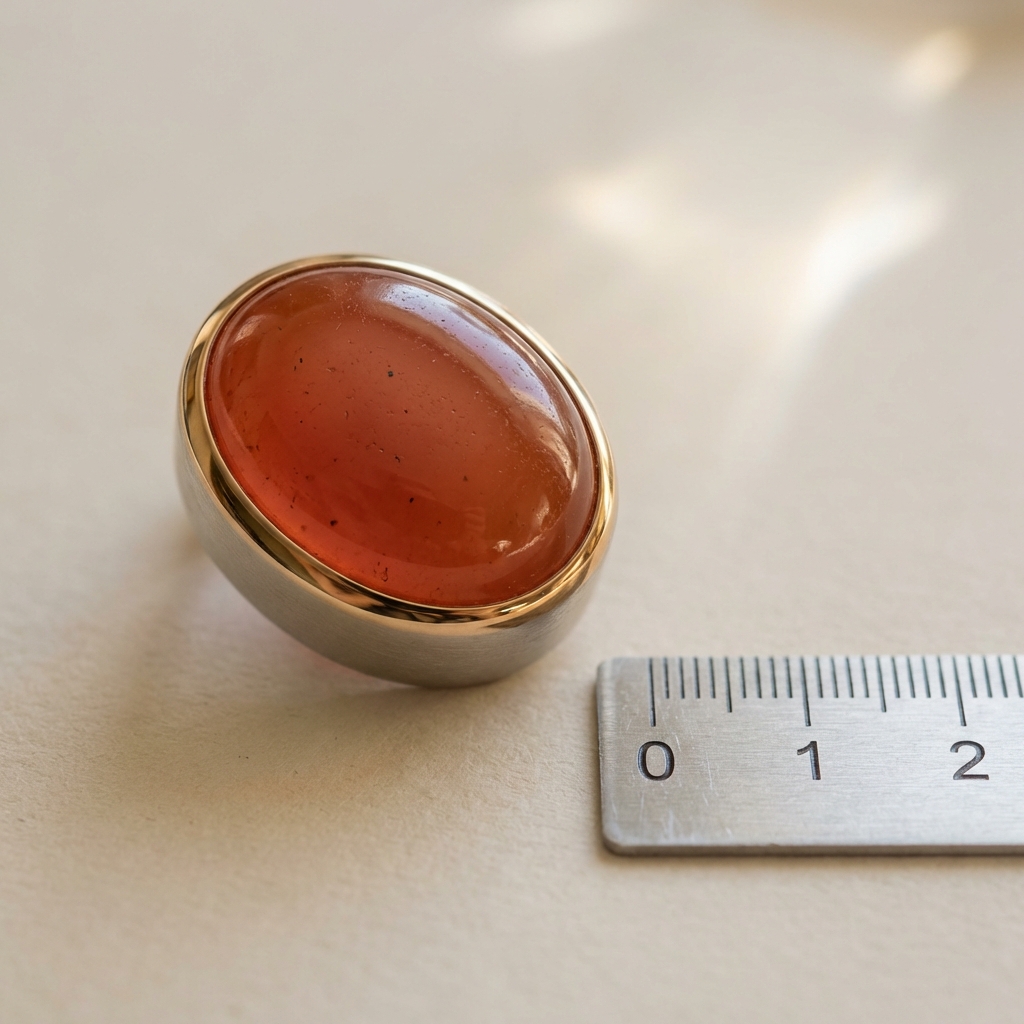
Conservation-friendly wearing includes avoiding exposure to harsh chemicals, tightening loose bezels before frequent wear, and storing the ring separately to prevent knocks to the cabochon surface, which supports long-term preservation.
Summary: balancing gemology, history and personal compatibility
Key takeaways
Carnelian is historically appropriate for signet and set rings and has physical properties that make cabochon settings common in wearable pieces, as described in gemological literature and major collections GIA carnelian entry.
Astrological and gem-therapy guidance labels carnelian as a warming, activating stone linked to Mars and Sun qualities, but there is no single authoritative list of zodiac signs who must not wear carnelian; compatibility is usually judged case-by-case and benefits from chart consultation Cafe Astrology gemstone guidance.
Next steps for buyers
Use the checklist and the simple mapping tool provided earlier to prepare questions for a reader or conservator, prioritise condition notes and provenance when evaluating a curated piece, and treat energetic guidance as one input among many when deciding on a carnelian cabochon ring.
There is no universal ban; some astrological and gem-therapy traditions advise caution when Mars or the Sun are strongly placed or afflicted in a chart, so individuals with those placements may prefer a case-by-case consultation.
Carnelian has reasonable durability for set rings, but suitability depends on the cut, bezel style and documented condition; a low cabochon in a full bezel is generally safer for regular wear.
Request clear photos, measurements, condition notes, restoration notes and any provenance or collection history language to assess wearability and documentation.
More from Aurora Antiqua
References
- Quartz, Handbook of Mineralogy, Mineral Data Publishing / Mineralogical Society of America, USA
- The Gemstone Book, CIBJO Blue Book, Coloured Stone Commission, CIBJO, The World Jewellery Confederation
- Chart of Commercially Available Gem Treatments (Gems & Gemology, Winter 2002), Gemological Institute of America
- How to Care For Your Jewellery: The Ultimate Guide by the National Association
- Gemstones from Roman Britain: Recorded in the Portable Antiquities Scheme, University Debrecen, Hungary
- Archaeological materials, Icon, The Institute of Conservation (UK)