


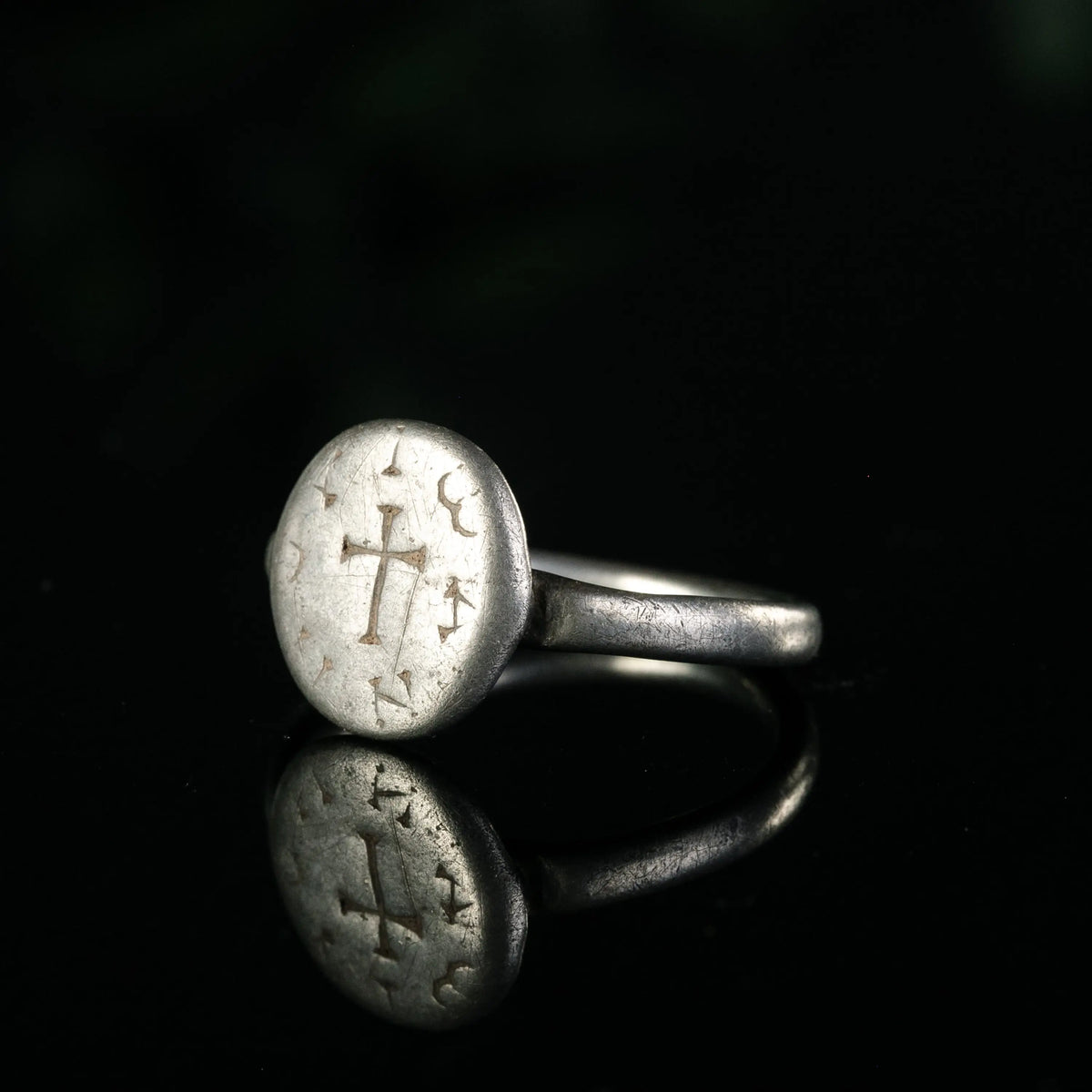


A seal ring carried a personal mark: a device cut into stone or metal that pressed an owner’s identity into wax or clay. From Roman officials to medieval merchants, the seal ring was the signature. Aurora Antiqua offers authentic ancient and medieval seal rings, each researched and guaranteed genuine for life.
Seal rings through the ages
Roman seal rings often set a carved intaglio; medieval and merchant seals favoured heraldic devices, initials and marks. See our signet rings for the broader family, or browse by era: ancient Roman rings and medieval & crusader rings.
Every Aurora piece is one of a kind, ships with its collection history stated on the listing, and is covered by our Lifetime Authenticity Guarantee.
By era: Medieval Seal Rings
Frequently asked questions
What is a seal ring?
A seal ring carries a personal or merchant's mark cut into stone or metal, pressed into wax to sign and authenticate documents. It functioned as identity in a single object.
How is a seal ring different from a signet ring?
They are largely the same thing: 'seal ring' emphasises the sealing function, 'signet' the engraved device. Both press a mark into wax to sign.
Were medieval seal rings used by merchants?
Yes. Merchants, knights, clergy and nobles each carried a seal ring with a personal mark, monogram or heraldic device to close and authenticate letters and deeds.