


Looking for the real thing? Browse our ancient artifact collection, each piece one of one, individually authenticated, with documented provenance. For the background, see the guide to buying ancient artifacts.
What we mean by real Roman artifacts: scope and context
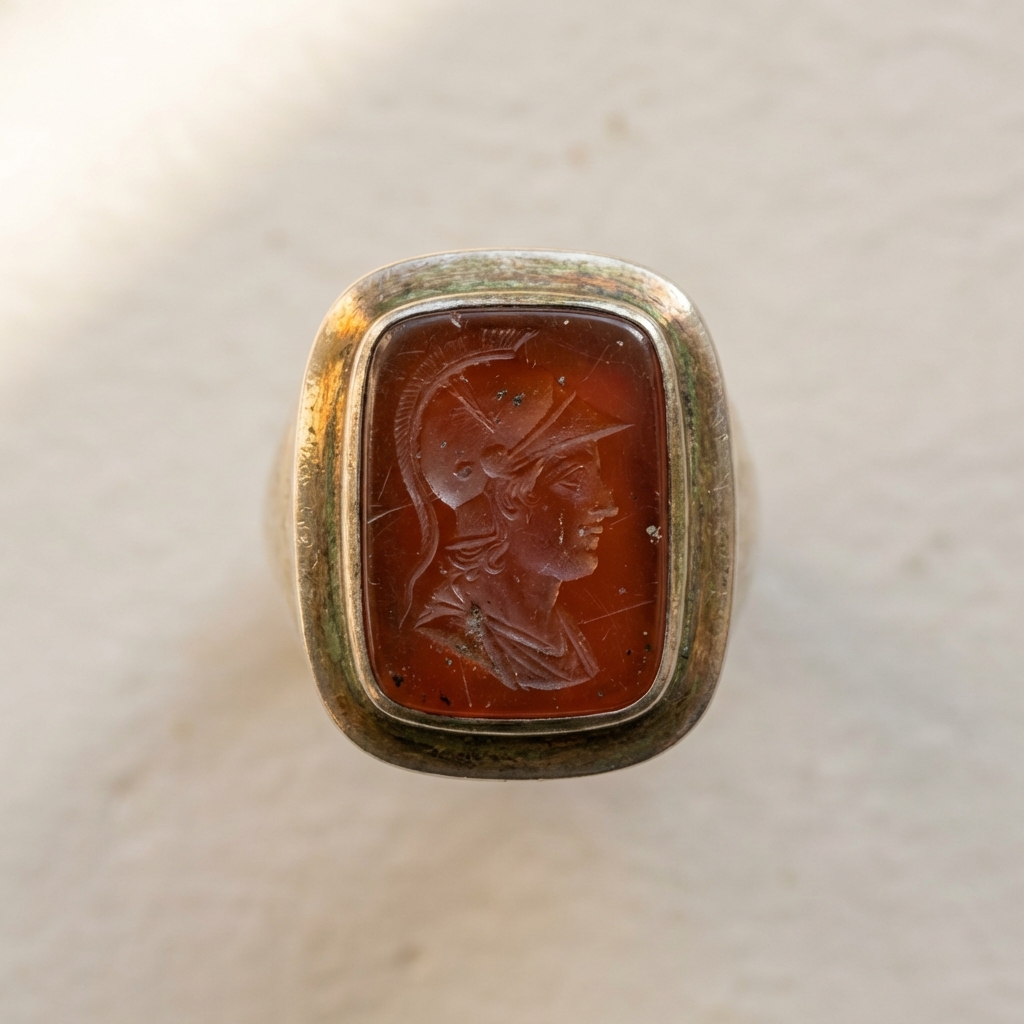
For this article, real Roman artifacts refers to small, portable objects that are typically attributed to Roman-period workshops and styles by specialists. Think ancient ring intaglios, small pendants, mounts and similar small metal items whose dating relies on stylistic, material and comparative clues rather than on excavation records.
When collectors look to buy ancient roman jewelry artifacts, the most important practical distinctions are about how an object is documented and described. Provenance, collection history and condition notes explain where a piece has been, how it was cared for and what interventions, if any, were made to stabilise or repair it; those records shape both legal standing and buyer expectations, and they help separate a well-documented antiquity from an unattributed object.
Many authentic pieces will show wear consistent with age: soft edges on bezels, a worn intaglio surface, patches of patina on metal. Restoration and preservation notes are central to understanding what a buyer is acquiring, because some treatments are stabilising while others can remove diagnostic traces. Legal and ethical frameworks also treat illicit export and looting as core concerns that can affect whether a sale is legitimate under cross-border rules, and that background is part of any responsible purchase.
Which objects are in scope: small jewelry and related small artifacts
This discussion focuses on rings, intaglios, small pendants, fittings and similar small antiquities that are portable and commonly offered on the market. These object types are often studied through stylistic comparison and material examination rather than excavation context, so buyers should expect dating to be presented as an expert estimate. Define your own collecting boundaries clearly: size, material, and acceptable condition all matter when assessing listings, and consider browsing the Ancient Roman Rings collection for examples.
When collectors look to buy ancient roman jewelry artifacts, the most important practical distinctions are about how an object is documented and described. Provenance, collection history and condition notes explain where a piece has been, how it was cared for and what interventions, if any, were made to stabilise or repair it; those records shape both legal standing and buyer expectations, and they help separate a well-documented antiquity from an unattributed object.
Why provenance and condition matter for collectors
Provenance and condition notes are the practical record of an object’s modern history and current state, and they play a central role in any purchase decision. Clear documentation that traces a piece through collections or shows export paperwork reduces legal uncertainty for cross-border transactions and helps establish the chain of custody that museums and responsible dealers recommend referencing before sale. For guidance on provenance in museum practice, see the Museum of Fine Arts discussion of provenance and antiquities.
Legal framework that governs buying Roman antiquities
International treaties and guidance are the starting point for understanding whether cross-border trade in antiquities is lawful, and they provide the core reference when dealing with objects whose origins are unclear. The UNIDROIT Convention on stolen or illegally exported cultural objects is the primary legal instrument addressing cross-border cases and remains a key standard for buyers to consult UNIDROIT Convention on Stolen or Illegally Exported Cultural Objects (1995)
Yes, private buyers can lawfully acquire Roman antiquities provided the object has documented legal export or is sold in compliance with relevant national and international rules; buyers should request provenance and export paperwork and follow due-diligence guidance.
National rules and practical buyer guidance sit on top of international frameworks. Government due-diligence guidance commonly used by dealers and auction houses asks buyers to request written acquisition histories and, where applicable, export or import permits. These national-level recommendations are important because enforcement and specific paperwork requirements vary between jurisdictions, and a buyer with cross-border concerns should follow the guidance applicable to their country of residence and to the seller’s country.
Codes of ethics for dealers and consultations among museums emphasise transparency and the avoidance of items from known high-risk contexts. That ethical layer complements legal instruments by encouraging sellers to disclose acquisition histories and to avoid trading objects that might have been looted or illegally exported.
International instruments: UNIDROIT and UNESCO basics
UNIDROIT and UNESCO provide the legal and policy framework that discourages trade in objects lacking documented legal export; they frame obligations for states and inform how courts and governments treat disputed items. Consult official instrument texts and national guidance when in doubt about a particular object’s cross-border status. For additional research resources, see the Research Databases listings maintained by the American Academy in Rome.
National due-diligence obligations and buyer responsibilities
Practical due-diligence guidance for buyers typically includes asking for written provenance, export permits when relevant, and a clear account of prior ownership. Buyers can expect to be asked for supporting documents in higher-risk transactions, and responsible sellers will provide transparent documentation rather than evasive answers.
Codes of ethics for dealers and consultations among museums emphasise transparency and the avoidance of items from known high-risk contexts. That ethical layer complements legal instruments by encouraging sellers to disclose acquisition histories and to avoid trading objects that might have been looted or illegally exported.
How authentication works for ancient roman jewelry artifacts
Authentication rarely rests on a single test. Best practice combines stylistic and comparative connoisseurship, provenance research and non-destructive scientific testing to build a multidisciplinary case for or against authenticity. Recent systematic reviews of analytical approaches show that combining these methods is standard practice because each method addresses different questions about an object’s origin and treatment Non-destructive analytical approaches and provenance methods for authentication of archaeological artefacts: a systematic review
Stylistic analysis places a piece within a typology of forms, motifs and manufacturing traces. For example, an intaglio motif and the way a bezel was formed can point toward a likely century or regional workshop, but such conclusions are comparative and probabilistic rather than absolute. Provenance documentation may corroborate stylistic attributions, and where paperwork is absent, stylistic arguments are weaker without context. Reference collections and published typologies are central to that comparative work, as shown in several provenance research projects.
Non-destructive testing - X-ray fluorescence for alloy composition, microscopy for surface wear, and imaging to reveal earlier repairs - helps rule out modern manufacture or recent forgeries but seldom provides a single, definitive yes or no. Independent, third-party reports that combine several analytical methods are the most useful form of scientific support because they allow specialists to interpret technical results in context rather than in isolation.
Non-destructive testing - X-ray fluorescence for alloy composition, microscopy for surface wear, and imaging to reveal earlier repairs - helps rule out modern manufacture or recent forgeries but seldom provides a single, definitive yes or no. Independent, third-party reports that combine several analytical methods are the most useful form of scientific support because they allow specialists to interpret technical results in context rather than in isolation.
Stylistic and comparative connoisseurship
Stylistic and comparative connoisseurship
Expert connoisseurs use close visual comparison with securely dated examples to interpret workshop practices, toolmarks and iconography. That work often depends on well-documented reference collections and published typologies; a stylistic judgment gains weight when it aligns with other lines of evidence such as documented provenance or laboratory analysis. The Clark Art Institute's provenance research project is one example of work that supports provenance and cataloguing efforts.
Non-destructive scientific testing and multidisciplinary reports
Common non-destructive techniques include portable X-ray fluorescence to check metal alloys, digital microscopy for wear and surface examination, and imaging to detect older repairs. These methods are valuable for narrowing possibilities but are most effective when reported alongside stylistic and documentary evidence in a multidisciplinary report prepared by independent specialists.
A practical due-diligence checklist before you buy
Start every possible purchase by asking the seller for a clear written provenance or collection history, including how and when the object left any country of origin and whether export permits exist. If dates or ownership gaps are unexplained, treat that absence as a material concern and seek clarification before proceeding.
Follow a simple provenance checklist before purchase, or see examples on @auroraantiqua
Copy this checklist: request written provenance, condition and restoration notes, clear photos of diagnostic details, any export or import permits, and independent report summaries where available.
Request condition notes that explain what was stabilised, repaired or left untouched. Good condition reports will comment on patina, visible repairs and any recent cleaning; a seller should describe stabilisation work rather than simply claim an object is restored. If a report mentions aggressive cleaning that removed surface patina, consider that a red flag and ask for further documentation or analysis.
Seek independent analysis where practical. A short third-party report that describes methods and findings-rather than an unverified seller statement-adds confidence. When independent testing is not feasible, record detailed images and written notes and consider asking a trusted specialist for an opinion before purchase.
Documents and questions to request from a seller
Before payment, request explicit answers to: What is the documented chain of ownership? Are there any export or import permits? Has the item been published or exhibited? Who carried out any restoration? Clear answers are part of normal due diligence and should not be evasive.
How to order or interpret independent reports
When you receive an independent report, check that it lists the analytical methods used, identifies the laboratory or specialist who prepared it, and explains limitations. Reports that combine stylistic commentary with technical analysis are more informative than single-method statements. Keep copies of these reports with your purchase records.
Red flags: spotting risky listings and suspicious behaviour
Some warning signs commonly indicate higher legal or ethical risk: absent or vague provenance paperwork, evasive seller responses to questions about origin, and listings that repeatedly avoid showing diagnostic details. These indicators should prompt pause and independent verification.
Geographic red flags include objects that appear suddenly on the market from regions known to be experiencing looting or conflict; such routing patterns increase the risk that an item was removed illegally. If the listing or the seller cannot explain how the object left its country of origin legally, consider that a serious concern and avoid purchase until documentation is supplied.
Condition and treatment red flags matter too. Recent aggressive cleaning, inconsistent repairs or removal of patina can erase evidence that specialists use to date and authenticate objects. When patina is uneven or selectively removed, ask for high-resolution images and a restoration note explaining what was done and why.
Common provenance and condition warning signs
Be particularly cautious when provenance is described only as "private collection" without dates or prior ownership notes, or when sellers use generic statements such as "acquired years ago" without specifics. That vagueness often masks gaps in the chain of custody that are material to legal standing and ethical assessment.
Geographic and transactional red flags
Unclear shipping routes, packages routed through many intermediaries, or sudden changes in seller location are transactional signs of potential trouble. If several red flags align-no paperwork, evasive answers and unusual routing-report the item to relevant authorities or seek legal advice rather than proceed.
Where genuine pieces are sold and how the market behaves
Collectors commonly encounter genuine Roman jewelry and small artifacts through specialist dealers, curated marketplaces and established auction venues. Each type of venue has different practical checks: dealers should provide condition reports and provenance summaries, marketplaces may vary in vetting, and auction houses are often able to supply cataloguing notes and condition reports on request. You can also browse our rings collection for a sense of how items are presented with condition notes.
Market reporting shows ongoing trade in ancient jewellery and small antiquities but also highlights a wide price dispersion and increased scrutiny of undocumented items, which underscores how documentation affects both buyer confidence and market behaviour Antiquity market trends in Cycladic figurines, 2000 to 2019, International Journal of Cultural Property
When browsing listings, practical checks include asking auction houses for full provenance and condition sheets, and asking dealers for restoration notes and collection history. A reputable seller will understand these requests and provide clear answers rather than evasive or curt replies.

A brief contextual mention: Aurora Antiqua curates small ancient rings and select artifacts with condition notes and provenance references where available, which is one model collectors can expect from transparent dealers. Keep brand references light and focus on documentation when comparing sellers.
Dealers, auction houses and specialist marketplaces
Dealers who specialise in ancient jewelry often provide detailed condition notes and can point to prior collection history; auction houses generally publish catalogue entries that summarise known provenance and condition and may offer specialist reports on request. Marketplaces vary in their vetting processes, so apply the same document requests regardless of venue.
Price dispersion and the role of documentation
Documentation typically increases buyer confidence and may be reflected in price, but price alone is not proof of authenticity. Undocumented items can show wide price ranges; when in doubt, prioritise documentation, not low price, because the costs of resolving a disputed provenance later are usually higher than a careful initial outlay.
Typical buyer mistakes and how to avoid them
A common error is buying when provenance is absent or when seller answers are evasive. Buyers sometimes assume a friendly or authoritative tone in a listing implies documented history; instead, request explicit written provenance and be prepared to walk away if the seller cannot provide it.
Relying solely on images is another frequent mistake. Photographs can hide repairs, composited views or selective lighting that obscures patina. Ask for close-up images of diagnostic areas, and request a short written note describing any restoration work so you understand what was changed.
Misreading restoration statements is also common. Some buyers assume restoration improves legal standing or market value; in reality, undocumented repairs can remove evidence used in dating and authentication. Prefer stabilisation and conservation carried out by recognised practitioners and request restoration notes that specify techniques and materials used.
Errors in vetting provenance and documentation
Do not accept vague provenance shorthand such as "private estate" without dates and named prior owners. If the seller cannot name prior collections or explain how export compliance was handled, seek independent advice or decline the purchase. Clear documentation often reduces both legal and ethical risk.
Misreading condition and restoration statements
Look for specific language in condition notes: what was stabilised, what was repaired, and what was left untouched. Avoid assumptions; when a condition note is absent or unclear, request a more detailed report and additional photographs before proceeding.
Bringing it together: a realistic path for buying ancient roman jewelry artifacts safely
The recommended buying flow starts with initial listing checks: confirm clear photos, ask for written provenance or collection history, and request condition and restoration notes. If export or import paperwork is relevant to the transaction, ask for copies of permits before payment and verify whether the seller can lawfully export the object.
If documentation is incomplete but the seller is willing to commission an independent report, that is a reasonable step. Independent analysis should identify methods used and the specialist who performed them; a combined stylistic and technical report is the most informative for buyers who need objective support.
Keep careful records of every step: dates of correspondence, copies of reports, payment receipts and condition photos. Those records are essential if provenance questions arise later and can speed resolution with authorities or intermediaries.
A short provenance checklist to send to sellers
Ask for named prior collections when possible
If you discover after purchase that an item may have been illicitly exported, contact the seller first to request missing documentation, seek specialist advice and be prepared to notify relevant authorities. Returning an object voluntarily and cooperating with authorities is often the clearest path to resolving disputes and helps protect both buyers and collections.
Multidisciplinary authentication and transparent provenance are the most practical safeguards available today. While no system removes all risk, following the checklist, requesting written documentation and keeping good records gives collectors a defensible and ethical approach to acquiring small Roman artifacts.
For further, practice-oriented content and to see examples of curated listings with condition notes and provenance references, collectors may find curated dealer presentations useful as a model for the documentation to request.
For further, practice-oriented content and to see examples of curated listings with condition notes and provenance references, collectors may find curated dealer presentations useful as a model for the documentation to request. See our article on the timeless appeal of Roman jewelry for context.
Look for a written chain of ownership with dates and named prior collections, copies of export or import permits when relevant, and clear restoration and condition notes; if these are absent, request more documentation before buying.
No; non-destructive scientific tests provide valuable data but are most reliable when combined with stylistic analysis and provenance research in a multidisciplinary report.
Contact the seller to request missing documentation, seek specialist advice and be prepared to report the matter to relevant authorities if evidence suggests illegal export.
More from Aurora Antiqua
References
- Kunsthandel und Galerien (Art trade and galleries), Kulturgutschutz Deutschland, Beauftragte der Bundesregierung für Kultur und Medien
- Regulation (EU) 2019/880 on the introduction and the import of cultural goods, European Parliament and Council, EUR-Lex
- 1995 Convention, UNIDROIT, International Institute for the Unification of Private Law, Rome
- Stolen Works of Art Database, INTERPOL
- About us, International Association of Dealers in Ancient Art
- Red Lists Database, International Council of Museums (ICOM)
- Research report: export licensing and provenance, GOV.UK, Department for Culture, Media and Sport (DCMS)
- Nuclear Techniques for Cultural Heritage Research (IAEA Radiation Technology), International Atomic Energy
- Testing and Retesting Alexander the Great, J. Paul Getty Museum and Getty Conservation Institute, Los Angeles