


Looking for the real thing? Browse authenticated Ancient Roman rings, each piece one of one, individually authenticated, with documented provenance. For the background, see the guide to buying ancient artifacts.
Roman-period glass jewellery in the region: definition and significance
In discussions of Levantine antiquities, the term israel roman glass jewelry is commonly used to describe jewelry elements made from Roman-period glass, most often beads, pendants and fragments mounted into metal settings. Specialists and museum catalogues typically date these to the Roman period, roughly the 1st to 4th centuries CE, and they appear frequently in southern Levant archaeological assemblages reported by local authorities and curators, which helps explain their prominence in museum displays and research collections Israel Antiquities Authority.
See curated finds and provenance notes on Instagram
This article highlights curated examples with clear condition notes and provenance references; Aurora Antiqua presents one contextual catalogue style approach to listing ancient jewellery without implying universal authentication.
When curators and archaeologists write about Roman glass jewellery they mean objects that begun life as glass beads or small pendants and, in some cases, later entered jewellery through deliberate mounting. These pieces are often catalogued separately from metalwork and gemstone rings because their composition, wear and weathering patterns differ from metals and carved stone intaglios, and because they speak to trade and workshop networks connected to regional glass production and circulation Metropolitan Museum of Art timeline on glass.
Roman glass elements are visible in many Levantine collections because glassmaking and glass trade were extensive in the Roman world, and because beads and small items survive in burial and settlement contexts. Curatorial accounts emphasize that what appears in display cases or online listings is the result of excavation or long-term museum collecting practices, which make these objects useful for both stylistic study and public interpretation Journal of Archaeological Science.

Historic motifs in Israeli jewellery: Hamsa, Star of David and shared symbols
The jewellery associated with the Land of Israel is also known for its use of enduring motifs such as the Hamsa and the Star of David, which appear across devotional, communal and decorative objects over many centuries. Museums and cultural collections document these symbols in contexts ranging from personal amulets to later communal adornment, noting their layered meanings and long afterlives in material culture Garment, Cleveland Museum of Art.
Historically, the Hamsa functions as a hand-shaped amulet used for protection and blessing in diverse local traditions, while the Star of David became a widely recognized communal emblem in later periods and was incorporated into jewellery for identity and display. Curatorial notes commonly present these motifs as evolving symbols that travel between devotional practice and fashionable adornment rather than as fixed or singular meanings The Israel Museum.
How specialists identify Roman glass and date pieces
Identification of Roman glass jewellery relies on a combination of visible diagnostic features, contextual archaeology and, increasingly, compositional analysis carried out by technical studies. Visible signs most often cited by curators include iridescent weathering, characteristic surface textures and manufacturing marks that fit known Roman-period typologies Metropolitan Museum of Art timeline on glass.
Look for clear provenance, detailed condition and restoration notes, high-resolution photos and measurements, and specialist or scientific reports when glass fragments or unusual materials are central to the attribution.
Where material questions remain, researchers turn to compositional and technological studies that measure the glass chemistry and manufacturing signatures; such analyses are central to confirming whether a fragment or bead fits Roman chemical profiles and production practices reported in regional studies Journal of Archaeological Science and an open-access study.
Context matters: isolated beads are harder to date securely than beads from well-recorded excavations. Museum reports and authority catalogues thus combine typology, weathering, contextual information and, when available, compositional data to reach a cautious dating and attribution Israel Antiquities Authority.
Regional metalwork and layered stylistic influences
Jewellery from the Land of Israel shows layered stylistic influences because the region experienced long sequences of Roman, Byzantine, Islamic and Crusader-period presence, each contributing motifs, techniques and workshop practices that could be combined in local objects The Israel Museum.
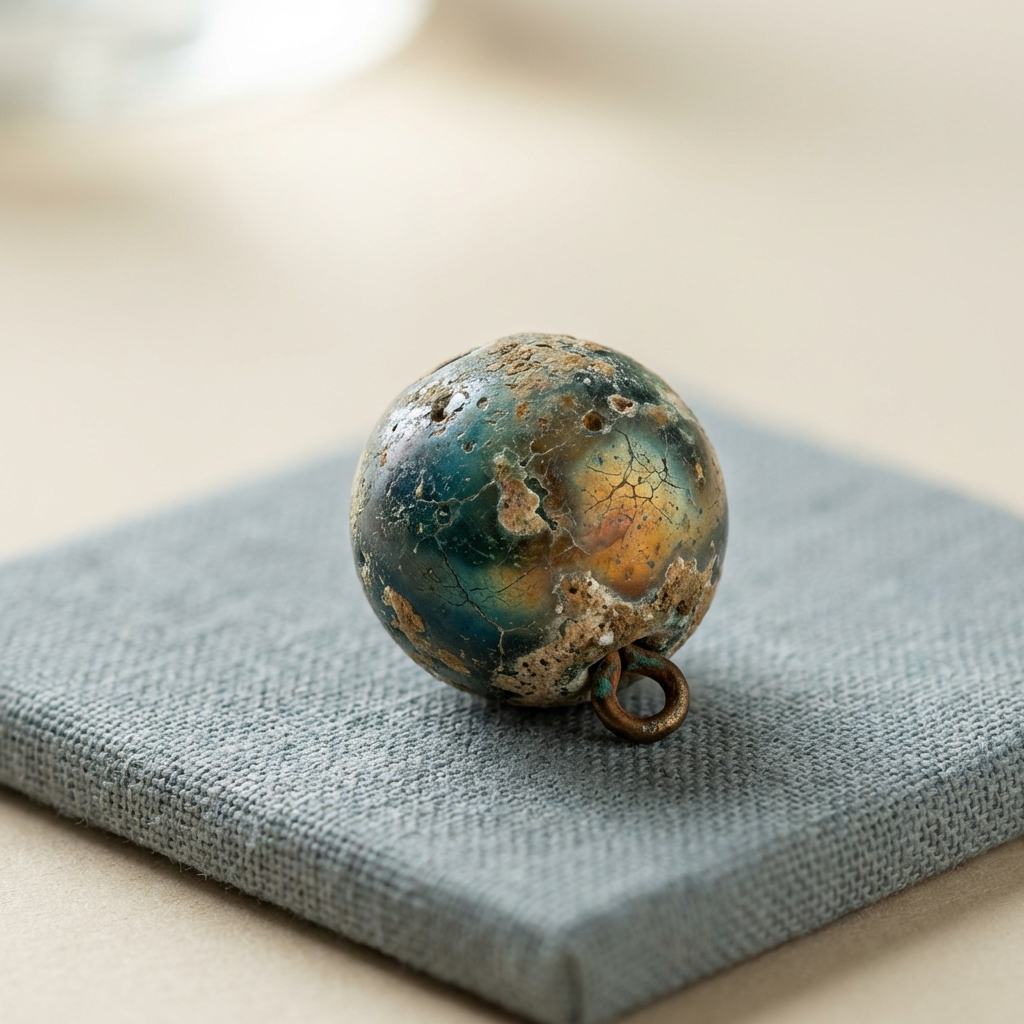
As a result, a single object in a museum catalogue may present formal features-such as bezel shapes, suspension loops and inlay strategies-that reflect more than one period. Curators therefore use conditional attributions, noting that workshop attribution and precise dating are estimates that depend on comparative typology and, where possible, scientific checks Israel Antiquities Authority.
Contemporary Israeli designers and the reuse of heritage motifs
Contemporary Israeli designers in recent years have increasingly reused and reinterpreted heritage motifs, drawing on ancient iconography for modern jewellery while also emphasising provenance, craftsmanship and clear documentation when historic elements are involved Haaretz feature on designers.

When contemporary makers incorporate actual ancient elements, the community increasingly expects explicit condition and provenance statements so buyers understand whether a component is historic, restored or a modern interpretation. Published commentary and design features note that transparency supports collector confidence without implying that every historic element has the same level of documentation or testing About us, International Association of Dealers in Ancient Art. At the same time, some sellers link to their own catalogues, for example an ancient Roman rings collection when describing comparable items.
Caution is common: designers and curators often encourage buyers to look for listings that explain what was stabilized or left untreated, and to ask for photos and measurements that show how a historic fragment has been integrated into a modern setting Haaretz feature on designers.
Legal provenance, export rules and museum guidance for buyers
For buyers interested in Israel-associated antiquities, institutional guidance stresses clear provenance documents, collection history statements and, when available, verification letters or published citations that show how an object entered a collection; such documents reduce legal and ethical uncertainties and are a first filter for responsible collecting Israel Antiquities Authority.
Museums and authorities also outline export and handling norms in their reports, and they are often the most reliable starting points for questions about lawful trade and documentation expectations. Collectors should treat institutional catalogues as guidance rather than as a substitute for case-specific documentation and expert advice Regulation (EU) 2019/880 on the introduction and the import of cultural goods, European Parliament and Council, EUR-Lex.
Condition, restoration notes and what to expect when buying ancient pieces
Ancient pieces commonly show wear consistent with age: breaks, surface losses, patina and weathered iridescence on glass are normal evidence of long-term burial or exposure. Condition notes in listings should call out these features and describe clearly what was stabilized, repaired, or left untouched Israel Antiquities Authority.
Request a simple condition report before purchase
Ask for magnified images of joins
Restoration and preservation notes are important because they describe interventions that affect handling and display. Good reports specify adhesives used, metal repairs, and whether a fragment was remounted; when such notes are absent, buyers should ask for explicit statements rather than infer condition from images alone E.C.C.O. Professional Guidelines (II): Code of Ethics, European Confederation of Conservator-Restorers'.
For glass components specifically, descriptions that mention iridescence or weathering are helpful because these features can indicate long burial histories; however, visual descriptions are not a substitute for compositional tests when the object's origin or date is crucial to the purchase decision Journal of Archaeological Science. See also a relevant compositional study.
Deciding factors: how to evaluate authenticity, documentation and value signals
A practical checklist helps structure decisions: request clear provenance statements, condition notes, high-resolution photos and measurements, and look for specialist reports or published references when available. Museum citations in a listing can strengthen confidence but do not replace provenance documents or technical testing when questions remain Israel Antiquities Authority.
Scientific checks such as compositional analysis are most advisable when a glass fragment or bead is central to the item's claimed date or origin, or when the listing uses language that implies a specific excavation history but provides no supporting documentation. In such cases, laboratory data can help distinguish broadly similar-looking materials and manufacturing traditions (comparative chemical studies).
Common mistakes and red flags when shopping for antiquities online
One common mistake is relying on aesthetic similarity alone. Objects can look period-appropriate without having secure provenance or scientific support, and photos that obscure joins, repairs or tool marks can hide critical information; buyers should therefore request detailed images and explicit condition notes Israel Antiquities Authority.
Vague or missing documentation is another red flag. Listings that avoid giving prior ownership history, excavation context or verification letters should be treated with caution; asking direct questions and seeking independent verification are sensible next steps when documentation seems incomplete Stolen Works of Art Database, INTERPOL.
Practical scenario: reading a listing for a Roman glass pendant
Imagine a listing that shows a small glass pendant mounted in a modern silver bezel. Start by checking the photographs for clear views of the glass surface, suspension fittings and any repair joins; then compare the measurements given against expected bead sizes and pendant proportions from museum catalogues to see whether the scale matches known examples Israel Antiquities Authority.
Next, review the provenance statement: does it name a previous collection, cite an excavation or provide a verification letter? If the description uses language such as appears to be or described as, treat those as cautious formulations and request clarification or scientific testing where dating is central to your decision Journal of Archaeological Science.
Finally, compile a short list of questions for the seller or curator: ask for magnified images of joins, request any lab reports or compositional data, and ask whether restoration used modern adhesives or remounting techniques. These practical prompts often resolve small uncertainties and indicate whether further expert checks are needed About us, International Association of Dealers in Ancient Art. See also this Aurora Antiqua blog post.
Care, display and wearable use of ancient glass jewellery
When wearing ancient glass items occasionally, handle them with care: avoid moisture, chemical exposure and impacts. Conservators and experienced sellers typically advise limiting use to occasional wear and to removing items for household activities or travel to reduce risk of accidental damage Metropolitan Museum of Art timeline on glass.
For long-term display, use stable mounts and avoid direct sunlight and fluctuating humidity. Sellers who follow conservation-minded reporting will note what was stabilized and whether a piece is recommended for display or strict storage; when in doubt, consult a conservator before undertaking any active restoration or frequent wear Israel Antiquities Authority.
Where to find reliable references and further reading
Trusted institutional sources for further research include The Israel Museum and the Israel Antiquities Authority for collection-based guidance and catalogues, while technical studies in journals provide the compositional detail useful for scientific comparisons The Israel Museum.
For accessible background on glass in the Roman world and museum interpretations, the Metropolitan Museum of Art timeline on glass is a helpful starting point, while peer-reviewed compositional studies offer the methods and data that underpin scientific attributions for glass elements in the Levant Metropolitan Museum of Art timeline on glass.
Summary: making informed choices when buying Israel-associated ancient jewellery
Main takeaways: look for the visual clues that curators use, ask for provenance and condition documentation, and do not rely solely on appearance. When glass fragments are central, request compositional checks or published comparisons to support dating claims Journal of Archaeological Science.
Next steps for collectors: compile a short checklist before purchase that includes high-resolution photos, measurements, provenance statements, explicit restoration notes and, where relevant, requests for scientific testing. When in doubt, consult museum catalogues and authority guidance to inform your questions and decisions Israel Antiquities Authority. Visit Aurora Antiqua for related listings.
Look for iridescent weathering, characteristic surface texture and size consistent with museum examples; ask for contextual information and compositional testing if dating is crucial.
Request collection history, prior ownership notes, verification letters or published citations, and clear restoration and condition descriptions.
Occasional, careful wear is often acceptable, but avoid moisture, knocks and chemicals and consult a conservator for significant repairs or long-term display.
More from Aurora Antiqua
References
- Garment, Cleveland Museum of Art
- ring, Victoria and Albert Museum, London
- Une bague-amulette judéo-chrétienne, Persée, Revue des etudes juives
- Gold finger ring with glass intaglio: a lioness (1995.85.2), The Metropolitan Museum of Art, New York
- Internet Archaeol. 40. Atkinson and Preston. Objects of personal adornment, Internet Archaeology, Council
- About us, International Association of Dealers in Ancient Art
- Regulation (EU) 2019/880 on the introduction and the import of cultural goods, European Parliament and Council, EUR-Lex
- E.C.C.O. Professional Guidelines (II): Code of Ethics, European Confederation of Conservator-Restorers'
- Stolen Works of Art Database, INTERPOL
- PubMed Central