


Looking for the real thing? Browse authenticated Ancient Roman rings, each piece one of one, individually authenticated, with documented provenance. For the background, see the guide to Roman jewelry.
What counts as ancient roman glass jewelry: a clear definition and scope
Terminology: beads, intaglios, inlays, pendants, and settings, ancient roman glass jewelry
For this guide, ancient roman glass jewelry refers to small wearable glass objects produced in the eastern and western Mediterranean from the late Hellenistic period through late antiquity, including beads, small glass intaglios set into bezels, inlaid pendants, and glass components used in rings or settings. This working definition is meant to set a narrow scope that links object types to the broader technological sequence that begins with Hellenistic core-formed methods and moves into Roman glassblowing and mold-blown production, which helps explain typical forms and surface features Metropolitan Museum of Art overview on glass
Dating these objects is often an estimate, generally tied to typology and archaeological context rather than a single visual trait. Typical listing language uses period ranges such as Hellenistic, Early Imperial, or Late Antique, and collectors should read those as informed estimates that depend on context and comparative cataloguing Fund des Monats August 2019 (Find of the Month), Landesamt für Denkmalpflege und Archäologie Sachsen-Anhalt

What this definition excludes is important: modern reproductions, nineteenth and twentieth century revival glass, and modern novelty beads are not covered here. Visual resemblance to an older style does not equal original production, and listings that lack documentation should be treated with caution when assessing authenticity Characterization of Castellani nineteenth-century gold jewellery by in situ, Scientific Reports
Readers will encounter a handful of specialist terms in listings and catalogues. Provenance refers to documented ownership or collection history; condition notes describe wear and repairs; restoration notes explain any conservation work performed; patina and iridescence are burial or weathering effects; core-formed, free-blown, and mold-blown describe manufacturing techniques; intaglio identifies carved or impressed designs; and bezel and hoop refer to metal settings or ring parts. These terms help link a description to the object's likely manufacture and history and should be part of any listing you evaluate Metropolitan Museum of Art overview on glass
A brief technological history: from Hellenistic core-formed methods to Roman glassblowing
Core-formed technique and Hellenistic origins
The earliest small glass objects in the eastern Mediterranean were made by core-forming, a technique where a temporary core is shaped, wound with molten glass, and decorated before the core is removed or reduced by heat, leaving a hollow bead or pendant that often retains subtle core remnants. This method is characteristic of Hellenistic work in the late fourth to first centuries BCE and explains certain internal textures and peripheral features seen on surviving pieces Metropolitan Museum of Art overview on glass
Core-formed items often display layered colors, trail decoration, and surface features that result from the winding process. For collectors, recognizing the rounded junctions and internal core traces can help distinguish an early technique from later blown or molded production, though careful photographic evidence and condition notes are usually necessary to be confident Oxford Research Encyclopedia overview of ancient glass
The spread of glassblowing and mold-blown methods in the Roman Imperial period
From the late first century BCE into the early Roman Imperial period, glassblowing and mold-blown methods spread widely, enabling faster and larger-scale production of beads and small components. Glassblowing produces characteristic bubble distributions and pontil-related marks, while mold-blown items can show seam lines and repeatable motifs, both of which affect how pieces wear and how they appear under close inspection Corning Museum of Glass collection and research on Roman glass (see methodological assessment on elemental composition methods)
These technological shifts did not erase earlier methods overnight but created overlapping practices and workshop variation that continued into late antiquity. Workshops adapted available raw glass, recycled fragments, and regional preferences, so typologies evolve gradually and must be read in light of both technique and archaeological context Corning Museum of Glass collection and research on Roman glass
Understanding these production differences matters to collectors because technique influences diagnostic features photographers and descriptions can capture, from mold seams that line up with repeated motifs to bubble and pontil patterns that indicate blowing. Where possible, catalogues that describe technique and conservation help place a piece within this technological sequence Oxford Research Encyclopedia overview of ancient glass
Major production centres, trade and archaeological contexts
Key production regions: Alexandria, the Levant, western Mediterranean
Curatorial and compositional studies identify major production and recycling centres in Egypt, particularly Alexandria, in the Levant, and in workshops across the western Mediterranean, which together supported a wide trade in raw glass and finished pieces. This regional distribution explains stylistic and compositional variation observed across excavated assemblages Corning Museum of Glass collection and research on Roman glass
Provenance claims that point to a specific production centre should be treated as hypotheses unless supported by compositional analysis or secure archaeological context, because workshop attribution remains an active research area and different studies emphasize different evidence lines British Museum collection highlights on Roman glass and beads
See behind the listings on @auroraantiqua
Download the printable checklist or view curated listings to compare condition notes and documentation before you buy
Archaeological contexts such as shipwrecks, burial assemblages, and large urban deposits provide crucial dating and distribution evidence because they preserve groups of objects that can be compared and catalogued. Shipwreck finds, for example, can link a set of goods to a narrow timeframe and trade route, which in turn informs typologies used to date similar jewelry components Corning Museum of Glass collection and research on Roman glass
Compositional techniques like LA-ICP-MS and other archaeometric analyses increasingly support hypotheses about raw glass sources and recycling practices, but standardized reporting across collections is uneven, so such reports strengthen attribution when available but are not yet a universal requirement for responsible assessment Compositional studies overview and publications (see recent LA-ICP-MS studies on transitions in glass technology and LA-ICP-MS characterization studies)
How to identify ancient roman glass jewelry: a practical framework
Technological markers: core-formed remnants, pontil marks, mold seams, bubble distributions
Identification starts with manufacturing markers that are visible to the eye or in close-up photographs. Look for core-formed remnants and layered winding lines on beads, pontil scars or rough junctions related to blowing, mold seams on repeat motifs, and characteristic bubble patterns that result from blowing; none of these features alone is definitive, but together they build a coherent technical picture Metropolitan Museum of Art overview on glass
Surface indications from burial or long-term weathering are also important. Iridescence, crusting, and micro-weathering often develop from burial and can help confirm age, yet conservation or cleaning can change these appearances, so always weigh surface effects against restoration notes and photographs taken before any treatment Sotheby’s collecting guide on ancient glass
A simple inspection checklist to follow when examining images or a listing
Use this list as a minimum review guide
When photos are available, request close-ups of rims, junctions between glass and metal, and any internal views that might show trapped core fragments or bubble patterns. High-quality images combined with measured dimensions and visible restoration details allow a preliminary assessment without a lab report, although compositional analysis remains the most reliable scientific confirmation when attribution is critical Compositional studies overview and publications
Documentary evidence such as collection history and conservation reports should be treated as part of the identification framework. A listing that includes conservator notes describing stable treatments and clearly dated ownership history is stronger than one that offers only a stylistic description, and asking sellers for these records is a reasonable step for any buyer Auction Terminology, Christie's
Buying criteria and documentation checklist for collectors
What to expect in condition and restoration notes
Before committing to a purchase, expect clear photos, measured dimensions, condition notes that describe chips, losses, and repairs, and explicit restoration notes that explain what was stabilized or restored. Listings that omit these details should prompt follow-up questions, because responsible conservation work and transparent condition reporting are core parts of reputable curation About us, International Association of Dealers in Ancient Art
Ask whether restoration involved modern adhesives, fills, or reshaping, and request statements about reversibility and conservation records where possible. Well-documented conservation does not certify age or origin but helps you understand how current appearance relates to original surface features Compositional studies overview and publications
How to read provenance and verification statements
Provenance language should be specific and attributable, for example listing prior collections, sale catalog numbers, or documented excavations. Vague phrases such as private collection without dates or supporting documents are weaker evidence, and responsible language attributes claims to paperwork or third-party checks rather than making absolute statements about authenticity The Past Polluted: A Pigovian Approach to the Black Market in Antiquities, International Journal of Cultural
For higher value items, consider requesting compositional or conservation reports, or asking whether a piece has been examined by a qualified conservator. These reports can corroborate manufacturing markers and provide independent technical context that goes beyond photographic assessment Compositional studies overview and publications
Common mistakes, red flags and conservation pitfalls
Visual traps and how reproductions mimic age
Common red flags include absent or vague provenance, inconsistent condition notes, evidence of recent tooling on edges, and language that asserts certainty without documentation. Reproductions can mimic patina and iridescence through chemical or surface treatments, so provenance and conservator reports are critical when visual clues are ambiguous Research report: export licensing and provenance, GOV.UK, Department for Culture, Media and Sport (DCMS)
Aggressive cleaning and overzealous polishing can remove diagnostic weathering layers or iridescent films, making authentic pieces harder to identify and sometimes producing misleadingly uniform surfaces. Stable, documented conservation that records interventions is preferable to undocumented restoration Compositional studies overview and publications
Over-interpreting patina or stylistic matches without documentation
Matching style or motif does not prove date or origin. Many forms were copied or revived across centuries, and stylistic similarity should be treated as a heuristic rather than proof. When in doubt, ask for compositional data or conservation reports that can provide technical context for stylistic observations Oxford Research Encyclopedia overview of ancient glass
Practical examples and short case scenarios for buyers
Example 1: a core-formed carnelian-inlaid bead listing and what to check
Scenario: A listing shows a small glass bead with layered colors and a cavity that appears filled with carnelian inlay, described as Hellenistic-era core-formed. Useful checks include requesting close-up photos of the winding lines, internal views that might reveal core traces, clear rim images, condition and restoration notes, and any collection history that can be documented. If the listing includes detailed conservation notes and a clear collection history, the claim is stronger than a bare stylistic description Metropolitan Museum of Art overview on glass
Request detailed photos and measurements, read condition and restoration notes carefully, ask for provenance documentation, and seek compositional or conservation reports for items where attribution affects your decision.
Example 2: a mold-blown intaglio ring component with partial provenance
Scenario: A mold-blown intaglio used as a ring inlay is offered with a stated early Roman date and a single collection citation without paperwork. Here, seek high-resolution photos of the intaglio face and sides to show mold seams and repeat patterning, request the seller’s restoration notes, and ask whether compositional or conservation reports exist. Partial provenance helps but is best treated as a lead to be verified rather than proof of date Corning Museum of Glass collection and research on Roman glass
If a buyer wants further verification, recommended next steps include requesting conservation documentation, asking for compositional analysis where possible, or consulting published museum catalogues that illustrate comparable types. These steps are appropriate when a proposed attribution affects purchase decisions British Museum collection highlights on Roman glass and beads
Conclusion: how to collect responsibly and where to learn more
In summary, the history of glass used in wearable Roman objects spans a technological continuum from Hellenistic core-formed methods to Roman glassblowing and mold work, and identification rests on combining manufacturing markers, burial surface indicators, and documentation rather than any single visible trait Metropolitan Museum of Art overview on glass
Practical next steps are to save a short checklist, request detailed photos and restoration notes, consider compositional reports for high-value items, and consult recent museum publications or conservator reports when available. Aurora Antiqua presents curated ancient rings and select small artifacts with condition notes and provenance references when available to help buyers understand what they are considering, and readers may view our highlights as models for responsible evaluation. To browse comparable objects, browse our rings collection for examples of condition reporting and documentation.

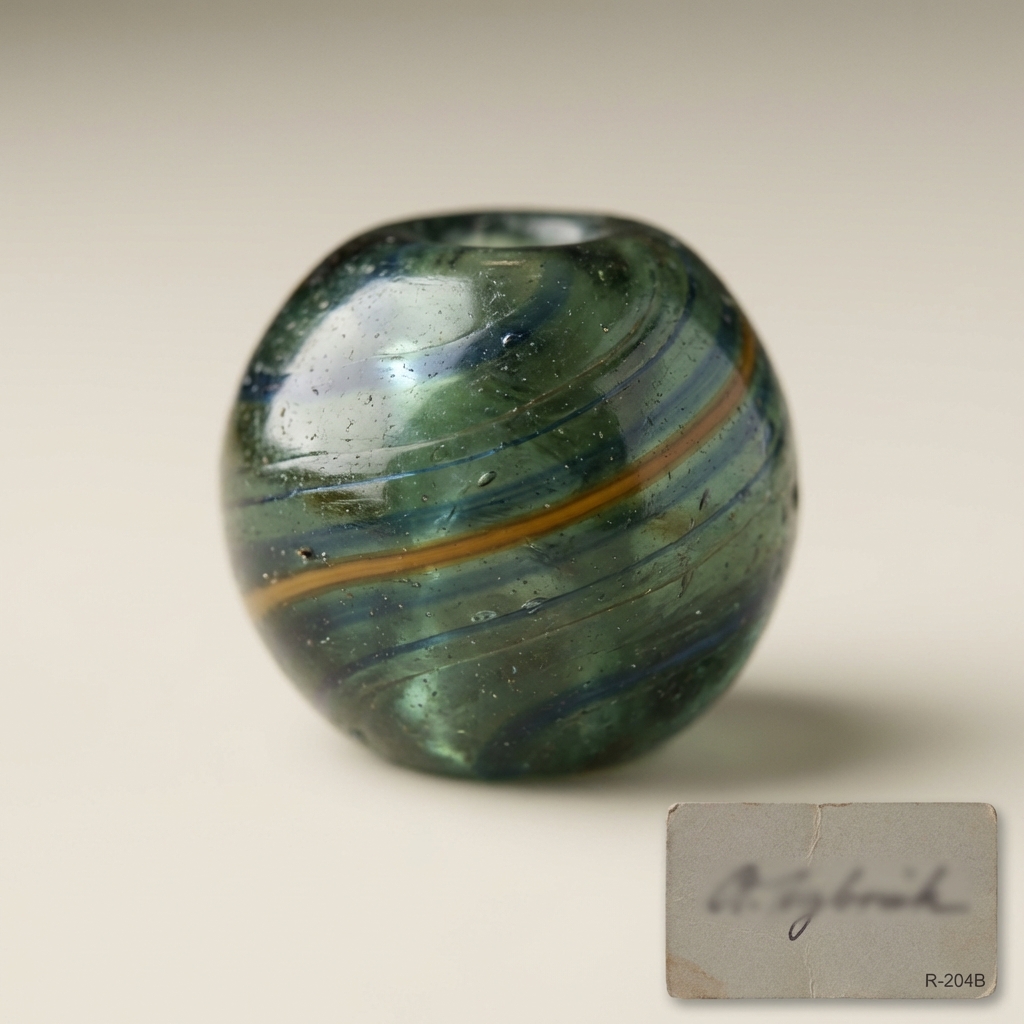
Core-formed items often display layered colors, trail decoration, and surface features that result from the winding process. For collectors, recognizing the rounded junctions and internal core traces can help distinguish an early technique from later blown or molded production, though careful photographic evidence and condition notes are usually necessary to be confident Oxford Research Encyclopedia overview of ancient glass
Before committing to a purchase, expect clear photos, measured dimensions, condition notes that describe chips, losses, and repairs, and explicit restoration notes that explain what was stabilized or restored. Listings that omit these details should prompt follow-up questions, because responsible conservation work and transparent condition reporting are core parts of reputable curation Publication 561 (12/2025), Determining the Value of Donated Property, Internal Revenue Service (IRS), USA
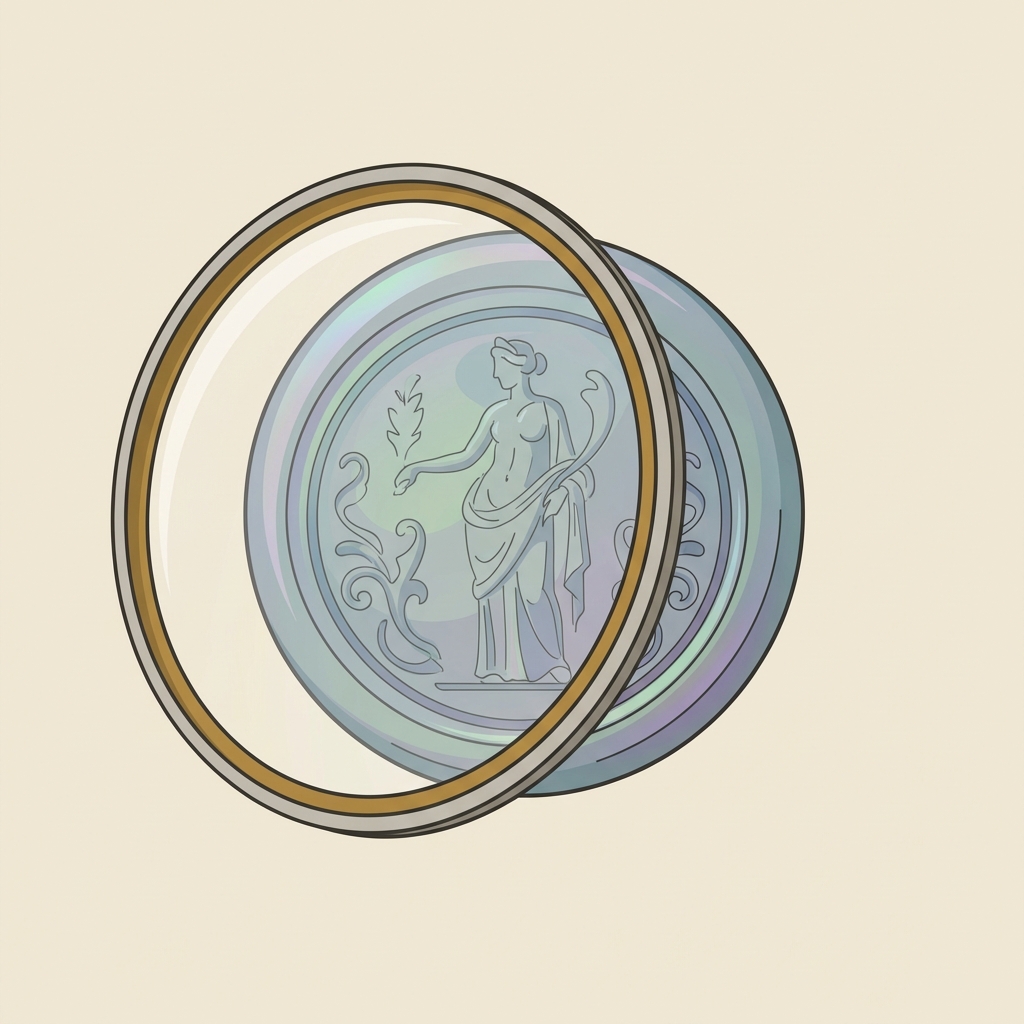
Look for manufacturing markers such as layered winding lines or core remnants for core-formed beads, pontil scars or bubble patterns for blown pieces, and consistent burial patina; always corroborate visual clues with condition notes and provenance documentation.
Compositional reports are not always available but they strengthen attribution; request them for higher value pieces or when provenance is incomplete and consider conservator notes as an intermediate level of verification.
Request high-resolution images of rims and junctions, detailed condition and restoration notes, any collection history or paperwork, and whether a compositional or conservation report exists.
More from Aurora Antiqua
References
- Fund des Monats August 2019 (Find of the Month), Landesamt für Denkmalpflege und Archäologie Sachsen-Anhalt
- Characterization of Castellani nineteenth-century gold jewellery by in situ, Scientific Reports
- Auction Terminology, Christie's
- About us, International Association of Dealers in Ancient Art
- The Past Polluted: A Pigovian Approach to the Black Market in Antiquities, International Journal of Cultural
- Research report: export licensing and provenance, GOV.UK, Department for Culture, Media and Sport (DCMS)
- Publication 561 (12/2025), Determining the Value of Donated Property, Internal Revenue Service (IRS), USA
- Gold finger ring with glass intaglio: a lioness (1995.85.2), The Metropolitan Museum of Art, New York
- Internet Archaeol. 40. Atkinson and Preston. Objects of personal adornment, Internet Archaeology, Council
- The Hellenistic, Roman transition in glass technology, Nature