


Looking for the real thing? Browse genuine Roman rings for sale — each piece one-of-one, individually authenticated, with provenance.
What the evil eye is and how it appears on an ancient roman bracelet
The term evil eye describes a range of beliefs about envious or harmful gazes and the protective objects used against them. In many scholarly accounts the idea of eye shaped amulets and protective imagery goes back to the ancient Near East and continued into the Greco Roman world, where eye motifs appear in both small portable amulets and in jewelry, linking the motif to the historical lineage of an ancient roman bracelet Encyclopaedia Britannica.
Roman and late antique jewelers often incorporated symbolic motifs that could function as protective devices rather than direct analogues of modern beads. Those examples are best read within their material and ritual context, with attention to manufacturing techniques, mounting styles, and find circumstances that can help a reader understand whether a piece was primarily ornamental or amuletic in its original setting Journal of Ancient Mediterranean Studies.
When considering an ancient roman bracelet with an eye motif, collectors should treat the object as an artifact whose meaning can shift over time. Provenance, condition notes, and any available documentation help place an object within collection history and avoid equating every historic eye motif with a single modern tradition. (Aurora Antiqua's ancient Roman rings collection).
Follow Jakob s behind the scenes updates on @auroraantiqua for context and care tips
Before you plan to wear a historic piece, read listing condition notes and provenance documentation carefully so you can weigh conservation needs against use.
How meanings and practices vary across cultures and time
The evil eye motif moves easily between being an amulet and being an ornament. In some communities the object maintains an active protective role, while in others the motif has become a decorative symbol that draws on older ideas without carrying the same ritual expectations. Curatorial sources ask users to respect that shift and to place historical pieces in their cultural context rather than treating them as neutral fashion items Oxford Research Encyclopedias. (See cultural coverage in the New York Times.)
Regional differences are common. Mediterranean practice and folk belief often inform how people interact with the motif today, but outside those regions other traditions and histories influence meaning. Collectors who value the provenance of ancient jewelry will likely find that the same motif can have different connotations depending on where and when it was made, and museum collection notes often stress reading those differences rather than assuming a single etiquette Encyclopaedia Britannica.
As the motif travels through time and trade it can acquire layers of meaning. That is part of why curators recommend transparent condition notes and documentation: they help the wearer understand whether a piece is best kept for display, occasional wear, or regular use and how its cultural resonance may differ from contemporary nazar bracelets.

Which wrist to wear an ancient roman bracelet with an evil eye motif
One frequent question is which wrist to choose. In many Mediterranean communities, notably Turkey and Greece, an evil eye bracelet is commonly worn on the left wrist, a practice reported in museum and cultural sources and reflected in contemporary folk guidance Turkish Cultural Foundation. Religious debates have also appeared in media coverage Al Jazeera.
That left wrist custom is not universal. Other cultures have different practices or no strong wrist preference at all. When a bracelet is a recent craft piece the wearer can often follow personal comfort or local habit, but for historical pieces the decision can also be guided by provenance and the circumstances in which the object was used originally.
Balance cultural respect, provenance, and conservation needs: follow documented condition notes, consider local gifting customs if relevant, favor minimal wear for fragile or heavily restored pieces, and consult a conservator for high risk items.
Practically, choose the wrist in consultation with the giver or community custom, or select the arm that reduces strain on fragile elements and avoids contact with surfaces that could damage a patina or repaired bezel.
Cleansing, activation, and gifting rituals: optional and locally specific practices
Many contemporary users perform cleansing or activation rituals when they begin wearing an amulet. Common folk methods include passing a piece through smoke, briefly immersing it in water or salt solutions, or tying it on with a symbolic knot. These acts are widely reported as cultural practices rather than formal requirements, and variants depend on local custom Turkish Cultural Foundation. Local guides also describe variants Inside Out in Istanbul.
Gifting customs also vary. In some traditions the bracelet is tied onto the recipient by the giver or by a respected person, sometimes accompanied by a short blessing or a small token to symbolically avoid transferring misfortune. These practices function as social measures that connect object, giver, and recipient in a shared exchange of care rather than as universal prescriptions Smithsonian Magazine.
Because these rituals are community specific, they are best treated as optional: if you borrow a practice from a living tradition, do so with awareness and, where appropriate, with permission or guidance from people within that tradition rather than assuming the steps carry the same meaning across contexts.
How to wear, care for, and interpret an ancient roman bracelet as wearable history
Before wearing a historical piece, inspect condition notes and restoration records.

Daily wearing recommendations depend on materials and construction. For bronze hoops or bracelets that retain original solder joins, prefer brief wear in low contact settings and remove the piece for tasks that involve water, abrasive surfaces, or cosmetics. Patina can be sensitive to abrasion and chemicals, so minimizing friction and exposure will help preserve surface character. (Consider professional restoration if listings note stabilization needs.)
When bezels hold small inlaid stones or deposits, avoid twisting or catching the setting. If restoration notes indicate reattached elements or modern solder patches, treat those areas as higher risk and limit regular wear. If the listing includes verification letters or a clear collection history, use that documentation to weigh the cultural importance of keeping the item intact versus making it a living part of a modern jewelry rotation Journal of Ancient Mediterranean Studies.
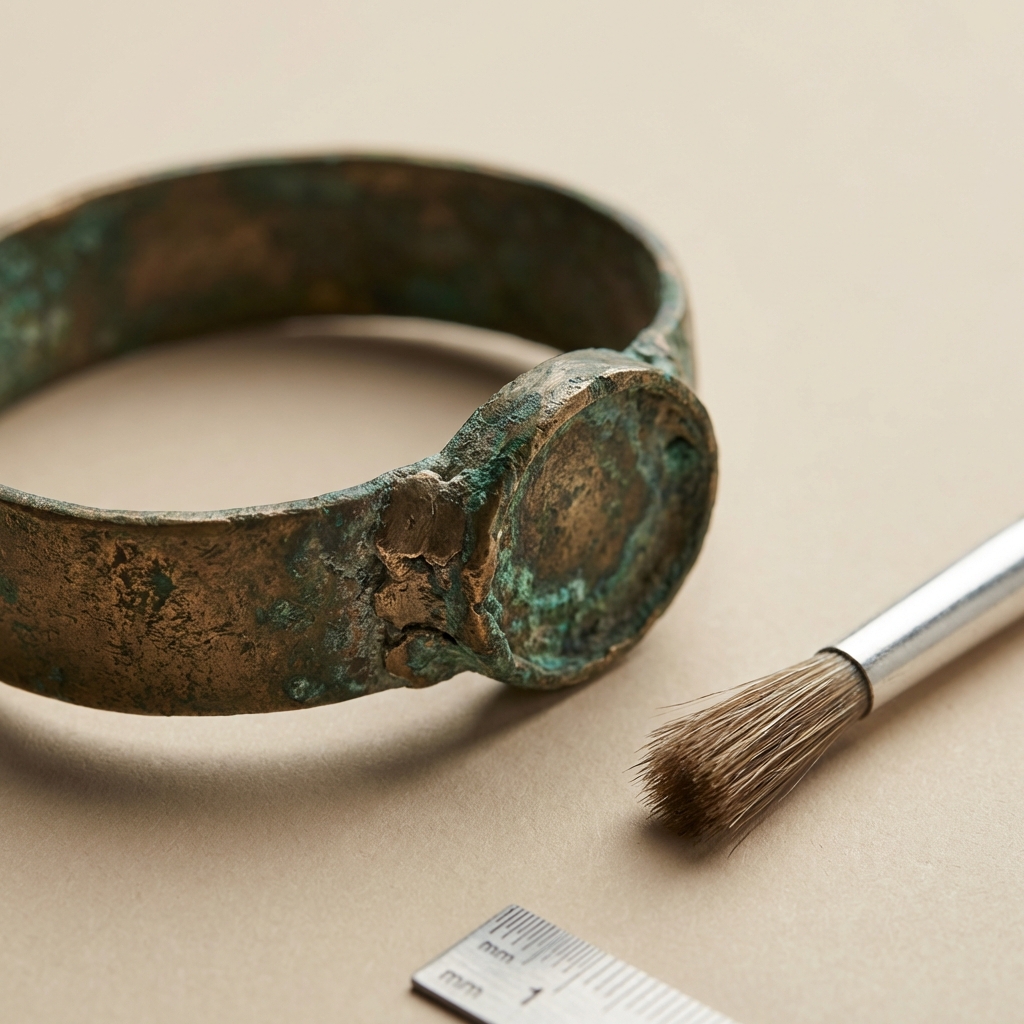
Use this short checklist to decide whether to wear an ancient roman bracelet regularly or reserve it for display.
- Fragility and construction: favor display if solder joints, thin hoops, or inlaid elements are original and show significant wear.
- Restoration extent: limit wear when restoration notes report modern fills, reattachments, or vulnerable repairs.
- Provenance and documentation: if strong provenance or verification letters exist, consider conservation priorities before regular wear.
Ask about collection history and condition: who previously owned the piece, what conservation work was done, and are there photos of the object before treatment. These answers help a collector decide whether occasional wear with care or museum style storage is the more responsible choice Oxford Research Encyclopedias.
When in doubt, consult a conservator for high value or fragile pieces. A short professional opinion can clarify whether a hoop can withstand occasional use or should be kept in controlled display conditions.
Common mistakes and etiquette pitfalls when wearing an evil eye bracelet
A common error is treating historical motifs as disposable fashion. That attitude can lead to unnecessary wear, loss of original surface, or the destruction of contextual information that makes an antiquity meaningful to collectors and scholars Encyclopaedia Britannica.
Assuming that a single set of wearing rules applies everywhere is another pitfall. Practices that are meaningful in one community can be irrelevant or even inappropriate in another. Curatorial advice emphasizes respecting provenance and cultural context rather than importing a single etiquette into every situation Oxford Research Encyclopedias.
quick pre wear checks to assess risk to an ancient bracelet
use before first wear
Avoid overlooking documentation. Provenance and restoration notes inform not only condition but ethical use. When a listing includes collection history or verification letters, use those documents to guide etiquette and to avoid actions that could remove valuable evidence of an object s past.
Practical examples and scenarios: wearing an ancient roman bracelet in daily life
Everyday scenario. A collector with a sturdy bronze bangle that shows stable joins and documented minor conservation chooses to wear it on special outings only, avoiding meals, gardening, or heavy manual tasks. The wearer pairs clothing to reduce contact and stores the piece in acid free wrap between uses.
Gift scenario. If giving an ancient motif to someone within a community where tying is customary, follow local gifting etiquette: present the piece with a short traditional phrase or a small token and, where appropriate, have a trusted person perform the tying to honor custom and reduce the sense of improvised ritual.

When to seek a second opinion. For pieces with contested provenance, unstable repairs, or high cultural significance, consult a conservator or a specialist dealer before regular wear. A professional assessment can recommend a safe wear plan or advise on display solutions that preserve both material and meaning Smithsonian Magazine. See Aurora Antiqua's Roman Empire blog for related posts.
Closing reminder. Practices vary and the best choice balances personal use, cultural sensitivity, and conservational care. Documentation should guide decisions about whether to incorporate an ancient motif into modern dress or to protect it as part of a collection.
Many Mediterranean traditions place an evil eye bracelet on the left wrist, but practices vary by culture. For historical pieces, follow provenance and conservation advice or choose the wrist that minimizes contact and wear.
Cleansing and activation rituals are optional and locally specific. If you adopt a ritual, do so with awareness of its cultural origins and treat it as a community practice rather than a universal rule.
It depends on condition notes and restoration history. Fragile or heavily restored pieces are usually best reserved for occasional wear or display; consult a conservator for high risk items.