


Looking for the real thing? Browse authenticated ancient artifacts, each piece one of one, individually authenticated, with documented provenance. For the background, see the guide to buying ancient artifacts.
What "pure silver" means for jewelry
Definitions: fine silver versus sterling - pure silver ankh
Collectors asking about a pure silver ankh are usually asking whether an object is made in a fine silver grade, typically expressed as .999 or .9999 in consumer contexts; fine silver grades are distinct from sterling, which is an alloy with lower silver fineness, and authoritative gemological guidance explains this difference and the common fineness labels used by jewelers and assay offices GIA guide to silver.
Fine silver in jewelry is softer and more prone to deformation than sterling, which normally contains roughly seven and a half percent other metals to increase strength; that trade off is why most commercial wearable items use sterling, while fine silver is chosen when surface purity or specific finishing is the priority 16 CFR 23.5, Misrepresentation as to silver content, Federal Trade Commission, eCFR.
A three point photo checklist to document hallmarks and joins
Use macro photos and scale rulers
Consumer protection and labeling expectations mean sellers should state fineness explicitly rather than merely labeling an item as silver; guidance for honest metal descriptions encourages numeric fineness or clear disclosure of plating or alloys so buyers know whether a listed ankh is fine silver or sterling FTC jewelry guide.
How silver purity is marked: hallmarks and fineness stamps
Reading numeric fineness marks such as 999 and 925
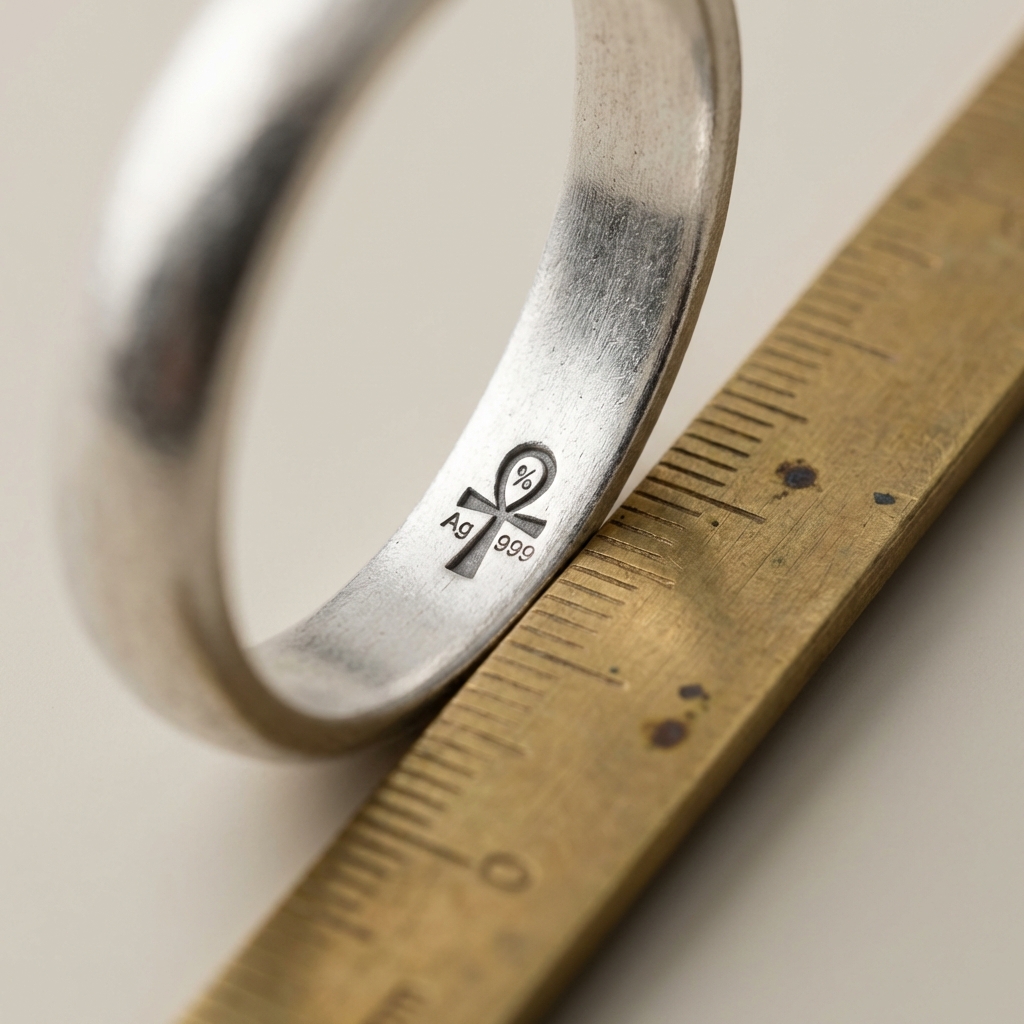
On-object evidence such as numeric fineness marks, for example 999 for fine silver or 925 for sterling, is the primary indicator buyers can look for; these marks are straightforward when present and often appear with assay office symbols in regulated systems The Goldsmiths' Company Assay Office guidance. For a plain how-to on reading silver hallmarks see a guide to hallmarks.
Different countries and assay systems use distinct symbols alongside numbers, so a 999 stamp in one jurisdiction may be supplemented by an assay mark in another; understanding the expected marks where the item was produced or sold helps you interpret a listing's photos and descriptions How to read hallmarks.
Assay office symbols and regional differences
When an assay office regulates hallmarking, a numeric fineness is often paired with a local assay symbol that identifies the testing authority; absence of such symbols does not prove inauthenticity, but it does raise the need for further documentation or testing FTC labeling recommendations.
Photographing and documenting marks is a practical step for buyers: request high resolution, well-lit macro images showing the inside of hoops or the underside of bezels where fineness stamps and tiny assay symbols typically appear, and include a scale or ruler to help later comparison and discussion with a lab or experienced seller Assay office examples.
Quick home checks versus professional testing methods
At-home screening: magnet, visual hallmark check, specific gravity and acid spot
Simple at-home checks such as a magnet test, visual hallmark verification, specific gravity calculations, or acid spot tests can be useful as preliminary filters to flag items that warrant closer inspection, but these methods can produce false positives or negatives and are not conclusive without professional analysis AGS basic metal testing. A concise methods list is available from Quicktest.
An at-home test can screen for obvious issues but cannot definitively confirm fine silver. For confident purchases request numeric hallmarks, high-resolution photos of marks and joins, and an independent XRF or assay report when certainty matters.
Because home screening is limited, many collectors treat these checks as triage: use them to decide whether to request more photos, documentation, or a lab report; if the item looks credible, follow up with professional testing or insist on an assay certificate before accepting a high value purchase GIA guide to silver.
Laboratory methods: XRF and fire assay, pros and cons
Handheld XRF is widely used as a non-destructive, rapid way to estimate surface composition and is valuable for screening and documentation, while fire assay is a destructive technique and remains the reference standard when absolute accuracy is required for small samples or when legal certification is needed Technical overview of XRF and fire assay. Practical notes on reading XRF output can be found in a guide to reading XRF results.
Ask a seller whether any independent XRF analysis or fire assay was performed and, if provided, request a simple report or certificate; a clear statement that testing was not done should increase your expectation of post-purchase testing or return options, because only professional methods can quantify silver content to the fine grades collectors often seek GIA guidance on silver types.
Decision checklist when buying a pure silver ankh online
What to demand from a listing before purchase
Before you commit to a purchase, require clear, close-up photos of any numeric fineness mark and the surrounding metal, plus high resolution images of joins, inside surfaces, and any soldered repairs so you can judge whether apparent marks are original or added later Hallmarking resource.
Use concise, polite messages such as: "Could you provide a macro photo of the fineness mark and the inside surface, and confirm whether this piece has had XRF or an assay? If so, can you upload the report or state the lab and date?" This phrasing keeps the request practical and focused on evidence rather than accusation.

Ask the seller to state the exact fineness language used in the listing and to disclose whether the piece was tested by XRF or a lab, and to include any available assay certificates or documentation showing prior testing; such transparency aligns with consumer-protection expectations for metal labeling FTC guidance.
How to weigh evidence when documentation is partial
If a listing shows numeric marks but omits assay documentation, weigh the photographic evidence against condition and restoration notes: clear, original wear patterns and consistent hallmarks strengthen the case, while newly smoothed surfaces or uneven patina near a stamp suggest caution and a need for testing Assay office examples.
When documentation is partial, prioritize sellers who provide return windows and written condition notes describing any modern solder or repairs, because those disclosures give you options for post-purchase testing and reduce the risk of an unexpected later finding Consumer labeling expectations.
Common mistakes and red flags to avoid
Misreading or trusting ambiguous hallmarks
One common mistake is assuming a vague label that says simply silver means fine silver; vague phrasing without a numeric fineness can hide plated or lower grade metal, so insist on numeric marks or explicit fineness wording in the listing FTC jewelry guide.
Another common error is overlooking restoration joins: repairs can introduce modern solder or filler metals that change surface appearance and composition, so request photos of solder lines and inside surfaces before you buy AGS testing notes.

Watch for signs of hallmark tampering or removal, such as inconsistent tool marks around a stamp or fresh filing near a mark; absence of marks increases the need for an independent XRF test or an assay certificate rather than serving as proof of authenticity Hallmark tampering guidance.
Practical examples and scripts: reading listings and asking sellers
Example 1: clearly hallmarked ankh with an assay report and what to verify
For a listing that shows a clear 999 stamp and an attached XRF summary or assay certificate, verify that photos show the mark in context and that the report explicitly names the tested area; if those elements align, you have stronger on-listing evidence that the piece was inspected and reported How to read marks.
Confirm the report date and the lab name, and ask whether the report describes the tested location on the ankh; a surface XRF result that matches a 999 surface reading is useful, but ask if multiple areas were scanned to rule out plated surfaces over different core metals XRF technical overview.
Example 2: unmarked pendant with visible restoration joins and next steps
If a pendant is unmarked and close-up photos show repairs or modern solder, treat the listing as ambiguous: request higher magnification images of the inside surfaces, ask whether prior testing exists, and assess the seller's return policy before bidding or buying Consumer labeling advice.
When a seller cannot provide testing or clear marks, a prudent next step is to plan for post-purchase verification and budget for an XRF session or an assay if you suspect high value; prioritize sellers who permit returns after independent testing when the listing is not definitive GIA guidance.
Suggested wording to request XRF or assay certificates
If the piece is high value, has ambiguous marks, or shows restoration, arrange for a professional XRF scan first because it is non-destructive and informative; reserve destructive fire assay only when absolute, legally documented fineness is required and the owner accepts sampling Technical testing guidance.
For a repair-focused question try: "Please show close-ups of any solder lines and describe the restoration work, including whether modern solder or filler metals were used." Keep records of all replies and images so you can refer back to them if you later seek professional testing or clarification.
How Aurora Antiqua presents documentation and condition notes
What to expect in condition and restoration notes from a curated seller
A curated seller presenting wearable history typically includes detailed condition notes, restoration notes that describe stabilization or repairs, and provenance references when available; those elements help buyers understand what they are purchasing without promising absolute authenticity beyond the stated documentation. See Aurora Antiqua's documented inventory.
Expect clear photography of marks and joins, measurements, and explanatory editorial content that places the piece in period context and highlights the evidence for dating and attribution, which supports informed buying rather than substituting for laboratory verification where it is needed. See Aurora Antiqua's curated inventory.
See documented listings and behind the scenes on Instagram
If you want to see examples of curated listings with condition notes and provenance context, consider browsing Aurora Antiqua's documented inventory to study how marks and restoration are presented. The shop aims to provide thorough condition notes while avoiding absolute authenticity claims.
How provenance and collection history are described
Provenance statements from a curator usually describe collection history, prior ownership notes, and any letters or documentation available; when provenance is asserted, check whether the listing links to or quotes the original documentation and whether that documentation was independently examined.
When testing information is absent from a curated listing, good practice is to ask the curator for more detailed photos or an XRF scan and to consider the seller's return and testing policies before completing a purchase, because a documented conversation can be valuable if later certification is sought.
Final checklist and next steps for confident purchases
Quick pre-purchase checklist you can copy
Copy this short starter checklist to message a seller: ask for numeric fineness photos, request close-ups of joins and inside surfaces, ask whether XRF or an assay was performed and for a copy of any report, confirm restoration notes that mention modern solder, and confirm the return policy for post-purchase testing.
When the listing provides a clear 999 mark and a recent independent XRF or assay report that names the lab and tested location, you can reasonably expect the item to meet fine silver criteria as reported; absent that, plan for testing after purchase or seek a seller who will allow testing returns XRF and assay overview. For an example listing see a silver ring listing.
When to get professional testing after purchase
If the piece is high value, has ambiguous marks, or shows restoration, arrange for a professional XRF scan first because it is non-destructive and informative; reserve destructive fire assay only when absolute, legally documented fineness is required and the owner accepts sampling Technical testing guidance.
Finally, keep copies of all photos, seller messages, and any reports, and consider documenting the item's condition in writing when testing is performed so you retain a clear record for future reference or resale.
Look for a numeric fineness stamp such as 999, clear close-up photos of the mark and inside surfaces, and any assay or XRF report; absent these, at-home checks are only preliminary and professional testing is needed for certainty.
Acid and magnet checks can flag obvious issues but can give false positives or negatives; use them only as an initial screen and follow up with laboratory testing for definite results.
Fire assay is generally reserved for situations needing a destructive reference-standard result; most collectors prefer non-destructive XRF first and use fire assay only if exactness justifies sampling.
More from Aurora Antiqua
References
- 16 CFR 23.5, Misrepresentation as to silver content, Federal Trade Commission, eCFR
- Hallmarking Guidance Notes: practical guidance in relation to the Hallmarking Act 1973, the UK Assay Offices
- https://www.assayofficelondon.co.uk/hallmarking/what-is-a-hallmark#convention, Goldsmiths' Company Assay Office
- Legislation, The Company of Goldsmiths of Dublin, Assay Office Dublin Castle
- Hallmarking Act 1973, The National Archives / legislation.gov.uk, UK
- Hallmarking in the UK: consumer protection, GOV.UK, British Hallmarking Council / GOV.UK
- Hallmarking, The Assay Office Birmingham
- Gesetz über den Feingehalt der Gold- und Silberwaren (FeinGehG, German law on gold and silver fineness), Bundesministerium der Justiz
- Hallmarking, The Goldsmiths' Company, The Goldsmiths Company Assay Office