


Looking for the real thing? Browse our full ring collection, each piece one of one, individually authenticated, with documented provenance. For the background, see the guide to ancient jewelry.
What '925' means for an eye of horus ring silver: definition and context
The short answer is that the stamped figure 925, commonly used on jewelry, indicates sterling silver, an alloy that contains 92.5 percent silver and roughly 7.5 percent other metals rather than pure or fine silver. This definition is the industry standard and is consistently described by silver authorities and gemological references, so it is the meaningful shorthand you will encounter in listings and catalogs, including for ancient motifs such as an Eye of Horus ring 16 CFR 23.5, Misrepresentation as to silver content, Federal Trade Commission, eCFR. For further reading see Sterling Silver 925: The Complete Guide.
For collectors and buyers, that distinction matters because a 925 stamp describes alloy composition but does not always tell the whole story for an ancient piece. Corrosion, surface accretions or local restorations can change what is visible on the surface and can hide or mimic a 925 mark, so interpretation for an ancient Eye of Horus ring may require more than the stamp alone Gemological Institute of America (GIA).
In practice, the phrase sterling silver 925 meaning appears in listing notes to describe metal content, and it acts as a baseline for understanding durability and expected behavior over time. When reading a listing, treat 925 as a composition label that usually means a piece was intended to meet the sterling standard, but consider condition notes and documented repairs when assessing what that mark implies for an antiquity.

Why sterling is alloyed: metallurgy, hardness and common alloys
Pure silver, often called fine silver and marked 999, is very soft and tends to deform or abrade quickly when used for rings or other items that receive daily wear. For wearable antiquities, including many historical rings, silver was commonly alloyed to improve hardness and wear resistance, which is why the 925 standard became widespread in trade and craft practice Hallmarking, The Assay Office Birmingham.
The most common alloying metal is copper, which increases the alloy's mechanical strength while remaining visually compatible with silver. That practical trade-off means sterling will generally hold an edge, resist bending, and take a better surface finish than fine silver, which is why many historic silversmiths preferred alloys for functional objects. See related items in our Ancient Roman Rings collection.
Alloy composition affects mechanical properties rather than the look of long-age d surfaces; centuries of patina, soil encrustation or deliberate treatments can make two objects with different alloy recipes appear similar. Understanding 925 silver composition provides a practical expectation about durability, but for an ancient ring the visible patina often tells a different story than the raw alloy numbers British Hallmarking Council.
quick estimate of composition impact on hardness
use as a rough comparative guide
Hallmarks, assay marks and legal labeling for 925 items
Where a national hallmarking system exists, an assay office mark used alongside a 925 stamp is the primary official indicator that an item meets sterling standards; assay offices test and record the metal composition and apply marks that are legally meaningful in their jurisdiction London Assay Office.
Marking practices vary internationally, however, so a 925 stamp without a recognized hallmark does not always carry the same legal or commercial weight across markets. Sellers and buyers should be aware that regional practice shapes how hallmarks are applied and enforced, making a photographed assay mark or documentation more valuable when provenance and local regulation matter.
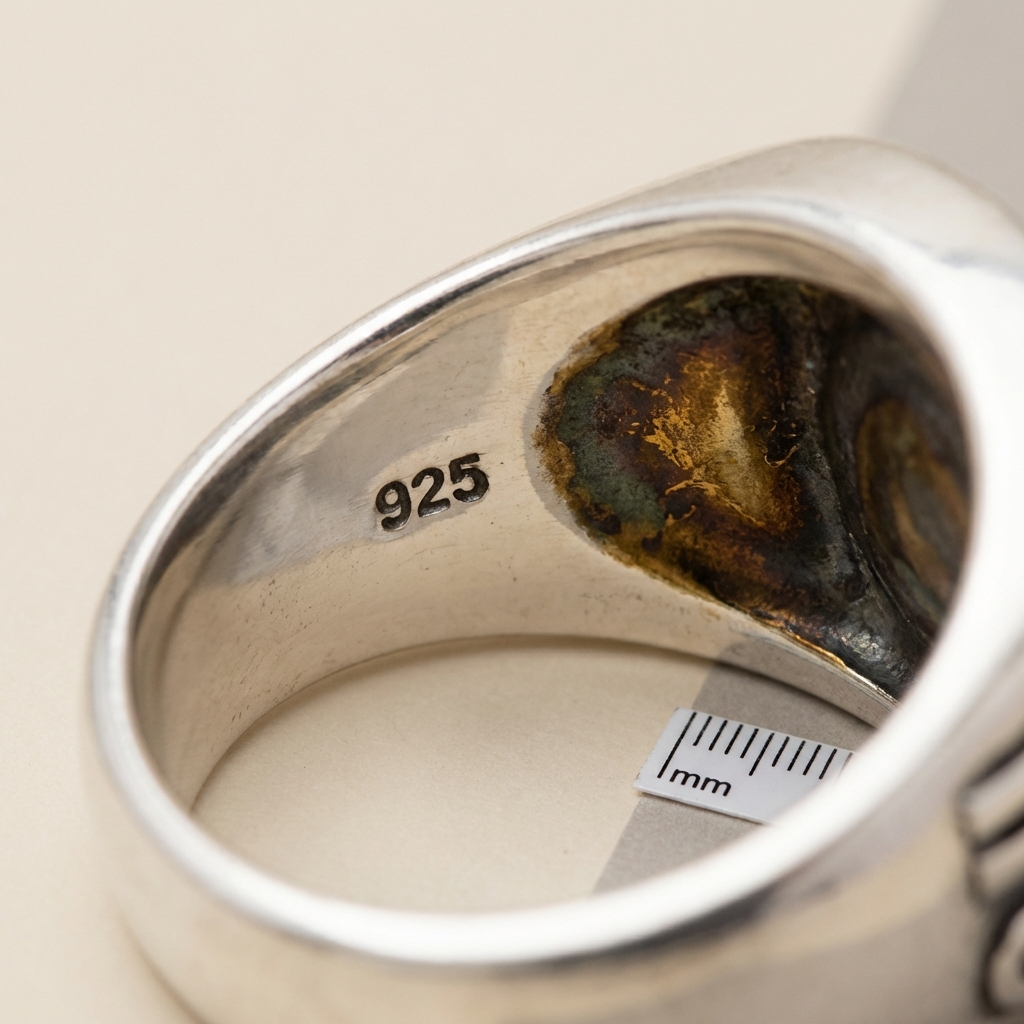
Regulatory guidance in major markets also requires honest labelling: trade rules and consumer guidance expect accurate descriptions of metal content and disclosure of plating or restorations when selling precious metal items. Clear disclosure helps buyers understand whether the 925 mark reflects tested composition, a maker's mark, or a conventional label used by a seller U.S. Federal Trade Commission guidance.
How to test 925 silver: home checks and professional methods
Collectors commonly use simple at-home screening methods to spot obvious fakes or plated items: visual inspection for plating lines or inconsistent color, a magnet test to rule out ferrous cores, weight comparison to expected ranges, and acid test kits that change colour when applied to a scratch or filing. These checks can detect many non-silver or plated items but are limited and cannot conclusively quantify silver content Rio Grande how to test sterling silver.
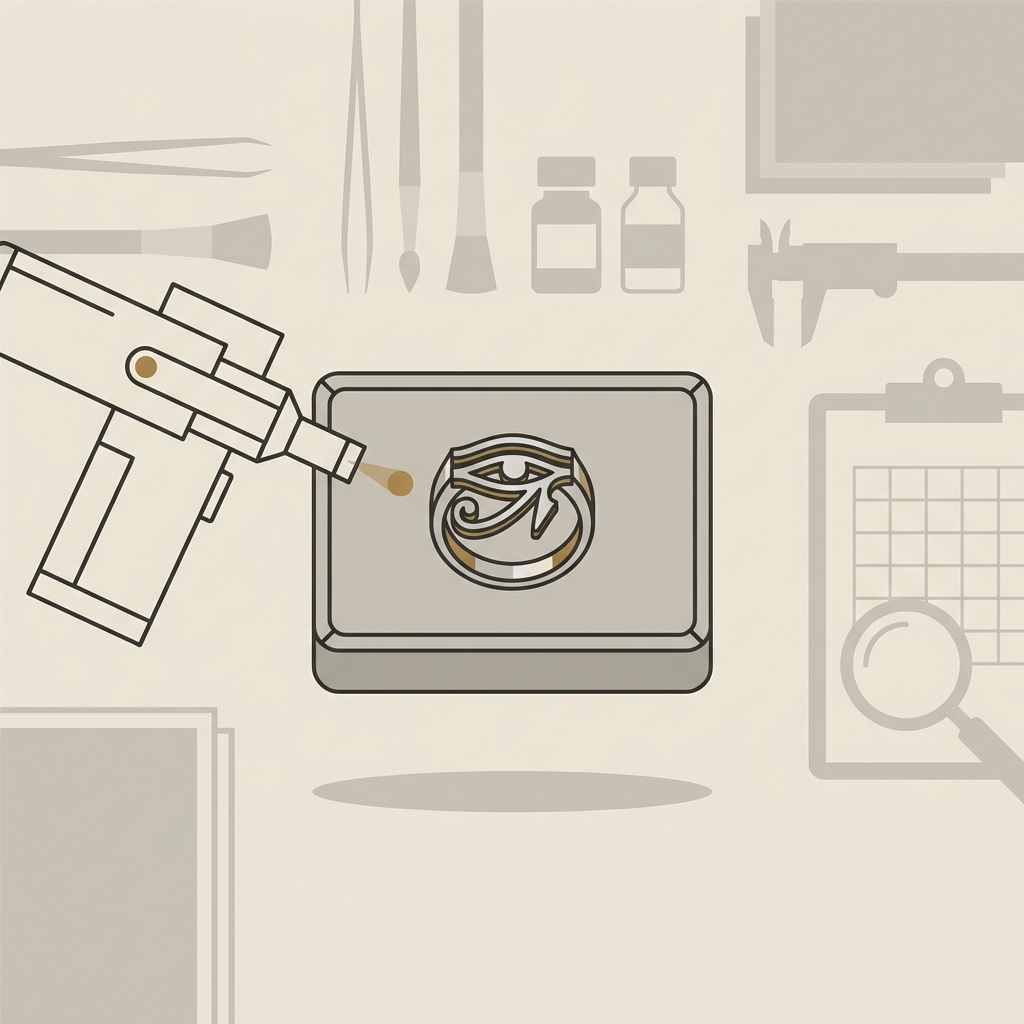
When composition needs to be known with confidence, non-destructive laboratory options such as XRF (x-ray fluorescence) provide element-level readings without removing material, while a professional fire assay will give conclusive composition results but is destructive. Choose XRF when you need a reliable, non-destructive assessment of an item suspected to be sterling; the choice between methods depends on value, rarity and whether a destructive test is acceptable Gemological Institute of America (GIA).
Follow @auroraantiqua for behind the scenes tests and condition notes
For high value or poorly documented ancient pieces, consider commissioning a non-destructive professional test such as XRF before purchase to reduce uncertainty about metal composition and to inform conservation choices.
Be mindful that surface treatments, plating, or centuries of corrosion can influence surface readings and visual tests, which is why an XRF reading should be interpreted alongside condition and restoration notes rather than as a single final answer.
Special considerations for ancient eye of horus ring silver: patina, restoration and provenance
Ancient rings with Eye of Horus iconography often carry surface patina, encrustation or historical repairs that complicate simple tests; surface corrosion can mask original alloys and make scratch tests or acid tests misleading, so condition notes and restoration records are essential context when assessing composition Gemological Institute of America (GIA).
When a listing describes restoration, repairs or conservation work, those notes should explain what was done and how it might affect material testing. For example, a plated area or a modern solder repair can produce a false negative or false positive on surface assays, so triaging the listing with clear questions to the seller improves your ability to interpret any later assay result.
Provenance and documentation increase confidence but rarely remove the need for technical verification if metal content is a determining factor in attribution or price. Treat condition notes, restoration notes and provenance as part of a cumulative case: they reduce uncertainty, but professional assay is the decisive step if composition materially changes the object's interpretation.
Deciding when composition matters: buyer decision criteria for ancient rings
Start by asking whether composition will change your buying decision. If the metal content affects attribution, dating, or market value for the piece you are considering, then verification is worth pursuing; otherwise, clear condition notes and trustworthy photography may be sufficient.
No, 925 denotes sterling silver with approximately 92.5 percent silver; for ancient rings the mark is a helpful indicator but does not replace condition notes, restoration records or professional assays when precise composition matters.
Criteria that increase the need for verification include high asking price, vague or absent provenance, signs of modern repair or plating, and listings that omit clear hallmark or assay information. When these flags are present, ask for specific documentation such as detailed condition notes, close photographs of hallmarks under magnification, and any prior assay reports London Assay Office.
A cost-benefit approach helps: for modest purchases, a careful home inspection plus seller disclosures may be acceptable. For high value or potentially diagnostic pieces, plan to budget for XRF or a professional assay as part of the purchase cost; the expense can be justified when composition affects attribution or long term conservation strategy Gemological Institute of America (GIA).
Common mistakes, red flags and how to avoid them when buying an eye of horus ring silver
A frequent error is accepting a 925 stamp at face value without examining condition notes, photographs of hallmarks, or restoration history. Missing condition notes, inconsistent or absent hallmarks, and vague provenance in a listing are common red flags that should prompt questions before payment Rio Grande how to test sterling silver.
Another trap is over-relying on at-home acid tests or a single magnet check. These methods can be useful screening tools but are prone to false results on plated or corroded surfaces. If you or the seller wants to clean the item to test it, bear in mind that amateur cleaning can remove patina or evidence relevant to attribution and may reduce scholarly or collector value.
To avoid these mistakes, request high resolution images of hallmarks and any paperwork, ask for plain photographs taken with a scale for size verification, and insist on condition and restoration notes that describe repairs rather than generic statements of good condition.
Practical checklist and next steps for buying an eye of horus ring silver
Use this compact buyer checklist when evaluating online listings: clear photos from multiple angles, close shots of hallmarks, detailed condition notes, explicit restoration notes, measurement and weight, and any stated provenance or prior documentation. These items form the first layer of evidence you should require before considering a test or offer Gemological Institute of America (GIA).

When to request XRF or a professional assay: ask for non-destructive testing when provenance is incomplete and the composition would change your valuation or conservation approach. Phrase requests politely and specifically, for example: Please provide any prior assay reports and, if none exist, would you permit an XRF scan prior to sale? Many reputable sellers accept reasonable verification requests rather than hiding documentation.
After purchase, limit aggressive cleaning and consult a conservator before any restoration. Proper storage, periodic gentle cleaning recommended by a conservator, and documentation of current condition will preserve the object's integrity and its documentary value to future study.
No. A 925 stamp indicates sterling silver made up of about 92.5 percent silver with other metals making up the remainder, not pure fine silver.
Home checks like magnet or acid tests can screen obvious fakes, but they cannot conclusively quantify silver in corroded or restored ancient pieces; professional XRF or assay is needed for certainty.
Request an assay when the price is high, provenance is unclear, hallmarks are inconsistent, or when composition affects attribution or conservation.
More from Aurora Antiqua
References
- 16 CFR 23.5, Misrepresentation as to silver content, Federal Trade Commission, eCFR
- Hallmarking, The Assay Office Birmingham
- Hallmarking Guidance Notes: practical guidance in relation to the Hallmarking Act 1973, the UK Assay Offices
- https://www.assayofficelondon.co.uk/hallmarking/what-is-a-hallmark#convention, Goldsmiths' Company Assay Office
- Legislation, The Company of Goldsmiths of Dublin, Assay Office Dublin Castle
- Protecting silver cultural heritage objects with atomic layer deposited, Heritage Science (Springer Nature)
- Gesetz über den Feingehalt der Gold- und Silberwaren (FeinGehG, German law on gold and silver fineness), Bundesministerium der Justiz
- Hallmarking in the UK: consumer protection, GOV.UK, British Hallmarking Council / GOV.UK