


Looking for the real thing? Browse authenticated ancient rings, each piece one of one, individually authenticated, with documented provenance. For the background, see the guide to buying ancient artifacts.
What 925 sterling silver means and why 'roman numeral' rings matter
Definition: '925' and silver purity in plain terms
If you are looking at a roman numeral ring silver that carries a 925 mark, start with a cautious assumption that 925 is a common purity mark used to indicate silver content. Use this as one clue among several rather than a definitive answer, and keep the seller's documentation and condition notes in view as part of your assessment.
Treat the 925 mark as one piece of evidence. Combine visual checks, condition and restoration notes, documentation or collection history, low risk at-home tests, and professional verification when needed to reach a reasoned decision.
The roman numeral motif is a decorative style that appears on a wide range of rings from modern fashion pieces to intentionally antiqued designs. The presence of roman numerals by itself does not prove age or provenance, and motifs can be added at any time. For collectors of ancient ring styles, motif, manufacturing clues and wear patterns together can help build a reasoned view of a piece, but no single mark or feature should be taken as conclusive.
Collectors often value roman numeral motifs for their clear graphic look and historical resonance. In many cases these motifs are used as stylistic references to past periods, and they can be found on both contemporary workshop pieces and older rings that have survived with surface wear. Consider motif style, engraving technique and how the numerals sit within the ring design when comparing pieces. See our Ancient Roman Rings collection for examples of numerals and period styles.
When evaluating any marked piece, combine observations about marks, patina and restoration notes to reach a cautious conclusion. The phrase 925 sterling silver verification can be a useful search term for further reading, but treat every observation as one data point among several.

Types of marks to look for in photographs and listings
How hallmarks, stamps and maker marks can inform you
Types of marks to look for in photographs and listings
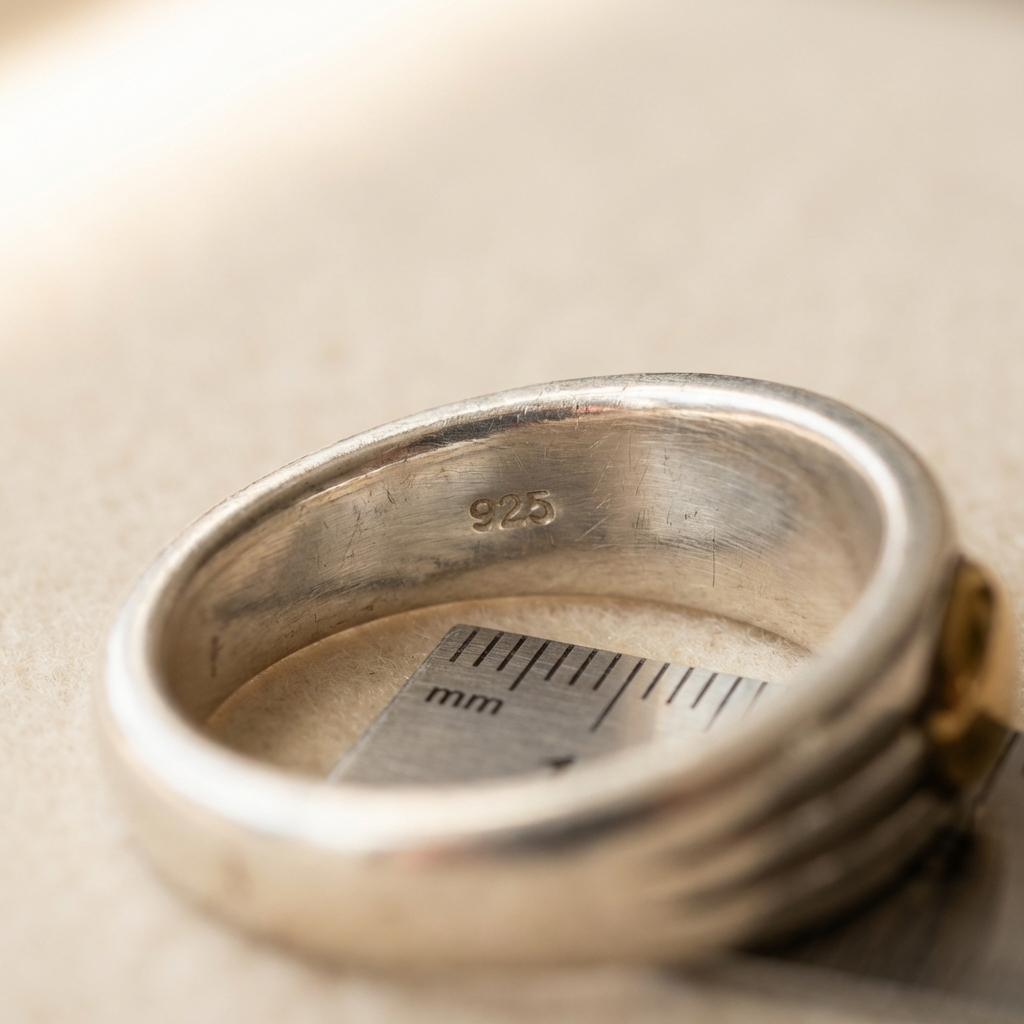
Common places for purity and maker marks are the inside band and near the bezel. A clear photograph of the inside band can be revealing. Ask sellers for high magnification images if the listing photos are not sharp, and request shots taken at several angles to show how a mark sits relative to wear and repairs.
Look for a 925 stamp, a maker mark, and any additional symbols that might indicate a workshop or assay office. Remember that stamps can be added or altered, so a claim of silver purity based only on a single neat stamp should be verified with additional evidence such as consistent wear patterns and transparent condition notes.
A mark that is deeply struck and shows the same wear as the adjacent metal tends to feel more consistent with long term use. Conversely, a crisp, untouched stamp on an otherwise worn interior may be a newer addition. When examining listings, ask for a close-up of the mark with a scale or ruler for size context, and ask whether any restoration or cleaning was done near the marking area.
As a practical step, copy a short image request to the seller asking for at least three close-ups: the inside band, the bezel area, and an oblique shot that shows how any numerals sit relative to worn edges. This simple verification approach is part of a mindful silver ring hallmark guide you can use when evaluating pieces online.
Quick visual checks for a roman numeral ring silver
Patina, wear patterns and how they should look relative to markings
When you inspect photos of a roman numeral ring silver, check that patina and wear patterns are consistent across the piece. If edges, shoulders and the inside of the band show wear but the numerals or a 925 mark look untouched, ask why. Consistency between surface wear and any stamps or motifs helps make a more credible case for age or long term use.
Good photos and clear condition notes are essential. If a listing lacks both, request them before you make a decision. A focused photo-request list makes it easier for a seller to respond and for you to compare evidence across multiple offerings.
@auroraantiqua shop notes
Copy this short photo-request checklist to ask a seller: close-up of inside band showing any marks, oblique shot of bezel and numerals, scale or ruler in at least one image, and macro image of any repairs or solder lines.
Consistency checks between motif wear and overall condition
Look for alignment between where wear is expected and where it appears. For example, the ring shoulders and interior are common contact points. If the numerals show heavy polishing but the inside band retains a natural surface and consistent patina, that mismatch deserves questions and a clear restoration note.
Request measurements and weight if they are not provided. Even approximate heft and dimensions help you rule out obvious mismatches between a ring described as solid silver and one that appears hollow or lightweight. These quick checks are part of everyday photo inspection habits used by collectors. You can also browse our rings collection to compare typical dimensions for similar styles.
At-home tests: what they can show and their limits
Non-destructive checks safe to try at home
There are a few low-risk checks you can do without specialized tools, but they are rough indicators rather than definitive proofs. Simple steps include noting the ring's feel and heft, assessing whether it attracts to a common magnet, and listening to a gentle tap to sense a denser metal response. Each of these can prompt further questions rather than provide final answers. For an accessible guide to home tests see how to test silver at home.
Before performing any test, photograph the ring from the same angles you used earlier to preserve a record of condition. Documenting results with images and short notes helps if you later consult an expert or need to compare to other pieces.
Why some home tests are inconclusive and when to stop
Many at-home methods are easily misread. A magnet will not reliably detect all non-silver alloys, and weight comparisons depend on accurate reference items. If any test requires bending, filing or chemical contact, stop and seek professional advice. Damaging a surface, removing patina or attempting home acid tests can harm condition and reduce collectible interest.
When you reach the limits of non-destructive observation, save your notes and images and consider asking a qualified jeweller or conservator for a written perspective. Good documentation will make any professional check faster and clearer.
When to seek professional verification and what to expect
Signs a piece needs lab or expert attention
Consider professional verification when a ring is high cost, marks are unclear or inconsistent, provenance is important to you, or the ring shows unexplained repairs. Professional opinion can be especially useful if you are building a collection where documented condition and clear provenance matter for long term stewardship.
Before contacting an expert, compile clear photographs, dimensions, weight and any restoration or condition notes the seller provided. This preparation speeds the consult and helps the expert understand the issues you raised.
Prepare a concise file for expert review
Include date and seller name
Types of professional documentation and written reports to ask for
A professional report can range from a short written opinion by a qualified jeweller to a conservation assessment that documents treatment. Ask what the expert examined, what tests were performed, and whether any conclusions are conditional. Keep any written statements with the item as part of its provenance or documentation file.
Bear in mind that professional verification complements, rather than replaces, clear listing photos and good condition notes. Sequence your checks so you only request formal testing when the piece is worth that investment or when key questions remain unresolved.
Assessing condition, restoration notes and what they mean for a ring
Assessing condition, restoration notes and what they mean for a ring
Common restoration descriptions and how to interpret them
Listings may include phrases such as stabilized, repaired or left untouched. Stabilized often means a conservator or seller performed minimal work to prevent further damage. Repaired indicates more active intervention, which can range from filling and soldering to reattaching a bezel. Ask for detail on what was done, when, and by whom whenever possible.
Restoration notes should align with visible signs in photos. If a seller describes a repaired shoulder, request a close-up so you can see solder lines or subtle differences in surface texture. Transparent reporting supports collector confidence even when repairs exist.
Which condition details matter most for rings
For rings, focus on structural integrity, bezel and setting condition, any losses to intaglio or gemstones, and the state of the interior band where marks and sizing signs appear. Patina and surface wear are expected for older pieces and can form part of an item's appeal; what matters is clear documentation and consistent photos that match the description.
If restoration is mentioned, ask whether original material was replaced and whether the piece has been resized. Resizing can alter the interior marking area and change how hallmarks appear. Knowing these facts helps you interpret the evidence correctly.
Common mistakes, red flags and buyer pitfalls
Listing and photo red flags
Poor photos, missing measurements, vague provenance claims and inconsistent condition descriptions are all reasons to pause. A single 925 stamp without supporting images or condition notes should not be treated as conclusive evidence of composition or age.
When in doubt, ask follow-up questions and request the specific images you need. If a seller resists reasonable requests for detail, view that reluctance as a warning and consider walking away or seeking another offering with better documentation.
Aurora Antiqua product listingsLanguage and documentation warning signs
Be cautious of vague phrases such as ancient style or period inspired without further detail, and of broad claims about provenance that lack dates or collection history. Favor listings with clear condition notes, restoration notes and any provenance documentation, and retain copies of these items with your records after purchase.
A clear, conservative listing that documents what is known and what is estimated is far more useful than one that makes sweeping claims without support. Aurora Antiqua presents pieces with condition notes and collection history when available to help collectors make informed choices. Visit Aurora Antiqua for more information about our approach to documentation.
Practical scenarios and examples to guide a decision
Scenario A: modern-made roman numeral ring with clear 925 stamp
Imagine a ring that shows a crisp 925 stamp, machine-made finishing and a uniformly bright surface consistent with modern manufacturing. In that case, it may be reasonable to treat the ring as a contemporary piece that uses a common silver purity mark. Ask the seller about manufacture date, whether the piece was produced in a known workshop, and request invoices if available.
Follow-up questions for the seller can include: Was the ring cleaned or polished recently, and is there any restoration history? Can you provide a macro image of the inside band? These details help you confirm that the article matches a modern production hypothesis.
Scenario B: older ring with worn stamps and partial documentation
Consider an older ring with a faint interior stamp and surface patina that differs across the numerals and shoulders. Here the worn appearance may fit a longer history of use, but worn stamps are also harder to verify. In such cases ask for the ring's known collection history, any documentation from previous owners, and close-up images of repairs or solder lines.
If key information remains missing but the ring is of interest, consider a professional opinion before committing to purchase. Professional verification can clarify whether the wear and marks align with the reported history and can be appended to your documentation file.
Checklist: how to decide if a roman numeral ring silver is right for your collection
A compact pre-purchase checklist
Use this checklist before buying: verify high-resolution photos of inside band and bezel, request measurements and weight, ask for clear restoration and condition notes, request documentation or collection history if any, and ask for dated images showing the mark at several angles. If questions remain unanswered, request a professional written opinion or be prepared to walk away.
Keep a copy of every seller message and image you receive. These items form part of the provenance and documentation that matters to collectors, and they make any later verification easier to perform.
Post-purchase documentation and care reminders
After purchase, retain all condition notes, restoration documentation and seller statements with the item. For care, avoid aggressive polishing that removes patina and document any conservation work with before and after images. Store silver rings in a stable environment and consult a conservator for any treatment that could alter original surfaces.
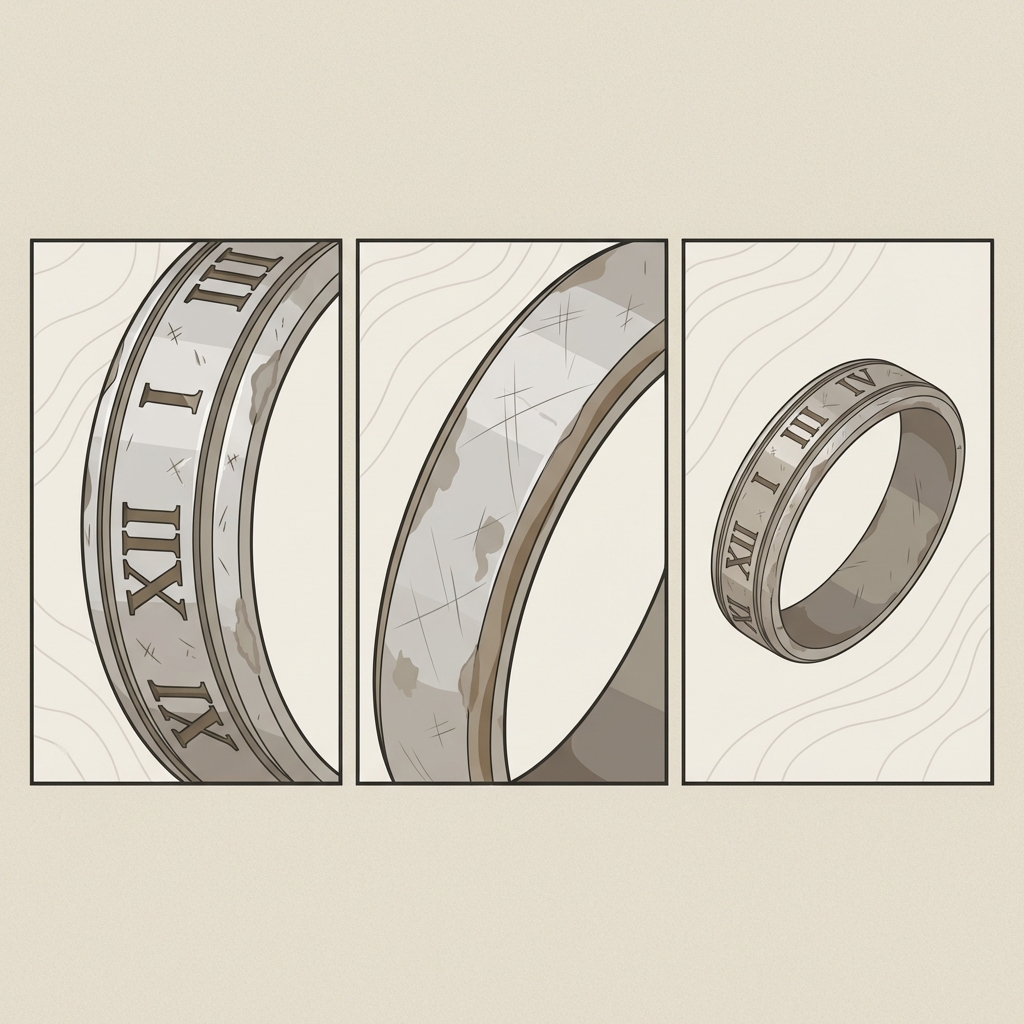
When in doubt about a restoration or repair, ask for the conservator's notes and keep them with the ring. Clear documentation supports long term stewardship and future study of the piece.
There are also longer buyer guides and practical resources that cover home testing and when to seek professional help, for example A Buyer's Guide: How to Spot Genuine 925 Silver.
A 925 stamp is commonly used to indicate silver purity, but it should be treated as one indicator among many and verified with photos, condition notes, and, if needed, professional assessment.
There are low-risk at-home checks such as magnet and heft assessments, but these are rough indicators; avoid destructive testing and consult an expert for conclusive results.
Seek professional verification when the price is high, marks or provenance are unclear, repairs are significant, or when you need written documentation to support a collection purchase.
More from Aurora Antiqua
References
- 16 CFR 23.5, Misrepresentation as to silver content, Federal Trade Commission, eCFR
- S.I. No. 441/2019, Hallmarking (Irish Standards of Fineness) Regulations 2019, Electronic Irish Statute Book
- https://www.assayofficelondon.co.uk/hallmarking/what-is-a-hallmark#convention, Goldsmiths' Company Assay Office
- Hallmarking, The Goldsmiths' Company, London
- Hallmarking Act 1973, The National Archives / legislation.gov.uk, UK
- Hallmarking Guidance Notes: practical guidance in relation to the Hallmarking Act 1973, the UK Assay Offices
- Gesetz über den Feingehalt der Gold- und Silberwaren (FeinGehG, German law on gold and silver fineness), Bundesministerium der Justiz
- Silver and plate, Icon, The Institute of Conservation (UK)
- Hallmarking, The Assay Office Birmingham