


Looking for the real thing? Browse genuine ancient rings for sale, each piece one of one, individually authenticated, with documented provenance. For the background, see the guide to buying ancient artifacts.
What a silver ring can mean for collectors: definition and context
The phrase roman numeral ring silver can describe a ring that is marked, themed, or dated in ways that matter to collectors, but the term alone does not determine value. Collectors assess value across several axes: metal fineness, maker interest, documented provenance, and historical importance, and those factors interact in different ways for modern versus antique pieces. When a ring arrives with a recognisable motif or a numeric inscription, that element can increase interest, but it only becomes reliably valuable in combination with documentation or maker attribution.
Value depends on a mix of documented provenance, maker and assay marks, condition and comparables; start with non-destructive screening, confirm hallmarks in official databases, and use XRF and accredited appraisal for definitive assessment.
For anyone handling older or marked silver, initial visual cues are useful but not definitive; wear consistent with age, a stable patina, and clear construction are all helpful indicators that should prompt a search for supporting records or a professional check. Auction and market guidance shows that comparable sales and documented collection history are often the decisive elements when judging an object described as an antiquity rather than costume jewellery, so buyers should treat marked or themed pieces as potentially collectible until records are checked Auction Terminology, Christie's.

Quick at-home screening: simple, non-destructive checks
Before arranging formal tests, use a repeatable screening routine that minimizes risk to the ring. Start with a loupe or strong magnifier to inspect the hoop, shoulders and any bezel, looking for hallmarks, date letters, maker punches and signs of resurfacing. Note any patina and record condition notes with clear photos from several angles; these images are what you will share with a conservator or appraiser later. Practical home checks are useful for initial triage but are not definitive for high-value or antique pieces GIA guidance on basic metal checks.
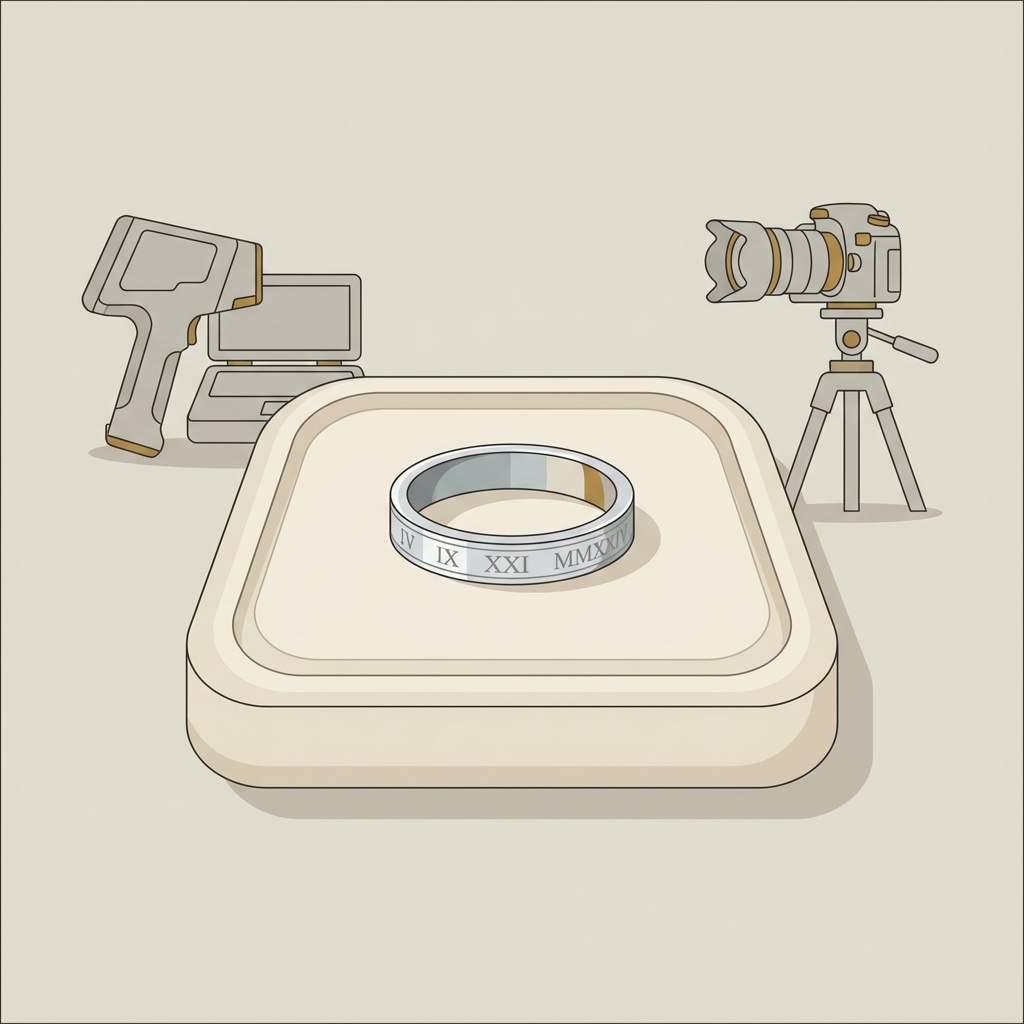
Next, perform three quick non-destructive steps: a magnet test to rule out common ferrous fakes, a lightweight comparison on a jeweller's scale to see whether the ring feels unusually heavy or light for its size, and careful loupe inspection for tool marks at joins that suggest modern soldering. Avoid any abrasive cleaning or invasive probing. If you are investigating a specific phrase like roman numeral ring silver, photograph inscriptions and measure any engraved numerals; these details can be crucial when a specialist narrows provenance or workshop attribution.
Hallmarks and assay-office records: the primary legal proof for silver
Official hallmarks and assay-office records are the primary legal and practical proof of silver fineness and often help identify maker and date; those records remain the recommended first check for UK and many European pieces The Goldsmiths' Company Assay Office hallmark guidance.
Hallmarks typically combine a fineness mark, a maker mark, a date letter and an assay office mark. Reading these elements together narrows the possible range of dates and locations. Trusted official databases run by assay offices allow collectors to match maker punches and date letters to registered records; when a hallmark matches an assay record, the ring's metal claim is substantially reinforced. When hallmarks are absent, the need for written provenance and third party testing increases, especially in markets governed by consumer disclosure rules.
Quick assay-office lookup checklist
Use official database matches where possible
In practice, if you find a clear fineness mark and an identifiable maker punch, save high resolution photos and record the exact shapes of letters and symbols. Many online assay-office lookups accept clear photos or allow manual matching against published charts. If you cannot find a match, keep those images and notes ready for a specialist; absence of a match does not prove inauthenticity, but it raises the importance of subsequent non-destructive testing and provenance checks https://www.assayofficelondon.co.uk/hallmarking/what-is-a-hallmark#convention, Goldsmiths' Company Assay Office.
Maker marks, dating and stylistic clues: putting the ring in historical context
Maker marks and maker marks and date letters can narrow a ring's probable age and sometimes point to a workshop; when combined with stylistic motifs they form a plausible attribution chain, though workshop attribution often remains tentative without strong documentation. Short punches and date letters are particularly helpful when they can be read and matched to an assay database.
Stylistic clues, such as typical bezel shapes, intaglio subjects, or the use of cabochon carnelian or agate settings, help place a ring within broad cultural and chronological ranges. For example, a simple hoop with a small intaglio and a worn patina is often more convincingly antique when supported by a maker mark and collection history, whereas the same motif on modern workmanship may indicate revival jewellery. Treat these clues as supportive rather than conclusive, and use them to prioritise which items deserve professional research and testing Birmingham Assay Office guide. See examples in our ancient Roman rings collection.
What actually drives market value: provenance, condition and comparables
Market value is commonly driven by documented provenance, maker interest, condition including restoration history, and recent comparable sales; metal content alone rarely determines price for antique or historically interesting rings Publication 561 (12/2025), Determining the Value of Donated Property, Internal Revenue Service (IRS), USA.
Provenance and clear collection history can transform a modestly made silver ring into a desirable collector piece if the documentation ties it to a known collection or an archaeological context. Similarly, a maker with an established market presence can command premiums. Condition notes and transparent restoration records alter buyer expectations: stabilised conservation can reassure collectors, while undocumented heavy repairs can reduce desirability. Use recent auction comparables and specialist sale notes to form a realistic estimate, remembering that markets fluctuate and comparables must be closely matched in period, condition and documented history.
Request a condition-summary or provenance review
If you would like a condition-summary or provenance review, request a specialist look from a curator familiar with ancient rings; a short documented note can clarify whether non-destructive testing or a formal appraisal is the right next step.
Condition, restoration and conservation: why the history of repairs matters
Patina, visible repairs and conservation history materially affect desirability and value for antique silver rings; transparent restoration notes that explain what was stabilised, repaired or left untouched help collectors and appraisers assess risk and authenticity Canadian Conservation Institute guidance.
Conservation-first practice favors non-destructive analysis and written reports that describe treatments in plain language: what was stabilised, what adhesive or solder was used, and whether surface finishes were altered. Before-and-after photos and dated conservation reports add confidence when presenting a ring for sale or appraisal. If heavy recent repairs are visible, disclose them and ask whether a conservator recommends further intervention before any invasive testing.
When to get professional testing and appraisal
Non-destructive testing, especially XRF analysis, is the recommended first step when alloy composition is an open question; XRF provides an elemental readout without taking samples and is widely used by specialists to estimate silver fineness before any further action GIA guidance on testing options.

Chemical or acid tests and touchstone methods can indicate silver content quickly but they risk surface damage and are generally discouraged for antique or high-value rings; reserve these methods for cases where preservation is not a concern or only after conservator consultation. For valuable or historically significant items, follow XRF with a professional appraisal and conservation assessment to understand how alloy composition, maker attribution and restorations combine to affect marketability and listing language FTC jewellery guidance.
Common mistakes collectors make when judging silver rings
Collectors frequently rely too heavily on visual appearance and weight, assuming that density equals silver content; while sensible as a first filter, weight comparisons and the magnet test cannot replace laboratory or non-destructive instrument checks and can mislead when alloys or internal cores are present GIA notes on basic tests.
Other common errors include trusting a seller claim without documentation, attempting acid tests on an unknown antique, and misreading hallmark variants. Many hallmark variants and maker punches require specialist comparison to published records. When unsure, preserve the object and its photographic record and seek a second opinion rather than risking irreversible surface damage.
Red flags and safe signs: quick checklist to spot problems or promise
Red flags include absent or inconsistent marks paired with confident seller claims, signs of modern tooling on joints, and recent heavy or poorly documented repairs. These issues usually warrant professional input rather than home testing. Safe signs that justify further investment in testing include clear hallmarks that match an assay-office record, consistent wear and patina, and a documented collection history that aligns with the ring's style Hallmarking in the UK: consumer protection, GOV.UK, British Hallmarking Council / GOV.UK.
When you see red flags, document them with photos and notes and avoid invasive tests. A conservator or accredited appraiser can often determine whether non-destructive testing is feasible and advisable.
Practical examples and scenarios: applying the checks in real cases
Example 1: a modern sterling ring with a clear 925 mark. At-home screening locates a crisp 925 fineness mark and a maker punch; photos match an assay-office maker listing and weight is consistent. In this case, the next steps are minimal: confirm with a non-destructive XRF if the price seems above market or request the seller's documentation. Clear markings and a modern maker mark usually mean that a straightforward antique silver ring appraisal or market comparables search will give a reliable value range Hallmarking, The Assay Office Birmingham.
Example 2: an unmarked ring with strong provenance notes. Suppose a ring lacks hallmarks but arrives with collection history stating it came from a documented estate and includes dated old photographs. Here, the provenance materially increases the need for non-destructive testing and a conservator report rather than immediate acid testing. An XRF report, paired with a conservator's note on patina and construction, can produce a defensible appraisal even when marks are absent, because documentation and condition notes support the attribution Publication 561 (12/2025), Determining the Value of Donated Property, Internal Revenue Service (IRS), USA.
Decision framework and quick next steps checklist
Screen: record marks and photos, compare weight and perform low-risk checks. Check hallmarks: use official assay-office databases and match maker punches where possible. Document: keep high-resolution images and condition notes. Test: request XRF for alloy estimation. Appraise: consult an accredited appraiser for market value and comparables. This stepwise flow helps you decide whether a ring requires a full appraisal or is reasonable to buy as modern sterling Assay Office overview or browse our rings collection.
If key thresholds are met, such as matching assay records or strong provenance, proceed with formal valuation and consider conservation reporting before sale. If the ring shows red flags, step back and seek specialist input rather than using chemical tests that can harm the surface.
Detailed case walkthrough: from discovery to sale-consultation
Start by assembling a submission package for assessment: clear photos showing hallmarks and joins, precise dimensions, weight, any historical documentation or collection history, and condition notes describing patina and visible repairs. A conservator will value before-and-after images and a dated report on any stabilisation or repairs when preparing a valuation submission. Providing this material speeds appraisal and clarifies what non-destructive tests have already been done Canadian Conservation Institute guidance. Related background on intaglio rings is in our article The Timeless Appeal of Roman Jewelry: Intaglio Rings.
When a conservator issues a stabilization report, that document can be referenced in a sale listing to explain what was done and why. Be transparent about tests performed, list their dates, and include clear condition notes to help potential buyers and appraisers place the piece among recent comparables. This transparency supports a fair market assessment and reduces disputes about condition or undisclosed repairs About us, International Association of Dealers in Ancient Art.
Conclusion: making a responsible decision about a silver ring
In short, hallmarks and assay records are primary evidence that support metal claims, at-home checks are a safe starting point, and non-destructive professional testing is the preferred route for items of potential historical or monetary value. Preserve evidence and seek specialist input when key attribution or alloy questions remain Assay Office hallmarking guidance.
For collectors uncertain about a ring's status, the practical next steps are clear: document the piece thoroughly, consult assay-office resources, and engage an accredited appraiser and conservator for XRF and condition reporting. These steps keep the object intact while producing the documentation a careful buyer or seller needs.
Official hallmarks recorded by an assay office are the most reliable starting point for confirming silver fineness and often include maker and date information, but their absence increases the need for provenance and professional testing.
Acid tests can damage surfaces and are not recommended for antique or valuable rings; non-destructive methods like XRF and conservator advice are preferred.
Seek a professional appraisal when a ring has clear hallmarks suggesting age or maker interest, when provenance exists, or when XRF indicates uncommon alloys or if restoration history is complex.
More from Aurora Antiqua
References
- https://www.assayofficelondon.co.uk/hallmarking/what-is-a-hallmark#convention, Goldsmiths' Company Assay Office
- Hallmarking, The Assay Office Birmingham
- Hallmarking in the UK: consumer protection, GOV.UK, British Hallmarking Council / GOV.UK
- 16 CFR 23.5, Misrepresentation as to silver content, Federal Trade Commission, eCFR
- Hallmarking Guidance Notes: practical guidance in relation to the Hallmarking Act 1973, the UK Assay Offices
- Gesetz über den Feingehalt der Gold- und Silberwaren (FeinGehG, German law on gold and silver fineness), Bundesministerium der Justiz
- Auction Terminology, Christie's
- Publication 561 (12/2025), Determining the Value of Donated Property, Internal Revenue Service (IRS), USA
- About us, International Association of Dealers in Ancient Art
- Hallmarking, The Goldsmiths' Company, The Goldsmiths Company Assay Office