


Looking for the real thing? Browse genuine ancient artifacts for sale, each piece one of one, individually authenticated, with documented provenance. For the background, see the guide to ancient jewelry.
Quick overview: what 'antique scarab ring' means and why careful assessment matters
Why this guide focuses on scarab rings
An antique scarab ring is commonly used in market and collection language to describe a ring featuring a carved scarab or scarab seal, often mounted as an intaglio set into a bezel, and likely originating in Egyptian or related Mediterranean contexts; typology and comparative catalogues are the first references many owners use to form an initial idea of age or origin, though those references do not replace laboratory testing or formal appraisal.
What buyers and owners commonly want to know first
Owners typically want to know whether a piece is genuinely ancient, what materials it contains, whether past repairs affect its integrity, and how to document it for sale or insurance; simple visual checks and provenance notes can screen obvious issues before paying for specialist services.
How the guide uses evidence and where to check primary sources
This guide relies on comparative museum typologies for scarab motifs and on hallmark and laboratory standards as primary verification routes; museum catalogues remain a reliable starting point for motif and typological comparison, and you can consult those collections to familiarise yourself with common forms and mounting styles British Museum - Egypt and Sudan collection
See documented examples and condition notes at Aurora Antiqua
Aurora Antiqua serves as a curator reference for documented, one of a kind ancient rings; view examples and condition notes in the shop to see how provenance and restoration are recorded.
What is an antique scarab ring? Definition, periods and common materials
Typical forms and motifs across periods
Historically, scarab rings range from simple scarab seals engraved with iconography to more elaborate intaglio mounts set in metal hoops. Motifs and carving style vary by period; some scarabs show geometric or hieroglyphic carvings while later examples adapt classical or local motifs. Recognising the intaglio style and drill or wear patterns helps with preliminary typological dating. See examples in our rings collection.
Common materials and mounting styles
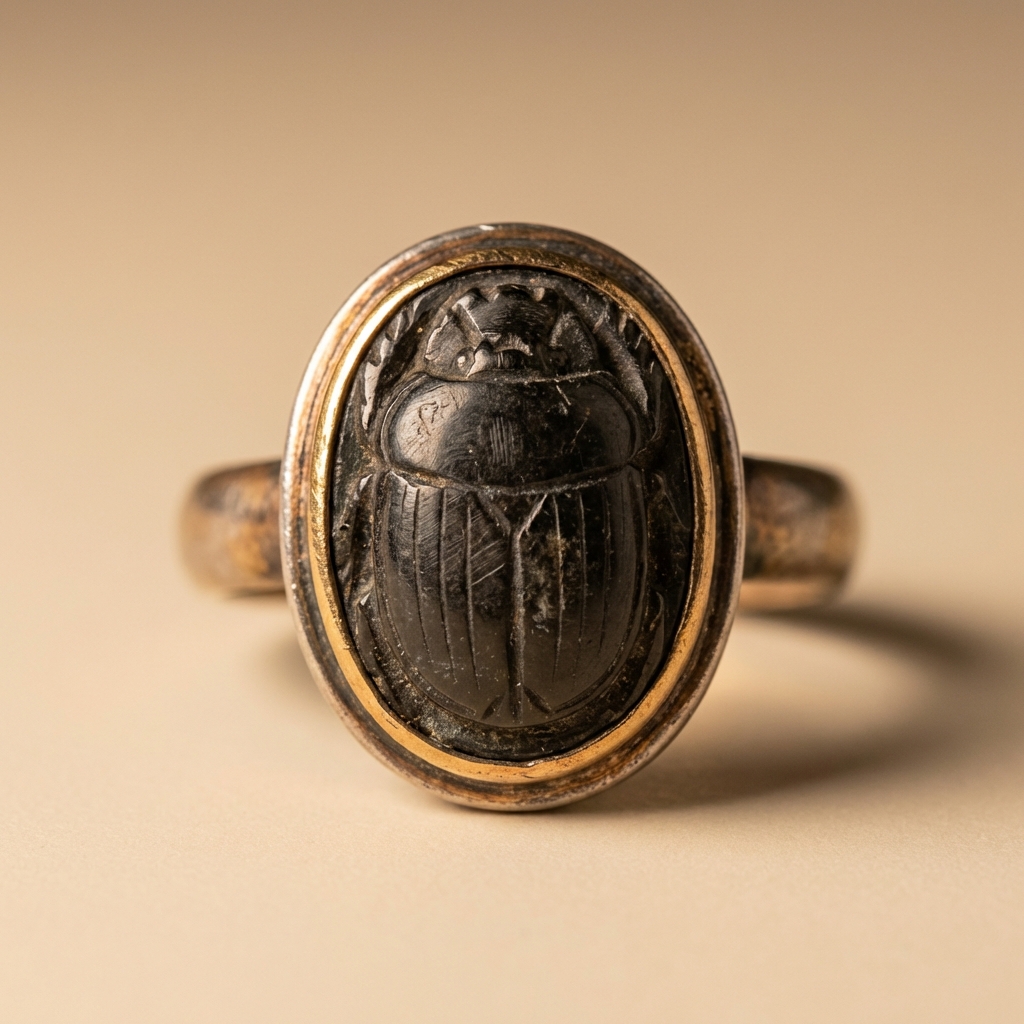
Scarab material historically includes stone varieties such as steatite (often glazed), carnelian and other hardstones, while mountings can be silver, gold or base metal hoops with bezel seats; mounting styles, bezel profiles and hoop construction can indicate workshop attribution or later remounting.
How museums and collections classify scarab rings
Museum catalogues typically classify scarabs by motif, manufacturing technique and find context, and those typologies are the primary comparative baseline for dating and motif analysis when assessing plausible examples of scarab ring identification British Museum - Egypt and Sudan collection
Initial visual inspection: hallmarks, construction and obvious red flags for an antique scarab ring
How to read and photograph hallmarks or maker marks
Start by photographing any marks on the hoop, shoulders or inner band with a macro-capable camera or a phone macro lens; where hallmarks are present, they can be checked against assay-office records to verify metal content and provide an approximate date in hallmarking jurisdictions.
In countries with hallmarking systems, assay-office records are the most verifiable starting point for confirming metal content and approximate dating; use official hallmark guidance to cross-check any marks you find https://www.assayofficelondon.co.uk/hallmarking/what-is-a-hallmark#convention, Goldsmiths' Company Assay Office
Use a sequence of visual checks, hallmark and typology comparison, clear condition and restoration notes, basic gem screening, then obtain laboratory gem reports or a USPAP-compliant appraisal when price, provenance gaps or insurance needs require higher confidence.
Construction details: mounting, hoop, shoulders and patina
Examine mounting joins, solder lines and the transition between bezel and hoop; older constructions often show hand-formed hoops and subtle asymmetry while modern repairs or remounts may reveal machine soldering or fresh tool marks. Patina and wear consistent with age often appear at contact points, but must be considered alongside construction evidence.
Red flags visible to the naked eye
Clear red flags include the use of modern adhesives around the bezel, tool marks inconsistent with period carving on the intaglio, or patina that appears artificially applied rather than worn; photographs showing unexpected tool finish or markedly different surface textures between scarab and mount warrant scepticism. See identification notes on false scarabs here.
Gemstone and intaglio checks you can do at home on an antique scarab ring
Tools to use: loupe, light, soft cloth
Keep a 10x loupe, a consistent light source and a soft lint-free cloth on hand; observe the intaglio under magnification for tool marks, surface wear and signs of re-drilling. Loupe gemstone testing and careful lighting reveal many features that distinguish old carving from modern recuttings.
Simple tests and what they can reasonably reveal
Basic screening such as loupe inspection for natural inclusions, and simple thermal or refractive checks, can separate many imitations from natural stones in a non-destructive way; for confident gem identification and any value-related determination, formal laboratory reports are required GIA guidance on imitation, synthetic and treated gems
When home checks are not enough
If tests leave questions about whether a stone is natural, treated or synthetic, or if the intaglio shows conflicting signs of age and tooling, a recognized gemological laboratory report is the appropriate next step to reach high confidence before a sale or insurance decision.
Dating and provenance: documents, typologies and how to compare museum references for an antique scarab ring
Provenance documents to look for
Useful provenance notes include a clear collection history, prior ownership records, acquisition dates, sale or catalogue references and any verification letters; the presence of dated, traceable documentation increases confidence compared with vague statements of age.

Using museum catalogues and typologies for dating
Museum collection typologies and catalogues are the foundation for initial typological dating and motif comparison for many scarab classes, and they provide immediate visual parallels you can use to assess plausibility; where typology points to a particular period, that estimate remains provisional until supported by documentation or testing British Museum - Egypt and Sudan collection and comparable listings in the ancient Roman rings collection.
Limits of provenance and when to be cautious
Even well-presented provenance can have gaps or rely on secondary references; treat vague or unverifiable paperwork with caution and prefer documentation that cites collection history or dated sales records rather than general claims of antiquity.
Condition and restoration: what to record and how restoration affects collector interest
What good condition notes include
Good condition notes list stabilized areas, repaired joins, replaced components and any areas intentionally left untouched; they name the materials used in repairs and note whether restoration aimed to stabilise or to reconstruct missing elements, which helps prospective buyers or appraisers assess impact on appearance and integrity.
Common restoration methods and how to describe them
Conservator guidance recommends documenting repairs such as soldered joins, infills or adhesive stabilisation with clear descriptions and photographs; transparent restoration notes that follow conservation best practice improve buyer confidence and provide context for valuation IIC guidelines for conservation and documentation
How conservator guidance should inform valuation
Restoration that stabilises an object can preserve its wearable function but will materially affect collector interest; include restoration notes with clear photos when requesting a valuation so an appraiser can separate original fabric from later intervention when estimating market suitability.
When to get a professional appraisal or lab report for an antique scarab ring
Types of professional reports and what they each deliver
A gemological report focuses on stone identification and treatment history, while a monetary appraisal provides a valuation for insurance or sale and should follow recognized standards; appraisals that adhere to professional practice guidelines create more consistent outcomes for insurance and legal purposes Publication 561 (12/2025), Determining the Value of Donated Property, Internal Revenue Service (IRS), USA
Typical triggers for ordering a report
Order a lab or appraisal when a listing price is high, when insurance coverage is needed, when provenance is ambiguous, or when a stone or metal identification would change sellability; these triggers help balance the cost of reporting against the benefit of greater certainty.
Find and vet labs or appraisers for gemstones and monetary valuations
Request accreditation and sample reports
Choosing the right lab or appraiser
Choose recognized gem labs for gemstone identity and treatment questions, and seek appraisers who follow USPAP or equivalent standards for monetary reporting; ask for sample reports and references so you can confirm the scope and methodology before paying for services.
Valuation checklist: step-by-step assessment for your antique scarab ring
Quick screening steps you can do in hours
Begin with well-lit photographs, a hallmark check, loupe screening and basic provenance review; these steps generally take a few hours and identify whether the object is a candidate for purchase or requires deeper investigation. See the Aurora Antiqua homepage for general examples of documented rings.
Deeper checks that justify a paid report
Deeper checks include formal gemological testing, metallurgical assay where appropriate, and comparison with auction comparables or specialist market reports; these steps are justified when the potential value or insurance exposure makes the reporting cost reasonable, and auction comparables help ground monetary estimates.
Preparing materials for an appraiser or auction house
Prepare a concise file with labeled photos, clear hallmark shots, measured dimensions, condition and restoration notes, and any provenance documents; this documentation shortens report turnaround and reduces follow-up questions from professionals and auction specialists FTC jewelry guides on seller disclosure
Common mistakes and red flags specific to scarab rings and small antiquities
Over-reliance on patina or surface wear
Patina alone can mislead because surface appearance can be artificially altered; always combine patina observations with construction evidence, mounting details and documented provenance before concluding age. See discussions on faked or authentic pieces here.
Misreading modern reproductions as ancient
Modern reproductions may imitate carving styles or patina and sometimes use machine-cut intaglios that mimic handwork; magnified inspection for modern tooling and inconsistent wear patterns often reveals these copies, and when in doubt, request laboratory or specialist opinion GIA guidance on imitation, synthetic and treated gems and background notes such as those on Egyptian jewelry questions.
Incomplete or misleading provenance
Vague provenance statements that lack dates, collection names or verifiable sale references should reduce confidence; seek clear, traceable provenance where possible and treat unverifiable paperwork cautiously.
Practical examples and scenarios: interpreting three typical listings for an antique scarab ring
Example A: Well-documented piece with museum-style catalogue parallels
Scenario A describes a listing with clear photographs of hallmark and bezel, a provenance note citing a prior collection and catalogue parallels that match museum typologies; this is a candidate for purchase pending a gem lab report if stone identity is value-critical, and the museum parallels provide a strong initial comparative baseline British Museum - Egypt and Sudan collection
Example B: Good-looking listing with missing hallmarks and vague provenance
Scenario B shows an attractive ring with convincing wear but lacks hallmarks and has a short provenance statement; the recommended next action is to request clearer hallmark shots, additional provenance details and a loupe-based inspection or a gem lab report if the asking price is significant.
Example C: Listing with obvious modern repairs or synthetic stone indicators
Scenario C reveals fresh solder lines, mismatched patina between scarab and mounting or stone indicators consistent with synthetic materials; in such cases, walk away or insist on lab and conservation documentation before proceeding to purchase.
How to document your scarab ring and prepare clear listing or appraisal materials
Photography and essential measurements
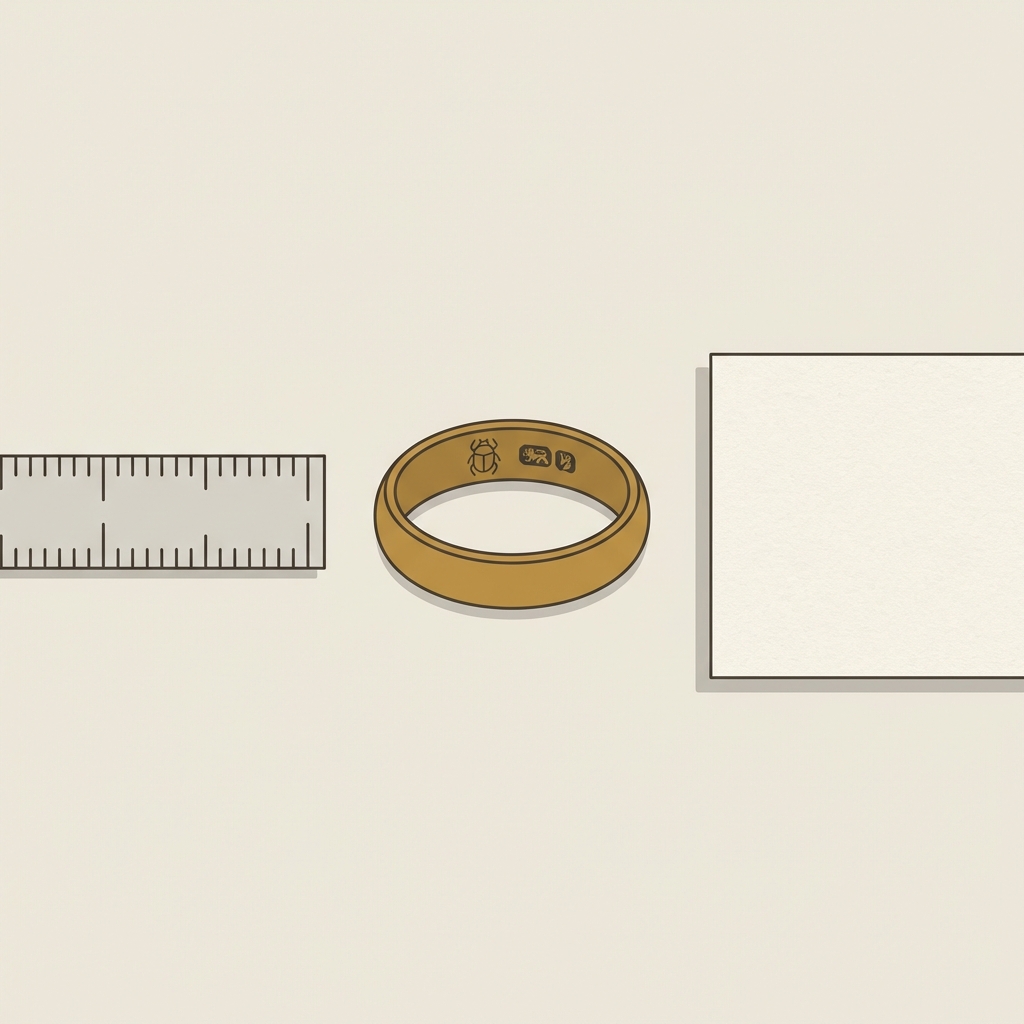
Take full-ring views from multiple angles, close-ups of the intaglio and bezel, clear shots of any hallmarks, and include a scale or ruler in at least one image; record exact measurements of the hoop internal diameter, bezel dimensions and approximate scarab size.
Writing transparent condition and restoration notes
Use concise phrasing that follows conservator guidance: note stabilised areas, describe repairs and name materials used, and indicate whether any components were replaced; this approach aids appraisers and buyers in understanding what is original and what was intervened upon IIC conservation guidance
How to present provenance and past ownership details
List provenance items with dates and sources, for example: "Acquired from X collection, sale record Y, 1987" where possible; when provenance is incomplete, state the limits clearly rather than implying certainty.
Selling, insurance and auction considerations for an antique scarab ring
When to insure and how to value for insurance
Insure items when replacement or agreed value is significant; formal appraisals following professional standards are appropriate for insurance and estate purposes, and appraisers should document methodology and comparables used in their valuation Publication 561 (12/2025), Determining the Value of Donated Property, Internal Revenue Service (IRS), USA
Selling routes and how documentation changes suitability
Well-documented pieces with clear provenance and condition notes are better suited to specialist auctions or dealer sales, while items lacking documentation may be more appropriate for private sale with clear disclosure; transparent listings reduce disputes and improve buyer confidence.
How auction comparables and market reports inform expectations
Auction comparables and specialist market reports provide price context, but small antiquities can have limited public comparables; use these reports as one input among condition, provenance and lab findings when forming price expectations.
Trusted resources and next-step contacts for confirming an antique scarab ring
Which labs and museum catalogues to consult
For gemstone identification consult recognized gemological laboratories, and for typology comparison consult established museum catalogues and collection highlights; each resource serves a different verification role and together they create stronger evidence than any single source alone GIA guidance on imitation, synthetic and treated gems
Consumer guides and disclosure resources
Use consumer guidance on seller disclosure to prepare transparent listings and to understand buyer rights; clear disclosure of condition, materials and provenance reduces dispute risk and supports fair dealing FTC jewelry guides on seller disclosure
Conservator and appraiser directories
Search professional directories or appraisal foundation listings to locate conservators and appraisers; confirm credentials, ask for sample reports and verify that appraisers follow recognised reporting standards before commissioning work.
Conclusion: clear next steps if you own or are considering buying an antique scarab ring
A short action plan
Start with clear photographs, a hallmark check, loupe screening and a provenance review; if questions remain about stone identity, metal content or provenance, proceed to lab reports and a USPAP-compliant appraisal as appropriate.
When to proceed and when to seek more evidence
Proceed cautiously when hallmarks, construction and provenance align with museum typologies; seek additional evidence in the form of lab reports or documented comparables when provenance is ambiguous or when price and insurance needs justify reporting costs.
Where to keep records
Retain copies of photographs, condition and restoration notes, provenance paperwork and any lab or appraisal reports in both digital and printed form; these materials support future sale, insurance or transfer and help maintain an unbroken documentation trail.
Use a 10x loupe to inspect tool marks and wear, photograph hallmarks and mounting, check for consistent patina and measure dimensions; these steps screen obvious issues but do not replace lab reports.
Order a gemological report if the stone identification affects price, if the piece is expensive, or if home tests leave uncertainty about natural versus synthetic material.
Provenance increases confidence when it is traceable and documented, but it should be combined with typology, hallmark checks and, where necessary, scientific testing for higher certainty.
More from Aurora Antiqua
References
- Publication 561 (12/2025), Determining the Value of Donated Property, Internal Revenue Service (IRS), USA
- https://www.assayofficelondon.co.uk/hallmarking/what-is-a-hallmark#convention, Goldsmiths' Company Assay Office
- Auction Terminology, Christie's
- Scarab. In: UCLA Encyclopedia of Egyptology (Kathlyn M. Cooney), University of California, Los Angeles
- OIP 118. Scarabs, Scaraboids, Seals, and Seal Impressions from Medinet Habu, Institute for the Study of Ancient
- The Past Polluted: A Pigovian Approach to the Black Market in Antiquities, International Journal of Cultural
- Object ID, International Council of Museums
- Gesetz über den Feingehalt der Gold- und Silberwaren (FeinGehG, German law on gold and silver fineness), Bundesministerium der Justiz