


Looking for the real thing? Browse our ancient artifact collection, each piece one of one, individually authenticated, with documented provenance. For the background, see the guide to ancient jewelry.
What counts as an ancient Egyptian ring and why the law matters
An ancient ring in the Egyptian tradition is an antiquity that was made in or associated with ancient Egypt and that survives as a physical object such as a gold hoop, a bezel set with carnelian, an intaglio, or a simple band showing wear consistent with age. Use the term ancient ring when describing an object that may be both jewelry and an artifact, and pair it with provenance and condition notes to help a buyer assess legal and curatorial risk. This practical definition helps separate ordinary modern jewelry from an antiquity whose ownership and movement are often regulated.
Buying ancient egyptian rings is not the same as buying modern jewelry because many objects found in Egypt are treated under national law as state property and, in many cases, cannot be moved across borders without documented permission. In practice that means exporters, buyers, and intermediaries must be alert to export permit rules and to the likelihood that museum‑level provenance will be required for a lawful cross border sale; for the foundational national rule see the Egyptian Ministry of Tourism and Antiquities website for the text and guidance on domestic protections Law No. 117 of 1983 on the Protection of Antiquities.
@auroraantiqua behind the scenes and provenance details
Before you proceed, plan to ask sellers for clear provenance and any export paperwork and pause if those items are not supplied.
Why this legal framework matters to you as a collector is practical: an object that lacks clear paperwork can be refused entry by customs in your country, may be subject to seizure, and can carry legal and reputational risk for private owners. International conventions and domestic import controls work together to make provenance and written export permits central to responsible collecting, so treat documentation as part of the item, not an optional extra.
The international framework: UNESCO 1970 and UNIDROIT 1995
The UNESCO 1970 Convention is the principal multilateral instrument that asks states to prevent illicit import, export, and transfer of ownership of cultural property and it underpins much domestic legislation on antiquities; this treaty explains why many countries maintain strict controls and why museums and customs officials will scrutinize paperwork before allowing objects to travel internationally UNESCO 1970 Convention.
The UNIDROIT 1995 Convention complements those measures by providing civil law mechanisms for recovery and restitution of unlawfully removed cultural objects, which means that, in jurisdictions that are parties to the convention, a private buyer may face claims for return even if criminal investigations are not underway; the treaty functions as a cross border civil remedy that operates alongside national preventive rules UNIDROIT 1995 Convention.
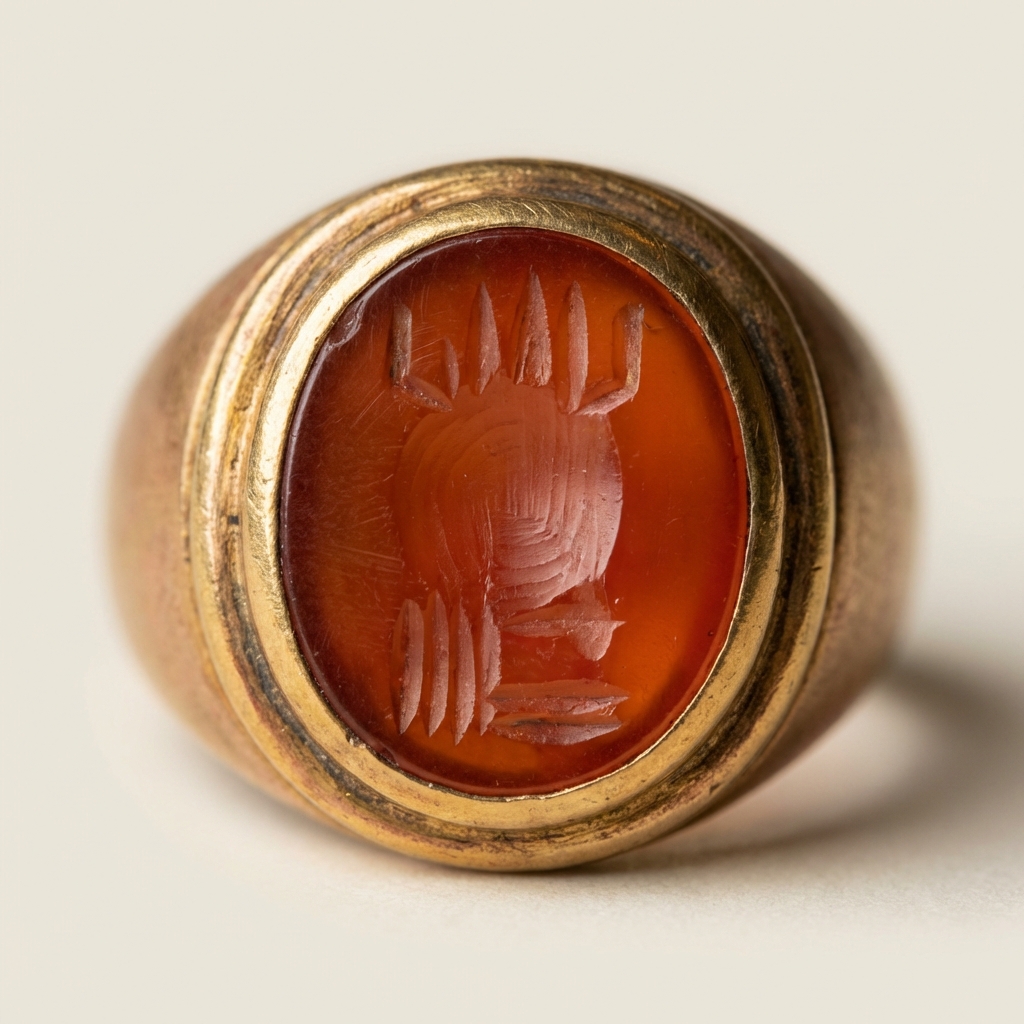
For a practical buyer this pairing matters because it makes national export paperwork and good provenance more than paperwork: they reduce the legal exposure that can lead to long restitution disputes or enforced returns. In short, international law sets expectations that national governments implement through permits and import controls, so learning what those domestic rules require is a key step before paying for an ancient ring. See related coverage from the Archaeological Institute for additional context Preserving Bolivia, Egypt, and Greece.
Egypt’s domestic rule: Law No. 117 of 1983 and what it means for buyers
Egypt’s core domestic rule, Law No. 117 of 1983, generally treats antiquities as state property and restricts export without an official permit; that statutory position is the primary legal barrier for cross‑border purchases of Egyptian material and is why many sellers and buyers must obtain clearance from Egyptian authorities for lawful export Law No. 117 of 1983 on the Protection of Antiquities.
Practically, this often means that an object offered outside Egypt needs either a clear documented export history predating the law or a current Egyptian export permit to be legally exported. Because administrative practice and the exact permitting procedures can change, many buyers are advised to confirm current requirements with the Egyptian Ministry of Tourism and Antiquities or to seek legal advice before completing an international purchase so that they understand whether the available paperwork is likely to satisfy customs in their jurisdiction Law No. 117 of 1983 on the Protection of Antiquities.
You may be able to buy and legally import Egyptian artifacts if you obtain verifiable provenance and any required Egyptian export permits, and if your home country’s import rules allow entry; when documentation is incomplete, consult authorities or counsel before purchase.
Even when a seller describes an item as an old family piece, ask whether the chain of ownership includes museum, gallery or trusted collection records and whether any Egyptian export paperwork exists; vague histories are a core source of legal and ethical risk.
Because the law makes antiquities subject to state custody unless properly released, an absence of export documentation can be decisive: it may mean the item was removed unlawfully or that the owner lacks the legal ability to transfer it internationally. Buyers should therefore treat confirmed export paperwork as a material condition of a lawful transaction.
Import rules in common buyer jurisdictions: US and UK examples
If you plan to import an Egyptian antiquity into the United States, be aware that U.S. Customs and related cultural property rules can bar entry of objects that lack proper export documentation or which are covered by bilateral agreements or emergency import restrictions; U.S. Customs guidance explains how cultural property import rules operate and why paperwork matters at the border Prohibited and Restricted Items, U.S. Customs and Border Protection. The State Department travel advisory also discusses regulation of antiquities and related travel concerns Egypt Travel Advisory.
In the United Kingdom, export licences and due diligence obligations are administered under national guidance and can require sellers to obtain an export licence before shipping material overseas; the UK guidance for exporting cultural goods outlines licensing thresholds and the duty to check the origin of cultural objects Exporting or importing objects of cultural interest, GOV.UK, Department for Culture, Media and Sport.
Both examples show a common point for private buyers: domestic import or export rules in your own country can be as important as the source country law, so you should confirm whether any bilateral agreements, temporary emergency restrictions, or specific national implementing legislation might affect your right to import an Egyptian antiquity before you commit to a purchase. The Antiquities Coalition provides resources on measures to restrict illicit antiquities markets that may be useful background Closing U.S. Markets to Illicit Antiquities.
A practical provenance and paperwork checklist for ancient Egyptian rings
Before buying an ancient Egyptian ring, insist on written provenance that traces the object to a named collection, museum, or documented sale history where possible; provenance that reaches a museum or known collection level reduces legal risk and is a primary indicator of responsible sourcing.

Ask specifically for the following documents and records: invoices or catalog entries showing prior sales, collection history notes that name prior owners or institutions, any export permits issued by Egyptian authorities, and independent technical or scholarly reports when available. When paperwork is partial, consider conditional purchase terms that require production of missing documentation within a stated timeframe or that allow return if documents fail to appear. See comparable items in our ancient Roman rings collection for examples of professional listings.
When you review dates and collection notes, be attentive to plausible timelines: a provenance that lists continuous ownership since the early 20th century will often be more reliable than a chain with unexplained mid‑century gaps. If export permits are claimed, ask for copies showing issuance date and the issuing authority so you can verify authenticity with relevant agencies when needed.
Where sellers provide restoration and condition notes, read them as part of provenance: clear restoration notes that describe what was stabilized or repaired, and photographs of those interventions, help experts assess whether later work may affect dating or alter the item’s originality.
Common red flags and warning signs of potentially illicit Egyptian material
Practical red flags include missing or vague provenance, claims of recent surface discovery without excavation records, sellers who are reluctant to supply paperwork or allow independent examination, and inconsistent or obviously altered documentation; these indicators raise the risk that an item may have been removed unlawfully and should prompt caution. For a visual and descriptive guide to at‑risk object categories consult the ICOM Red List for Egypt Emergency Red List of Egyptian Cultural Objects at Risk, International Council of Museums (ICOM), Paris.
Other marketplace indicators to watch for are unusually low prices for seemingly significant pieces, multiple listings for similar items with overlapping descriptions, and sellers who discourage third‑party checks or push for quick payment without documentation. These behaviors are common warning signs and align with the practical red flags described by curators and enforcement officials.
If you encounter these signs, escalate by requesting more documentation, involving an independent specialist for examination, or declining the purchase; walking away is frequently the most responsible decision when paperwork cannot be produced or verified.
How to buy safely in different channels: auction houses, dealers, and online marketplaces
Auction purchases: review the auction catalogue notes carefully for provenance statements, previous catalogue references, and any export documentation disclosed by the seller. Auction houses typically carry more formal cataloguing, but that does not replace export permits; confirm whether an item has documented export history and ask the house to provide all available paperwork before bidding.
Dealer and private sales: when buying from a dealer, request condition notes, restoration notes, and written collection history; reputable dealers may also provide provenance and verification letters or references. Treat dealer‑provided documentation as part of the sale contract and consider requiring a clause that allows return if export paperwork is later shown to be missing or invalid.
Online marketplaces: be especially cautious because listings often truncate histories and images. For any online offering, insist on high‑resolution photos showing any hallmarks, bezel work, and patina, and require the seller to supply provenance and export paperwork before you remit funds. If a seller cannot or will not provide documentation, consider that a clear signal to pause. You can also compare listings with our rings collection to see how professional listings present provenance and condition notes.
Tools and tests that can help verify materials and age
Technical checks that can assist buyers include metallurgical analysis to identify alloy composition, gem identification for stones such as carnelian or agate, and patina assessment by a conservator; documented lab reports can strengthen confidence but are rarely a substitute for good provenance. Lab reports should be read in context since many scientific results are interpretive rather than definitive.
estimate non invasive testing costs to inform a buying decision
include laboratory fees and reporting time
When testing is practical depends on the object and the stakes: for a higher value ancient ring with uncertain paperwork, commissioning a targeted technical report can be worthwhile. For lower value items the costs and invasiveness of testing may outweigh the benefit, so prioritize paperwork review and independent specialist opinion when lab testing is not justified.
How to read condition notes, restoration notes, and what 'wear consistent with age' means
Condition notes typically describe the state of the metal, any missing parts, the bezel and shoulders, and the nature of the patina, while restoration notes explain what work was done such as stabilizing a cracked hoop or consolidating a detached bezel. Understanding these terms helps you judge how much of the item is original versus later repair and whether the interventions were invasive or reversible.
Terms such as stabilized or conserved can mean different things: stabilized often indicates that a conservator took steps to prevent further deterioration, while conserved may include documented treatments that are reversible; ask sellers for precise descriptions and photos of any repairs so you can discuss them with a specialist if needed.
The phrase wear consistent with age is a qualitative assessment that suggests expected surface loss, smoothing of details, or patina formation rather than modern tool marks; when in doubt, request close photographs of the areas described and, if necessary, a short video of the ring under raking light to reveal surface features more clearly.
Interpreting provenance documents and collection history
Acceptable provenance chains often include museum inventory numbers, catalog citations, or dated invoices from recognized dealers and auction houses; such references make it possible to trace prior ownership and reduce uncertainty about lawful export. When documents cite prior museum or collection level custodianship, that history materially reduces legal risk and improves confidence in the chain of title.
Be cautious about provenance statements that contain gaps, contradictory dates, or unverifiable transfers; these are red lines because they make it difficult to demonstrate lawful title and to satisfy customs in many jurisdictions. If provenance is incomplete, consider insisting on supplemental evidence such as photographs from earlier catalogues or letters from prior owners that can be independently checked.
Provenance alone does not guarantee authenticity or lawful export, so pair good provenance with export permits or credible expert reports where possible. When documentation is present, verify key dates and issuing authorities to ensure the chain reads plausibly and to reduce the chance of post‑sale disputes.
When to pause, seek legal advice, or decline a purchase
Pause and seek legal counsel if the seller cannot produce export papers, provides conflicting provenance statements, or refuses independent examination; these signals often indicate legal or ethical complications that merit professional review. In some cases, a short legal opinion can clarify import risks in your country and help you decide whether to proceed under conditions such as escrow or return rights.
In some cases, a short legal opinion can clarify import risks in your country and help you decide whether to proceed under conditions such as escrow or return rights.
Remember that conventions like UNIDROIT can provide civil remedies for return and restitution in suitable jurisdictions, which means that ownership can be contested later even after payment; this is why a conservative approach that values transparency and documentation reduces future legal exposure UNIDROIT 1995 Convention.
When in doubt, decline: if key paperwork cannot be produced or verified, walking away protects you legally and ethically and preserves the reputation of serious collectors and dealers.
Common mistakes collectors make and how to avoid them
Emotional buying is common: collectors sometimes bid or pay impulsively because of the object’s appearance or a persuasive backstory, and then later discover paperwork problems. Avoid this mistake by requiring documentation up front and keeping a purchase file that records all correspondence, invoices, and provenance claims.
Another frequent error is relying solely on verbal assurances from sellers. Always ask for written documentation and, where necessary, a clause in the sale that conditions ownership transfer on satisfactory export paperwork. If a seller refuses contractual protections, treat that as a significant red flag.
Finally, do not accept the claim that an object is a family heirloom without documentary support; such claims are common but legally weak unless backed by dated evidence such as photographs, letters, or museum references.
Short hypothetical scenarios and what a responsible buyer would do
Scenario A: an online marketplace listing for a single ring shows good photos but only a short note stating a 'family provenance' with no dates. A responsible buyer asks for high resolution images of hallmarks and the inside of the band, requests any older invoices or photographs, asks the seller whether an Egyptian export permit exists, and conditions any payment on receiving verifiable paperwork within a set period.
Scenario B: a ring offered at auction has a long provenance listed in the catalogue but no export paperwork in the sale packet. A prudent buyer contacts the auction house to request copies of any export documents on file, checks whether prior catalogues cite the object, and adds a condition to any private follow‑up purchase that the seller must produce export documentation or accept a return within a contractual window.

Conclusion: practical next steps for collectors interested in ancient Egyptian rings
Keep a short checklist with you when shopping: written provenance to museum or collection level, any Egyptian export permits, independent technical reports if needed, and clear condition and restoration notes. Treat these items as the minimum for a cautious purchase.
Verify import rules in your jurisdiction before committing to a purchase, document every communication with the seller, and favour sellers who supply transparent paperwork and clear restoration notes. When documentation is missing or inconsistent, be prepared to walk away; responsible collecting puts legal clarity and ethical sourcing ahead of impulse. Visit our homepage for more information Aurora Antiqua.
Ask for written provenance tracing to a museum or named collection when possible, copies of any Egyptian export permits, condition and restoration notes, and any independent technical or scholarly reports available.
Import rules in the United States can bar entry of Egyptian antiquities lacking proper export documentation or subject to bilateral restrictions, so you should confirm applicable CBP guidance before attempting import.
Technical tests can help identify materials and age but do not substitute for clear provenance and export paperwork; testing is useful when paired with documented history and expert opinion.
Browse the Aurora Antiqua catalogue
Every piece is independently identified, dated, and documented. Shipped insured from Belgium with DHL Express, free within the EU.
More from Aurora Antiqua
References
- Prohibited and Restricted Items, U.S. Customs and Border Protection
- Exporting or importing objects of cultural interest, GOV.UK, Department for Culture, Media and Sport
- Emergency Red List of Egyptian Cultural Objects at Risk, International Council of Museums (ICOM), Paris
- Federal Register, U.S. Customs and Border Protection, Department of Homeland Security
- Current Agreements and Import Restrictions, United States Department of State, U.S. Department of State, Bureau
- eCFR, Office of the Federal Register and Government Publishing Office
- 1995 Convention, UNIDROIT, International Institute for the Unification of Private Law, Rome
- Stolen Works of Art Database, INTERPOL
- Regulation (EU) 2019/880 on the introduction and the import of cultural goods, European Parliament and Council, EUR-Lex
From Aurora Antiqua
We sell authenticated ancient & medieval pieces, each individually examined before listing and backed by a Lifetime Authenticity Guarantee. One of a kind, sold once, never reproduced.
Browse Ancient Artifacts →