


Looking for the real thing? Browse our full ring collection, each piece one of one, individually authenticated, with documented provenance. For the background, see the guide to ancient jewelry.
How to buy ancient rings: what 'safe' means
When collectors ask How to buy ancient rings, they are really asking two linked questions: will the object pose a health risk if I wear it, and will it survive being worn without further damage. In practical terms, safety covers chemical risks tied to alloy contaminants and corrosion, and structural risks stemming from thin hoops, cracks, or unstable historic repairs. These two dimensions often overlap, because a weakened structure can shed fragments and release corrosion products that contact the skin.
Health concerns are typically about specific materials and corrosion products that can irritate or, in some cases, cause toxicity with prolonged contact. Lead in archaeological metal alloys is one such concern and is addressed by public health authorities, so treat unknown lead content as a potential risk until documentation or testing says otherwise CDC lead guidance.
Safety depends on two things, health risk from materials and corrosion, and structural integrity of the ring. Confirm condition notes, ask for provenance or testing like XRF when needed, and consult a conservator before repeated wear.
Structural integrity is separate but equally important. Conservators note that visible corrosion, thin or cracked hoops, and historic repairs commonly reduce load-bearing strength and are primary reasons to assess a piece before repeated wear Getty Conservation Institute guidance.
Another common health issue is contact allergy from metals such as nickel, which remains a leading cause of allergic contact dermatitis and continues to be monitored by European chemical authorities. If a listing or seller does not address nickel, proceed cautiously, especially for wearers with known allergies ECHA nickel overview.
Why safety matters for buyers
Buying an ancient ring often means accepting incomplete material data and some conservation uncertainty. Without provenance, condition notes, or testing, unknown alloy composition increases the chance of encountering problematic contaminants or unstable corrosion, so a conservative approach is appropriate.
Key terms: corrosion, provenance, restoration notes
Corrosion describes the chemical or physical breakdown of metal, and may produce soluble salts that irritate skin or stain fabrics. Provenance refers to collection history and documentation that help assess authenticity and prior handling. Restoration notes should describe what was stabilised, repaired, or intentionally left untouched; when absent, assume more uncertainty until clarified by the seller or a conservator British Museum conservation guidance.
A practical pre-wear checklist for buyers
Use this section as a decision guide before you plan to wear an ancient ring. The checklist below is designed to reduce both health and structural risk, and to help you know when to ask for more information or a conservator assessment.
Step 1: Confirm documentation - Check the listing for condition notes, restoration notes, and any provenance or collection history. If these are absent or vague, request clarification before considering wear.
Step 2: Inspect for active corrosion and structural cues - Look for active green or blue residues, loose flakes, or discoloration at joins and under bezels. Visible movement at a repair point, hairline cracks in the hoop, or a noticeably thin cross-section are signs to stop and seek expert evaluation AIC guidance on caring for small metal objects.
Save this practical pre-wear checklist on @auroraantiqua
Copy or download this checklist to refer to before asking to try on or wear a ring; treat it as a pre-wear triage, not a conservation report.
Step 3: Allergy screening - Ask the seller whether nickel testing or statements about allergenic metals are available, and consider your own allergy history. If you are nickel sensitive and the composition is unclear, avoid skin contact until tests or reliable documentation are provided ECHA nickel overview.
Step 4: Request non-destructive testing or conservator input - When a listing lacks composition data or the piece shows borderline condition, ask for XRF testing or a conservator report to reduce uncertainty; understand that XRF gives surface composition and has limits for corroded or plated objects Getty Conservation Institute guidance.
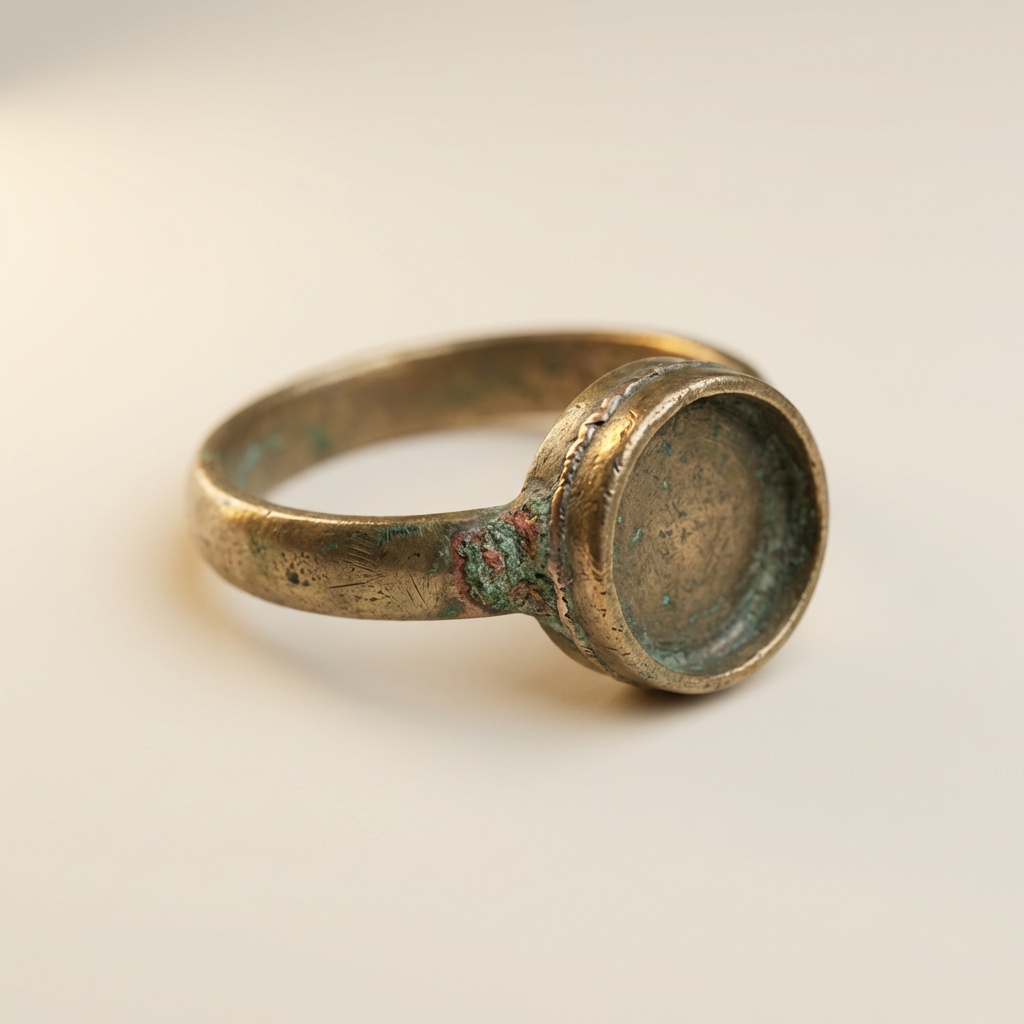
Step 5: Immediate actions for minor concerns - If you see light, inactive surface dirt, recommend dry brushing or a soft cloth for the seller or conservator. Avoid home metal dips or abrasive cleaning methods, which can remove patina and destabilise fragile surfaces British Museum conservation guidance.
When to refuse or delay wear - Do not accept an invitation to try on or wear a ring that shows active corrosion, loose material, hairline fractures, or lacks clear documentation. Ask for testing or a conservator assessment first AIC guidance on caring for small metal objects.
Visual inspection checklist
Photos can reveal many issues: look for color changes that suggest copper salts, thin sections at the hoop, visible seams or soldered patches, and any loose detritus around stones. Make these observations part of your purchase questions rather than assumptions.
When to ask for tests or a conservator
If the ring's alloy composition is unclear, request non-destructive testing such as XRF, or a conservator's written opinion for structural repairs. A conservator can assess whether a repair is stable for occasional wear or requires further conservation Getty Conservation Institute guidance.
Assessing materials and health risks
Understanding which materials present health risks is central to deciding whether a ring can be worn. Lead in some archaeological alloys poses a toxicity concern, particularly with prolonged skin contact or frequent handling, so treat pieces with unknown lead content cautiously until you have testing or credible documentation CDC lead guidance.
Nickel release remains a common cause of allergic contact dermatitis and is the subject of active regulatory focus in Europe. If a listing does not address nickel release, assume a potential allergy risk for sensitive wearers and ask for testing or avoid skin contact ECHA nickel overview.

Copper corrosion products, often called verdigris when green-blue residues appear, can both irritate skin and stain textiles. Conservators recommend stabilising or removing loose corrosion before prolonged skin contact, and note that visible green salts may indicate soluble corrosion products that warrant professional attention Bronze disease, Conservation Wiki, AIC Wiki, American Institute for Conservation.

Provenance and documentation reduce uncertainty because they record collection history, prior conservation, and any analytical tests previously performed. When those are present, the risk assessment can shift from cautious refusal toward conditional short-term wear under agreed limits British Museum conservation guidance.
Common harmful materials to watch for
Look for statements in listings about lead-containing alloys, unprotected copper alloys, or unclear metallurgical descriptions. If the seller notes lead, or if alloy composition is unknown, treat that as a material risk until testing clarifies the situation CDC lead guidance.
How provenance and documentation reduce uncertainty
Provenance can include collection history or verification letters that show prior institutional handling or testing. Such documentation does not guarantee safety, but it often explains why a piece was stabilised and what conservation treatments were applied, which materially lowers uncertainty about short-term wear AIC guidance on caring for small metal objects.
Structural risks: hoop thickness, repairs, and conservation advice
Structural risk is about whether the ring can withstand the stresses of wearing, handling, and incidental knocks. A thin hoop, a hairline crack, or movement at a historic solder or repair point are practical signs that the object may fail if worn repeatedly Getty Conservation Institute guidance.
Conservators also advise against aggressive household cleaning that can remove stabilising corrosion crusts or weaken historic joins. For light surface dirt, dry brushing and soft cloths are usually the preferred first steps, while more intrusive work should be left to professionals British Museum conservation guidance.
request concise non-destructive testing or conservator appraisal
ask seller for photos and test reports
How to read condition notes and repair histories
Condition notes should say what was stabilised, what was repaired, and what was left untouched. Photos of repair seams, and statements about adhesives or modern solder, help assess whether a repair is likely stable. When notes are vague, treat the repair as unknown and seek a conservator's opinion AIC guidance on caring for small metal objects.
When a historic repair is stable and when it is a liability
A repair that is flush, shows no movement, and has documentation describing stabilisation may be safe for occasional wear, provided the ring is otherwise sound. By contrast, repairs that show gaps, bending, or detachment under light pressure indicate a liability and should prompt conservator-led consolidation before wear Getty Conservation Institute guidance.
Cleaning, handling, and short-term wear: conservation-safe practices
Museum and conservation bodies recommend avoiding household metal dips, commercial abrasive polishes, and other aggressive cleaning methods on ancient rings, because these can remove stable patina and expose fresh metal to rapid corrosion British Museum conservation guidance.
For light soiling, conservators typically begin with dry brushing through a soft brush and follow with a soft cloth. This approach helps reveal surface condition without introducing solvents or mechanical abrasion that might destabilise fragile areas AIC guidance on caring for small metal objects.
Short-term wear can be reasonable in many cases when several conditions are met: the hoop thickness is sufficient, corrosion is inactive or stabilised, restoration notes indicate stable repairs, and the wearer has no known metal allergies. Even then, limit exposure time and avoid moisture, cosmetics, and sweat, which can accelerate corrosion and allergen release Getty Conservation Institute guidance.
Immediate precautions for short-term wear include removing the ring for sleep, exercise, and handwashing, and monitoring skin during and after wear. If redness, itching, or a rash appears, stop contact and seek medical advice if symptoms persist.
What not to do at home
Avoid metal dips, abrasive cloths, and strong chemical cleaners, as these methods can strip patina and destabilise corrosion layers. Do not attempt to mechanically remove green or powdery corrosion with knives or metal tools, as doing so risks both damage and exposure to potentially harmful corrosion products Archaeological materials, Icon, The Institute of Conservation (UK).
Guidelines for safe short-term wearing
When short-term wear is agreed, wear the piece only for brief events, avoid moisture and strenuous activity, and keep a photographic record of the ring before and after wear to spot any early change. These steps protect both the wearer and the artifact.
When to say no: red flags that should stop a purchase
Certain conditions should prompt a pause or a clear refusal until testing or conservator input is available. Unknown alloy composition, especially when lead is plausible, is a primary red flag because of the health implications of prolonged contact or frequent handling CDC lead guidance.
Active corrosion, loose flakes, thin or cracked hoops, and missing documentation about prior restoration are structural red flags. If a listing shows these issues and the seller cannot provide a conservator report or non-destructive test results, defer purchase or insist on a professional assessment British Museum conservation guidance.
Other red flags include a lack of clear provenance or restoration notes, and any evidence that the piece was recently cleaned with aggressive chemicals. If you are considering wearing the ring, these conditions elevate risk for both health and preservation and should be treated conservatively AIC guidance on caring for small metal objects.
Practical examples and scenarios
Example 1: a stable Roman gold signet ring. Imagine a gold signet described with thorough condition notes, a thick, unworn hoop, a clear record of a prior minor cleaning and a conservator's note that no active corrosion is present. Such a ring is often reasonable for short-term wear because gold alloys are less likely to produce soluble corrosion products and a robust hoop reduces structural risk. Still, confirm the provenance and testing notes where possible before repeated daily use British Museum conservation guidance.
In that scenario, requesting XRF testing or a conservator's brief appraisal can provide additional confidence by confirming surface composition and documenting the ring's stable condition for future reference Getty Conservation Institute guidance and by consulting technical reviews of XRF methods XRF review.
Example 2: a copper-alloy Byzantine band with verdigris. A listing shows green-blue residue at the bezel, a slightly flattened hoop, and limited condition text. In this case, avoid skin contact until a conservator removes loose salts and stabilises the corrosion, because verdigris can both irritate skin and cause staining of clothing Sustainable Conservation of Bronze, J. Paul Getty Museum and Getty Conservation Institute, Los Angeles.
Requesting XRF testing may clarify surface alloy, but testing does not remove the need for conservator stabilisation when soluble corrosion products are present. XRF can be helpful, but it is not a substitute for a physical conservation assessment when corrosion is active Getty Conservation Institute guidance.
Care after purchase: storage, monitoring, and when to seek conservation
After purchase, store ancient rings in a dry, stable environment away from fluctuating humidity, and keep pieces separated from other metals and fabrics to avoid mechanical abrasion and galvanic interactions. Low-humidity, acid-free storage helps slow further corrosion British Museum conservation guidance.

Regular visual checks are important. Photograph the ring periodically and compare images for new active corrosion, staining, or loosening repairs. If you spot fresh powdery corrosion, green staining, or movement at a repair, contact a conservator for an assessment rather than attempting home interventions AIC guidance on caring for small metal objects.
Certain preservation steps, such as chemical stabilisation or consolidation of fragile metal, should only be performed by trained conservators with appropriate documentation of materials and methods. These interventions reduce health and structural risks but require professional judgment Getty Conservation Institute guidance.
Conclusion: balancing wearability and preservation
Deciding How to buy ancient rings is fundamentally an exercise in risk reduction. Use condition notes, documented restoration, provenance references, and, where needed, XRF or a conservator's appraisal to make an informed choice. When key information is missing, the conservative default is to prioritise preservation and insist on testing or assessment before repeated wear AIC guidance on caring for small metal objects.
Aurora Antiqua positions itself as a curator that provides condition notes and provenance references when available to help buyers weigh these trade-offs, while avoiding absolute guarantees about composition or future outcomes. Thoughtful pre-wear checks and professional support help collectors enjoy wearable history without exposing themselves or artifacts to unnecessary risk.
Yes, sometimes short-term wear is reasonable if condition notes show a stable hoop, no active corrosion, documented restorations, and you have no known metal allergies. Limit exposure and avoid moisture.
Request non-destructive testing such as XRF for surface composition and, when structural or corrosion concerns exist, a conservator's written appraisal. Understand each test has limits.
For light dirt, use dry brushing with a soft brush and a soft cloth. Avoid metal dips, abrasive polishes, and strong chemicals that can remove patina or destabilise the surface.
More from Aurora Antiqua
References
- Bronze disease, Conservation Wiki, AIC Wiki, American Institute for Conservation
- Archaeological materials, Icon, The Institute of Conservation (UK)
- Silver and plate, Icon, The Institute of Conservation (UK)
- Conserve O Gram 10/2: Caring For Silver And Copper Alloy Objects, National Park Service, US Department
- Standards: Konservatorische Behandlung von archäologischen Funden (conservation of archaeological finds), Bundesdenkmalamt Österreich
- Sustainable Conservation of Bronze, J. Paul Getty Museum and Getty Conservation Institute, Los Angeles
- Contact dermatitis, NHS, NHS (National Health Service, England)
- Black Dermographism: An Uncommon Cause of Skin Discoloration, PMC, Indian Dermatology Online Journal, DOI
- Conservation Institute, The Getty
- Resources, American Institute for Conservation
From Aurora Antiqua
We sell authenticated ancient & medieval pieces, each individually examined before listing and backed by a Lifetime Authenticity Guarantee. One of a kind, sold once, never reproduced.
Browse Authenticated Ancient Rings →