


Looking for the real thing? Browse authenticated ancient rings — each piece one-of-one, individually authenticated, with provenance.
What is an ancient bronze ring? Composition, dating and condition
Definition and typical periods: ancient bronze ring
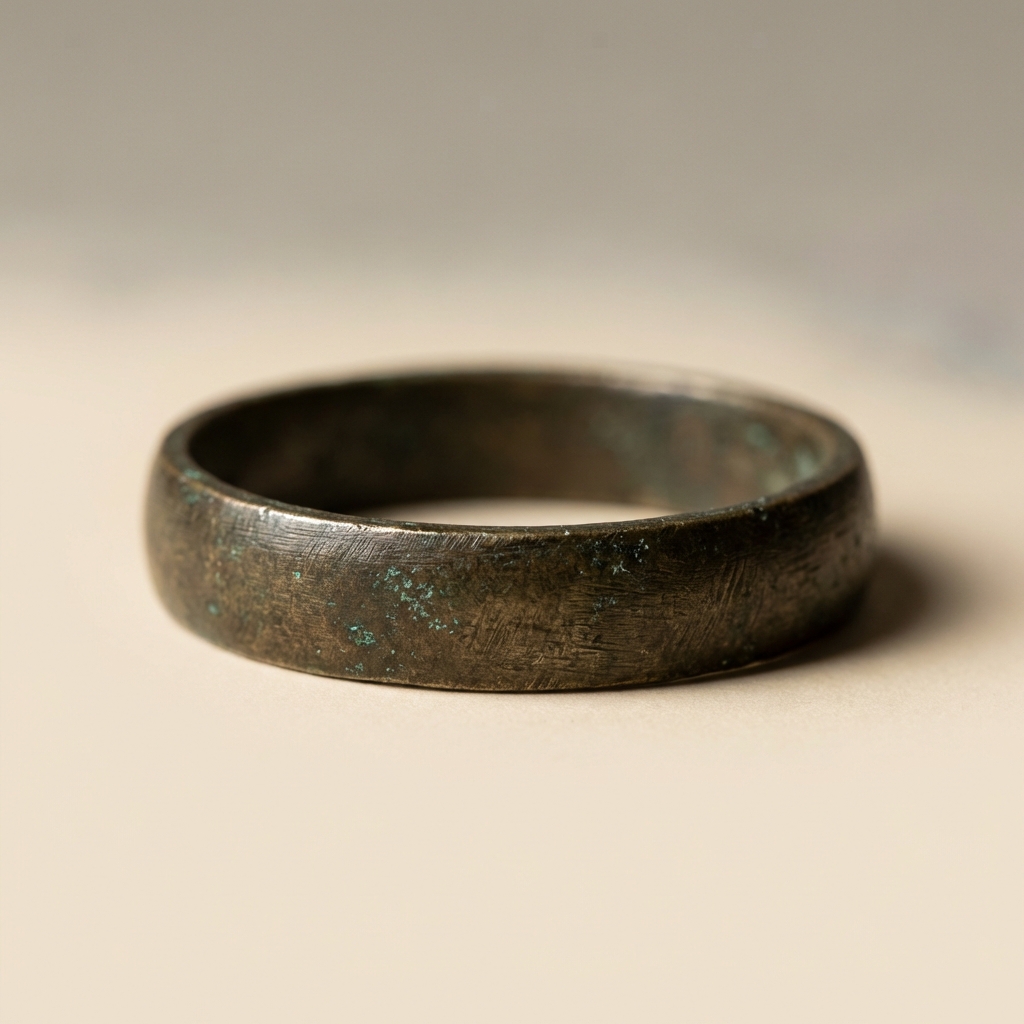
An ancient bronze ring is an antiquity originally manufactured in historical periods such as the Roman, Greek, Byzantine, Celtic or medieval eras and typically made from copper alloyed chiefly with tin and sometimes other metals. The term ancient bronze ring covers both simple hoop rings and examples with bezels, intaglios or applied motifs; condition notes, patina and visible repairs affect whether a piece is described as wearable or a collector object.
Composition matters because historic bronze is not a single formula, and many periods and workshops mixed copper and tin with variable amounts of additional metals, notably lead in some contexts, so knowing an object s alloy is relevant to decisions about wearing and conservation. For practical guidance on alloy variability and object care, conservators rely on established object care resources rather than home tests, and listing notes should reflect any known analysis British Museum conservation guidance.
Follow @auroraantiqua for behind the scenes restoration and condition notes
Check the listing s condition notes and any documentation before deciding to wear a piece. Aurora Antiqua presents condition and restoration notes alongside many of its curated ancient rings to help buyers assess suitability for occasional wear.
Patina and wear consistent with age can indicate stable surface chemistry in many cases, but patina appearance alone is not a substitute for compositional data or a conservator s inspection. Restoration notes that describe stabilisation, replacement elements or removed corrosion are important context when evaluating an item s wearability.
Dating and workshop attribution are estimates that should be tied to any provided documentation or third party tests when available. Statements about period and origin are usually based on stylistic comparison, findspot records or prior collection history and should be treated as part of the object s provenance rather than absolute certainties.

Bronze disease and corrosion risks to the ring and wearer
What is bronze disease and how it looks
Bronze disease is a chloride driven active corrosion process that forms powdery green or blue copper salts which can eat into a metal object over time. The process is noteworthy because it can continue even when the object appears stored, and it is different from stable, adherent patina that sometimes indicates long term stability. Conservators emphasise careful identification because untreated active corrosion can lead to progressive material loss Canadian Conservation Institute guidance.
How corrosion products can transfer to skin or clothing
Powdery corrosion products produced by active chloride corrosion can be transfer capable, leaving residues on skin or fabric and in some cases staining or causing local irritation. The transfer risk depends on residue solubility and mechanical friability; visible powder, loose flakes or unexpected friability in listing photos are signals to request professional stabilisation before prolonged wear British Museum conservation guidance.
When evaluating photographs and condition descriptions, look for visual cues such as soft, powdery deposits, fresh bright green or blue salt blooms, and areas where raised surface detail appears granular or flaky. Sellers may call stable surface colour patina, but the difference between stable patina and active salts is material to both wearer safety and object conservation, so conservative handling is advised. See the rings collection for examples of how listings present condition notes.
How conservators decide if an ancient bronze ring is safe to wear
Assessment steps used by conservators
Conservator assessments start with non destructive inspection: detailed photography, targeted magnified examination, notes on friability and active residues, and cross referencing any restoration notes or prior treatment records. These steps establish whether visible signs point to stable surface ageing or active chloride corrosion that requires treatment Canadian Conservation Institute guidance.
You can sometimes wear an ancient bronze ring for occasional use, but it is safer to have non destructive screening and a conservator evaluation if there are any signs of active corrosion or unknown composition, and to consult a clinician if you suspect metal allergy.
If a conservator suspects active corrosion they will typically recommend desalination and stabilisation before the object is recommended for handling or wear. Consolidation of fragile areas and careful documentation of any intervention are part of ethical conservation practice and help future owners understand what was done and why British Museum conservation guidance.
When conservators recommend professional treatment
Professional treatment is advised when a ring shows powdery salts, flaking metal, loose fragments or signs that salts may be soluble and mobile. Conservators will prioritise stabilising active corrosion to prevent further loss and to reduce transfer risk to skin or clothing, and sellers should disclose such treatment and provide restoration notes when work has been completed Canadian Conservation Institute guidance.
Conservators also weigh the object s historical significance, fragility and intended use. If a piece is an especially fragile collector object, they may advise minimal handling and recommend display or occasional wear only under controlled conditions rather than regular use.
How to test alloy composition: XRF, ICP-MS and what results mean
Differences between XRF and ICP-MS
Non destructive XRF screening is widely used as a surface technique to estimate the elemental composition of metal objects and is a practical first step for artifacts that should not be sampled. XRF can provide a quick indication of major elements such as copper, tin and lead and is commonly chosen when conservators or sellers need a surface assessment without invasive sampling British Museum conservation guidance.
ICP MS is a laboratory assay that can deliver precise bulk elemental data but typically requires sampling or micro sampling and therefore trades destructiveness for analytical precision. For collectors and conservators who need exact internal composition data, ICP MS may be requested, but the decision to sample should be weighed against the object s value and condition Guidance on testing for metal allergy and interpretation of patch tests. See general XRF definitions at QA Group.
Why home acid tests are unreliable
Home acid or scratch tests are imprecise, risk damaging surface patina and can produce misleading results; they are not recommended for decision making about wear or conservation. Conservators prefer non destructive screening and credible laboratory reports over ad hoc home tests because professional methods offer known limitations and documented procedures British Museum conservation guidance.
When a listing reports XRF screening, ask for the instrument details and a simple readout or photo of results. XRF readouts are a surface measurement and can be influenced by corrosion layers or surface treatments, so specialists interpret them in combination with imagery and condition notes.
Health considerations: allergy, lead exposure and safe handling
Allergic contact dermatitis and patch testing
Metal contact allergy should be assessed by patch testing through a clinician or a contact dermatitis clinic; nickel is the most frequent trigger worldwide, while copper and lead allergies are reported less often. If you suspect sensitivity, seek clinical patch testing rather than guessing from symptoms alone NHS guidance on allergic contact dermatitis.
Patch testing provides objective information and helps clinicians correlate skin reactions with likely culprits. If patch testing confirms sensitivity, the clinician can advise on avoidance strategies and suitable alternatives for wearing jewellery.
Lead concerns in historic alloys
Historic bronze jewellery can contain lead in variable amounts depending on period and workshop, and lead is a toxicity concern if fragments, dust or soluble salts are ingested or otherwise enter the body. Items suspected of containing lead should be handled cautiously and tested with appropriate methods rather than assumed safe European Chemicals Agency overview on lead in jewellery.

Immediate precautions are sensible: avoid putting the ring in your mouth, remove it before eating, and do not allow children to handle potentially leaded objects. If the ring is thought to have lead or visible loose corrosion, request testing or a conservator s evaluation before prolonged wear.
A practical decision checklist: can I wear this ring?
Quick yes/no checklist
Use the following checklist as a practical decision aid when assessing a listing or an owned object: documented composition or credible screening results; no visible signs of active bronze disease; clear restoration notes; clinician clearance if you suspect metal allergy; planned wear frequency identified as occasional or daily; and an informed plan for storage and periodic monitoring Canadian Conservation Institute guidance.
Each item influences the recommendation. For example, a tested stable alloy with XRF results and no active corrosion usually rates low risk for occasional wear, while unknown composition and visible powdery salts rate high risk until stabilised or tested.
Factors that change the recommendation
If a ring is intended for daily wear the threshold for testing and conservator advice should be higher, because repeated exposure increases the chance of skin contact with corrosion products and places more mechanical stress on fragile elements. Occasional wear for short periods reduces exposure but does not remove the need to confirm stability and composition.
If documentation is missing, practical next steps are to ask the seller for high resolution photos, request XRF screening if available, and consult a conservator about any visible residues. When in doubt, postpone wearing until a basic non destructive screening and visual stabilisation check have been completed British Museum conservation guidance.
Everyday care when wearing an ancient bronze ring
Safe wearing habits
Remove the ring for bathing, swimming, gardening, heavy cleaning tasks and when using household chemicals, because water and many detergents accelerate corrosion processes and can mobilise salts. Regularly inspect the ring for new signs of powdery deposits, fresh colour changes or loose fragments and keep photodocumentation to track changes over time Canadian Conservation Institute guidance.
Steps to arrange a basic non destructive screening and handling check
Keep records of any tests or treatments
Conservative cleaning and monitoring
Conservative cleaning means removing loose dirt with soft brushes and dry methods, avoiding liquids unless advised by a conservator. If residues suggest soluble salts or salts visibly bloom after brief moisture exposure, seek professional desalination rather than attempting aggressive home cleaning British Museum conservation guidance.
Keep condition notes with the object and update photographs after any wearing period. Small changes over a few wears can indicate a stable object or the start of an active process; documenting those changes helps conservators advise on next steps if new issues appear.
When to get professional conservation before wearing
Signs that require stabilisation
Seek professional treatment if the ring shows visible powdery salts, bright green or blue bloom, flaking metal, loose fragments or areas where the surface crumbles under light pressure. These signs indicate active corrosion that can continue to degrade the object and may transfer residues to skin or clothing Canadian Conservation Institute guidance.
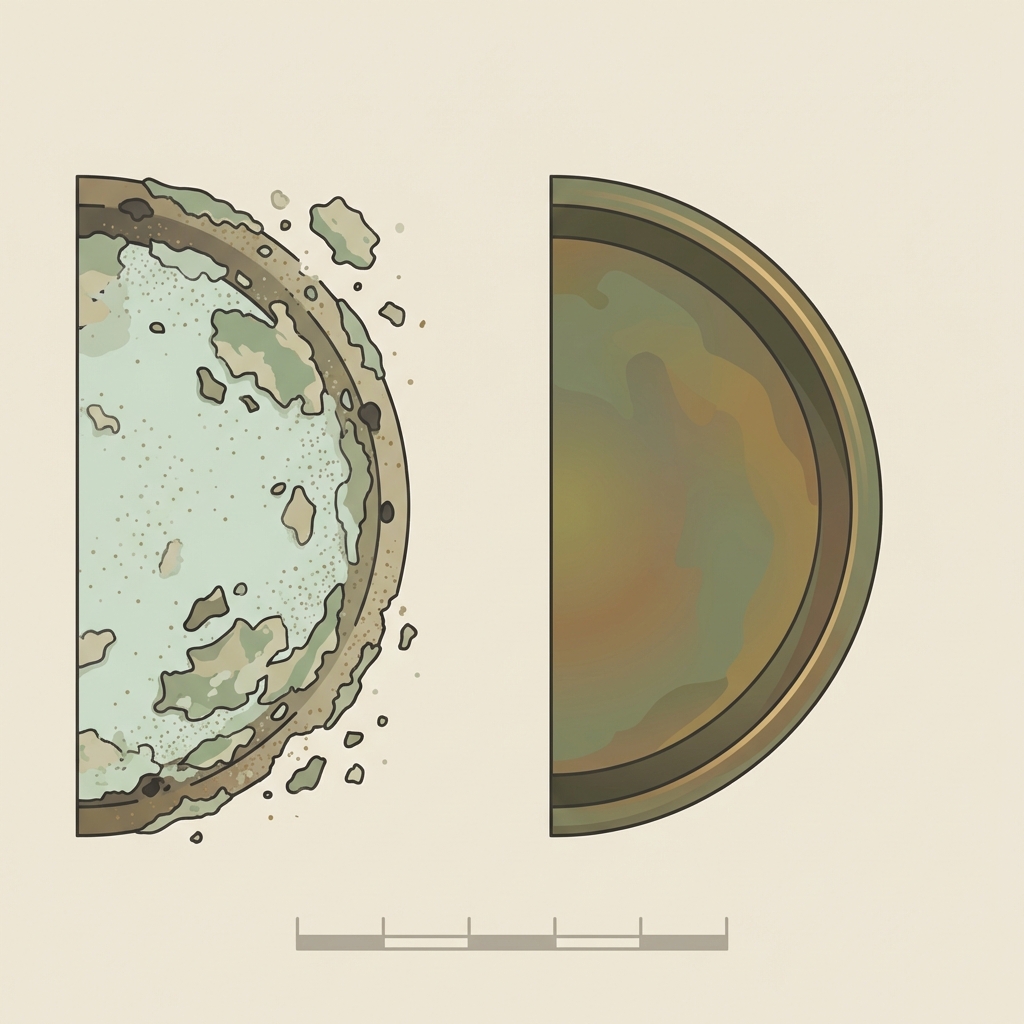
Do not attempt aggressive removal of corrosion at home. Uninformed mechanical cleaning, acidic dips or abrasive polishing can remove historical surface evidence and may accelerate corrosion by exposing fresh metal or dispersing soluble salts into inaccessible areas.
What conservators typically do
Conservators commonly use desalination baths, controlled chemical stabilisers, mechanical consolidation in localized areas and corrosion inhibitors as part of a documented treatment plan. They also record before and after condition reports so future owners know what was changed and why British Museum conservation guidance.
Because some treatments are irreversible, conservators balance intervention against preservation of historical surface evidence. A careful treatment aims to stabilise the object for safe handling and reduce transfer risk while keeping as much original material and patina as possible.
Common mistakes buyers make with ancient bronze rings
Misreading photos and condition notes
Buyers often assume that an intact looking surface equals safety; however, active corrosion can present as localized powdery blooms that may be missed in low resolution photos or cropped images. Ask for close up images of suspected areas and a clear statement about any observed friability or loose deposits before committing to wear Canadian Conservation Institute guidance.
Another common error is treating restoration notes as minor fine print. Detailed restoration notes may contain critical information about prior stabilisation work, replaced elements or areas deliberately left unrestored that affect whether a piece is advisable to wear.
Over-reliance on DIY tests
Home acid spot tests, magnet checks and scratch tests can damage surfaces and give unreliable signals about alloy composition; these approaches are discouraged in favor of non destructive screening by a qualified technician or conservator. When accurate composition data matters, professionals recommend XRF or laboratory assays rather than improvised home methods British Museum conservation guidance.
If a seller suggests a home test as proof of composition, ask instead for a documented XRF readout or a conservator s note confirming that the object was inspected and found stable for handling or wearing.
Practical scenarios: three real-world examples
Scenario A: stable patina, occasional wear
Scenario A describes a small Roman ring with even, adherent dark brown to green patina, clear restoration notes saying no active corrosion was present, and an XRF screening reporting copper and tin with low or undetectable lead levels. In this situation a conservator might rate the piece low risk for occasional wear, subject to routine checks and removal for activities that might wet or abrade the ring British Museum conservation guidance.
Suggested action: ask the seller for the XRF readout photograph, keep the ring out of water, and set a reminder to inspect and photograph the ring after a few wears to detect any change.
Scenario B: visible bronze disease do not wear
Scenario B is a ring clearly showing powdery green salts and flaking metal around the bezel and hoop. This indicates active chloride corrosion and the responsible approach is to avoid wearing, secure the object, request conservator intervention and obtain a treatment report before any handling that might transfer residues Canadian Conservation Institute guidance.
Suggested action: contact a conservator for a stabilisation plan, do not attempt cleaning at home, and retain photographic evidence to document the condition prior to treatment.
Scenario C: unknown alloy with sensitive skin test first
Scenario C describes a ring with unclear listing information, no reported tests and a wearer who has a history of contact dermatitis. Reasonable steps are to seek clinical patch testing for likely metal allergens and to request non destructive XRF screening to clarify alloy composition prior to wearing. Clinical and compositional data together inform a safer decision NHS guidance on allergic contact dermatitis.
Suggested action: postpone wearing until patch testing results and an XRF screening are available, and consider occasional wearing only if both assessments indicate low risk.
How sellers and listings should communicate safety and condition
Minimum listing information to ask for
Ask sellers for clear condition notes, high resolution photos of all surfaces, any tests performed such as XRF or ICP MS, and restoration receipts or notes when available. Listings that include before and after conservator photographs provide useful transparency for buyers considering wear British Museum conservation guidance. For comparison of listing formats see the ancient Roman rings collection.
When composition is claimed, request the original test readout or a conservator s brief so that the claim can be evaluated rather than taken on faith. Treat composition statements as contingent on the evidence provided rather than definitive proof.
How to read restoration and provenance notes
Restoration notes should list what was stabilised, repaired or left untouched and provide dates and conservator names or workshops when possible. Provenance and documentation help place an object in context and can support decisions about acceptable intervention for wear, but provenance alone does not guarantee that an object is safe to wear.
Good practice is to add any provided documentation to the object s file and include scans or photos of conservation receipts and testing readouts so future owners or conservators can understand past interventions.
If your skin reacts: immediate steps and next steps
What to do in the first 24 hours
If you develop skin irritation after contact with a ring, remove the ring, gently wash the skin with mild soap and water, and avoid further exposure. Photograph the reaction and the ring s contact surface to help clinicians and conservators evaluate the cause and to document potential residue transfer American Academy of Dermatology information on metal allergy.
For mild local irritation, observation may be reasonable, but if symptoms worsen, spread or involve significant blistering seek prompt medical advice. Keep the ring in a sealed container to preserve any residues that a clinician or conservator might request for analysis.
When to see a clinician or conservator
Contact a dermatologist for persistent or severe skin reactions and ask about patch testing to identify specific metal allergens. At the same time consider a conservator consultation if residues or visible corrosion are suspected, since the object itself may require stabilisation to prevent ongoing transfer NHS guidance on allergic contact dermatitis.
Inform the seller about the reaction and request any available testing or restoration documentation to support clinical or conservation follow up. Such documentation can help clinicians and conservators interpret risks and recommend the next steps.
Storage, transport and long-term preservation of wearable antiquities
Best-practice storage conditions
Store ancient bronze rings in low humidity, padded compartments away from reactive materials and direct sunlight, and check periodically for new corrosion signs. Low humidity and stable temperatures reduce the mobility of salts and the risk of bronze disease spreading or initiating British Museum conservation guidance.
Keep documentation, lab results and restoration receipts with the object so that provenance and care history travel with the ring. Photodocumentation taken before and after any wearing or treatment provides a clear record for future decisions about conservation.
Pack rings in padded containers with inert separation from other metals, avoid putting multiple metal items together in a single small bag, and include paperwork that describes the condition and any known risks. Use stable packing materials that do not off gas or contain acids which could interact with the object during transit.
If transporting for testing, include contact details for the receiving conservator or laboratory and a brief condition note so the receiving facility can prioritise handling if the object shows active corrosion on arrival.
Conclusion: balancing wearability, safety and conservation for an ancient bronze ring
Key takeaways
An ancient bronze ring can sometimes be worn safely for limited occasions if composition is known, active corrosion has been ruled out and any personal allergy risk has been assessed by a clinician. The decision framework emphasises testing, conservator input and conservative care to protect both wearer and object Canadian Conservation Institute guidance.
Prioritise clear documentation, conservative cleaning and professional advice rather than quick home fixes. Many pieces can be enjoyed responsibly as wearable history when the fundamentals of testing, stabilisation and monitoring are followed. See the Aurora Antiqua store for example listings.
Look for powdery green or blue salts, flaking metal, or areas that crumble under light touch; if in doubt, request a conservator inspection or professional testing.
Yes, XRF is a non destructive screening method commonly used to estimate surface alloy composition, but its results should be interpreted alongside condition notes and imagery.
Remove the ring, wash the area gently, photograph the reaction and seek dermatology advice; keep the ring secure for possible residue testing and inform the seller.
References
- https://www.britishmuseum.org/learn/conservation
- https://www.canada.ca/en/conservation-institute/services/objects/metal/bronze-disease.html
- https://www.journal-dermatology-example.org/article/10.0000/jced.2024.00123
- https://www.nhs.uk/conditions/allergic-contact-dermatitis/
- https://echa.europa.eu/hot-topics/lead-in-jewellery
- https://auroraantiqua.com/products/the-celestia
- https://www.aad.org/public/diseases/a-z/metal-allergy
- https://nuclead.com/metals-analysis/
- https://www.qa-group.com/en/glossary/x-ray-fluorescence-analysis-xrf/
- https://ims.evidentscientific.com/en/applications/portable-xrf-technology-archaeometry-authentication-conservation-art-objects
- https://auroraantiqua.com/
- https://auroraantiqua.com/collections/rings
- https://auroraantiqua.com/collections/ancient-roman-rings