


Looking for the real thing? Browse our full ring collection, each piece one of one, individually authenticated, with documented provenance. For the background, see the guide to ancient jewelry.
What is an ancient roman bronze ring? Definition and context
An ancient roman bronze ring is an ancient ring manufactured in the Roman world that in archaeological terms is described as bronze, a copper tin alloy whose exact makeup can vary by time and place. The alloy differences matter because the relative amounts of copper and tin and any trace metals influence how the metal ages and how reactive the surface can be to moisture and salts, which in turn affects wearability.
Typical examples include plain hoop rings, rings with raised bezels that once held intaglios or glass insets, and rings with simple iconographic motifs such as laurel wreaths, stylized animals, or geometric decoration. Many surviving examples show wear consistent with age: smoothing on the hoop, worn bezel edges, and a surface patina that records burial and handling history.
Follow @auroraantiqua for restoration insights and condition details
If you are looking at curated listings, check that condition notes and close interior photos are included so you can judge structure and any surface deposits before planning to wear a piece.
In practical terms, expect an ancient ring to present as an artifact rather than a modern jewel. Condition notes, restoration notes, and provenance help set appropriate expectations about durability and the likely need for careful handling rather than routine modern wear.
Typical forms and decorative motifs
Roman rings commonly appear as simple hoops, signet-style rings with a bezel for carving or intaglio, and ornamented bands. Bezels may be shaped as oval, circular, or shield forms, and iconography ranges from personal initials to deities or abstract patterns. Because many rings served both decorative and symbolic roles, design elements often reflect local workshops and fashions rather than a single imperial style.
What 'bronze' means in archaeological and trade contexts
In archaeological and trade descriptions the term bronze generally means a copper tin alloy, but the proportions and additional trace metals vary by region and period. That variation is important because some mixes are more prone to surface reactions than others, and a reported alloy or XRF note can change a decision about whether a ring is safe to wear.
When a seller or catalogue uses the term ancient ring or bronze, treat those terms as starting points for questions about condition, composition, and any conservation work that has been done.

How bronze alloys and patina behave over time
Patina versus active corrosion
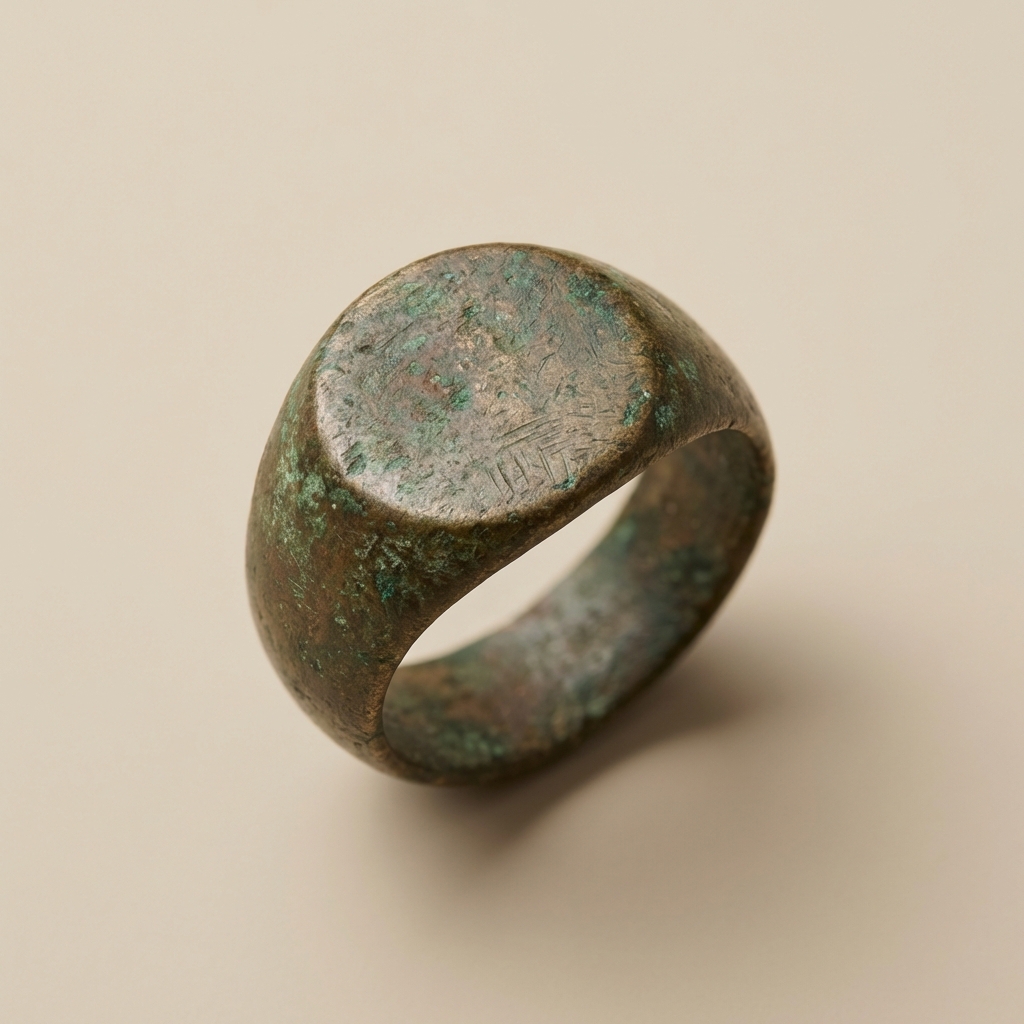
Copper alloys develop patina, a stable surface layer that often protects the underlying metal and can be part of the ring's character; patina differs from active corrosion, which is a progressive chemical attack that can continue to damage the object if left untreated. Conservators distinguish a stable, adherent patina from powdery, crystalline deposits that indicate ongoing corrosive activity.
Where an object shows active corrosion, professional conservation is advised because the process can continue under a seemingly intact surface and cause material loss and staining if worn or handled without stabilization, a point emphasized in museum conservation guidance.
What causes green or blue staining
Green or blue deposits are typically copper salts that result from reaction between copper, moisture, and environmental chemicals such as chlorides; these salts can rub off onto skin or fabrics and sometimes give the impression of the metal transferring to the skin. The chemistry producing these deposits explains why moisture, salts, and acids accelerate visible staining and why alloy composition and burial history influence how a ring behaves after it is recovered.
Can you safely wear an ancient roman bronze ring? Health and skin considerations
Allergy risk: copper versus nickel
True allergic contact dermatitis to copper appears to be uncommon according to dermatology guidance, while nickel remains the most frequent metal sensitizer, so the practical allergy risk from wearing a bronze piece depends partly on whether nickel contamination is present in the alloy or on repairs, which is why testing or documentation can matter for sensitive wearers.
Watch for skin signs that suggest irritation rather than simple staining: persistent redness, itching, blistering, or a reaction that does not resolve after removing the object. If those signs appear, remove the ring and seek medical advice; patch testing can determine sensitization to nickel or other metals.
Wearing an ancient roman bronze ring can be safe for many people if the object is stable, well documented, and cared for carefully; unstable pieces with active corrosion or unknown alloy contamination should be conserved or tested before regular wear.
In most cases staining alone is a cosmetic transfer of copper salts rather than an allergic rash, but because individual responses vary it is prudent to treat new or persistent reactions as a potential medical concern and consult a dermatologist for assessment and testing if needed.
Irritant reactions and staining
Irritant reactions can occur when sweat, cosmetics, or topical acids interact with the surface and produce local irritation or dyeing of the skin; these events differ from allergic contact dermatitis in mechanism, and stopping wear typically resolves the problem unless true sensitization is present. If you plan to wear a ring regularly and have known metal sensitivities, ask the seller about alloy details or testing before deciding to wear the piece against bare skin.
When a bronze ring should not be worn: recognizing bronze disease and instability
Visual signs of active corrosion
Look for powdery green or blue crusts, flaking or soft areas, loose concretions, and new verdigris on skin or cloth; these are visible signs that an object may be actively corroding and that wearing it could transfer salts or accelerate loss. When such signs are present, conservators typically advise against wearing the piece until it has been stabilized.
Even a ring with a long-standing patina can hide active chloride-driven corrosion beneath, so visual stability is not a guarantee of safety for either wearer or object.
Why active corrosion increases risk to wearer and object
Active corrosion can produce transferable copper salts that stain skin and apparel and may also cause progressive structure loss in the metal, so wearing an unstable ring risks both personal irritation and further damage to the artifact. Because the process can continue in contact with moisture, stabilization and desalination by a conservator are often recommended before resuming handling or wear.
Conservator-recommended care before and while wearing a bronze ring
Simple checks before first wear
Before wearing an ancient ring for the first time, request clear condition notes and high-resolution photographs of the interior, bezel, and any areas that look encrusted or powdery so you can judge structural soundness and surface chemistry. Sellers who curate wearable antiquities will often include restoration notes and provenance to help buyers make an informed choice.
When a seller notes that a piece has been stabilized or treated, ask for conservator treatment notes or a brief description of the specific interventions performed so you understand what stabilization implies for future handling and whether further maintenance is likely to be needed.
Daily handling and storage tips
Simple habits can reduce corrosion risk and prevent staining. Wipe off sweat and cosmetics after wearing, avoid prolonged exposure to water and chemicals, and store rings in dry, stable conditions away from acidic materials. Gentle cleaning with pH-neutral soap and careful drying are commonly recommended for stable objects before wear.

If you plan to wear a curated piece from a specialist seller, expect transparent condition notes, restoration notes, and provenance or collection history when available, because those details are central to assessing whether a specific ring is suitable for personal wear.
Everyday habits that increase corrosion or staining
Chemicals and activities to avoid
Exposure to acids such as perfumes or household cleaners, frequent contact with chlorides from pools or seawater, and prolonged moisture from sweat all increase corrosive activity; avoiding these exposures reduces the chance of new staining or active deterioration.
Avoid abrasive cleaning or aggressive polishing because those actions can remove a stable patina and damage fine details, which both harms the artifact and can expose fresh metal to renewed corrosion.
How perspiration and acidity affect bronze
Perspiration contains salts and acids that can speed the formation of copper salts on the surface and thereby increase staining and local corrosion; for regular wearers this means limiting long spells of physical activity while wearing the ring and drying the ring promptly if it becomes damp.
Buying checklist: what to ask before you plan to wear an ancient roman bronze ring
Documentation and photographs to request
Ask sellers for condition notes, restoration notes, interior and bezel photographs, and any provenance or collection history; these items give context and allow you to judge whether the item is presented as a wearable antiquity or a conserved museum object. When possible, request details of any tests such as XRF or lab assays that reveal alloy composition and potential nickel content.
Red flags that suggest conservation first
Red flags include descriptions of active corrosion, powdery green deposits, loose concretions, or a seller who cannot or will not provide close-up images and clear condition information. Those signs suggest a conservator should assess and possibly treat the piece before it is handled regularly or worn.
printable buyer questions to request condition and test details
Use as a cover note when emailing a seller
Interpreting condition and restoration notes
Common restoration terms and what they mean
Terms such as stabilized, consolidated, and filled have specific implications. Stabilized usually means measures were taken to arrest active corrosion, consolidated indicates fragile areas have been strengthened, and filled means material was used to replace losses or support weakened areas; each term suggests a different post-treatment handling expectation and should prompt a request for treatment documentation.
When a seller claims stabilization, ask whether a conservator performed the work and request any treatment notes or before and after images so you can assess whether the object remains suitable for wear or should be handled only occasionally.
What stabilized corrosion implies for wear
Stabilization can make handling safer and reduce transfer of salts, but it rarely eliminates the need for ongoing care. Even stabilized rings benefit from limited exposure to moisture, routine inspection, and conservative cleaning to avoid undoing treatments or exposing fresh metal.
Testing alloy and contamination: when to ask for XRF or a lab assay
What XRF can and cannot tell you
XRF report is a common non-destructive method to identify surface and near-surface metal composition and can often detect major and some trace elements including nickel, which is useful for allergy risk assessment. An XRF report from the seller increases confidence about alloy makeup but remember that XRF is surface-sensitive and may not reflect buried heterogeneity or local repairs.
If a listing reports XRF results, treat those findings as useful but not infallible, and consider requesting testing details or a lab assay for ambiguous or high-risk cases such as when the buyer has known metal allergies.
Why nickel detection matters for allergy risk
Because nickel is the most frequent metal sensitizer in dermatology practice, identification of nickel in an alloy is important information for anyone with a known nickel allergy; absence of reported nickel reduces one major source of concern but does not rule out other irritant mechanisms such as copper salt transfer.
Practical cleaning steps safe for most stable bronze rings
Gentle at-home cleaning routine
For rings that are documented as stable and free of active corrosion, a conservative routine works well: remove loose dirt with a soft brush, wash sparingly with a mild pH-neutral soap and water, rinse briefly, and dry thoroughly with a soft cloth. Avoid soaking and do not use acidic or abrasive cleaners that can alter patina or damage details.
If you observe powdery deposits, flaking, or any structural weakness while cleaning, stop and seek professional conservation rather than continuing home treatment, because at that point the ring may need desalination or consolidation performed by a conservator.
When not to clean at home
Do not attempt home cleaning when a ring shows signs of bronze disease, loose fragments, or complex encrustations. Such symptoms call for qualified assessment because improper treatment can accelerate loss or make later conservation more difficult.
When to seek professional conservation rather than DIY
Signs that require a conservator
If a ring exhibits active bronze disease, loose fragments, structural instability, or if it carries valuable documented provenance that could be compromised by home treatment, contact a conservator. Professional intervention is particularly important when descriptions indicate chlorides or salt encrustation that may be driving corrosion.
Conservators can assess and prioritize treatment, document interventions, and provide aftercare recommendations that help both object safety and wearer peace of mind.
What conservation treatment typically involves
Common treatments include stabilization to arrest active corrosion, consolidation to strengthen friable areas, and in some cases desalination to remove chlorides that fuel bronze disease. Treatment notes or a conservator report help future owners understand what was done and what ongoing care will be needed.
How to wear ancient rings safely: real-world scenarios and tips
Everyday wear for a stable ring
For a ring assessed as stable and documented as such, a cautious daily plan includes removing the ring for heavy manual tasks, avoiding swimming and showers while wearing it, wiping it dry after contact with moisture, and keeping a photographic record of the interior and finger after initial wears to spot any transfer staining or new corrosion.
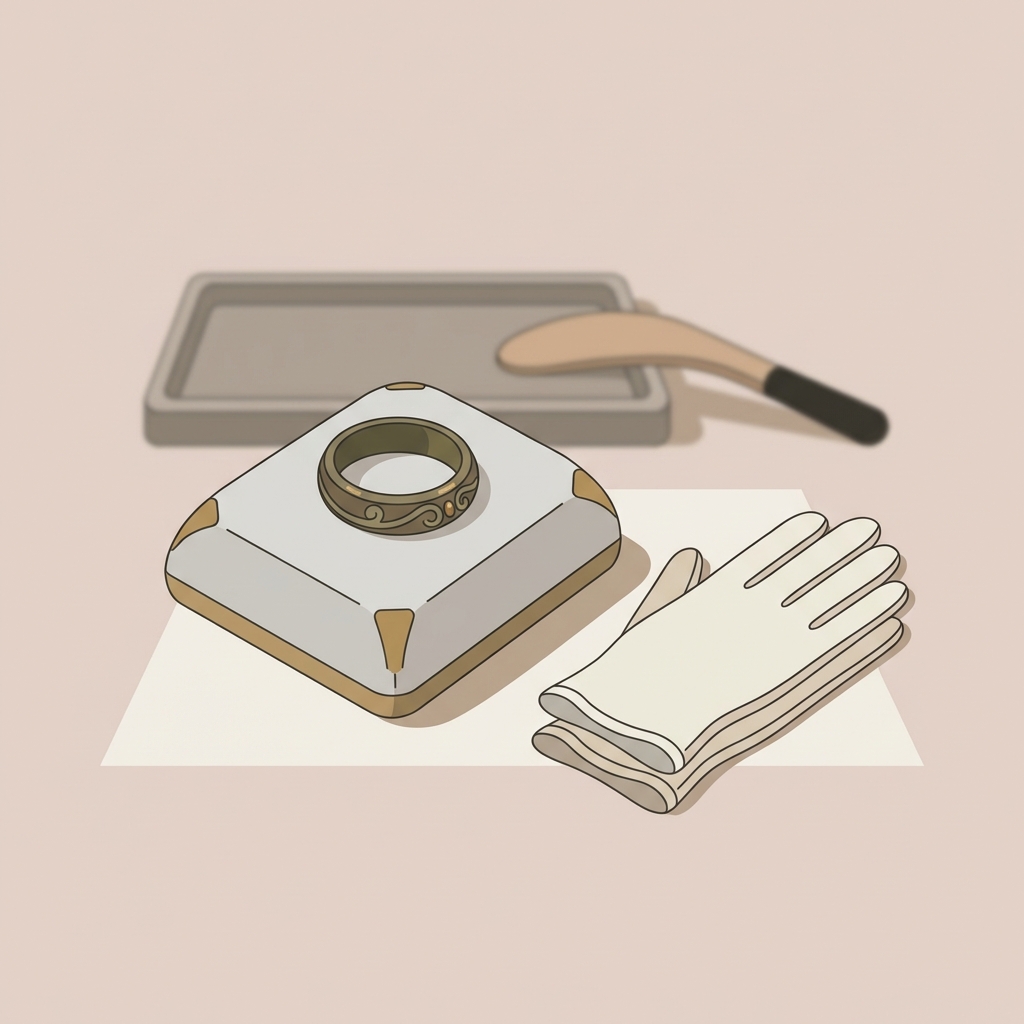
Regular inspection is an important habit: check for new green or blue staining, new flaking, or the appearance of fresh deposits on the ring or on fabric where it contacts, and pause wearing if any of those signs appear.
Occasional wear and special event use
If you intend to wear an ancient ring only occasionally, the lowest risk approach is to try it on at home for short periods, avoid activities that cause sweating, and return it to protective storage promptly. For important events a safe approach is to wear it over a thin glove or on a chain when possible to limit direct skin contact.
Common mistakes collectors make with wearable antiquities
Assuming stable appearance equals safety
Collectors sometimes assume that an old, stable-looking patina means the object is safe to wear, but that appearance can hide chloride-driven corrosion or weak subsurface areas. Always corroborate visual impressions with condition notes or a conservator check when in doubt.
Avoid aggressive at-home polishing intended to make the metal look new, because removing patina can both damage the artifact and expose fresh metal that corrodes more rapidly.
Ignoring documentation and restoration history
Failing to request restoration notes, provenance, or test results is a common error. Those documents are part of responsible buying and they help you and any conservator who may later treat the object understand its history and the decisions that have already been made about its care.
Summary: deciding whether to wear an ancient roman bronze ring and next steps
Quick decision checklist
Wearing an ancient ring can be safe for many people when the piece is stable, well documented, and cared for appropriately. Before you decide to wear a ring, check condition notes, ask about stabilization or XRF testing for nickel, avoid high-exposure activities, and consider having a conservator evaluate any suspected active corrosion.
If you notice skin redness, itching, blistering, or persistent discoloration after wearing a bronze ring, remove the ring and consult a dermatologist who can offer patch testing to determine sensitization to metals or copper salts.
Where to get help and further reading
When in doubt, rely on conservator advice for object safety and on dermatologists for health concerns; see our Q&A on whether you can wear ancient rings. Request treatment reports or XRF notes from sellers when available, and keep correspondence and photographs to document condition and care decisions over time.
True allergy to copper is uncommon; most reactions are irritant or due to nickel contamination. If you experience redness or blistering, remove the ring and consult a dermatologist for patch testing.
Green or blue staining is usually copper salts rubbing off and is cosmetic, though it can indicate active corrosion that needs conservation; stop wearing and seek assessment if staining is persistent.
For stable rings a gentle soft brush with pH-neutral soap and careful drying is acceptable; if there is powdery corrosion, flaking, or loose pieces, stop and consult a conservator.
More from Aurora Antiqua
References
- EAP, Estonian Journal of Archaeology Publications, Estonian Academy Publishers
- Long-term corrosion of copper alloys in the soil, Heritage Science (Springer Nature)
- Bronze disease, Conservation Wiki, AIC Wiki, American Institute for Conservation
- Conserve O Gram 10/2: Caring For Silver And Copper Alloy Objects, National Park Service, US Department
- Conserve O Gram 4/16: Creating A Microclimate Box for Metal Storage, National Park Service, US Department
- Archaeological materials, Icon, The Institute of Conservation (UK)
- Hallmarking, The Assay Office Birmingham
- Nickel Allergy, DermNet, New Zealand
- Contact dermatitis, NHS, NHS (National Health Service, England)