


Looking for the real thing? Browse authenticated ancient rings, each piece one of one, individually authenticated, with documented provenance. For the background, see the guide to ancient jewelry.
Short answer: can you wear an ancient copper ring safely?
Short answer, in plain terms: an ancient copper ring can often be worn with low health risk, because most contact issues are cosmetic staining rather than systemic poisoning; however, allergic contact dermatitis to copper is documented and may affect sensitized individuals, so check your history before prolonged wear.
Wearing an ancient copper ring is often acceptable with low systemic risk because most issues are cosmetic staining; however allergic contact dermatitis can occur, so check condition notes, consider patch testing if you have prior metal reactions, and consult a conservator for corroded pieces.
Do you have a history of metal reactions? If you do, treat that as the primary deciding factor and consider clinical testing before regular wear.
Quick summary for collectors
For collectors the key points are simple: confirm the material and condition notes on the listing, see the rings collection, look for signs of active corrosion or unstable crusts, and expect that surface oxidation can produce green or dark staining on skin that is usually removable with cleaning or barrier measures; authoritative clinical summaries describe staining and contact dermatitis as the principal concerns for topical exposure to copperMayo Clinic contact dermatitis.
If the listing includes restoration notes or provenance, use that information to decide whether the piece has been stabilised or if it retains loose deposits that could increase local irritation risk. When in doubt, short trial wear and careful monitoring are prudent steps before regular use.
When to read further
Read on if you have a history of metal sensitivity, if the ring shows loose green crusts in photos, or if condition and restoration notes are vague about cleaning and stabilisation; these factors change the risk balance and may require conservator input or dermatology advice.

If your priority is wearable history rather than continuous daily wear, there are conservation-minded steps that reduce staining and limit skin contact, and those are described below.
What do we mean by an ancient copper ring: materials, corrosion, and documentation
Copper versus copper-alloy (bronze) and common historic uses
In listing language an ancient ring described as a copper or bronze piece usually refers to a copper-based metal, where bronze indicates a copper-tin alloy that was commonly used across Roman, Greek, Byzantine, and medieval workshops; material descriptions on listings are often estimates unless metallurgical testing is provided, so treat the stated metal as informed but potentially approximate.
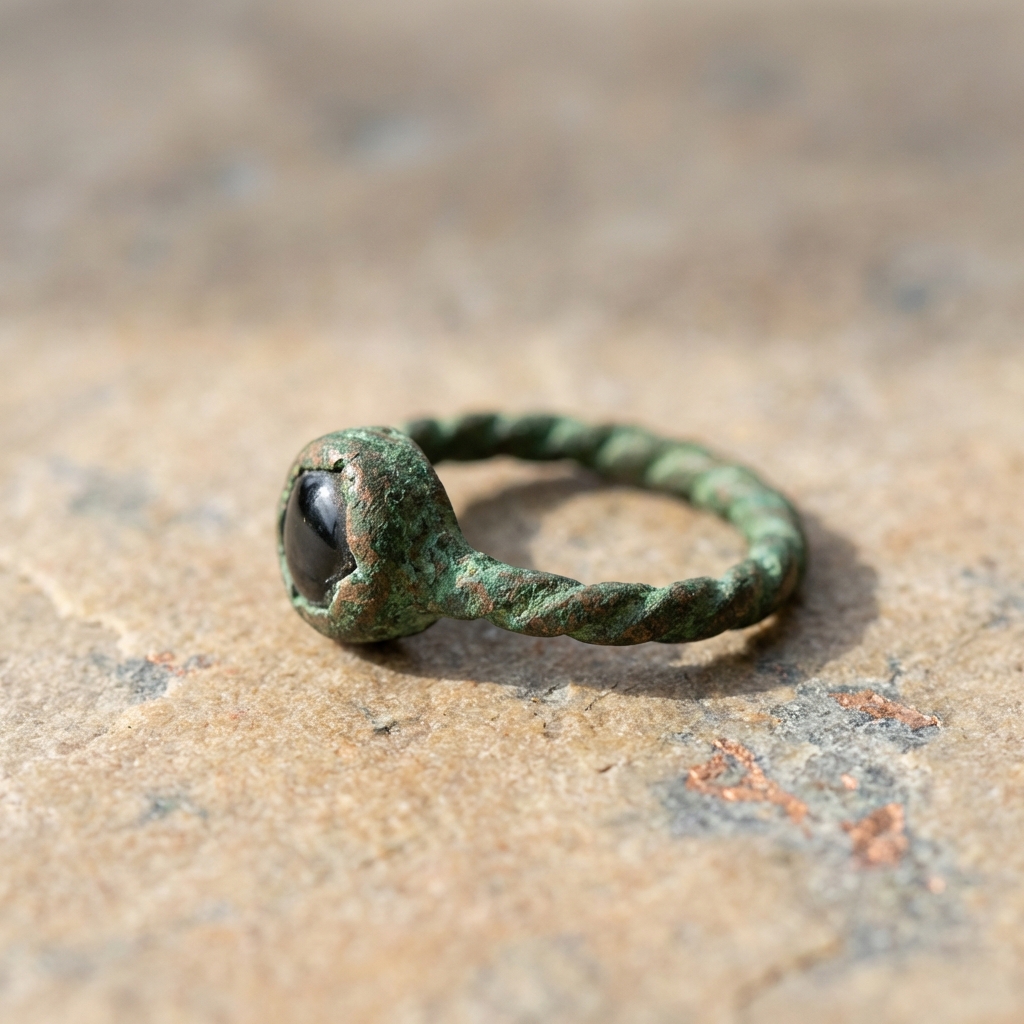
Collectors should expect patina and surface deposits on most genuine antiquities, and should look for condition notes that specify whether the metal was chemically stabilised, mechanically cleaned, or left untouched to preserve original surface character.
Patina, corrosion, and what condition notes should say
Patina is the surface layer that develops through long-term oxidation and burial; it can be stable and desirable as evidence of age, but active corrosion or loose crusts indicate ongoing chemical change that can increase the transfer of copper salts to skin and therefore raise the risk of irritation when worn regularlyATSDR toxicological profile for copper.
Condition notes should describe whether loose crusts were consolidated, whether any active verdigris or green salts remain, and whether repairs or modern stabilisation were performed. If notes are absent or vague, ask the seller for higher resolution images and targeted condition details before deciding to wear the piece.
Provenance and restoration notes: why they matter for wear
Provenance and restoration notes are relevant because they often record past treatments that affect how safe an object is to wear; restoration that included stabilisation and protective coatings can reduce salt transfer, while unknown or amateur repairs may leave residues or unstable surfaces that increase local irritation risk.
When a listing includes documentation such as collection history or treatment reports, use those documents to understand what was done and whether conservator input is recommended for future handling or for any proposed protective treatment. See related ancient Roman examples in the ancient Roman rings collection.
How copper contact affects skin: staining, irritation, and systemic risk
Why copper stains skin and how staining differs from allergy
Contact with copper or copper alloys commonly produces green or dark skin staining because surface oxidation forms copper salts that can transfer to skin; this staining is usually a topical, cosmetic effect and can often be reduced or removed with cleaning or barrier measuresMayo Clinic contact dermatitis.
Staining is not the same as allergic contact dermatitis. Staining is a chemical transfer from the metal to the skin surface, while allergic reactions reflect immune sensitisation and produce redness, itching, blistering, or other dermatitic changes rather than mere colour change.
See restoration and handling up close on @auroraantiqua
Review condition notes and the decision checklist below before you try an item on skin, and consider short trial wear to monitor for staining or irritation.
Allergic contact dermatitis: how common and how it presents
Systematic reviews and case series show that allergic contact dermatitis to copper is less common than reactions to metals such as nickel, but documented cases confirm that sensitised individuals can develop dermatitis on contact with copper-containing alloys, so anyone with prior metal allergy should treat copper exposure cautiouslysystematic review of allergic contact dermatitis to copper. For an accessible review of copper hypersensitivity see Copper hypersensitivity - Contact Dermatitis.
Typical presentation includes localized redness, itching, and sometimes blisters or scaling at the contact site; severity and timing vary between individuals, and cross-reaction with other metals may complicate clinical interpretation.
Why systemic copper poisoning from wearing a ring is unlikely
Authoritative toxicology sources emphasise that systemic copper toxicity is primarily associated with ingestion or occupational inhalation rather than routine dermal contact; routine skin exposure to a ring therefore poses extremely low risk for systemic copper poisoning in normal useATSDR toxicological profile for copper.
That said, avoid wearing metal jewellery on broken skin or when prolonged moisture exposure will occur, because open wounds and sustained wetness change skin permeability and can increase local reactions and potential absorption pathways.
How to find out if you will react: patch testing and clinical steps
When to consider patch testing
Patch testing is the accepted clinical method to diagnose metal hypersensitivity and many dermatology centres can include copper or broader metal series panels on request; consider testing if you have a history of unexplained rashes from jewellery or if you plan to wear an ancient copper ring regularlyACDS patch testing information (see a clinical overview review article).
Patch testing is particularly valuable when a patient has recurrent dermatitis that correlates with metal exposure, because it helps isolate which metals provoke a response and guides practical avoidance strategies.
What a patch test can and cannot tell you
A positive patch test indicates sensitisation to a tested metal under standardised conditions, which suggests a higher risk of a clinical reaction on contact; a negative test reduces likely sensitivity but does not absolutely eliminate the chance of a reaction to a specific artifact, particularly if the object has uncommon corrosion products or residues.
Cross-reactivity between metals can occur, and tests vary in which metal salts are included, so discuss the proposed testing panel with your dermatologist to ensure it reflects your exposure concerns.
Talking to a dermatologist and preparing documentation
When you see a dermatologist bring clear photos of the ring, the seller's condition and restoration notes, and a timeline of any past reactions; these items help clinicians match clinical findings to likely exposures and select an appropriate patch test panelContact dermatitis, NHS, NHS (National Health Service, England). Practical instructions for patch testing are also available from clinical centres patch testing instructions.
If testing confirms sensitisation, use the results to guide whether trial wearing with protective measures is reasonable or whether complete avoidance of direct skin contact is advised by the clinician.
Practical care and mitigation for wearing an ancient copper ring
Conservation-minded care starts with gentle cleaning to remove loose oxidation, thorough drying, and limiting prolonged moisture exposure; simple precautions like these reduce both staining and the skin's exposure to copper saltsBronze disease, Conservation Wiki, AIC Wiki, American Institute for Conservation.
Quick-care checklist for handling and trial wearing an ancient ring
Use conservator advice for valuable items
If you choose protective options, consider inner banding or a clear barrier coating applied by a conservator; these measures can reduce direct skin contact but may alter appearance and should be discussed with a specialist to weigh aesthetic and preservation trade-offs.
For everyday handling, remove the ring before swimming, heavy sweating, or activities that keep the item wet for prolonged periods. Also avoid wearing on broken skin and store the piece dry in archival-grade materials when not in use.
When you probably should not wear an ancient copper ring regularly
Signs that a ring is unsuitable for wear
Do not wear a ring regularly if photos or condition notes show loose green crusts, flaking corrosion, or reports that repairs are unstable; these signs indicate active chemical change and increase the likelihood of local irritationATSDR toxicological profile for copper.
Similarly, if restoration notes are vague about the nature of past treatments or if the seller cannot confirm stabilisation, treat the object as higher risk for skin contact until a conservator evaluates it.
Situations of elevated risk
Avoid regular wear on damaged or broken skin or during activities that cause prolonged moisture exposure because these conditions increase skin permeability and raise the chance of irritation or secondary infection from chronic rubbing or trapped moistureMayo Clinic contact dermatitis.
If you have a documented metal allergy or multiple prior reactions to different metals, adopt a conservative approach: trial short wear under observation and seek dermatology input before extended use.
How to get a second opinion
When in doubt consult a professional conservator about stabilisation and a dermatologist about skin risk; describe the object's condition fully and provide any restoration records so both specialists can give targeted advice specific to the artifact.
A conservator can advise on non-invasive consolidants or reversible coatings that reduce salt transfer, and a dermatologist can recommend testing or avoidance strategies tailored to your clinical history.
A practical decision checklist for buyers and wearers
Before you wear, follow this short checklist: confirm the material description, read condition and restoration notes, inspect photos for loose crusts, look for provenance documentation, and consider whether you have prior metal reactions that suggest testingAbout us, International Association of Dealers in Ancient Art.
Ask sellers about cleaning history, any stabilisation or consolidants used, and whether independent documentation or treatment reports exist. If none are available, request clearer photos and targeted condition answers before purchase. You can also contact us for questions about listings.
If you plan to wear the ring, do a short trial of one to two hours and record any changes in skin colour or sensation; stop wearing immediately if you notice redness, itching, or blistering, and seek dermatology advice if symptoms persist.

Real-world scenarios: examples and what to do
Wearing an ancient Roman bronze ring with intact patina
Scenario: a well-documented Roman bronze ring with stable, intact patina and clear restoration notes indicating consolidation. Recommended approach: gently clean the interior band to remove surface dust, dry thoroughly, try the ring for short periods while monitoring for staining or irritation, and consider a conservator-applied inner band or reversible clear coating if you want extended daily wear.
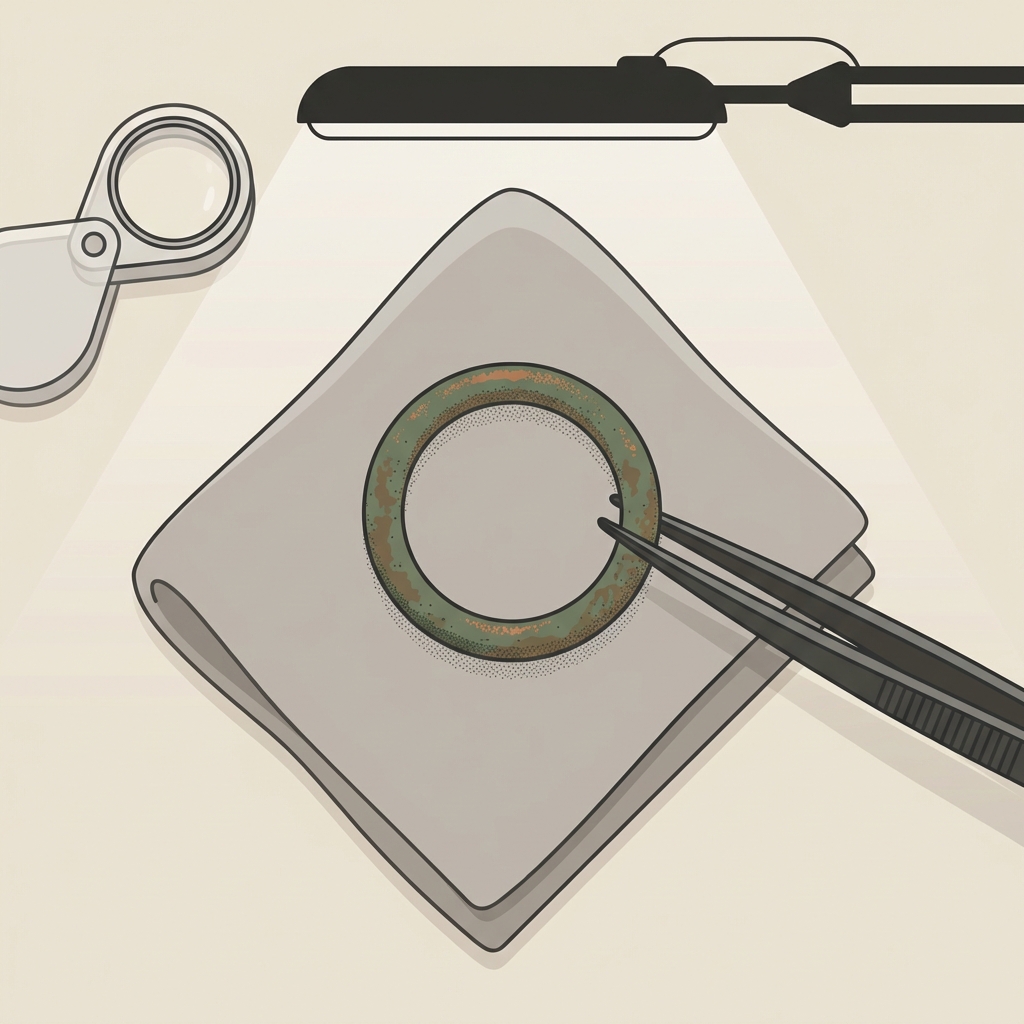
This approach balances wearable history with caution, emphasises monitoring, and preserves original surface character when conservator input is used for any irreversible changes.
A medieval copper ring with loose green crusts
Scenario: a medieval copper ring that shows loose green crusts and flaking in photographs. Recommended action: do not wear the ring on skin until a conservator stabilises the deposits; loose salts are likely to transfer to skin and increase irritation risk, and consolidation also protects the artifact from further lossATSDR toxicological profile for copper.
If you already own such a piece and notice skin reaction after brief contact, remove the item immediately, gently clean the contact area with mild soap and water, and consult a dermatologist if symptoms persist.
A buyer with known nickel allergy who wants to try copper
Scenario: you have a known nickel allergy and are considering an ancient copper ring. Recommended steps: seek patch testing that includes a copper or metal series, share test results with a conservator or seller when discussing protective options, and if tests are negative, trial short wear with close monitoring before committing to daily useACDS patch testing information.
Remember that a negative test does not remove all uncertainty, especially if the artifact has unusual corrosion products, so use trial wear and record-keeping to make a cautious decision.
Conclusion: balancing wearable history with cautious care
Main takeaway: most contact from an ancient copper ring causes cosmetic staining rather than systemic poisoning, allergic reactions are possible but less common than reactions to metals like nickel, and routine dermal exposure rarely leads to systemic copper toxicity according to toxicology guidanceATSDR toxicological profile for copper.
Practical next steps are to check condition and restoration notes, clean and dry the piece before wear, consider patch testing if you have a history of metal allergy, and consult a conservator for unstable corrosion. Aurora Antiqua provides condition and restoration summaries where available to help buyers decide, but consult clinical or conservation specialists for definitive health or stabilisation advice.
Green or dark staining from a copper ring is typically a topical transfer of copper oxidation products and is usually removable with cleaning or barrier measures; it is cosmetic rather than an allergic or systemic reaction.
Yes, allergic contact dermatitis to copper is documented though less common than reactions to nickel; if you have a history of metal allergies consider patch testing before prolonged wear.
Systemic copper poisoning from wearing a ring is extremely unlikely in normal use because authoritative toxicology identifies ingestion or inhalation as the primary systemic exposure routes.
More from Aurora Antiqua
References
- Contact dermatitis, Causes, National Health Service (NHS), UK
- Contact dermatitis, NHS, NHS (National Health Service, England)
- Nickel Allergy, DermNet, New Zealand
- Black Dermographism: An Uncommon Cause of Skin Discoloration, PMC, Indian Dermatology Online Journal, DOI
- Cadmium in Children's Jewelry, New York State Department of Health
- Bronze disease, Conservation Wiki, AIC Wiki, American Institute for Conservation
- Long-term corrosion of copper alloys in the soil, Heritage Science (Springer Nature)
- Archaeological materials, Icon, The Institute of Conservation (UK)
- About us, International Association of Dealers in Ancient Art
- PubMed Central