


Looking for the real thing? Browse genuine ancient rings for sale, each piece one of one, individually authenticated, with documented provenance. For the background, see the guide to ancient jewelry.
What an ancient copper ring is and why it matters
Definition and typical forms
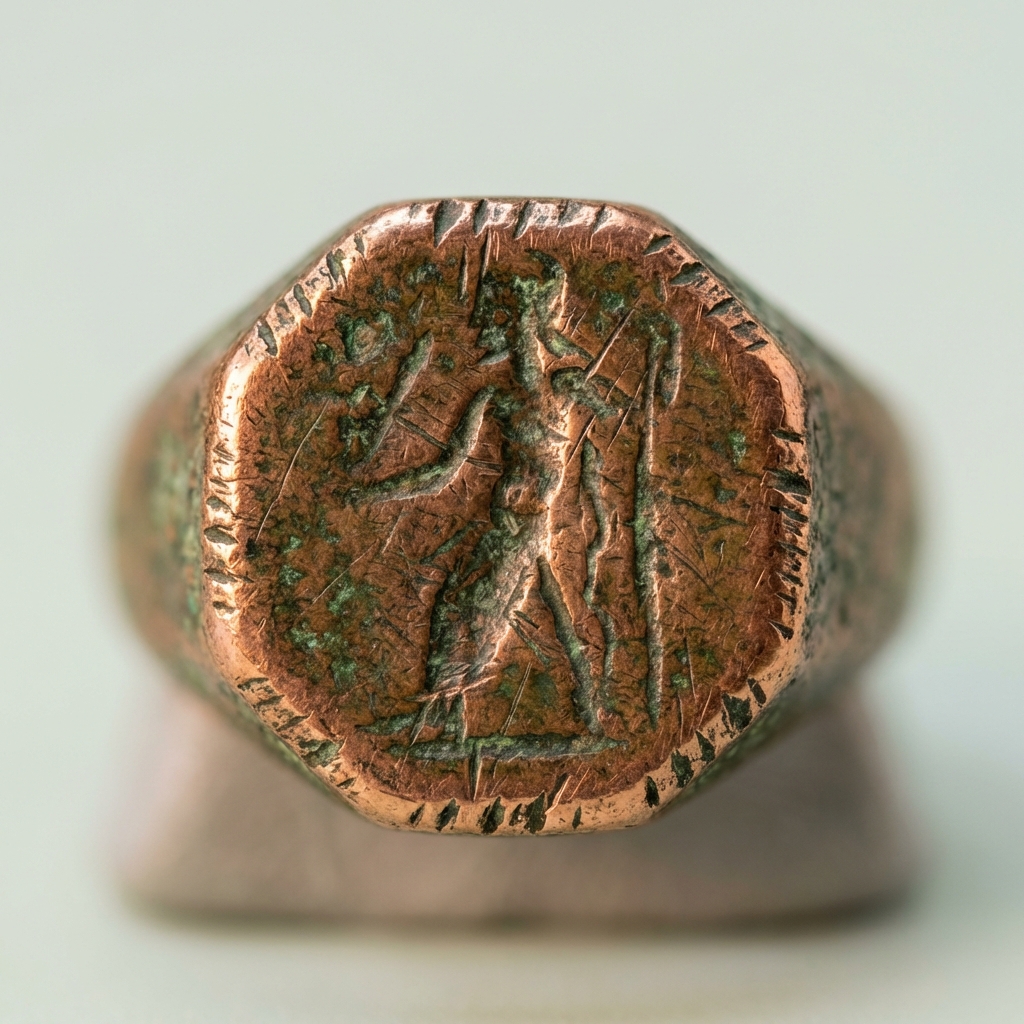
An ancient copper ring is an archaeological object made primarily from copper or a copper alloy, shaped as a hoop, bezel ring with a set or intaglio, or a simple band used for daily wear or ceremonial display. Collectors and curators commonly use the term to describe items that range in date from the Bronze Age through Roman and medieval contexts and that show wear consistent with age, such as flattened shoulders, softened details, and a stable patina, as discussed in institutional literature Metropolitan Museum of Art timeline on jewelry.
ancient copper ring
As a category, an ancient copper ring can vary widely in manufacture, from thin, hand-formed bands to cast or die-stamped rings with octagonal bezels and numeric or figural motifs. Typical features to learn to recognise include the bezel, any surviving intaglio or setting, the hoop profile, and signs of conservation or repair.

Why collectors value them
Collectors value ancient rings for their direct connection to past workmanship, iconography, and use-life. Value often depends less on a modern sense of gem quality and more on provenance, condition notes, patina preservation, and clear photographic and documentary records supplied by the seller; those elements help establish the object’s narrative and collection history British Museum Bronze Age metalwork overview.
When considering an item, bear in mind that health claims about copper are separate from the reasons scholars and collectors find these rings meaningful; the latter rests on craft, context, and documentation rather than on modern therapeutic promises.
The archaeological record: where and when copper rings show up
Chronological spread from Bronze Age to medieval times
Copper and copper-alloy rings are a recurring element in archaeological assemblages, appearing from Bronze Age graves and hoards through Roman burials and into medieval contexts. This long chronological span reflects wide accessibility of copper as a material and varied local uses and motifs, a pattern documented in museum and archaeological syntheses Metropolitan Museum of Art timeline on jewelry.
Rings from different periods often differ in manufacture and finish; Bronze Age examples may show simple casting or hammered forms while Roman pieces can display cast bezels with intaglio work or stamped decoration. Regional workshop habits and local alloy recipes help explain stylistic variation across sites and centuries.
Regional workshops and common materials
Across regions, copper alloys such as bronze or brass were common, with workshop traditions influencing bezel shapes, decorative repertoire, and mounting techniques. Knowing the regional vocabulary of forms is useful when assessing attribution language in listings, since workshop features can be diagnostic for dating and origin.
Symbolism and motifs: what an ancient copper ring could mean
Common motifs and their typical interpretations
Bezels and intaglios often carry geometric designs, numeric symbols, deity or animal imagery, and simple inscriptions, each of which can indicate personal identity, protective use, or affiliation. Interpretation relies on context and comparative material rather than assumption; a repeated motif in a region can point to shared symbolism or workshop conventions rather than a single, fixed meaning.
Gemstones such as carnelian or agate that survive in bezel settings sometimes bear carved imagery; these intaglios are valuable comparanda when attempting to link a ring to an iconographic tradition or to broader social practices.
See behind the desk with Jakob on Instagram
Explore curated listings and editorial notes that describe motifs and condition without implying health claims, so you can decide which pieces match your interests.
Rings as identity, protection, or status markers
In many contexts a ring could function as a marker of identity, a protective amulet, or a sign of status depending on its materials, imagery, and find context; museum catalogues and comparative studies are useful starting points when reading such objects. Always treat symbolic readings as provisional and tied to documented context.
Material properties: copper, copper alloys, and antimicrobial findings
What materials are in ancient copper rings
Historically, a range of copper alloys were used, including bronze and brass, each developing characteristic corrosion products and surface patina depending on burial conditions and later handling. Patina formation is an important element of an object’s history, and conserving that surface preserves information about age and use. See a recent multianalytical investigation into copper-based artifacts for further analytical context multianalytical investigation.
Laboratory findings on antimicrobial surface activity
Laboratory studies and public health literature document that copper and some copper alloys can reduce microbial contamination on surfaces under controlled conditions, a material property increasingly applied in public settings; these findings concern surface activity and do not, by themselves, demonstrate therapeutic effects from wearing copper jewelry EPA summary on antimicrobial copper alloys. Additional non-invasive chemical analyses are available for comparative reference non-invasive chemical analyses.
It is important to separate materials science from consumer health claims: surface antimicrobial results are context specific and do not translate directly into proven relief for inflammatory conditions when wearing a ring.
Clinical evidence and safety: what trials and toxicology say
Clinical trials on copper jewelry for arthritis
High-quality randomized trials and systematic reviews up to 2026 have not found consistent, measurable benefits from wearing copper bracelets or rings for rheumatoid arthritis or osteoarthritis beyond placebo effects; readers should treat therapeutic claims with scepticism unless supported by rigorous, peer reviewed evidence Clinical evidence summaries on copper bracelets and arthritis.

For buyers, the practical implication is to avoid relying on an ancient copper ring as a medical treatment. If a listing suggests health benefits, ask the seller for the basis of those claims and for independent evidence; sellers that present condition notes, restoration notes, and provenance documentation help buyers make informed choices.

Contact dermatitis and toxicity considerations
Typical skin contact with copper alloys is low risk for most individuals, but contact dermatitis and localized allergic reactions can occur in sensitized people, and systemic copper toxicity is associated with ingestion or sustained high exposure rather than ordinary wear. Basic toxicology guidance explains exposure routes and reasonable precautions ATSDR toxicological profile for copper.
When trying a piece, observe how your skin reacts and consider wearing a liner or rotating the ring off the finger if irritation appears. Keep in mind that a visible greenish residue is often corrosion product and not an indicator of therapeutic action.
Conservation and care: preserving patina and historical information
Museum and conservation best practice
Conservation guidance for metal objects recommends minimal intervention, photographic documentation, and stabilizing active corrosion rather than abrasive cleaning that removes patina or original surfaces. Following these practices helps preserve historical information and condition notes for future study Canadian Conservation Institute guidance on caring for metal objects.
For collectors who value the object as an artifact, the priority is to preserve surface evidence. Professional conservators record treatments and provide restoration notes that should accompany any sale or transfer to maintain transparency about interventions.
What to avoid when cleaning
Avoid aggressive polishing, leather rubbing, or chemical dips that remove the stable patina or thin original surfaces. Such actions can erase tool marks, wear patterns, and burial residues that are meaningful for dating, attribution, and authenticity assessments.
If cleaning at home, use the gentlest possible methods and document the object’s appearance with high resolution photos before and after any intervention, so restoration notes remain accurate and useful to future owners.
How to evaluate an ancient copper ring before you buy
Checklist for listings and photos
Start with a clear itemised checklist: provenance and documentation, high resolution photos from multiple angles, exact measurements, condition notes, and any restoration or conservation reports. When those elements are present, a listing gives a stronger basis for trust and further inquiry Metropolitan Museum of Art timeline on jewelry. You can also browse examples in our rings collection to see how listings are presented.
Buyer checklist for assessing listings
Use before purchase to request missing information
Assess patina and wear consistent with age: look for softened detail at frequent contact points and for corrosion patterns that match the listed history. If the listing uses workshop attribution language, ask for the comparanda or specialist basis for that claim.
When to seek specialist reports
If provenance is incomplete, dating is disputed, or the price suggests high rarity, ask for independent reports or a specialist opinion. A short condition report or a high quality spectral or metallurgical analysis can clarify alloy composition and help place the piece in the right regional and chronological framework.
For buyers without access to specialist services, transparent sellers who provide restoration notes and photographic documentation allow an informed, cautious purchasing decision.
Restoration notes and documentation: what to look for in listings
Common restoration descriptions and what they mean
Typical restoration phrases include stabilized corrosion, soldered repairs, replaced or modernized mounts, and areas where surface consolidation was applied. Each phrase should be accompanied by photographic evidence and dates for any interventions, so buyers can understand what was altered and why Canadian Conservation Institute guidance on caring for metal objects.
Where listings state that material was removed, seek clarification about what was taken and whether records or images exist from before the treatment. Transparent restoration notes increase confidence in interpretation and help maintain honesty about the object’s condition.
How restoration affects interpretation
Restoration can preserve structure and stop active corrosion, but it can also obscure original surfaces. Buyers should consider how much intervention aligns with their collecting goals; a collector seeking wearable history may accept documented repairs, while a study collection may prioritize minimal intervention and comprehensive restoration notes.
Typical mistakes and red flags when buying ancient copper rings
Overinterpreting wear or patina
Assuming that green residues or polished surfaces confirm ancient wearing or health benefits is a common error. Patina alone does not prove provenance or use claims; combine surface evidence with documentation and comparative literature before drawing conclusions Canadian Conservation Institute guidance on caring for metal objects.
Avoid sellers who offer sweeping statements about therapeutic effects or vagueness about dating; these are both common red flags in listings.
Ignoring missing documentation
Buying without clear provenance, condition notes, or multiple view photographs increases the risk of disappointment. If a listing lacks these basic elements, request more information or decline the purchase until you have the necessary records.
Practical examples: scenarios for choosing, wearing, and gifting
Collector seeking provenance
A collector who prioritises provenance will ask for paperwork, prior collection history, and any independent reports. They will expect detailed restoration notes and high resolution photos that show both surfaces and repair areas, and they may request a short specialist assessment before bidding or buying.
Buyer who wants wearable history
A buyer interested in wearable history may tolerate documented repairs and select pieces with comfortable hoop profiles, intact bezels, and stable patina. They should still confirm condition notes that describe what was stabilised and whether any soldered repairs affect fit.
Gifting an ancient ring
When gifting, disclose restoration notes, condition, and provenance to the recipient. Provide care guidance and suggest a conservator if the recipient plans regular wear rather than display, so expectations about fragility and maintenance are clear.
How to clean and care for an ancient copper ring at home
Simple, non invasive steps
For routine care, keep the ring dry, remove it for bathing or heavy work, and store it in stable humidity and temperature conditions. Use soft brushes or cotton swabs and distilled water for light dusting; always photograph before and after any cleaning attempt so restoration notes remain accurate Canadian Conservation Institute guidance on caring for metal objects.
Avoid metal polishes, abrasive pads, and chemical dips. These methods can remove patina and erase historical data. If you need to remove verdigris or active corrosion, consult a conservator rather than attempting strong home treatments.
When to consult a conservator
Seek professional conservation if the ring shows active powdering corrosion, structural instability, or if the metal flakes when handled. Conservators can stabilise corrosion, provide clear restoration notes, and recommend safe long term storage and display methods.
If you have concerns about skin reactions, a dermatologist can test for metal sensitivity and advise on safe wearing practices such as liners or alternate finger use.
Styling, ethics and cultural sensitivity when wearing ancient jewelry
Contextual display vs casual wear
Wearing an ancient ring in public invites curiosity about origin and meaning. When sharing images or descriptions, disclose provenance and condition honestly and avoid making speculative cultural claims without documentation. This practice respects both the object and audiences who value accuracy.
For daily wear, favour pieces described as structurally sound and with documented repairs that make them safe to wear; otherwise use a display or bespoke mount if you prefer to enjoy the piece visually rather than as functional jewelry. For further practical advice on wearing ancient rings, see our Q&A Can you wear ancient rings?
Respecting cultural heritage
Ethical collecting includes checking provenance and avoiding objects with unclear or problematic ownership histories. When provenance is strong and documentation exists, a buyer can better understand the cultural context and decide whether public display is appropriate.
Short case studies: reading a listing and a museum example
Mock listing walkthrough
Walk through a hypothetical listing: a ring with a short, undated provenance, four low resolution photos, vague condition notes, and no restoration history. That listing should prompt requests for better photos, exact measurements, and conservation records before purchase. Listings that provide those elements are easier to evaluate against museum standards.
Use the checklist above to score listings: missing provenance, absent restoration notes, or no closeups of the bezel are all reasons to pause or request more information.
Museum catalogue entry as comparison
Museum entries typically include exact findspot or collection history, conservation treatments, high resolution imagery, and scholarly commentary. Comparing a commercial listing to a museum catalogue highlights what professional documentation looks like and which details you should request from private sellers.
Summary and practical checklist: deciding whether to wear an ancient copper ring
Final short checklist
Key points to remember: ancient copper rings are historically widespread and culturally meaningful, surface antimicrobial findings do not equal proven therapeutic benefits for wearers, and conservation priorities favour preserving patina and documenting any interventions Canadian Conservation Institute guidance on caring for metal objects.
Before buying or wearing: confirm provenance documentation, request condition and restoration notes, inspect clear photos and measurements, and seek specialist reports when dating or attribution matter. If you experience skin irritation, discontinue wear and consult a medical professional.
With careful evaluation and respect for conservation practice, an ancient copper ring can be enjoyed as wearable history while preserving the object’s informational and cultural value.
Current high quality clinical trials do not show consistent measurable improvements in arthritis from wearing copper jewelry beyond placebo. Treat therapeutic claims with scepticism and consult a medical professional for treatment advice.
For most people, brief skin contact is low risk, but sensitized individuals can develop contact dermatitis. If irritation occurs, stop wearing the ring and consult a dermatologist.
Request provenance documentation, detailed condition and restoration notes, high resolution photos, exact measurements, and any specialist or independent reports available.
More from Aurora Antiqua
References
- Conserve O Gram 10/2: Caring For Silver And Copper Alloy Objects, National Park Service, US Department
- Long-term corrosion of copper alloys in the soil, Heritage Science (Springer Nature)
- EAP, Estonian Journal of Archaeology Publications, Estonian Academy Publishers
- Contact dermatitis, Causes, National Health Service (NHS), UK
- Nickel Allergy, DermNet, New Zealand
- Cadmium in Children's Jewelry, New York State Department of Health
- Black Dermographism: An Uncommon Cause of Skin Discoloration, PMC, Indian Dermatology Online Journal, DOI
- Bronze disease, Conservation Wiki, AIC Wiki, American Institute for Conservation