


Looking for the real thing? Browse authenticated ancient rings, each piece one of one, individually authenticated, with documented provenance. For the background, see the guide to ancient jewelry.
What a hematite intaglio ring is and why it matters
Definition of hematite and intaglio
Hematite is an iron-oxide mineral noted for a metallic luster and density that make it suitable for finely cut intaglios, while also meaning the polished surface and underlying material can be sensitive to harsh abrasives and cleaners, so understanding the stone is the first step for any wearer or buyer GIA hematite overview.
Intaglio is a carving technique in which an image is cut into the stone so that impressions can be made or the design reads when set as a seal; in Roman rings, intaglios on dark stones such as hematite were used for personal decoration and, in some cases, functional sealing or symbolic display Metropolitan Museum collection database.
Material and context matter: museum catalogues and Roman material studies document hematite and similar dark stones used for intaglios across a range of findspots, and a number of published examples come from contexts that researchers interpret as military-associated, though this varies by findspot and provenance documentation Journal of Roman Archaeology on military rings.
See curated hematite intaglios with documentation
This article explains identification and care steps that can help you assess documentation and condition notes, and Aurora Antiqua provides curated listings with provenance and restoration notes for collectors seeking further context.
The physical qualities of hematite help explain why it appears in Roman intaglios: it takes a bright polish and records fine incisions clearly, which suits detailed iconography, but its relative softness compared with harder gemstones makes it vulnerable to abrasive treatments and mechanical impact, so wear and conservation history are crucial when considering use GIA hematite overview.
How rings functioned in Roman military and personal identity
Forms of evidence that link rings to soldiers
Assigning a ring to a military wearer requires contextual evidence beyond the stone type, with the strongest indicators being a documented findspot within a military deposit, burial context associated with known soldiers, inscriptions that name units or ranks, or publication in a museum catalogue with explicit provenance notes Journal of Roman Archaeology on military rings.
Armies moved across provinces and soldiers adopted a range of symbols, so a ring found in a fort dump or a documented grave of a soldier carries weight that a lone, undated ring on the market does not; catalogue entries and findspot records are therefore essential to avoid overinterpreting a stone type as evidence of military ownership Metropolitan Museum collection database.

Symbolic motifs could include unit emblems, standards, depictions of military gods, or personal emblems that reference a soldier's identity, but similar images also appear on civilian rings for amuletic or familial reasons, so inscriptions, findspot associations, or parallel objects in secure archaeological contexts are the best means to establish a military link Journal of Roman Archaeology on military rings.
When evaluating a listing that claims a military origin, search for explicit provenance statements such as collection history or catalogue citations and watch for condition and restoration notes that explain whether a ring was stabilized or altered during conservation, because these notes can affect how the object would have been worn and what its iconography originally signified Gem-A guidance on buying and documenting ancient rings.
Choosing which finger to wear a hematite ring on today
Modern etiquette and practical choices
There is no single historically mandated finger for a hematite Roman-style ring; modern recommendations depend on intended use, personal comfort, and the ring's structure, and many guides suggest the ring finger or little finger for sealing because they provide stability, while the index or middle finger is often recommended for statement display Smithsonian overview of ring fingers.
Practical factors influence that decision: handedness affects how often the bezel encounters knocks, bezel size and profile change how comfortable the stone rests against adjacent fingers, and a heavy or protruding bezel may be more secure on a finger that experiences less impact during daily tasks Smithsonian overview of ring fingers.
Choose the finger based on function and fit: ring or little finger for sealing and stability, index or middle finger for display; always factor in bezel size, handedness, and condition notes before wearing.
If you plan to use a hematite intaglio as a signet or seal, try wearing the piece on the ring finger or little finger on your non-dominant hand for stability; if the goal is to show the intaglio as a conversation piece, the index or middle finger tends to place the bezel more prominently without requiring the pressure and fine motor control of sealing Smithsonian overview of ring fingers.
Remember that historic wear patterns vary: many Roman wearers probably balanced practicality with display, so your modern choice can reflect personal comfort and safety while respecting the object's condition.
Sizing and fit: measuring ancient rings safely
What measurements matter

The primary measurement for safely assessing fit is the inner diameter of the hoop; measure across the widest inner span and compare that to modern sizing charts or a known, well-fitting ring rather than relying on the listed nominal size alone, because many antiquities have been resized or recorded in older size systems Gem-A guidance on buying and documenting ancient rings.
Bezel and shoulder clearance affect comfort as much as inner diameter: a wide bezel can prevent a ring from sliding comfortably over the knuckle, and protruding shoulders can press on adjacent fingers or snag clothing, so examine photos and condition notes to assess whether the piece can be worn on a given finger without forcing the fit Metropolitan Museum collection database.
How restoration and stabilization affect fit
Many offered ancient rings have stabilization or light restoration recorded in the condition notes, and those interventions can alter the internal shape or rigidity of the hoop; if restoration notes indicate the hoop was reinforced or a gap bridged, the ring may measure differently than an unrestored example, so factor those notes into any decision to wear the piece Gem-A guidance on buying and documenting ancient rings.
Before attempting to wear an archaeological ring, confirm whether the seller provides inner diameter measurements, clear views of the hoop and bezel, and any stabilization descriptions; when in doubt, consult a conservator or ask for a condition report to avoid stressing fragile joins or repaired sections Metropolitan Museum collection database.
How to judge whether a hematite ring was likely worn by a soldier
Provenance and typology checklist
Start with a checklist: documented findspot, association with military equipment or a dated military grave, inscriptions that name units or ranks, and publication in a museum catalogue or peer reviewed study are the strongest indicators of a military attribution, while the stone type alone is insufficient to establish such a claim Journal of Roman Archaeology on military rings.
Good provenance entries will cite excavation reports, collection history, or catalogue numbers that allow independent verification; a clear findspot and publication raise confidence that the ring belonged to a soldier or was used in a military context, whereas undated market finds lack that evidentiary support Metropolitan Museum collection database.

When a seller provides restoration and condition notes alongside provenance, those statements can clarify whether the ring retains original features that support typological comparison; always ask for catalogue references or published parallels before accepting a military attribution, and treat stone type as only one piece of the puzzle Journal of Roman Archaeology on military rings.
When to seek catalogue or publication level evidence
If the claim of a military wearer is central to your interest, insist on publication level references such as museum catalogue entries or a peer reviewed article that discuss the object or closely similar parallels, because those sources provide the contextual detail-findspot, stratigraphy, associated objects-required to support an attribution to soldiers Metropolitan Museum collection database.
A short example of a robust provenance entry would name the excavation, the year of recovery, the accession or catalogue number, and any published discussion; that level of transparency allows a collector to follow up with museum records or excavation reports rather than rely on vague marketplace claims Journal of Roman Archaeology on military rings.
Care and conservation for hematite and iron oxide intaglios
What to avoid
Hematite intaglios require conservative care: avoid ultrasonic and steam cleaners, abrasive polishing, and exposure to strong chemicals because these treatments can remove polished surfaces, alter patina, or stress old fills and joins in archaeological rings American Gem Society conservator notes.
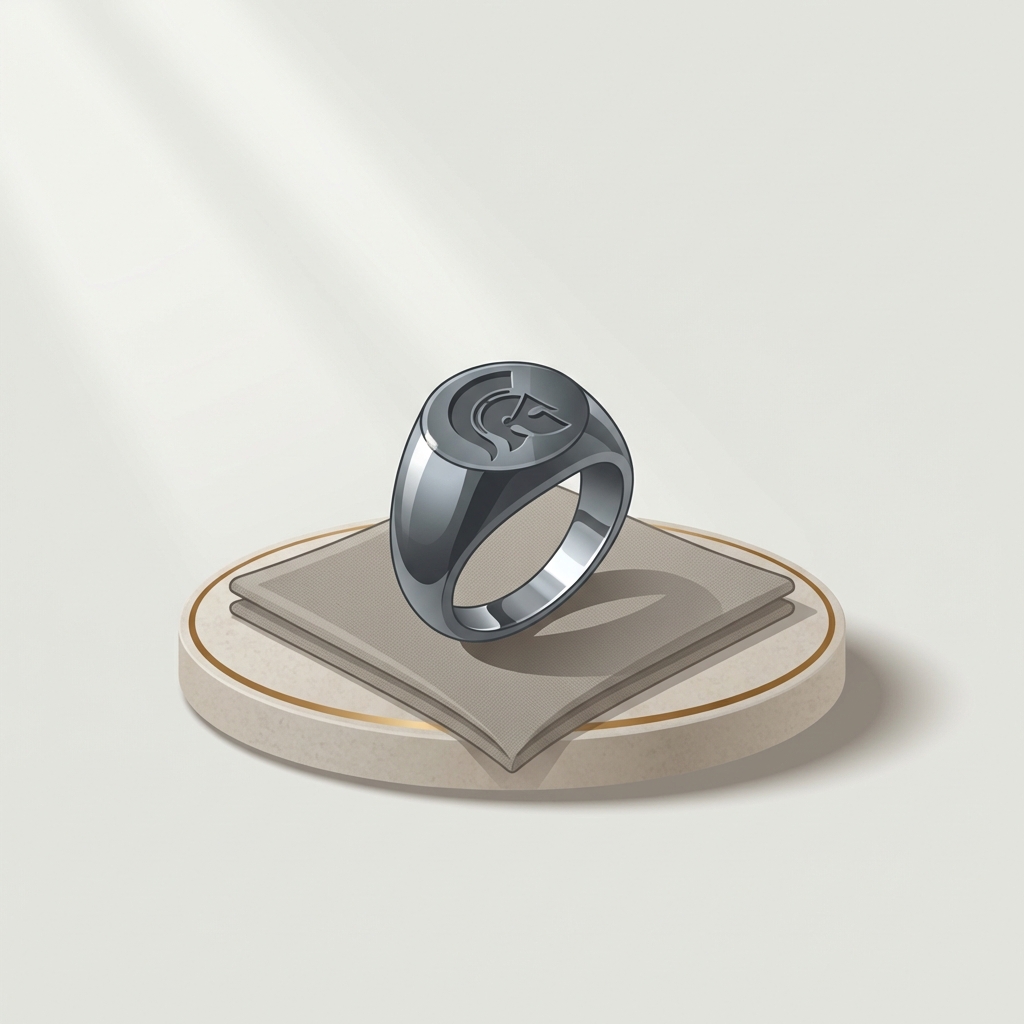
Even seemingly gentle household polishes can abrade the metallic sheen of hematite, so owners should not assume modern jewelry cleaning methods are safe for ancient intaglios; when in doubt, defer to professional conservation advice and the seller s restoration notes before attempting any treatment GIA hematite overview.
Safe cleaning, storage, and when to call a conservator
Conservator recommended practice is simple: use a soft, dry or slightly damp cloth for surface dusting, avoid soaking, store hematite pieces separately to prevent abrasion of the polished face, and seek a qualified conservator for any structural issues or questions about historic repairs American Gem Society conservator notes.
Before any attempted resizing or mechanical work, request full restoration notes and, if possible, images that show joins and interior repairs, because physical intervention on stabilized or filled hoops can cause separation or loss without careful, specialist treatment Gem-A guidance on buying and documenting ancient rings.
Styling and practical wearing examples
Examples by finger and outfit
Daily wearable antiquity: if you intend to wear a stable, well documented hematite intaglio on ordinary days, choose the non-dominant ring or little finger to reduce impact exposure, wear with simple outfits that avoid tight glove layers, and treat the ring like a fragile heirloom rather than a modern signet; this reduces the risk of knocks and abrasion Smithsonian overview of ring fingers.
Occasional statement wear: for social occasions where display matters, a stable intaglio with a flat bezel can sit comfortably on the index or middle finger to place the engraving in view, but remove the piece for any activity that risks forceful impact or contact with chemicals such as solvents or chlorine Smithsonian overview of ring fingers.
Convert a measured inner diameter to an estimated circumference for size comparison
Use measured inner diameter for comparison
Museum safe handling: if an intaglio is presented as an archaeological specimen with minimal restoration, handle only with clean hands or gloves, support the hoop to avoid flexing, and avoid trying to resize the ring for wear without specialist input; the goal is to preserve patina and existing joins rather than adapt the piece for daily use American Gem Society conservator notes.
Bezel size and wear: a broad bezel will often make a ring feel larger and can interfere with adjacent fingers; conversely, a small, shallow intaglio may wear more comfortably and be suited to the index finger for display, so match the bezel profile to the intended finger and use condition notes to assess long term wearability Metropolitan Museum collection database.
Common mistakes buyers and wearers make
Assuming provenance from stone type alone
A common error is treating hematite as proof of a soldier s ownership; stone type alone is not sufficient to establish military provenance, and doing so risks misattributing the cultural meaning of the object unless corroborating findspot or inscriptional evidence exists Journal of Roman Archaeology on military rings.
Another frequent mistake is accepting an ambiguous marketplace description without asking for publication level references or condition photos; always request catalogue citations, excavation reports, or clear collection history when a military origin is claimed Metropolitan Museum collection database.
Ignoring condition and restoration notes
Trying aggressive cleaning or forcing a poor fit are practical errors that can permanently damage a hematite intaglio; instead, read restoration notes, seek a conservator s opinion when repairs exist, and use gentle, conservator recommended cleaning methods if you intend to wear the piece American Gem Society conservator notes.
Corrective steps are straightforward: measure the inner diameter, compare to a known ring or use a conversion tool, review restoration notes for stabilized joins, and consult a specialist where structural work is required rather than attempting do it yourself Gem-A guidance on buying and documenting ancient rings.
Conclusion and quick checklist before you wear or buy
Three step checklist
Provenance check: verify findspot, collection history, or catalogue publication before accepting a military attribution and request excavation or catalogue references where available Metropolitan Museum collection database.
Fit check: measure inner diameter, assess bezel and shoulder clearance, and compare to a well fitting modern ring or use a conversion method to avoid forcing a fragile hoop Gem-A guidance on buying and documenting ancient rings.
Where to find reliable documentation and help
Use museum catalogues, published excavation reports, and specialist gemological or conservation advice when questions remain; these sources provide the evidence and treatment guidance needed to wear or care for a hematite intaglio responsibly Metropolitan Museum collection database.
Respect the object: if restoration notes show stabilization, accept that the piece may be best kept as wearable history for occasional, careful use rather than daily wear.
No. Stone type by itself is insufficient; a military attribution needs findspot, inscriptions, grave association, or publication level provenance to be credible.
For regular, cautious wear choose the non-dominant ring or little finger to reduce impact; remove the ring for activities that risk knocks or chemical exposure.
Use a soft dry or slightly damp cloth for gentle cleaning, avoid ultrasonic or steam cleaners and abrasives, and consult a conservator for structural issues.
More from Aurora Antiqua
References
- Hematite, Handbook of Mineralogy, Mineral Data Publishing / Mineralogical Society of America, USA
- Weight in the Form of a Hippopotamus Head, The Cleveland Museum of Art, USA
- Pliny the Elder, The Natural History, BOOK XXXIII, Perseus Digital Library, Tufts University (edition Bostock)
- Aulus Gellius, Attic Nights, Book X, LacusCurtius, Bill Thayer, University of Chicago (Loeb Classical Library edition)
- About us, International Association of Dealers in Ancient Art
- BS EN ISO 8653:2026, TC, BSI, British Standards Institution
- E.C.C.O. Professional Guidelines (II): Code of Ethics, European Confederation of Conservator-Restorers'
- How to Care For Your Jewellery: The Ultimate Guide by the National Association
- Evaluation of a two rubber band technique for finger ring removal, PMC, Annals of the Royal College of Surgeons