


Looking for the real thing? Browse genuine ancient artifacts for sale, each piece one of one, individually authenticated, with documented provenance. For the background, see the guide to ancient jewelry.
What counts as an egyptian ring? Definition and context
Archaeological and museum evidence
Rings appear regularly across Egyptian tombs and museum holdings from the Predynastic into the Roman period, and those collections remain primary references when identifying objects described as egyptian rings; museum overviews and catalogues give the most accessible starting points for comparison Metropolitan Museum of Art overview on jewelry in ancient Egypt. See a related Met catalog entry for a comparable object here.
Yes, rings are documented regularly from early Egyptian periods through the Roman era; museum catalogues and typological studies show a long-lived tradition across materials and motifs, though attribution for market pieces depends on provenance and technical documentation.
Terms collectors should know
Collectors should be familiar with a few practical terms that help set expectations: provenance and collection history describe where an object was found and who has owned it, condition notes and restoration notes explain what was stabilized or repaired, and bezel or intaglio describe the carved or engraved surface that often carries iconography. Those details can indicate whether a band with a carved scarab is likely an ancient example or a later reproduction.
When the listing or record cites an archaeological find context or a museum accession number, confidence in the attribution typically increases because cataloguing ties the object to published references or excavation records; absence of those details means attribution is probable rather than certain, and buyers should treat such items cautiously.

A brief timeline: egyptian rings across periods
Predynastic to Old Kingdom
Evidence shows rings in early Egyptian burials and assemblages, where simple bands and early scarab bezels can appear alongside other personal ornaments; typological catalogues and museum essays trace these early occurrences and provide comparative forms used to suggest an object's broad period British Museum Egyptian collection records. A representative object can also be viewed in the British Museum online collection here.
Middle and New Kingdom developments
Through the Middle and New Kingdoms, ring forms diversify and the use of carved stone scarabs and inscribed bezels becomes more common in both funerary and daily contexts, which helps specialists link shapes and motifs to likely workshops and time ranges; researchers rely on catalogue comparisons to place items within these sequences.
Late, Ptolemaic and Roman period continuities

In later periods, including the Ptolemaic and Roman eras, rings continue as visible dress items with continuity in materials and motifs; museum catalogs and synthesis essays document this long-lived tradition while noting regional and workshop variability. Typologies remain a key tool for dating but many market pieces lack the scientific provenance needed for narrow attribution.
Across all these periods, typological catalogues and museum databases are the practical means researchers use to compare forms, and those records are often the first place a collector should look when evaluating a purported ancient ring.
Materials and manufacture of egyptian rings
Common materials: gold, copper-alloys, faience, carved stones
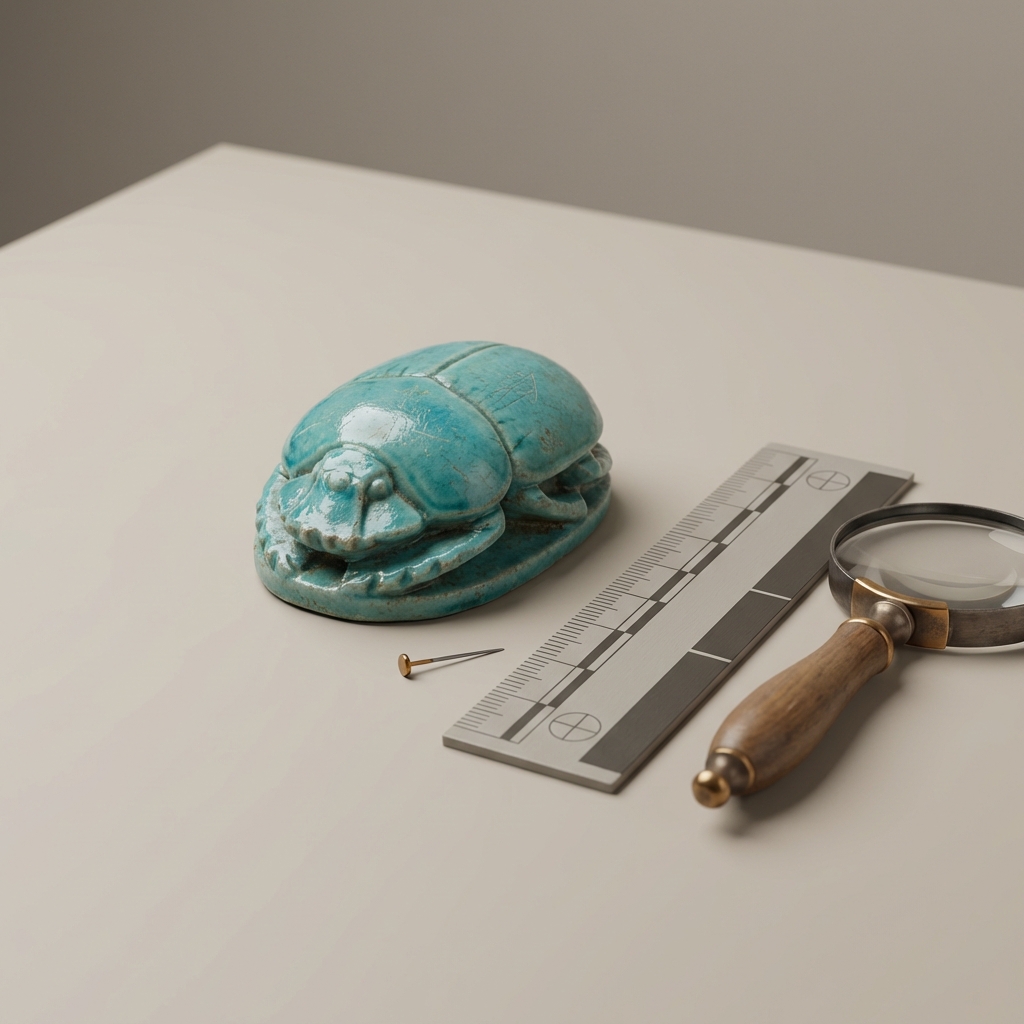
Typical materials include gold, copper-alloys or bronze, faience, and carved stone such as carnelian, agate, or steatite scarabs; gold and faience are especially prominent in elite and funerary contexts, while copper-alloy and stone examples occur across a wider social range Journal of Archaeological Science review on metallurgy and materials.
Techniques: goldsmithing, faience glazing, intaglio carving
Archaeometallurgical and conservation studies describe techniques that can help place a piece: local goldsmithing approaches, distinctive faience glazing recipes, and intaglio carving styles provide technical signatures that specialists interpret for dating and attribution, though many market-sourced items lack full scientific testing Journal of Archaeological Science review on metallurgy and materials. For examples of conservation work revealing ring details, see a conservation case study at the Cincinnati Art Museum here.
quick comparison checklist for identifying likely egyptian ring features
use with museum catalogue comparisons
How material informs dating and attribution
Material appearance and construction can suggest period ranges: for example, certain faience glazes and gold joining methods are associated with particular eras and workshops, but appearance alone cannot prove antiquity when provenance is absent; technical reports and conservation records increase confidence when available Foundational typology and catalogue references.
When a listing provides scientific testing or conservator reports, those documents can show metal composition, glazing recipes, or tool marks consistent with Egyptian techniques, and they should be used alongside typology and collection history to form a balanced judgement.
Why egyptian rings mattered: functions, symbolism, and seals
Amuletic and protective imagery
Bezel imagery, especially scarabs and deity representations, often served amuletic or protective roles and could be intended to convey protection for the wearer in life or after death; these symbolic functions are documented in museum records and teaching resources that explore jewelry and amulets Khan Academy overview of Egyptian art and amulets.
Names, seals, and personal identity
From the Old Kingdom onward, engraved bezels and scarab seals were used for names and administrative sealing, linking rings to personal identity as well as symbolism; when a bezel carries a name or clear seal impression, that feature becomes a primary marker used by curators and cataloguers to connect an object to an individual or office.
See behind-the-scenes documentation and condition details on @auroraantiqua
See curated listings with clear provenance and condition notes to compare how documentation changes confidence in attribution.
Social display and funerary use
Funerary assemblages often include rings that reflect social display or beliefs about protection in the afterlife, and catalogues of tomb finds show how rings appear with other amuletic items; context matters because the same motif on a funerary ring and on a later copy can mean very different things for dating and function British Museum Egyptian collection records.
Interpretation should remain cautious: motifs can persist across centuries and may be reused or copied, so iconography is one line of evidence among several rather than a single proof of origin.
How experts and museums identify egyptian rings: a practical framework
Provenance and collection history checks
The primary markers for confidence are archaeological or museum provenance, clear condition and restoration notes, and a bezel with Egyptian motifs such as scarabs or hieroglyphs; when these elements align, attribution is more secure and museum accession records provide the strongest public documentation British Museum Egyptian collection records.
Material and typology comparison
Compare the object's form and motifs with typological catalogues and museum database images to see whether band shape, bezel type, and manufacturing features match documented examples; catalogues remain the primary comparative tools for recognizing Egyptian ring types and motifs Journal of Egyptian Archaeology synthesis on rings and typologies.
Scientific testing and conservation reports
When available, conservator reports and scientific analyses (metal composition, glazing analysis, or microscopic tool-mark study) provide technical evidence that can support a typological attribution, but many market pieces lack these tests so collectors should factor that absence into their confidence level Journal of Archaeological Science review on metallurgy and materials.
Consider requesting clear photography of hallmarks, bezel undersides, and any repairs, and ask whether the seller can provide conservator notes or a lab report before completing a purchase.
Common mistakes and pitfalls when attributing or buying egyptian rings
Over-reliance on appearance and patina
Patina and surface wear can be simulated or produced by modern treatments, so visual similarity alone is an unreliable basis for attribution; catalogue comparisons and independent testing are tools to avoid being misled by appearance Journal of Archaeological Science review on metallurgy and materials.
Ignoring gaps in provenance
Many historical catalogues remain useful references, but they do not replace documented provenance or scientific analysis for market pieces; a claim that an object resembles a form in a catalogue should prompt a request for collection history or an accession number before accepting the attribution as fact Foundational typology and catalogue references.
Misreading modern repairs or restorations
Modern repairs and conservation work can alter how an object looks and how motifs read, so always ask for explicit restoration notes; if a listing states that an item was stabilized or repaired, request the conservator's description to understand what was changed and why, because restoration can affect both appearance and analytical results.
Practical examples and scenarios: reading listings and museum records
Example 1: a gold scarab ring with museum provenance
Imagine a museum catalogue entry that lists a gold ring with a carved scarab bezel, an accession number, and a short conservation note; those elements together-museum accession, photographed details, and a conservator description-raise confidence because they allow a reader to verify the object against public records and published typologies Metropolitan Museum of Art overview on jewelry in ancient Egypt.
Example 2: a faience bezel without clear collection history
If a listing shows a faience bezel with Egyptian motifs but lacks collection history, provenance, or conservator testing, treat the attribution as probable rather than certain; faience is common in Egyptian contexts but glaze recipes can be replicated, so absence of documentation reduces confidence Journal of Archaeological Science review on metallurgy and materials.
How to translate condition and restoration notes into confidence levels
Clear condition and restoration notes that describe what was cleaned, consolidated, or repaired provide important context: a stabilizing consolidation noted by a conservator is different from a modern reshaping of a bezel, and that distinction affects how a ring should be valued and interpreted; always ask sellers for conservator statements when such work is mentioned.
Short practical steps: verify any accession number with the claiming institution, compare the photos to similar items in online catalogues, and request lab or conservator reports when the listing includes technical claims about materials.
Buying checklist and final takeaway for collectors
Short checklist to use before purchase
Before buying rings, check: documented provenance or accession number, clear condition and restoration notes, close-up photos of bezel and band, a typology match in museum catalogues, and conservator or lab reports when available. Treat items lacking these elements as probable rather than certain examples of egyptian rings British Museum Egyptian collection records.
How Aurora Antiqua frames provenance and documentation
Aurora Antiqua presents curated ancient rings with condition notes, restoration notes, and collection history when available, to help buyers understand what they are seeing and why attribution may be probable rather than certain. Such transparency helps collectors compare marketplace items with museum records and typologies.
Next steps for buyers
When in doubt, consult museum databases, request conservator reports, and compare the item to typological catalogues; if you plan to buy as a wearable artifact, prioritize clear photos, measurements, and transparent restoration notes, and be prepared to accept a degree of uncertainty when provenance documentation is incomplete Journal of Egyptian Archaeology synthesis on rings and typologies.
Look for archaeological or museum provenance, clear condition and restoration notes, a bezel with Egyptian motifs such as a scarab or hieroglyphs, and material consistent with the claimed period; absent documentation, treat attribution as probable rather than certain.
Not always; faience often appears in elite and funerary contexts but it was also used in broader contexts, so material alone is not definitive without provenance or typological comparison.
When a listing makes technical claims or lacks clear provenance, asking for conservator reports or lab analysis can materially improve confidence in attribution and condition assessments.
More from Aurora Antiqua
References
- Finger Ring with Frog, The Cleveland Museum of Art
- Ring, Victoria and Albert Museum, London
- OIP 118. Scarabs, Scaraboids, Seals, and Seal Impressions from Medinet Habu, Institute for the Study of Ancient
- Scarab. In: UCLA Encyclopedia of Egyptology (Kathlyn M. Cooney), University of California, Los Angeles
- Gemstones. In: UCLA Encyclopedia of Egyptology (James A. Harrell), University of California, Los Angeles
- scarabée ; amulette, Louvre site des collections, Musee du Louvre, Departement des Antiquites egyptiennes, Paris
- The Fitzwilliam Museum, Amulet: E.281.1896, University of Cambridge
- Emergency Red List of Egyptian Cultural Objects at Risk, International Council of Museums (ICOM), Paris
- Books by Adams, Edward, Project Gutenberg
- Client Challenge, JSTOR