


Looking for the real thing? Browse our ancient artifact collection, each piece one of one, individually authenticated, with documented provenance. For the background, see the guide to ancient jewelry.
Quick answer: ancient egyptian wedding rings, what the evidence says
Short answer in one paragraph: rings appear throughout ancient Egyptian material culture and were used for many purposes, but the evidence that they served routinely as a modern style wedding band is limited and usually case specific. Museum overviews and collection catalogues record bezel rings, signets and simple hoops as common ornaments and tools of identity rather than as universally attested marital tokens, a point visible in major surveys of Egyptian jewellery and collection entries Metropolitan Museum of Art overview of jewellery in ancient Egypt.
Want clear provenance and condition notes before you buy?
For collectors, the best first step is to consult object records and any available provenance and condition notes before accepting claims that a ring was a marital token; treat such attributions as provisional unless supported by clear documentation.
That conditional stance matters for buyers and researchers alike, because museum object records often prioritise function and iconography, for example describing rings as amulets or signets, and provide the evidence that supports those interpretations British Museum collection entries on Egypt and Sudan.
Practical note for collectors: when a seller or catalogue suggests marital use, ask for the object record, any provenance statements and restoration or condition notes that explain how the piece was dated and interpreted Museum studies on ancient Egyptian rings and object studies.
Rings in Egyptian material culture: types, dates and common functions
Rings occur across the Egyptian record from early periods through the Late Period and later, and the archaeological record shows a range of types. Simple hoops, bezel rings with set stones or engraved intaglios, and signet rings with carved surfaces appear in museum catalogues and surveys, indicating a long chronological spread and wide social distribution Metropolitan Museum of Art overview of jewellery in ancient Egypt.
Typologically, bezel rings often contain carved gemstones or faience panels and may carry iconographic images that function as personal identifiers or amulets. Signet rings, by contrast, have flattened carved surfaces used to impress clay or wax, which researchers read as seals of identity or administration. Simple metal hoops without elaborate bezels are common and may have served everyday ornament functions, with wear patterns and patina helping to indicate frequent use British Museum collection entries on Egypt and Sudan.
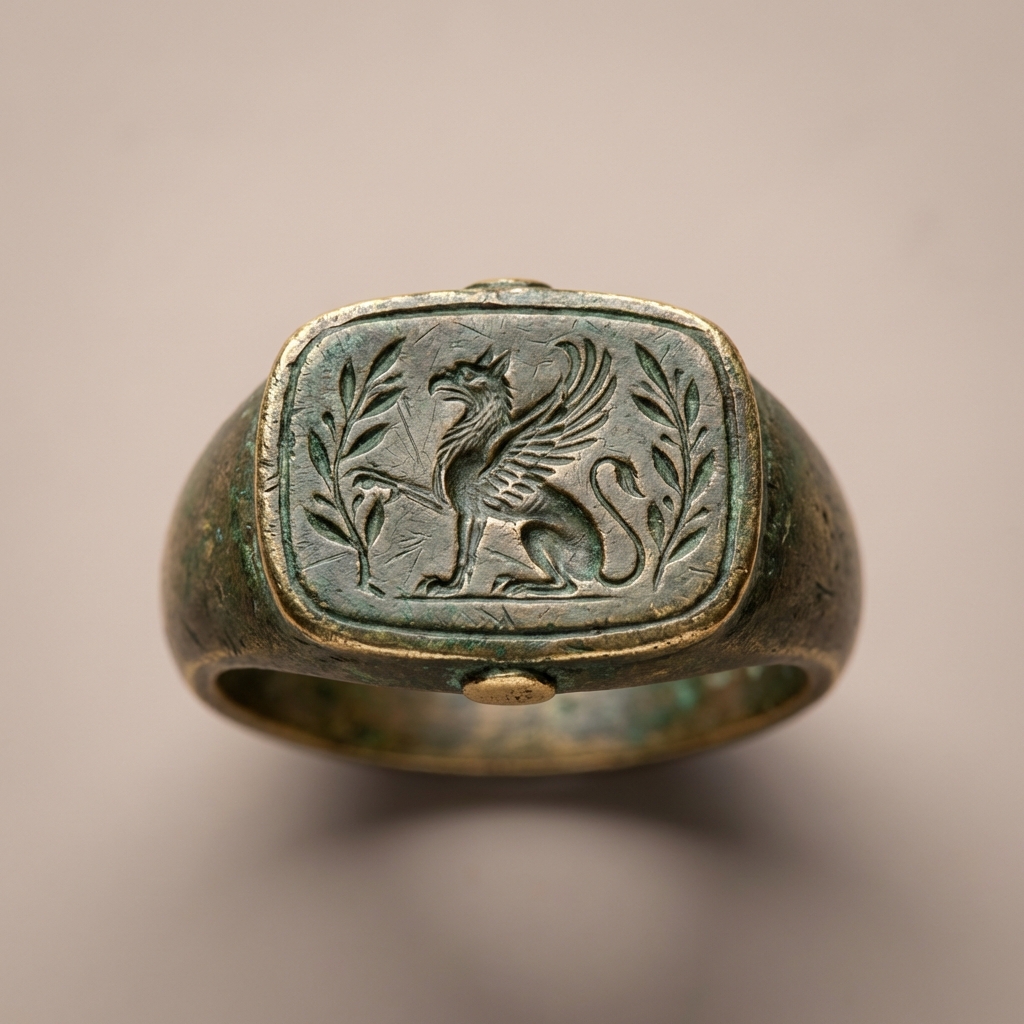
Across periods, museum catalogues emphasise multifunctionality. A single ring might serve as an amulet, a personal ornament and a status marker, depending on its materials, iconography and the context in which it was found. That multifunctional interpretation explains why many entries do not assign a straightforward marital function to rings unless additional evidence is present Metropolitan Museum of Art overview of jewellery in ancient Egypt.
How rings were used: ornament, amulet or seal? Rings were common and served many purposes in ancient Egypt, but routine use of rings as wedding bands is not clearly documented; claims that a ring was a marital token should be treated as provisional and supported by object records and provenance.
Rings were common and served many purposes in ancient Egypt, but routine use of rings as wedding bands is not clearly documented; claims that a ring was a marital token should be treated as provisional and supported by object records and provenance.
Iconography and inscriptions are primary tools curators use to assess a ring's likely function. Rings that bear images of gods, protective symbols or common amuletic motifs are typically interpreted as protective devices or markers of personal identity rather than explicit marital tokens, a distinction made clear in museum descriptions and studies of Egyptian jewellery Metropolitan Museum of Art overview of jewellery in ancient Egypt.
When a ring shows an intaglio carved with a name, title or a unique motif, curators often read it as a signet or a personal identifier used in daily administration or private identity. Wear patterns on the bezel or the hoop, the presence of a fitted stone, and the ring's findspot, for example in a domestic context or a tomb, all inform that assessment British Museum collection entries on Egypt and Sudan.
It is also common for single objects to carry multiple meanings in life and in burial. A ring deposited in a grave might have been an amulet for the afterlife, a cherished personal ornament, or a functional seal in life. Without supporting documentary evidence linking a ring explicitly to a marriage ritual, most object records stop short of calling such rings wedding rings.
What Egyptian legal and documentary sources say about marriage and rings
Papyri and other documentary records from ancient Egypt record marriage agreements, dowry arrangements and household matters, but they rarely describe a ring exchange in a way that parallels later Western wedding ceremonies. Reference entries on marriage in Egypt note this documentary silence, which limits how confidently scholars can claim routine ring exchange as a standard ritual Oxford Research Encyclopedia entry on marriage in ancient Egypt. For discussions of documentary examples and demotic marriage papyri see Ancient Egyptian Society and Family Life.
That absence in the documentary record does not prove rings were never used to mark marriage. Documentary silence means we must be cautious: a ring could have served as a personal or household token in particular places or times, and later cultural contact may have introduced or popularised explicit ring-exchange practices. Scholars therefore treat claims of ritual ring exchange as provisional unless tied to specific textual or object evidence.
For collectors and researchers, a careful approach is to look for both the material evidence of a ring and any contemporaneous textual reference that ties the object to marriage, such as a papyrus that mentions a gift with an identified object, or a clearly dated archaeological context that supports the interpretation. When such supporting documentation is absent, the marital claim should remain tentative.
Greek and Roman influence: clearer marital ring practices in Hellenistic and Roman Egypt

Comparative evidence from Greek and Roman sources shows clearer uses of rings as marital tokens, and that clarity can help when assessing rings from Hellenistic and Roman Egypt. Classical literature and archaeological finds from Mediterranean contexts document ring exchange and ring symbolism in marital contexts more explicitly than surviving Pharaonic texts do, so rings from later periods in Egypt are sometimes easier to link to marriage practices Greek Gold from Hellenistic Egypt.
In Hellenistic and Roman Egypt, then, interpretation must consider cultural contact. A ring dated and provenanced to those periods may plausibly reflect Greco-Roman marital customs in addition to local Egyptian traditions, which complicates attribution and increases the need for precise dating and provenance statements in any claim of marital use. Comparative collections and catalogues such as those for Roman period rings provide helpful parallels Hellenistic and Roman period rings.
Aurora Antiqua presents Aurora Antiqua Hellenistic and Roman period rings with clear provenance summaries and condition notes so buyers can see the basis for period attribution and for any interpretive claims. When buying, request the object record and any documentary evidence that links the piece to its archaeological context.
How scholars read motifs and dating to argue for marital use
Scholars who argue that a given ring might be marital typically rely on a combination of motif interpretation and precise dating. Some motifs, for example paired images or certain inscriptions, have been proposed as suggestive of household ties, but these links are usually tentative and require supporting contextual evidence to be persuasive Metropolitan Museum of Art overview of jewellery in ancient Egypt.
Dating methods, including stratigraphic context, associated finds, stylistic comparison and scientific approaches, are critical because a ring dated to a period of strong Greco-Roman influence carries different interpretive possibilities than one from an earlier Pharaonic stratum. Workshop attributions and comparative typology also help place a ring within a production tradition that may be associated with particular social usages British Museum collection entries on Egypt and Sudan.
The limits of iconographic interpretation are important to stress. A circular motif or a plain band by itself does not constitute proof of marital function. Scholars therefore prefer converging evidence: a ring with a plausible motif, securely dated context and corroborating documentary references makes a stronger case than any single piece of ambiguous evidence Museum studies on ancient Egyptian rings and object studies.
How to evaluate a claim that a ring is an ancient egyptian wedding ring
ToolType: | Purpose: | Fields: | Notes:
ToolType: | Purpose: | Fields: | Notes:
Collectors can use a short checklist that foregrounds provenance, condition notes and documentary context. Start by requesting the museum-style object record or sale catalogue entry, plus any written provenance and photographs that show hallmarks of wear, repairs or restoration; these items form the basis for assessing any marital claim British Museum collection entries on Egypt and Sudan.
Practical provenance and condition checklist for assessing rings
Use as a guide not as definitive proof
Next, verify the dating: is the object securely dated by findspot, associated materials or stylistic comparison? Ask for laboratory tests if available, and request any collection history that links the piece to a documented excavation or a reputable collection. Without secure dating, attributions to marital practice remain speculative Museum studies on ancient Egyptian rings and object studies.
Finally, evaluate interpretive claims: if a seller claims the piece is a wedding ring, ask what evidence supports that claim. Is there a textual reference, a documented find context, or a comparable example in a major collection? Prefer conditional language in descriptions, and document any expert opinions with contactable references.
Common mistakes and myths when identifying ancient egyptian wedding rings
One common error is assuming that any circular band is a wedding band. Plain hoops and simple bands were everyday ornaments in many periods and do not by themselves indicate marital function. Museum catalogues emphasise typology and context rather than automatically assigning marital meaning to a circular form Metropolitan Museum of Art overview of jewellery in ancient Egypt.
Another frequent mistake is misreading amuletic motifs as marital symbols. Protective images and deity figures are often amuletic, intended to guard the wearer, and may have no explicit connection to marriage rituals. Documentary evidence from papyri does not typically describe ring exchange as a standard matrimonial rite, so iconographic claims must be handled carefully Oxford Research Encyclopedia entry on marriage in ancient Egypt. For further reading on marriage practices see a survey of customs Marriage and Family Customs in Ancient Egypt.
A third pitfall is overclaiming based on incomplete provenance. A persuasive attribution to marital use requires clear provenance, dating and interpretive reasoning; without those elements, sellers or catalogues should use conditional wording and provide the supporting documents that allow independent assessment.
Practical examples and how to read museum records and listings
Begin with a museum object entry and note the key fields: object title and catalogue number, material and dimensions, provenance and collection history, condition and restoration notes, and the curator's functional interpretation. Major collections such as the British Museum and the Met provide entries that model this structure and help readers learn what to look for British Museum collection entries on Egypt and Sudan.
Provenance lines often include collection history, previous owners, and acquisition notes. These lines can reveal whether an item comes from a documented excavation, from a 19th or 20th century private collection, or from an undocumented source. Clear provenance strengthens any interpretive claim by providing a chain of custody and contextual anchors Museum studies on ancient Egyptian rings and object studies.
Restoration and condition notes tell a complementary story. Repairs, stabilisation work and present condition help determine whether a ring's shape or decorative features are original or later altered. When sellers provide transparent restoration notes, buyers and researchers can better judge how much of an interpretive claim rests on original features versus modern restoration.
To recap: rings are widespread throughout Egyptian material culture and perform many functions, but routine use of rings as wedding bands in the modern sense is not demonstrably universal across periods. That cautious conclusion follows from museum surveys and the documentary record, which emphasise multifunctional uses and do not routinely record a wedding ring ritual in Pharaonic sources Metropolitan Museum of Art overview of jewellery in ancient Egypt.
For collectors who want to evaluate claims that a ring is an ancient egyptian wedding ring, the practical next steps are clear: request the object record, examine provenance and dating evidence, review condition and restoration notes, and prefer conditional attributions supported by documentary or contextual data British Museum collection entries on Egypt and Sudan.
Suggested further reading and resources include museum catalogues and reference entries on marriage and jewellery in Egypt, which provide the comparative material necessary to judge specific claims. The Oxford Research Encyclopedia entry on marriage and major collection overviews are good starting points for deeper study Oxford Research Encyclopedia entry on marriage in ancient Egypt.
No. Rings were widespread but documentary and archaeological evidence does not show a universal ritual of ring exchange across all periods; use appears to have been multifunctional and context dependent.
Museum labels vary in specificity; trust requires seeing the object record, provenance and the evidence that supports the attribution rather than relying on a brief label alone.
Request the object record, provenance documentation, dating evidence and any restoration notes, and ask for contactable expert opinions or publication references.
More from Aurora Antiqua
References
- Finger Ring with Frog, The Cleveland Museum of Art
- Aulus Gellius, Attic Nights, Book X, LacusCurtius, Bill Thayer, University of Chicago (Loeb Classical Library edition)
- Pliny the Elder, The Natural History, BOOK XXXIII, Perseus Digital Library, Tufts University (edition Bostock)
- Pliny the Elder, The Natural History, BOOK XXXIII, Perseus Digital Library, Tufts University (edition Bostock)
- Internet History Sourcebooks: Medieval Sourcebook, Internet Medieval Sourcebook, Fordham University, New York
- Gimmel Ring, Victoria and Albert Museum, London
- The Form of Solemnization of Matrimony, The Church of England
- Ring, Victoria and Albert Museum, London
- Ring, The Cleveland Museum of Art