


Looking for the real thing? Browse our full ring collection, each piece one of one, individually authenticated, with documented provenance. For the background, see the guide to ancient jewelry.
What is an ancient wedding band? Definition and historical context
Terms: wedding band, ancient ring, intaglio, bezel
An ancient wedding band is, in working terms, any finger ring from antiquity that can plausibly be associated with marital or betrothal practice or with personal identity and status; the phrase ancient wedding band is used here to mean a surviving ring from the first century CE or thereabouts that might have served such roles.
For this article the geographic and chronological frame is the eastern Mediterranean, including Palestine, in the late Republican to early Imperial period, roughly around the first century BCE through the first century CE, and the sources considered include both textual traditions and surviving material objects recorded in museum and excavation catalogues. Archaeological cataloguing of rings in the region provides the primary material window on what kinds of bands circulated and where they have been found, while contemporaneous writings describe practices in Greco-Roman society that can help interpret some uses Encyclopaedia Britannica.
It is important to stress limits of certainty. Published finds are uneven in their geographic coverage and many surviving rings lack secure archaeological provenance, so sampling bias and gaps in documentation can affect how confidently we assign a social function such as matrimony to a given band British Museum collection.
Short answer and key findings for busy readers
Short answer: rings were present and used in Greco-Roman marriage and personal identity contexts in the eastern Mediterranean in the first century, but contemporary Jewish legal texts do not show a uniform requirement for a wedding ring in first-century Palestine, so a standardized Jewish wedding ring practice in Jesus' immediate milieu is not strongly supported.
See the practical checklist for evaluating an ancient wedding band on our guide
If you want a practical checklist for evaluating a claimed ancient wedding band, continue to the checklist and examples below to learn which documents and object details matter most.
Headline summary of the evidence:
- Archaeological catalogues and excavation records show intaglio and plain bands in the region, confirming rings circulated in the eastern Mediterranean, including Palestine British Museum collection.
- Greco-Roman sources describe ring use in marriage and for sealing and personal identity, which helps explain why signet and intaglio rings are common in collections Encyclopaedia Britannica.
- Contemporary Jewish legal texts from the late Second Temple and early rabbinic period do not require a ring for betrothal, so textual support for a universal Jewish wedding ring in the first century is limited Oxford Research Encyclopedia.
- Material evidence shows a variety of materials and forms, so metal alone does not prove marital use without context Journal of Roman Studies.
- Best practice for assessing a claimed first-century band is to prioritize secure provenance, condition and restoration notes, typological matches to museum records, and scientific testing when available Metropolitan Museum study.
What the texts say: Jewish, Christian, and Roman sources
Second Temple and early rabbinic legal texts describe kinship, betrothal and marriage as formal transactions, but they do not universally prescribe a ring as the sole method of kinyan or kiddushin; where rings appear in later rabbinic descriptions they often post-date the first century and reflect subsequent custom rather than indisputable first century practice Oxford Research Encyclopedia.
Rings were present in the eastern Mediterranean and used in Greco-Roman marriage and identity practices, but contemporary Jewish legal texts do not show a universal requirement for a wedding ring in first-century Palestine, so picturing a uniform Jewish wedding band custom in Jesus' immediate milieu is not strongly supported.
New Testament passages and later Jewish texts can inform how people thought about marriage, yet many such writings are not contemporary legal manuals for first-century Palestinian practice and cannot alone prove common use of a wedding ring in Jesus' immediate circle; caution is needed when using later sources as direct evidence.
By contrast, Greco-Roman writers and material culture together show rings functioned in marriage and as personal identity markers in many parts of the Roman world, which helps explain why intaglio and signet rings are common in museum catalogues for the eastern Mediterranean Encyclopaedia Britannica.
Second Temple and early rabbinic legal texts describe kinship, betrothal and marriage as formal transactions, but they do not universally prescribe a ring as the sole method of kinyan or kiddushin; where rings appear in later rabbinic descriptions they often post-date the first century and reflect subsequent custom rather than indisputable first century practice Oxford Research Encyclopedia.
New Testament passages and later Jewish texts can inform how people thought about marriage, yet many such writings are not contemporary legal manuals for first-century Palestinian practice and cannot alone prove common use of a wedding ring in Jesus' immediate circle; caution is needed when using later sources as direct evidence.
By contrast, Greco-Roman writers and material culture together show rings functioned in marriage and as personal identity markers in many parts of the Roman world, which helps explain why intaglio and signet rings are common in museum catalogues for the eastern Mediterranean Encyclopaedia Britannica.
Archaeological evidence: rings found in Palestine and the eastern Mediterranean
Published excavation records and museum catalogues document surviving rings from the late Republican and early Imperial period in the Levant, including examples made of bronze, silver and gold; these items demonstrate that rings circulated in first-century contexts across urban and some rural sites in the region British Museum collection.
That said, the distribution of finds is uneven: some areas yield well-documented examples while other parts of Palestine show sparse published material, which complicates any attempt to estimate how widespread ring-based betrothal practices may have been in different communities Journal of Roman Studies.

Museum records are the most reliable route to contextualized examples because they often preserve accession numbers, provenance notes, and comparisons to published typologies; for visual and typological comparison, consult well-documented collections and departmental studies rather than isolated imagery.
Types, materials and functions of rings in the first-century Mediterranean
Rings from the period come in several functional types: simple hoops or plain bands that could be personal ornaments; bezel rings that carry decoration or settings; and intaglio or signet rings used for sealing documents and signaling status Journal of Roman Studies.
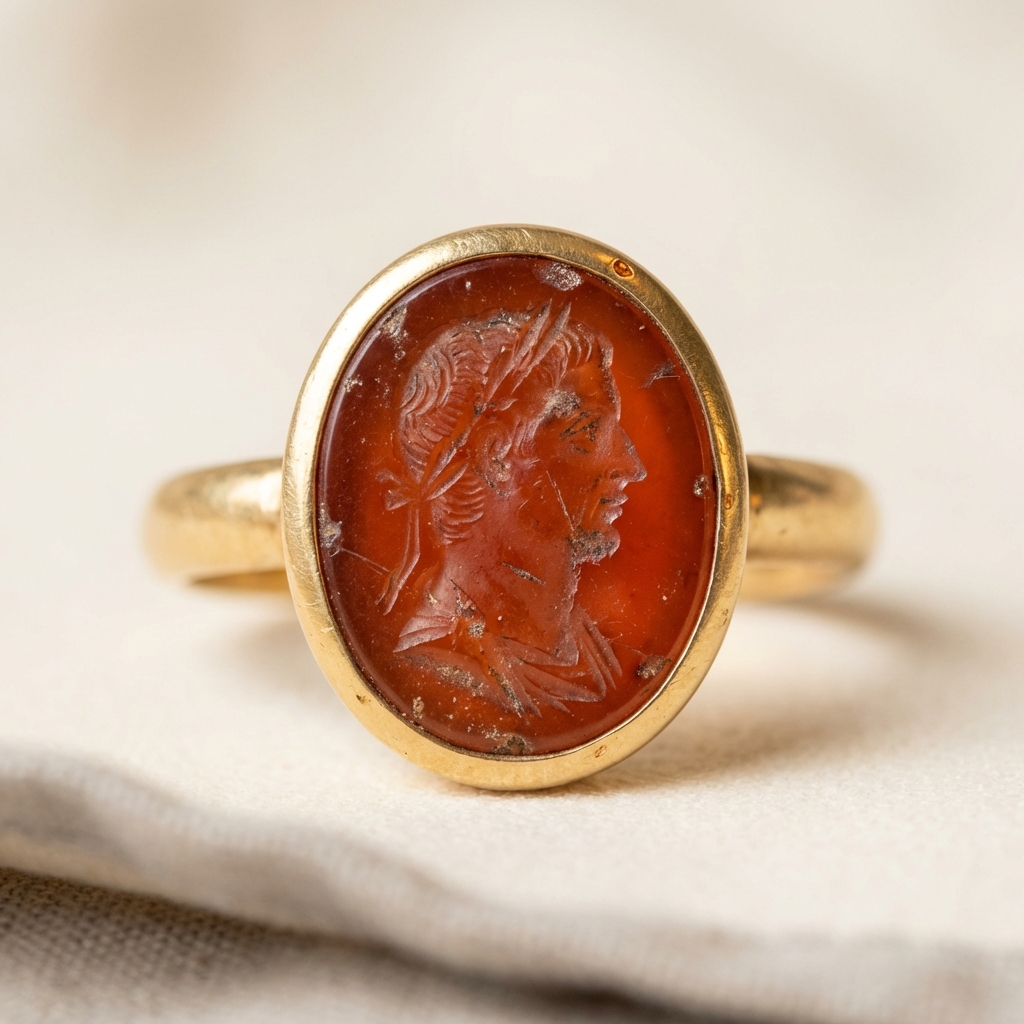
Signet and intaglio rings often carried engraved images or inscriptions and were used to impress a seal, a role distinct from purely decorative or matrimonial uses; many signet examples are catalogued in museum collections and studies of personal identity in the Roman world Encyclopaedia Britannica.
Material variety is wide: bronze and iron hoops were common everyday items, while silver and gold could indicate greater wealth or status, but material alone is not definitive for marital function without clear archaeological or documentary context British Museum collection.
How experts assess whether a band is plausibly a first-century wedding ring
Collectors and researchers use a stepwise approach. First, confirm whether the object has secure archaeological provenance or an early, documented collection history; second, compare the ring's form and decoration to published typologies in museum catalogues; third, review condition and restoration notes; and lastly, seek scientific testing where feasible to support a proposed date or alloy composition Metropolitan Museum study.
Applied carefully, this checklist reduces reliance on stylistic guesswork and visual impressions from photos alone; provenance and typological matches typically carry the most weight when assigning a social function such as betrothal or sealing use.
Score provenance, condition, typology and testing to assess plausibility of a first-century band
Use as a guide not a proof
After using the tool, if key fields are missing or ambiguous, seek additional documentation or specialist consultation rather than accepting a confident date from images alone.
Where available, scientific analysis such as compositional study or metallography strengthens dating and attribution claims by showing alloy choices or manufacturing marks consistent with a given period or workshop; such tests are not always present but are increasingly used in departmental studies Metropolitan Museum study.
Open questions remain about variation between urban centres, where Greco-Roman customs were widespread, and rural Jewish villages, where different local practices likely persisted; uneven excavation coverage and reporting means scholars still debate the scale of adoption across communities Journal of Roman Studies.
Provenance, documentation and what to ask when buying an ancient ring
Ask for specific provenance details: collection history with dates, prior ownership records, museum accession numbers if relevant, and any excavation or purchase documentation that ties the object to a find context; these items sharply improve confidence in an attribution Metropolitan Museum study.
Request condition notes that describe what was stabilized or repaired and clear restoration notes that explain any invasive work; a transparent note that an item was stabilized is different from one that underwent reconstructive repair, and the difference matters for visual assessment and dating claims.
If a seller or collection cannot provide credible documentation, treat dating and functional claims as provisional and consider seeking third-party examination or comparative references from published catalogues before purchasing British Museum collection.
Condition and restoration: interpreting wear, repairs and patina
Typical signs described as wear consistent with age include overall surface smoothing, rounded edges where repeated contact occurred, patina development on base metals, and micro-abrasions on bezels from handling; these features are informative but must be read alongside provenance and typology Metropolitan Museum study.
Restoration notes should state what was done, who performed the work if known, and whether any modern materials were used; stabilization to prevent further loss is common and should be clearly separated in the notes from any reconstructive fills or re-profiling that alter original surfaces.
Common mistakes and myths buyers should avoid
A frequent error is assuming material equals function; a gold band can be ornamental rather than matrimonial, and conversely a bronze hoop might have served as a token in some contexts, so context matters and metal alone is not determinative British Museum collection.
Another common mistake is to trust undated or vague provenance claims without independent corroboration; imagery-only listings that lack measurements, condition notes and collection history are poor grounds for confident attribution Metropolitan Museum study.
Practical examples and visual cues collectors can use
Look at museum catalogue entries for intaglio signet rings and plain hoops and note the fields they include: date range, find spot or acquisition history, accession number, measurements, and condition statements; those fields are the minimum you should expect in a responsible listing British Museum collection.
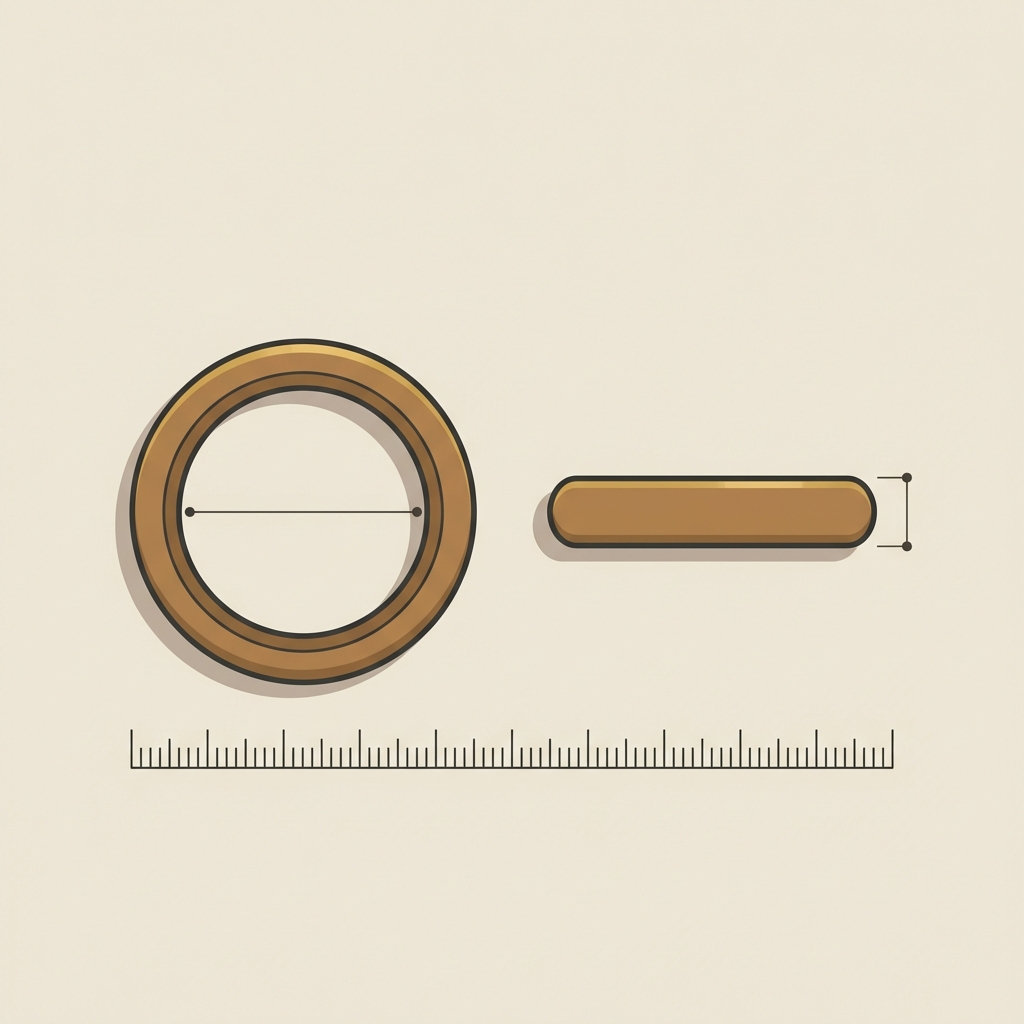
Photograph checklist: request a sharp image of the bezel or intaglio face, close-ups of the hoop profile and shoulders, a full ring in scale with a ruler or scale bar, and any marks or tool marks on the inner surface; include measurements for internal diameter and band width to aid comparison with typological parallels Metropolitan Museum study.
Use catalogue comparisons to match characteristic features, such as carving style on a carnelian intaglio or the profile of a beaded bezel, and prefer examples accompanied by accession numbers and departmental notes when making a typological judgment British Museum collection.

A decision framework: should you consider buying a claimed ancient wedding band?
Green flags include secure provenance with early collection history or excavation context, clear condition and restoration notes, and published parallels in museum catalogues; these increase the plausibility that a band dates to the claimed period and may support suggested uses Metropolitan Museum study.
Red flags are missing or vague provenance, heavy undocumented restoration, claims that rely solely on images without measurements, or broad dating ranges with no typological match; these circumstances warrant caution and further inquiry British Museum collection.
Short purchase checklist: request documents, compare to museum parallels, ask for condition and restoration notes, and if still interested obtain a specialist opinion or third-party testing before finalizing a purchase Metropolitan Museum study.
Conclusion: what we can reasonably say about rings in Jesus' time
In balance, rings were present in the eastern Mediterranean in the first century and were part of Greco-Roman marriage and personal identity practices, yet contemporary Jewish legal texts do not demonstrate a uniform requirement for a wedding ring in first-century Palestine, so attributions of a standardized Jewish wedding band for Jesus' immediate milieu should be made cautiously Encyclopaedia Britannica.
For collectors, the most reliable route is to prioritize documented provenance, clear condition and restoration notes, typological matches to museum records, and scientific support when available, and to treat attributions as probabilistic rather than absolute British Museum collection.
Appendix: resources, museum records and further reading
Recommended record types to consult are museum catalogue entries, departmental studies, excavation reports and published metallurgical analyses; pay attention to accession numbers, date ranges provided by curators, and any notes about restoration or prior publication British Museum collection. For recent reporting on ring finds see Biblical Archaeology, LiveScience, and Archaeology Magazine.
When you need a specialist, ask for references to published catalogues or departmental essays that discuss comparable objects rather than accepting undated online descriptions, and consider third-party scientific analysis where provenance is ambiguous Metropolitan Museum study.
No. Evidence indicates rings were used in Greco-Roman contexts and by some individuals in the region, but contemporary Jewish legal texts do not require a ring for betrothal, and archaeological finds are unevenly distributed, so use was not universal.
No. Materials such as gold or bronze do not by themselves prove marital use; context, provenance, typology and condition notes are needed to support such a claim.
Request collection history or accession numbers, excavation or acquisition documentation, clear condition and restoration notes, and any published catalogue comparisons or scientific test reports.
More from Aurora Antiqua
References
- Pliny the Elder, The Natural History, BOOK XXXIII, Perseus Digital Library, Tufts University (edition Bostock)
- Pliny the Elder, The Natural History, BOOK XXXIII, Perseus Digital Library, Tufts University (edition Bostock)
- Aulus Gellius, Attic Nights, Book X, LacusCurtius, Bill Thayer, University of Chicago (Loeb Classical Library edition)
- Philip Kiernan and Klaus-Peter Henz, Rings from the Forbidden Forest, Cambridge University Press
- Catalogue of the Engraved Gems and Finger-Rings in the Ashmolean Museum, II: Roman, BAR Publishing, via Fulcrum
- Internet History Sourcebooks: Medieval Sourcebook, Internet Medieval Sourcebook, Fordham University, New York
- Ring, Victoria and Albert Museum, London
- Ancient Gold Ring Found in Jerusalem, Biblical Archaeology Society, biblicalarchaeology.org